How HMB Modelling Cuts Kraft Mill Steam by up to 12%
An engineering analysis of displacing bark fuel to save up to 18.5 MW of steam.
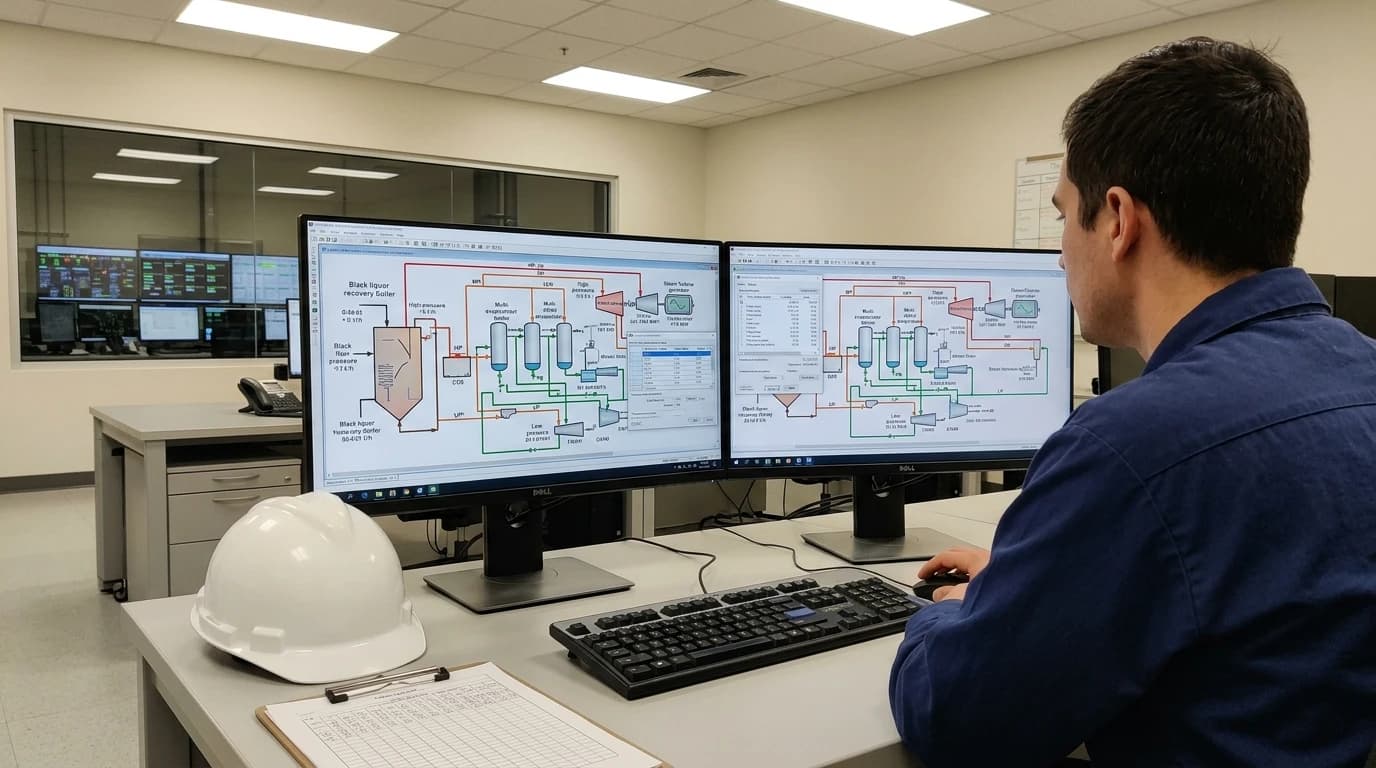
A heat and mass balance (HMB) model is a mathematical representation mapping species-level mass flows and thermodynamic energy states across an integrated manufacturing facility. Process systems in integrated kraft pulp and paper plants operate under highly coupled thermal and chemical regimes. Traditional energy audits evaluate equipment in isolation, overlooking the complex thermodynamic interactions between the fibreline, chemical recovery cycle, and power utility blocks. By contrast, a system-wide HMB simulation reconciles the entire thermal network, establishing a single source of truth for all energy and mass flows.
Applying systematic HMB modelling alongside pinch analysis consistently reveals deep inefficiencies in multi-pressure steam distribution and heat exchanger networks (HEN). Industry-wide validation confirms that these models provide the engineering precision needed to reduce overall steam consumption by up to 12%. This approach establishes a rigorous baseline for capital expenditure, protecting investments in mill-wide decarbonisation and thermal efficiency.
Establishing a Single Source of Truth with Heat and Mass Balance Pulp and Paper Modelling
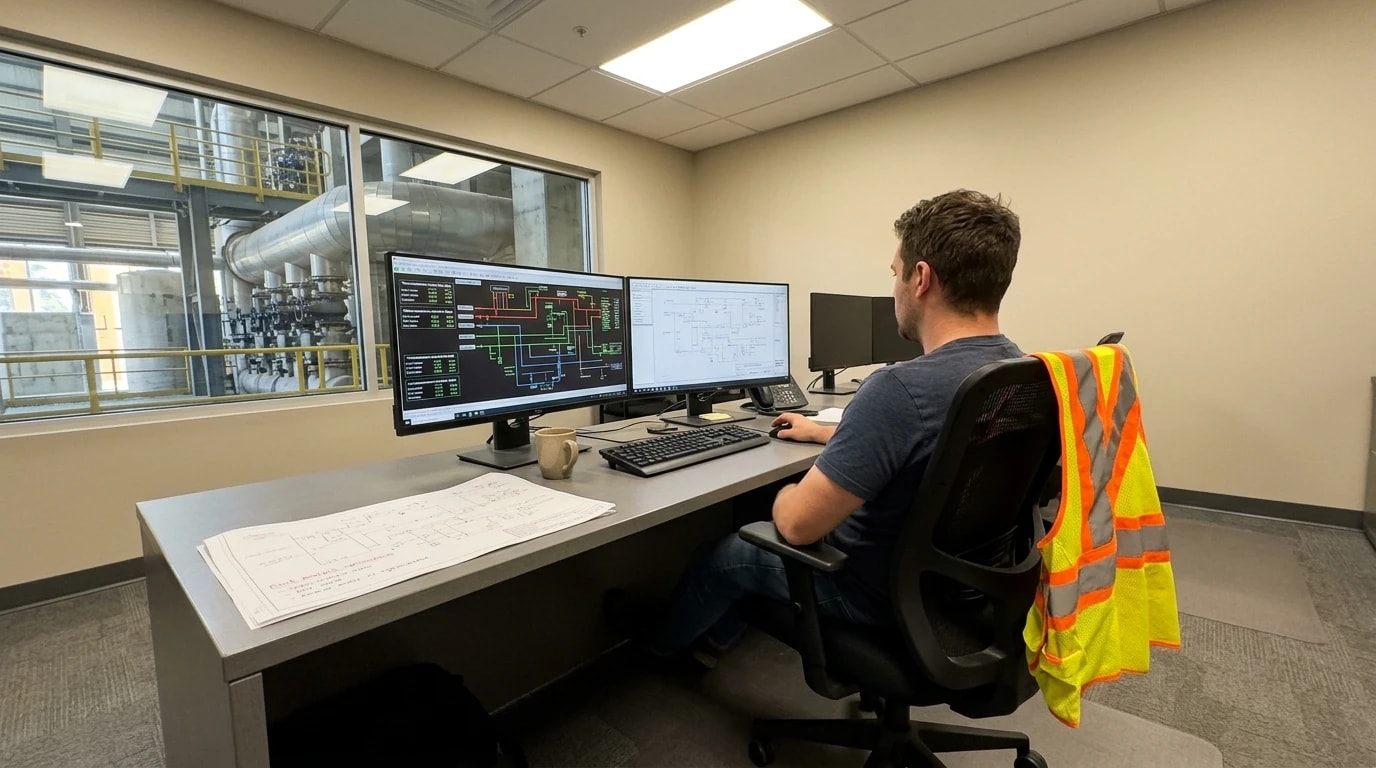
Integrated kraft mills are complex chemical processing plants that must balance water, inorganic cooking chemicals, organic wood dissolved solids, and multi-grade steam. Designing or retrofitting these facilities requires highly accurate mass and energy accounting. A robust heat and mass balance pulp and paper model achieves this by tracking individual species across multiple phases.
Species-Level Mass Balancing
A reliable simulation must track water, suspended fibres, dissolved organics (lignin and hemicellulose), and active cooking chemicals like sodium hydroxide, sodium sulphide, and sodium carbonate. This tracking is critical in the chemical recovery loop, where weak black liquor is concentrated and burned to recover pulping reagents. Small errors in water or chemical balances cascade downstream, leading to under-designed heat exchangers and inaccurate estimations of boiler steam generation.
Thermodynamic Energy Reconciliations
Beyond simple flow rates, an HMB model calculates the exact enthalpy and temperature profile of every stream. In steam distribution networks, superheated high-pressure steam undergoes successive expansions through turbines or pressure-reducing desuperheating valves. The simulation ensures that thermal energy calculations account for pressure drop, heat loss, and phase changes, calculating desuperheating water addition using the following steady-state conservation of energy formula:
ms⋅Hs+mw⋅Hw=mo⋅HoWhere:
- ms is the mass flow rate of superheated inlet steam in kg/s
- Hs is the specific enthalpy of the superheated steam in kJ/kg
- mw is the mass flow rate of desuperheating water in kg/s
- Hw is the specific enthalpy of the desuperheating water in kJ/kg
- mo is the mass flow rate of the outlet steam in kg/s
- Ho is the target specific enthalpy of the outlet steam in kJ/kg
By resolving this relationship at every steam-using unit, the model prevents localised thermal imbalances and desuperheater piping erosion.

Map every energy and material flow in your process with detailed heat and mass balance calculations — the foundation for any optimisation or design project.
Thermodynamic Modelling of Non-Conventional Process Streams
Pulp mill streams contain non-conventional fluids that do not follow standard ideal gas or basic aqueous thermodynamic models. Black liquor, for instance, is a highly viscous mixture of water, inorganic salts, and dissolved organic wood solids. Its boiling point elevation and viscosity vary non-linearly with dry solids concentration.
Simulating Non-Conventional Solids
Process engineers typically resolve these complex properties using process simulation platforms like Aspen Plus, HYSYS, or DWSIM. Within these environments, property methods are configured to handle non-conventional solids. Thermal design teams often apply the HCOALGEN physical property model to calculate the specific enthalpies and density of black liquor and biomass streams. This calculation relies on ultimate and proximate organic analyses, mapping elements like carbon, hydrogen, nitrogen, sulphur, and ash to thermodynamic enthalpies.
Additionally, density and viscosity are modelled using custom correlation coefficients reflecting physical pulp mill data. This prevents engineers from underestimating pump power requirements and heat transfer coefficients in the black liquor evaporator trains.
Target Identification with Pinch Analysis
Once the model calculates stream enthalpies and flow rates, the system identifies thermodynamic pinch points. Pinch analysis calculates the minimum hot and cold utility targets for a process before any physical heat exchangers are designed, defining the absolute thermodynamic limit of heat recovery. Comparing current steam use to the calculated pinch target allows engineering teams to identify non-optimal heat exchange, such as heating a cold stream with steam when a hot process effluent is available.
Mill-Wide Steam Savings: Proving the Pinch Targets
Pinch analysis and HMB optimisation studies across integrated kraft pulp and paper mills consistently demonstrate that systematic process integration yields substantial steam savings. Two notable studies demonstrate these results:
The Chalmers University of Technology Study
A benchmark retrofit pinch analysis by the Chalmers University of Technology on a partly integrated kraft pulp and paper mill in Sweden evaluated steam reduction opportunities. The study identified a maximum thermal energy saving potential of 18.5 MW, representing a 12% reduction in overall mill steam demand.
The research team developed two retrofitting paths:
- A straightforward, low-risk retrofit saving 5.8 MW of steam at an investment cost of €130,000 per MW of saved steam.
- A more extensive retrofit designed to achieve 11 MW of steam savings at a capital cost of €140,000 per MW of saved steam.
Displacing bark fuel in the primary power boilers with this saved steam brings the payback period for both options to under 16 months.
The Natural Resources Canada La Tuque Mill Study
Under the Natural Resources Canada Process Integration programme, researchers evaluated the Smurfit-Stone integrated paperboard mill in La Tuque, Quebec. The mill produces white-top, fully bleached, and food-grade board, and historically suffered from high energy consumption.
A multi-pressure steam and water circuit pinch analysis identified nineteen energy-saving opportunities, of which twelve were selected for physical implementation. The projects achieved excellent results:
- Overall steam demand fell by 37 tonnes per hour.
- Total annual fossil fuel usage decreased by 850 TJ (a 15% reduction in oil and gas consumption).
- Annual operating costs fell by CAN$ 6,000,000.
- Mill carbon dioxide emissions decreased by 50,000 tonnes per year.
- Liquid effluent discharge fell by 6,000 cubic metres per day, with a 3°C drop in effluent discharge temperature.
- The simple payback period for most of the selected heat recovery projects was under 10 months.
Performance Comparison of Key Pinch Studies
The table below compares key parameters and performance metrics from the Chalmers and Natural Resources Canada studies:
| Metric / Parameter | Chalmers University Study (Sweden) | La Tuque Mill Study (Canada) |
|---|---|---|
| Mill Type | Integrated Kraft Pulp & Paper Mill | Integrated Paperboard Mill |
| Primary Methodology | Retrofit Pinch Analysis | Multi-Pressure Steam & Water Pinch |
| Steam Savings Achieved | 12% (18.5 MW) | 37 tonnes/hour |
| Fossil Fuel / Biomass Offset | Displaced bark fuel in power boiler | 15% reduction in oil and gas (850 TJ) |
| CO₂ Emission Reductions | Dependent on bark utilisation | 50,000 tonnes/year |
| Effluent Thermal Impact | Process water heat recovery | 3°C drop in effluent discharge temperature |
| Capital Payback Period | Under 16 months | Under 10 months for key projects |
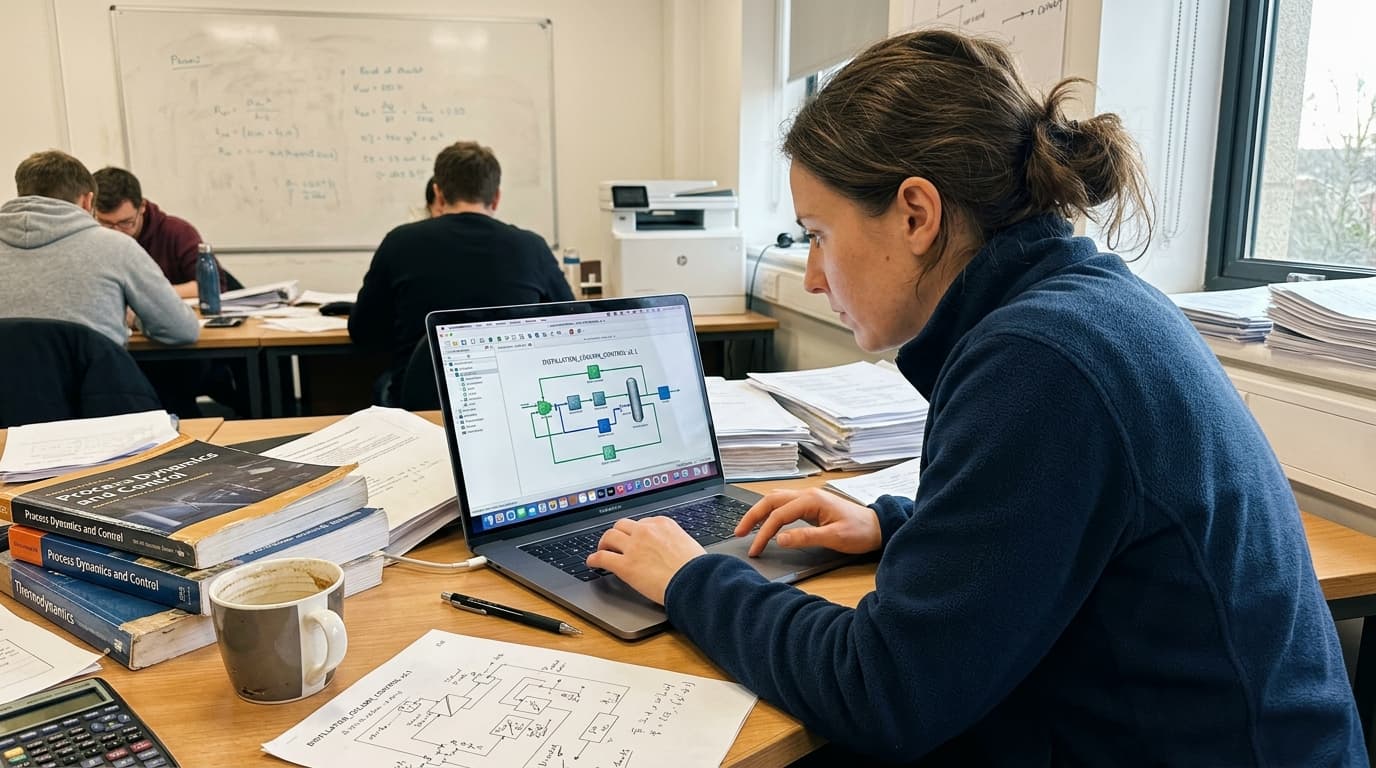
Map every energy and material flow in your process with detailed heat and mass balance calculations — the foundation for any optimisation or design project.
The Four Pillars of Kraft Mill Utility Steam Optimisation
Maximising steam savings in a kraft mill requires addressing four primary areas of utility consumption. An HMB model evaluates each area's distinct dynamics while accounting for mill-wide thermal interactions.
Steam Header Reconciliation and Multi-Pressure Management
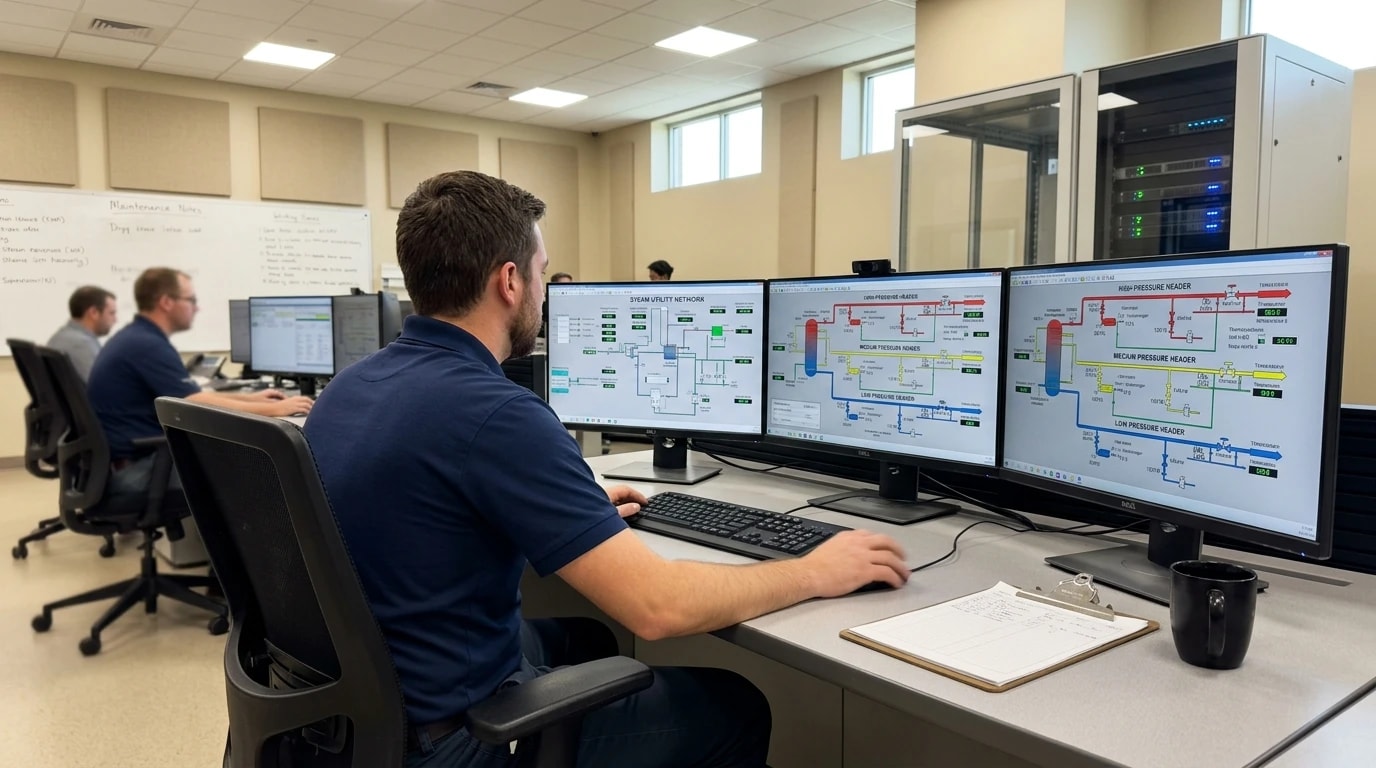
Steam networks in pulp mills are typically divided into three pressure levels: high-pressure (HP) at 60 to 80 bar, medium-pressure (MP) at 10 to 15 bar, and low-pressure (LP) at 3 to 5 bar. Balance anomalies occur when process steam demands do not align with turbine power extraction profiles. This misalignment leads to steam throttling through pressure-reducing desuperheating valves or venting of excess low-pressure steam.
HMB modelling reconciles steam headers by analysing real-time flows, pressures, and temperatures to recommend optimal turbine extraction setpoints that align with actual heat exchanger demands. This allows operators to minimise the bypass of steam turbines and optimise power generation.
Black Liquor Recovery Cycle Optimisation
The chemical recovery block is the primary thermal hub of a kraft pulp mill. Multi-effect evaporator trains concentrate weak black liquor from approximately 15% dry solids up to 70% to 80% dry solids for combustion in the recovery boiler—a highly steam-intensive process.
An HMB simulation models these evaporator effects to identify optimal vapour flows and condensate flashing. It also evaluates how increasing the black liquor solids concentration affects the recovery boiler's thermal efficiency. Raising the dry solids concentration from 65% to 80% increases the combustion temperature, improving water evaporation and yielding higher high-pressure steam production per tonne of black liquor solids burned.
Cylinder-by-Cylinder Dryer Section Analysis
The drying section of a paperboard or pulp drying machine is typically the largest consumer of low-pressure steam in the mill. Process engineers evaluate this section on a cylinder-by-cylinder basis, modelling heat transfer through the cast-iron shells, the condensate film, and the paper web.
An HMB simulation reconciles steam supply, condensate evacuation, and air-venting dynamics. This identifies the correct differential pressures across the cascade groups to optimise condensate removal, enabling operators to prevent water-logging and increase the heat transfer coefficient. The model also analyses the hood ventilation system, recommending optimal exhaust air volumes and temperatures to recover waste heat for preheating building air and machine pocket ventilation systems.
Water Circuit Closure and Filtrate Loops
Closing water circuits is critical for reducing thermal energy use. When mills dump warm filtrate or white water to wastewater treatment, they lose the thermal energy used to heat that water. An HMB model tracks water and fibre loops to identify opportunities for recycling warm filtrates in the washing and bleaching stages. This reduces both fresh water demand and the steam required to preheat it, lowering the thermal load and temperature of the final effluent.
The 11-Step Engineering Methodology for Mill-Wide Integration
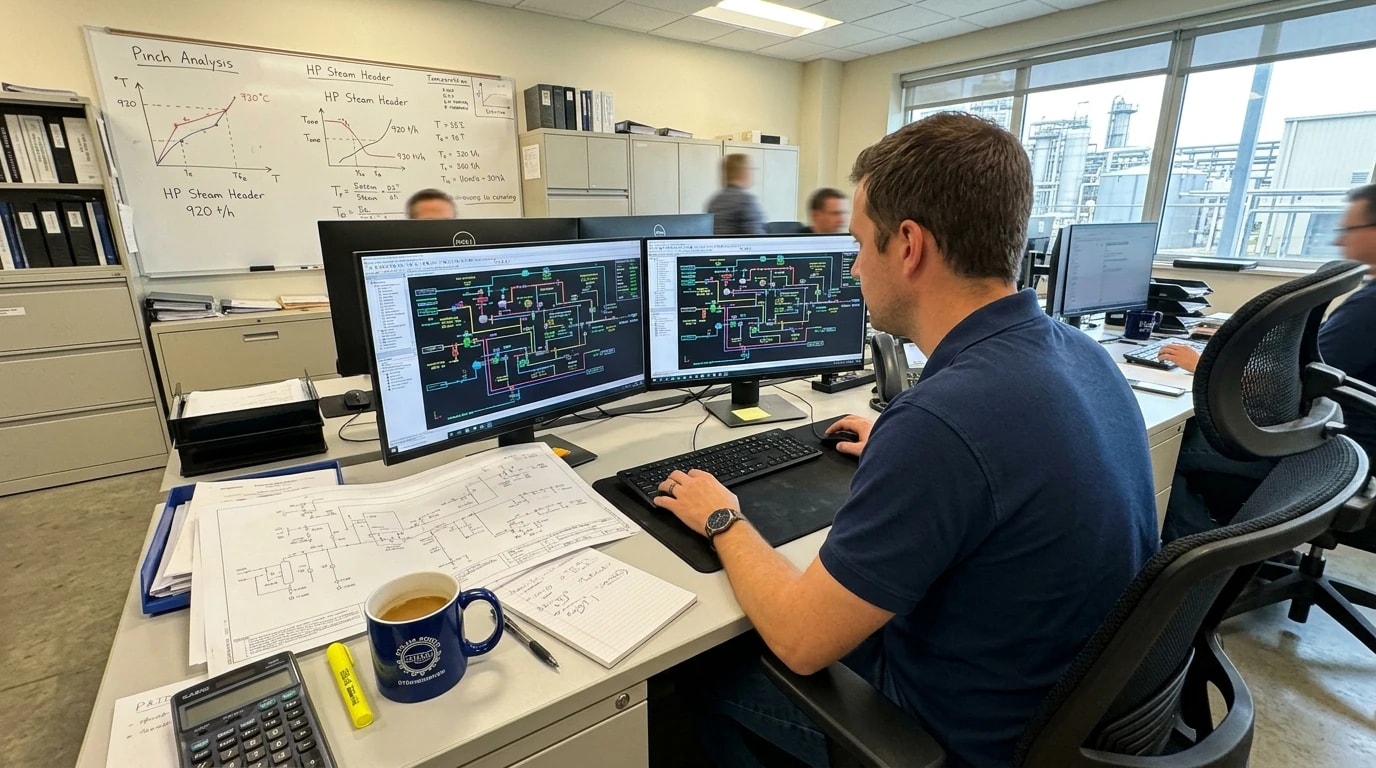
To translate simulation outputs into reliable field changes, EnerTherm Engineering applies a proprietary 11-step engineering methodology. This framework ensures process modifications are backed by validated thermodynamic and physical plant data.
The process begins with thorough data acquisition, reconciling piping and instrumentation diagrams (P&IDs) with historical distributed control system (DCS) data and laboratory measurements. Because integrated pulp mills undergo seasonal load changes, the model is validated against both summer and winter operations. This ensures that heat exchanger networks are sized to handle seasonal fluctuations in river water feed temperatures.
By using this structured, simulation-backed approach, mills can identify clear avenues for energy reduction. Across diverse industrial operations, implementing this systematic methodology yields:
- An average mill-wide energy reduction of 14%.
- An attractive, rapid capital payback period averaging 1.8 years.
- A validated annual carbon dioxide reduction of 2,800 tonnes per site, supporting compliance with regulatory frameworks like the Industrial Emissions Directive (IED) 2010/75/EU or the Medium Combustion Plant Directive (MCPD) Directive (EU) 2015/2193.
Quantifying the Value: Capital Expenditure Planning and Return on Investment
Implementing major thermal retrofits in an active kraft mill requires significant capital and operational planning. Mill technical directors and utility managers must justify capital requests using clear, data-driven return on investment (ROI) analyses.
Relying on simple, localised energy saving estimates can lead to unintended consequences:
- Under-sizing a heat exchanger, which restricts plant production during peak winter demand.
- Over-sizing a thermal network, which increases capital costs, resulting in sub-optimal velocity profiles and accelerated tube fouling.
- Creating downstream imbalances, where saving low-pressure steam in one area results in excess steam venting at the power boiler.
A mill-wide HMB model addresses these risks by providing a single source of truth: a detailed Process Flow Diagram (PFD) containing embedded stream tables and validated Sankey energy flow maps. When a mill evaluates a retrofit project—such as upgrading to an eight-effect falling-film evaporator train or installing a new condensate recovery system—the changes are simulated across the entire facility. This allows engineers to verify that steam savings in the process areas translate directly to reduced fuel consumption in the utility boiler, rather than simply shifting the energy surplus elsewhere.
This simulation-backed approach provides plant managers with the precise engineering data needed to secure executive approval. By identifying exact thermodynamic targets and quantifying operational benefits, mills can confidently implement energy efficiency projects that deliver predictable steam savings, reliable emission reductions, and rapid payback periods.
This article reflects the independent analysis and editorial opinion of EnerTherm Engineering. Product names, trademarks, and brands mentioned belong to their respective owners. EnerTherm Engineering is not affiliated with, endorsed by, or a licensee of any third-party software or product mentioned unless explicitly stated.

Managing Director — EnerTherm Engineering
Dr. François Pierrel is Managing Director of EnerTherm Engineering with over two decades of expertise in thermal design, heat transfer, and industrial energy optimisation. He holds a PhD in Heat Transfer from Cranfield University and a Post-Doctorate from Heriot-Watt University.
