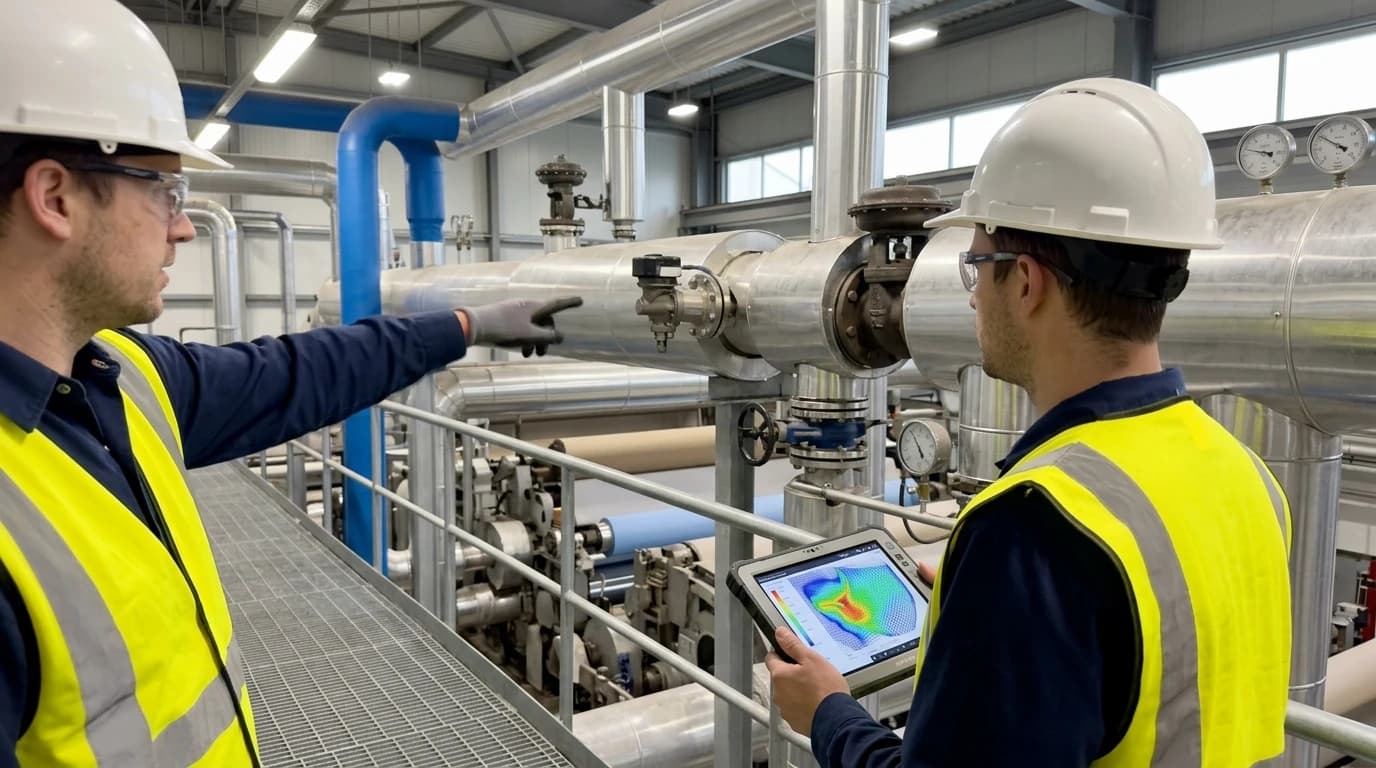
Thermal Design Simulation for Paper Mills Stops Steam Loss
Thermodynamic modelling predicts dryer steam usage to within 10% of measured values.
Thermal design simulation for paper mills is a thermodynamic modelling process that uses mathematical algorithms to simulate heat and mass transfer within the drying section, steam distribution system, and heat recovery networks. This engineering methodology constructs a virtual replica of the mill's thermal systems, allowing engineering teams to analyse existing machinery under varying operating conditions without disrupting continuous paper production.
Mathematical Accuracy in Thermodynamic Modelling
Thermodynamic modelling software replicates physical mill conditions with high accuracy, predicting sheet moisture profiles to within 2% and specific steam consumption to within 10% of physical measurements. This level of accuracy allows technical directors to evaluate how changes in paper grades, basis weight, or machine speed affect overall steam demand.
De-risking Thermal Upgrades
Capital expenditure in pulp and paper facilities carries substantial operational risk; incorrect heat recovery equipment or miscalculated steam pipe sizes can cause sheet breaks, wet-end moisture variation, and extended downtime. Thermodynamic modelling de-risks these projects by verifying the performance of proposed modifications before manufacturing or installation begins. Mill managers can evaluate multiple design scenarios to select the option that offers the highest return on investment and the lowest operational risk.
The Impact of Dryer Hood Air Balance on Steam Consumption
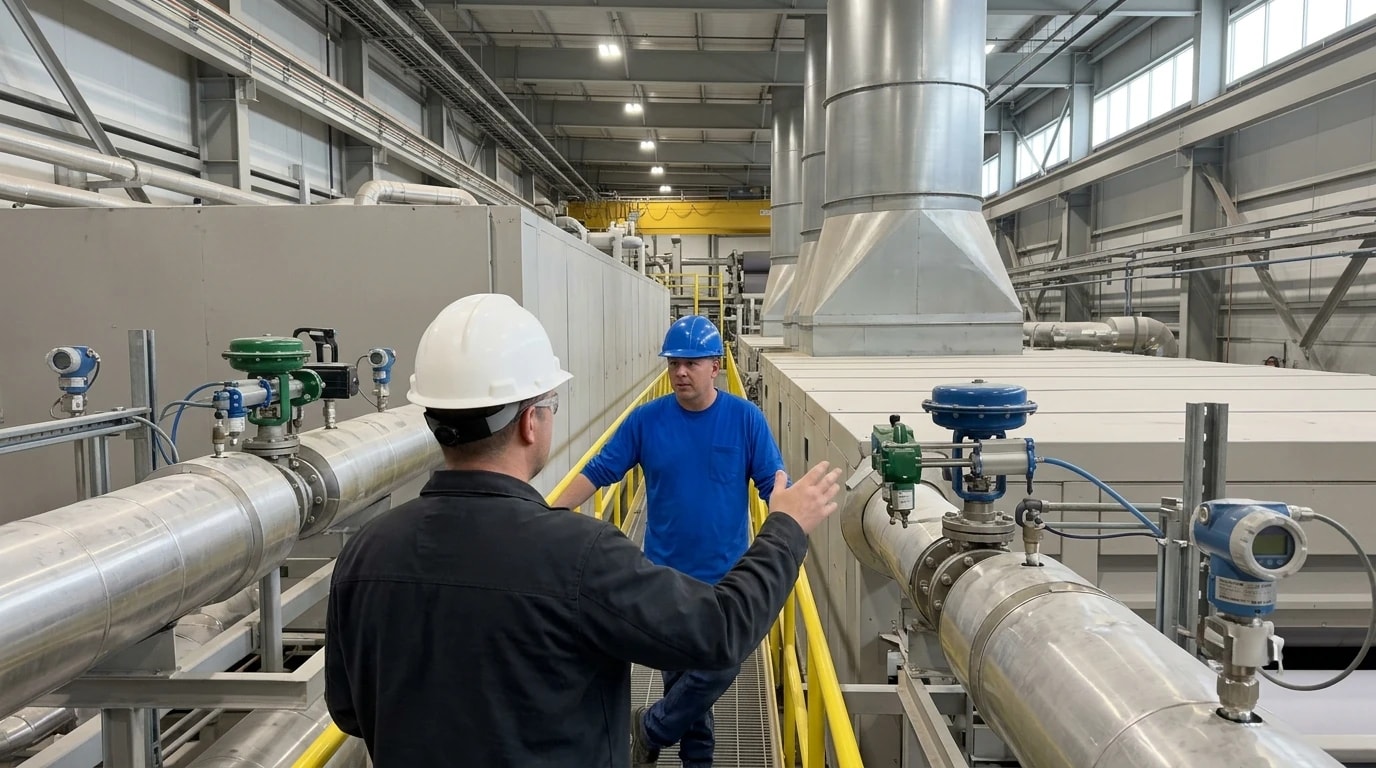
The dryer hood extracts evaporated moisture from the moving web, making it the single largest energy consumer in a paper mill. To operate efficiently, it must maintain a precise balance between incoming fresh supply air and exiting hot, humid exhaust air.
The Physics of Air-to-Air Balance
An unbalanced air ratio draws cold leakage air from the basement or surrounding machine hall into the hood. Steam-heated cylinders must then transfer additional heat to warm this infiltration air to the exhaust temperature, increasing the specific steam consumption (SSC):
SSC=m˙wm˙swhere:
- SSC is the specific steam consumption (kilograms of steam required to evaporate one kilogram of water from the paper sheet).
- m˙s is the mass flow rate of steam supplied to the dryer section in kilograms per hour (kg/h).
- m˙w is the mass flow rate of water evaporated from the sheet in kilograms per hour (kg/h).
Optimal operations require keeping SSC as low as possible. When supply air volume falls below the design threshold, infiltration occurs. This infiltration directly increases the steam mass flow rate (m˙s) required to maintain the drying rate, driving up operational costs.
Case Study: Air Balance Deviations at DS Smith Croatia PM3
At the DS Smith Croatia PM3 board machine, engineers documented an unbalanced supply air volume of just 39% of the exhaust air volume, far below the optimal 75% design ratio.
Heating this cold infiltration air from approximately 30°C to the 81.4°C exhaust temperature created a 1,350 kW thermal load. This deviation required an additional 0.59 kg/s of fresh steam, translating to 2.1 tonnes per hour. Under peak winter conditions, this loss rises to 3.8 to 3.9 tonnes per hour, representing up to a 15% increase in annual steam demand solely due to hood air imbalance.
| Operational Metric | Design Value | Documented Inefficient Value | Impact of Deviation |
|---|---|---|---|
| Supply-to-Exhaust Air Ratio | 75% | 39% | High infiltration of cold basement air |
| Additional Thermal Load | 0 kW | 1,350 kW | Increased cylinder heat transfer demand |
| Additional Fresh Steam Flow | 0 kg/s | 0.59 kg/s | Extra 2.1 tonnes of steam per hour |
| Peak Steam Increase | 0 t/h | 3.8 to 3.9 t/h | Up to 15% increase in annual steam demand |
Identify where your plant is losing energy and quantify the savings potential — our audits map every heat source, sink, and waste stream in your facility.
Integrating Waste Heat Recovery and High-Temperature Heat Pumps
To capture waste energy, modern paper mills integrate advanced heat recovery systems (HRS) with high-temperature heat pumps. Thermodynamic modelling matches the heat pump's thermal capacity to the waste heat source, ensuring high overall system efficiency.
Upgrading Waste Heat with Large-Scale Heat Pumps
Dryer exhaust air typically leaves the hood at 70°C to 85°C. While air-to-air exchangers preheat incoming fresh air, much of the thermal energy remains unused because of its low temperature. Large-scale high-temperature heat pumps can recover and upgrade over 50% of this waste heat.
For example, a 12 MW thermal Large Heat Pump (LHP) can generate up to 20 tonnes per hour of process steam at temperatures up to 170°C. This setup has been successfully deployed at speciality paper manufacturing sites, such as the Delfort Group's mill, where the LHP is coupled with Mechanical Vapour Recompression (MVR) to generate superheated steam at 3.4 bar(a). This installation avoids approximately 19,000 tonnes of Scope 1 CO₂ emissions annually.
Thermodynamic Integration of LHP and MVR Systems
To achieve high delivery temperatures, thermal design teams combine a closed-loop heat pump cycle with an open-loop MVR system. The closed loop absorbs heat from paper mill wastewater or exhaust air, evaporating a low global warming potential (GWP) working fluid. An electrically driven centrifugal compressor raises this fluid's temperature and pressure before condensing it to generate low-pressure steam.
The open-loop MVR system then compresses this steam to the exact pressure and temperature required by the dryer cylinders. This integrated configuration can achieve a Coefficient of Performance (COP) 10% above guaranteed values, ensuring superb electrical efficiency.
The Seven-Step Thermal Audit Methodology
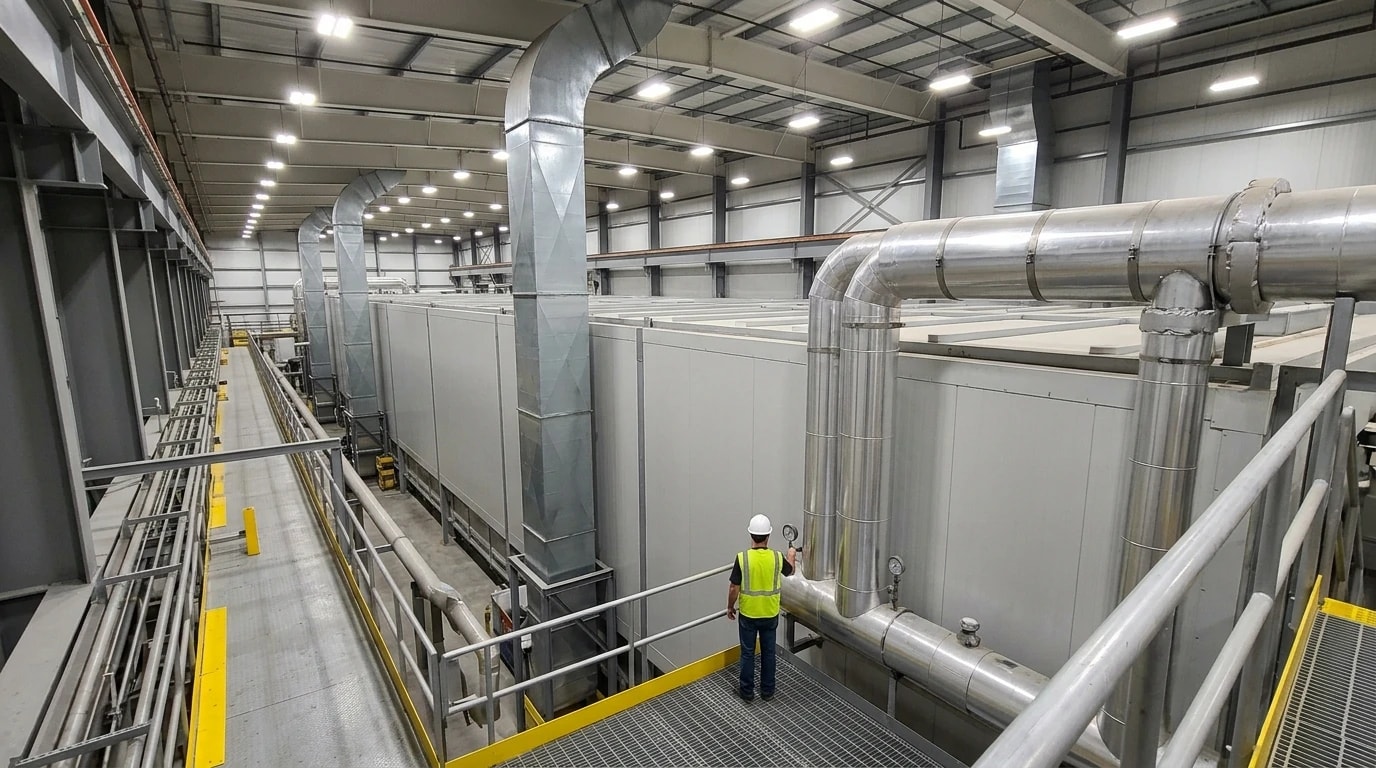
Process optimisation in pulp and paper manufacturing requires a structured engineering approach. Thermal design simulation is integrated into a comprehensive seven-step thermal audit methodology designed to minimise production downtime while identifying major energy-saving opportunities.
Step 1 to Step 4: From Consultation to Data Capture
- Step 1: Initial Consultation and Scope Definition. Engineering teams collaborate with mill technical directors to establish baseline utility consumption, review historical production data, and identify specific operational bottlenecks.
- Step 2: On-Site Assessment. Process specialists inspect the steam and condensate loops, the dryer hood ventilation, and major mechanical operations during normal mill operation to prevent production delays.
- Step 3: Portable Instrumentation Logging. Engineers install specialised non-invasive testing tools to capture real-time performance data. This includes power analysers to measure motor efficiency, ultrasonic leak detectors to pinpoint steam trap failures, and thermal imaging cameras to map radiation losses from dryer ends.
- Step 4: Thermodynamic Modelling. Using the captured flow, pressure, and temperature data, engineers build a detailed thermal design simulation of the paper mill dryer section and associated steam networks.
Step 5 to Step 7: Simulation, Prioritisation, and Verification
- Step 5: Energy Conservation Study. Designers run multiple simulation scenarios to identify efficiency losses, such as steam pressure control errors, excessive condensate accumulation, and exhaust air heat losses.
- Step 6: Financial Case Development. Technical analysts compile a board-ready report containing prioritised energy conservation measures. Each proposal includes precise capital expenditure estimates, energy cost reductions, and carbon savings, targeting an average 14% reduction in energy costs and a 2.0-year payback period.
- Step 7: IPMVP Performance Verification. To guarantee investment security, engineers establish a measurement and verification plan aligned with the International Performance Measurement and Verification Protocol (IPMVP).

Identify where your plant is losing energy and quantify the savings potential — our audits map every heat source, sink, and waste stream in your facility.
Operational Challenges: Steam, Condensate, and Mechanical Systems
Drying paper is not solely a thermal process; it depends heavily on fluid dynamics, pressure control, and auxiliary mechanical systems. Thermal design simulations must address these interconnected areas to prevent mechanical failures and optimise performance.
Steam Pressure Control and Condensate Management
Steam condenses inside the rotating drying cylinders as it transfers heat to the wet paper web. If this condensate is not evacuated quickly, it forms an insulating layer along the cylinder's inner wall. This reduces the heat transfer coefficient and forces the mill to use higher steam pressures, increasing the risk of thermal stress and joint leaks.
Thermodynamic modelling simulates the behaviour of siphon tubes and cascade steam systems. By optimising the differential pressure between steam groups, the steam system maintains high steam velocities through the siphons, ensuring thin condensate films and maximum thermal conductivity.
Mechanical Processing Optimisation
Substantial energy savings are also available by optimising mechanical wet-end machinery, where water is removed before entering the dryer section. Modernisations in this area significantly reduce electricity consumption. For example, replacing older liquid ring pumps with variable-speed turbo blowers can cut vacuum system power consumption by around 60%. At the Kemsley mill PM3, installing three high-speed turbo blowers achieved electrical energy savings of 10,000 MWh per year, proving that mechanical dewatering efficiency directly reduces the downstream thermal load.
Verifying Efficiency Gains Under IPMVP Option B
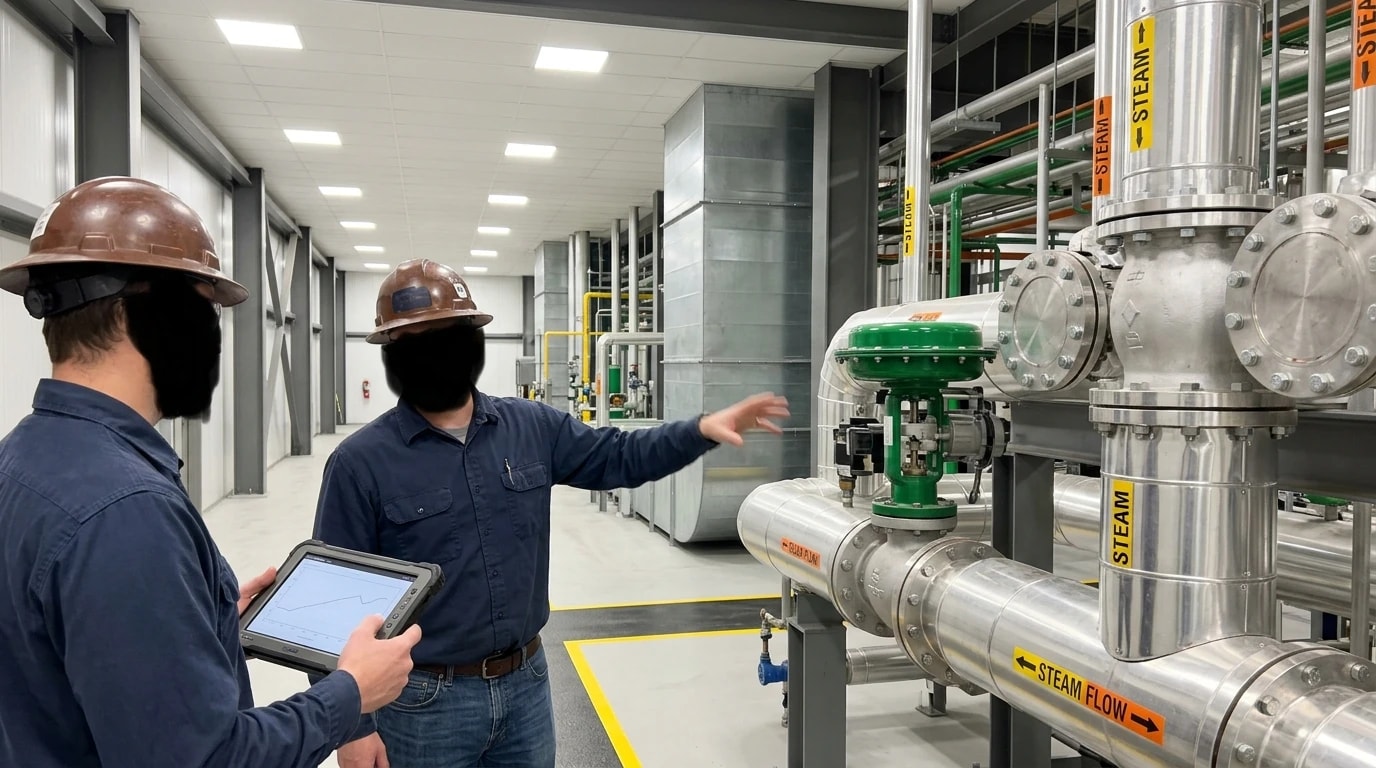
To secure financing for large thermal upgrades, technical directors must provide undeniable proof of savings. Adhering to the International Performance Measurement and Verification Protocol (IPMVP) provides the standardised framework required by financial institutions and regulatory bodies.
Establishing the Energy Baseline
Before implementing any changes, engineers define a mathematical model of the baseline energy consumption, relating energy use to independent variables such as:
- Outdoor ambient temperature and humidity.
- Paper grade and basis weight.
- Machine speed and production volume (tonnes per hour).
Retrofit Isolation via IPMVP Option B
To verify localised upgrades—such as a new heat recovery system or high-temperature heat pump—engineers select IPMVP Option B (Retrofit Isolation: All Parameter Measurement). This option is highly suited for paper mills because it isolates the specific subsystem's energy use from the rest of the facility.
Under Option B, all parameters affecting energy consumption are measured continuously. For a steam-producing heat pump installation, this includes continuous measurement of:
- Electrical power input to compressor motors.
- Mass flow rate and temperature of the waste heat fluid entering the evaporator.
- Mass flow rate, temperature, and pressure of the process steam generated by the condenser and MVR system.
By measuring these parameters directly, the engineering team can calculate the actual hourly thermal energy delivered and electricity consumed. This continuous data capture ensures accurate, verified savings, independent of other changes in the mill's wider electricity or steam networks.
Aligning Energy Audits with Regulatory Compliance
Reducing steam loss and optimising paper mill drying sections does more than lower utility bills; it is a critical component of regulatory compliance and corporate carbon reduction roadmaps.
EU ETS Obligations and Financial Exposure
Paper mills operating within the European Union and the United Kingdom are subject to the EU Emissions Trading System (EU ETS) and the UK ETS. Under these cap-and-trade schemes, facilities must surrender carbon allowances for every tonne of CO₂ emitted. As allowance prices fluctuate, the financial risk of relying on inefficient fossil-fuel steam boilers increases.
Implementing thermal design simulations and subsequent heat recovery projects directly reduces Scope 1 CO₂ emissions. By replacing natural gas boilers with electrified steam generation technologies, mills can significantly lower their annual compliance costs.
Carbon Reduction Roadmaps and Capital Allocation
Most major paper and packaging groups have committed to net-zero carbon roadmaps, targeting substantial emission reductions by 2030 and full carbon neutrality by 2050. To achieve these goals, corporate boards require reliable, de-risked engineering proposals.
Thermal design simulations provide the rigorous scientific backing needed to justify large capital expenditures. By demonstrating a precise understanding of the paper mill's water-energy nexus and showing a clear, verified return on investment through IPMVP, technical directors can successfully secure the funding required to transform their manufacturing operations.
This article reflects the independent analysis and editorial opinion of EnerTherm Engineering. Product names, trademarks, and brands mentioned belong to their respective owners. EnerTherm Engineering is not affiliated with, endorsed by, or a licensee of any third-party software or product mentioned unless explicitly stated.

Managing Director — EnerTherm Engineering
Dr. François Pierrel is Managing Director of EnerTherm Engineering with over two decades of expertise in thermal design, heat transfer, and industrial energy optimisation. He holds a PhD in Heat Transfer from Cranfield University and a Post-Doctorate from Heriot-Watt University.
