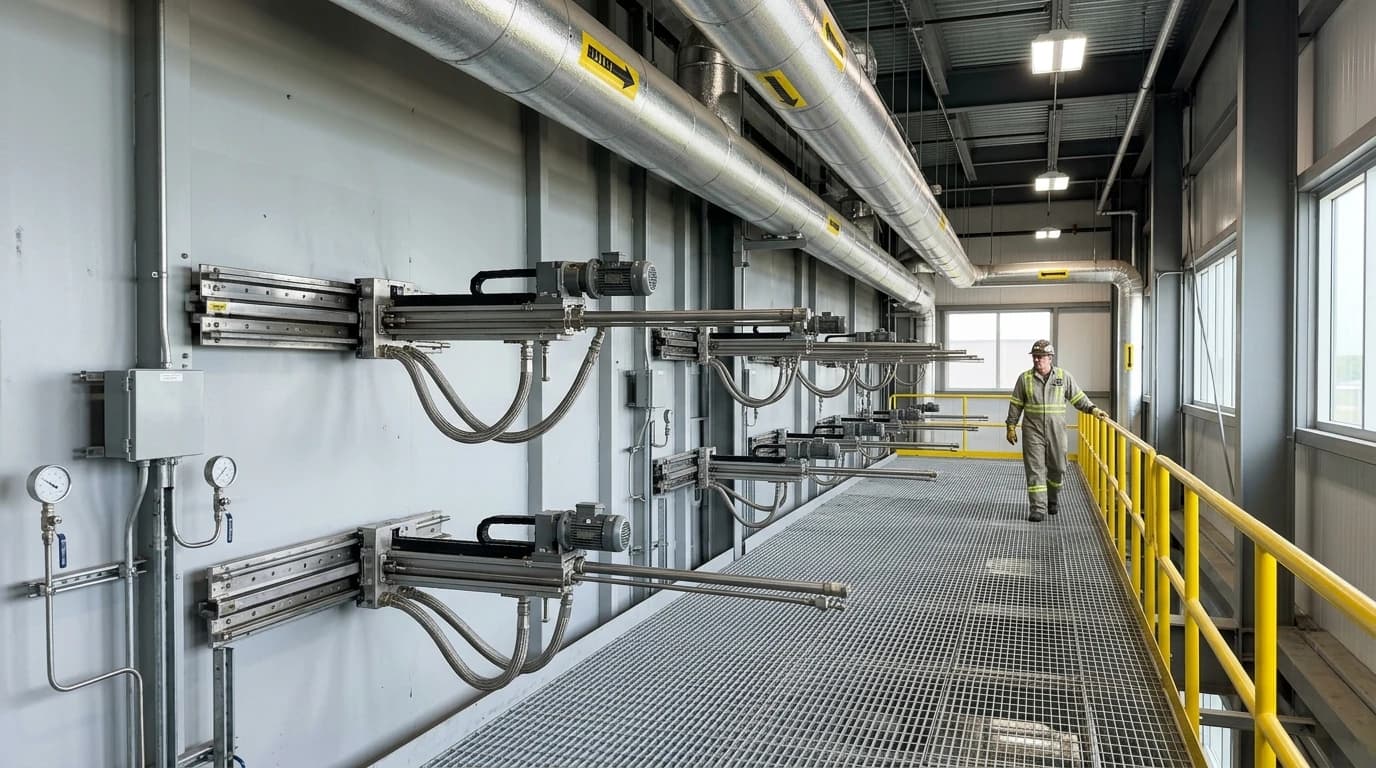
Reclaiming 4-6% of Black Liquor Recovery Boiler Steam
An 11-step process to optimise combustion and boost steam yields by up to 2.7%.
Black liquor recovery boiler optimisation is an industrial process engineering methodology that maximises thermal efficiency, chemical recovery rates, and high-pressure steam generation in a kraft pulp mill by aligning combustion aerodynamics, liquor dry solids concentration, and dynamic sootblowing schedules. The recovery island represents the thermodynamic heart of the kraft pulping process, acting simultaneously as a chemical recovery reactor and a high-capacity utility boiler. Within this system, organic lignin and hemicellulose dissolved in black liquor are combusted to produce high-pressure superheated steam. This steam drives turbogenerators to supply green electricity to the grid and the mill, while the lower-pressure exhaust steam satisfies the thermal demands of the digesters and evaporator trains. Minimising internal parasitic steam consumption is the primary lever for pulp mill utilities directors looking to debottleneck steam production and maximise self-generated power export.

Map every energy and material flow in your process with detailed heat and mass balance calculations — the foundation for any optimisation or design project.
Slashing the Parasitic Load: Smart Sootblowing Optimisation
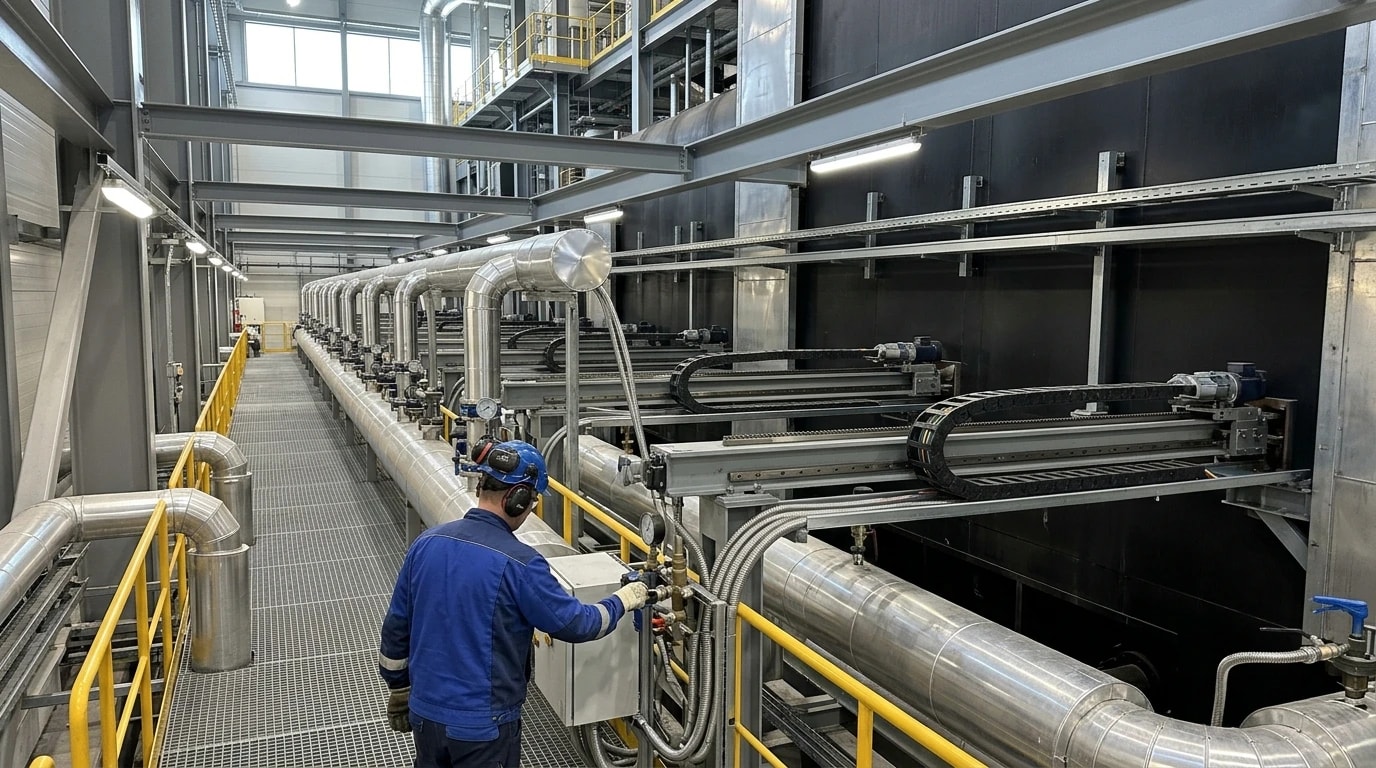
Unoptimised, conventional time-based sootblowing in kraft recovery boilers consumes an average of 5% to 10% of the total steam generated by the boiler. Recovery boilers operate under severe fouling conditions due to the high inorganic salt content of black liquor, which forms sticky deposits on the heat-transfer tubes in the superheater, boiler bank, and economiser sections. To prevent these deposits from bridging and plugging the gas passages, high-pressure steam is extracted directly from the superheater outlet and blown through retractable sootblowers to clean the tube surfaces.
The Pitfalls of Time-Based Cleaning Cycles
Traditional sootblowing operates on rigid, sequential time-based cycles. In this configuration, sootblowers are activated in a predetermined order at fixed time intervals, regardless of whether a specific boiler section actually requires cleaning. This mechanical approach introduces two distinct thermal inefficiencies. First, clean sections are subjected to unnecessary steam blowing, which directly wastes high-pressure steam and accelerates tube erosion. Second, heavily fouled sections do not receive targeted cleaning when localised ash deposition spikes, causing local heat-transfer rates to deteriorate and flue gas temperatures to rise.
Implementing Dynamic, Heat-Transfer-Driven Sootblowing
Dynamic sootblowing optimisation replaces sequential timers with real-time, heat-transfer-driven control algorithms. By calculating localised heat-transfer coefficients (U-values) for individual heat-exchanger banks, the process control system monitors the precise rate of deposit accumulation. These calculations rely on real-time process inputs:
- Flue gas temperature drop across each bank.
- Steam temperature rise and mass flow within the tubes.
- Local gas velocity and pressure drop.
When the calculated thermal resistance of a specific tube bank exceeds a predefined threshold, the system triggers only the sootblowers associated with that exact zone. Clean zones are bypassed, which dramatically reduces unnecessary steam consumption.
Reclaiming 4% to 6% of High-Pressure Steam
Shifting from time-based sequencing to dynamic, heat-transfer-driven sootblowing optimisation reduces this parasitic steam load by 4% to 6% overall. For a large-scale recovery boiler producing 300,000 kg/hr of high-pressure steam, this optimisation reclaims up to 18,000 kg/hr of steam. Rather than being consumed as sootblowing utility steam, this high-pressure, superheated steam is directed through the steam turbines. This redirection increases green power generation, boosting the mill's energy self-sufficiency and creating a highly valuable electricity export stream.
Elevating Dry Solids Content: The Evaporation-Combustion Link
Increasing heavy black liquor dry solids content from 72% to maximised limits near 80% to 82% via Model Predictive Control (MPC) of the evaporation plant reduces combustion variability in the recovery boiler. Water entering the recovery boiler in the black liquor fuel acts as a direct thermodynamic penalty. A significant portion of the lower-furnace thermal energy must be consumed to evaporate this moisture, which lowers the adiabatic flame temperature and reduces the heat available for steam generation.
Thermodynamic Benefits of High-Solids Firing
By elevating the dry solids concentration, the moisture load entering the furnace is minimised. This water reduction results in several critical thermodynamic improvements:
- Higher Flame Temperature: The adiabatic flame temperature in the lower furnace increases, which accelerates the combustion kinetics of the organic components.
- Improved Smelt Bed Reduction: The elevated hearth temperature promotes the endothermic reduction reaction of sodium sulphate to sodium sulphide, raising the overall chemical reduction efficiency of the recovery cycle.
- Decreased Flue Gas Volume: Reducing the water vapour volume in the flue gas lowers the gas velocity, extending the residence time of gases within the heat-transfer zones and minimising stack heat losses.
Reducing Excess Oxygen and Improving Flue Gas Heat Recovery
Combustion stabilisation is a direct benefit of reducing liquor dry solids variability. When the evaporation plant is unoptimised, fluctuating solids concentration forces boiler operators to run with high excess-air margins to prevent localised blackouts and incomplete combustion. By implementing Model Predictive Control (MPC) on the multi-effect evaporator train, dry solids variation is reduced by 50%.
This stable fuel quality allows process engineers to safely reduce the boiler's residual excess oxygen from 3.0% to 2.3%. Reducing excess air minimises the thermal energy wasted in heating inert atmospheric nitrogen. Combined with the higher solids firing, this combustion optimisation increases high-pressure steam generation by approximately 2.7% overall.
Reclaiming Steam via Evaporator Optimisation
Maximising dry solids must be achieved without increasing the thermal load of the evaporation plant itself. Advanced process controllers optimise the steam economy of the multi-effect evaporators by dynamically distributing pressure drops across the effects and controlling product liquor recirculation. This ensures that the heavy black liquor is concentrated to 80% to 82% dry solids using the minimum possible quantity of low-pressure steam, ensuring a net positive steam gain across the entire recovery loop.

Map every energy and material flow in your process with detailed heat and mass balance calculations — the foundation for any optimisation or design project.
Process Simulation and CFD Modelling of the Droplet Lifecycle
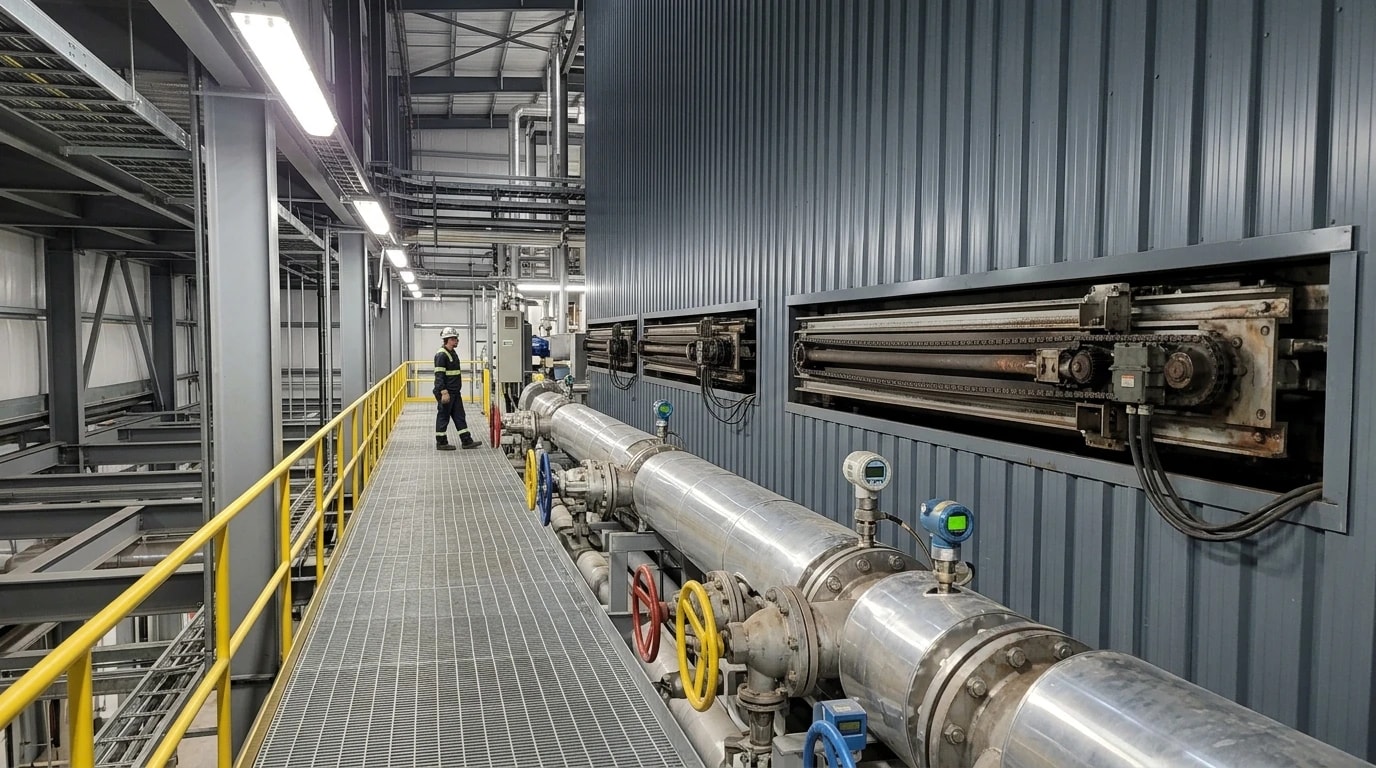
Recovery boiler performance and droplet combustion stages (drying, devolatilisation, char burning, and smelt oxidation) are modelled using advanced process simulators like Aspen Plus and CFD tools. Inside a recovery boiler, black liquor is sprayed through splashplate or nozzle systems that produce droplets ranging from 0.5 mm to 5.0 mm in diameter. The trajectory, combustion behaviour, and physical placement of these droplets are critical to preventing tube plugging and maximising heat release.
The Four Stages of Black Liquor Droplets
- Drying: As the droplet enters the hot furnace gas stream, its temperature rises to the boiling point of the water. Water is rapidly evaporated, and the droplet undergoes mild swelling.
- Devolatilisation (Pyrolysis): Once dry, the droplet temperature rises above 200°C to 300°C, triggering thermal cracking of the organic compounds. Volatile gases are released and burn in an envelope flame, causing the droplet to swell enormously (up to 10 times its original volume).
- Char Burning: The remaining carbonaceous residue, which contains inorganic salts, undergoes gasification and oxidation. This is the slowest combustion stage and is controlled by the diffusion of oxygen, carbon dioxide, and water vapour to the char surface.
- Smelt Oxidation/Reduction: The inorganic salts (primarily sodium carbonate, sodium sulphate, and sodium sulphide) melt, coalesce, and flow down to the smelt bed at the furnace floor.
Thermodynamic Modelling with Quasi-Chemical Codes
Accurate thermodynamic simulation of species-level mass balances and non-ideal alkali salt mixtures (using quasi-chemical condensed-phase equilibrium codes) is critical to predicting the boiler’s exact temperature profiles, sulphur scavenging, and fouling behaviour. Ideal Gibbs free energy minimisation models cannot accurately simulate recovery boiler chemistry because the inorganic ash deposits exist as non-ideal, multi-component ionic liquid solutions.
By applying constrained Gibbs free-energy minimisation techniques combined with quasi-chemical codes, process simulators model the non-ideal thermodynamic behaviour of the Na-K-S-Cl-C-O-H-N system. This thermodynamic precision is vital for predicting:
- The First Melting Temperature (T15): The temperature at which 15% of the ash deposit melts, making it highly sticky and prone to adhering to superheater tubes.
- Chlorine and Potassium Enrichment: The volatile enrichment of chlorine and potassium in the upper furnace, which significantly depresses T15 and accelerates plugging.
- Sulphur Scavenging Reactions: The capture of sulphur dioxide by sodium carbonate fumes to form solid sodium sulphate, preventing gaseous sulphur emissions.
Integrating Aspen Plus, HYSYS, and DWSIM
Process design teams utilise advanced chemical process simulation software to construct mill-wide mass and energy balances. Flowsheet simulators like Aspen Plus, HYSYS, and DWSIM are employed to model the chemical recovery loop. These platforms allow engineers to input the complex elemental composition of black liquor (carbon, hydrogen, oxygen, nitrogen, sulphur, sodium, potassium, and chlorine) and simulate the multi-zone combustion behaviour of the recovery boiler. The resulting simulation serves as the "single source of truth" mass and energy balance, which is validated against seasonal and upset mill conditions.
The 11-Step Methodology for Mill-Wide Heat and Mass Balance Optimisation
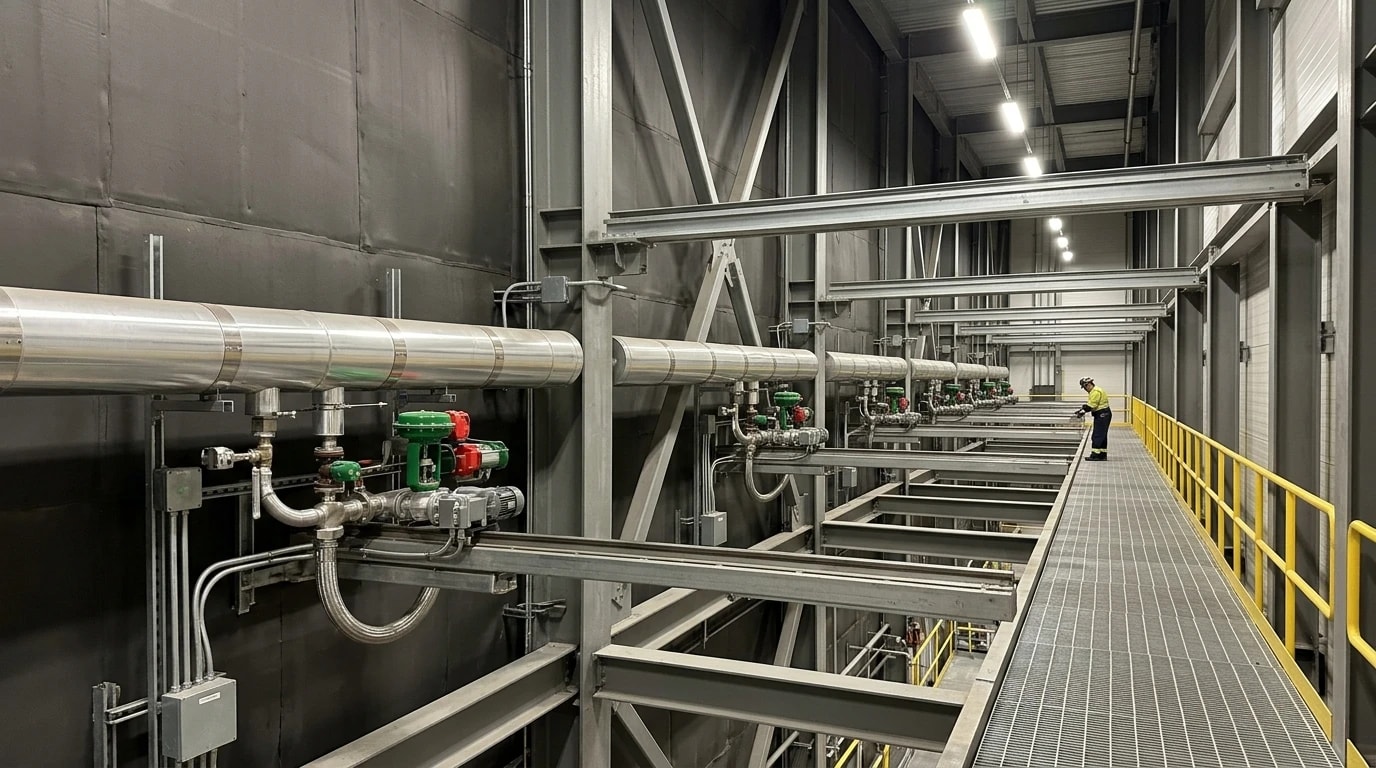
Systematic boiler and evaporator optimisation relies on a structured, mill-wide heat and mass balance (HMB) framework to reconcile disparate measurements and identify thermal pinch points. Kraft pulp mills are highly integrated systems where changes in the recovery island directly propagate to the pulping, bleaching, and utility islands. Addressing these interactions requires a rigorous engineering approach.
EnerTherm's 11-step engineering methodology standardises this optimisation process, leading from initial raw data acquisition to a fully validated implementation roadmap:
- Site Data Collection: Gathering historical process logs, piping and instrumentation diagrams (P&IDs), and operational records.
- Boundary Definition: Defining the exact thermodynamic boundaries of the recovery boiler, evaporator, and turbine systems.
- Sensor Validation & Reconciliation: Analysing process instruments to identify and filter out faulty data, drifts, or measurement offsets.
- Baseline Flowsheet Setup: Constructing the process flowsheet within a simulation platform (such as Aspen Plus, HYSYS, or DWSIM).
- Thermodynamic Property Package Selection: Specifying non-ideal property packages and quasi-chemical codes to handle the black liquor and smelt chemistry.
- Species-Level Mass Balancing: Reconciling the elemental balances (C, H, O, N, S, Na, K, Cl) across all liquid, gas, and solid phases.
- Energy & Enthalpy Balancing: Calculating the heat duties, latent heat exchange, and combustion enthalpies across the boiler and evaporator sections.
- Model Validation: Validating the simulation predictions against actual seasonal mill conditions and known boiler upset states.
- Single-Source-of-Truth PFD Generation: Outputting a verified Process Flow Diagram (PFD) containing embedded stream tables and Sankey energy maps.
- Pinch Analysis & Opportunity Identification: Evaluating heat-exchanger network pinch points to identify areas where thermal energy can be recovered.
- Implementation Roadmap Formulation: Developing a prioritised capital investment plan with validated payback periods and emission metrics.
Establishing the Single-Source-of-Truth Process Flow Diagram
The output of this 11-step methodology is a comprehensive, validated Process Flow Diagram (PFD). This document serves as the single source of truth for the mill's engineering and operations teams. By embedding stream tables directly into the PFD, process engineers can instantly trace the flow rate, temperature, pressure, enthalpy, and chemical composition of any stream. This transparency prevents the common mistake of optimising one unit operation (such as the evaporator plant) at the direct expense of another (such as the recovery boiler feed system).
Multi-Pressure Steam Header Reconciliation
Reclaiming steam from the recovery boiler requires careful reconciliation of the mill’s multi-pressure steam headers. A typical kraft mill operates high-pressure (HP) headers at 60 to 80 bar, medium-pressure (MP) headers at 10 to 12 bar, and low-pressure (LP) headers at 3 to 4 bar. Reclaiming 4% to 6% of the high-pressure steam from sootblowing increases the mass flow of HP steam available to the steam turbines. By using process simulation, utility directors can model the entire steam network to ensure that this reclaimed HP steam is expanded through the backpressure or extraction turbines to generate maximum megawattage. This prevents the reclaimed steam from being depressurised through letdown stations, which destroys its thermodynamic exergy.
| Stream Parameter | Unoptimised Baseline | Optimised Recovery Loop | Net Thermodynamic Benefit |
|---|---|---|---|
| Black Liquor Dry Solids | 72.0% | 81.5% | +9.5% solids firing (lower water load) |
| Residual Excess Oxygen | 3.0% | 2.3% | Reduced flue gas heat loss |
| Sootblower Steam Load | 8.0% of total steam | 3.5% of total steam | Reclaimed 4.5% HP steam for turbines |
| Flue Gas Stack Temp. | 175°C | 145°C | 30°C reduction in thermal loss |
| Gross Power Export | Baseline | +2.2 MW | Increased green electricity revenue |
Targeted Financial and Carbon Payback Metrics
Applying this structured heat and mass balance methodology consistently yields significant performance and sustainability gains for industrial operations. Across multiple pulp and paper installations, this approach has achieved:
- An average mill-wide energy reduction of 14%.
- An attractive, low-risk project payback period of 1.8 years.
- A verified annual carbon footprint reduction of 2,800 tonnes of CO₂ equivalent.
Regulatory Compliance and Best Practice for Kraft Recovery Loops
European pulp and paper manufacturers must operate within the strict environmental boundaries set by the Industrial Emissions Directive (IED) 2010/75/EU and the associated Best Available Techniques (BAT) Reference Document (BREF) for the Production of Pulp, Paper and Board. These regulations mandate stringent daily emission limits for sulphur dioxide (SO₂), nitrogen oxides (NOₓ), and particulate matter (dust) from recovery boilers.
Aligning with EU Best Available Techniques (BAT)
Optimising the recovery boiler combustion cycle directly supports compliance with IED 2010/75/EU standards. The BREF document defines BAT-associated emission levels (BAT-AELs) that are difficult to achieve without precise combustion control. For example, maintaining low NOₓ emissions requires staging the combustion air into primary, secondary, and tertiary air streams.
Reducing excess oxygen from 3.0% to 2.3% via Model Predictive Control lowers the local concentration of oxygen in the combustion zones. This oxygen reduction suppresses the oxidation of fuel-bound nitrogen and limits the formation of thermal NOₓ.
Emissions Control and Sulphur Scavenging Optimisation
The efficiency of the sulphur scavenging cycle is heavily dependent on maintaining a hot, stable lower furnace environment, which is made possible by high dry solids firing. When black liquor dry solids are maximised to 80% to 82%, the high lower-furnace temperature vaporises sodium compounds.
This gaseous sodium reacts with volatile sulphur gases (such as hydrogen sulphide and methyl mercaptans) in the upper furnace to form solid sodium sulphate (Na2SO4). This in-situ chemical reaction captures sulphur within the boiler's particulate phase, dramatically reducing gaseous SO₂ emissions and allowing the mill to easily meet the strict environmental limits mandated by IED 2010/75/EU.
Furthermore, optimising the sootblowing cycle using dynamic, heat-transfer-driven control maintains steady flue gas temperatures. This temperature control prevents the electrostatic precipitators (ESPs) from experiencing thermal shocks or gas velocity surges, which improves particulate capture efficiency and ensures that dust emissions remain safely below the regulatory thresholds.
This article reflects the independent analysis and editorial opinion of EnerTherm Engineering. Product names, trademarks, and brands mentioned belong to their respective owners. EnerTherm Engineering is not affiliated with, endorsed by, or a licensee of any third-party software or product mentioned unless explicitly stated.

Managing Director — EnerTherm Engineering
Dr. François Pierrel is Managing Director of EnerTherm Engineering with over two decades of expertise in thermal design, heat transfer, and industrial energy optimisation. He holds a PhD in Heat Transfer from Cranfield University and a Post-Doctorate from Heriot-Watt University.
