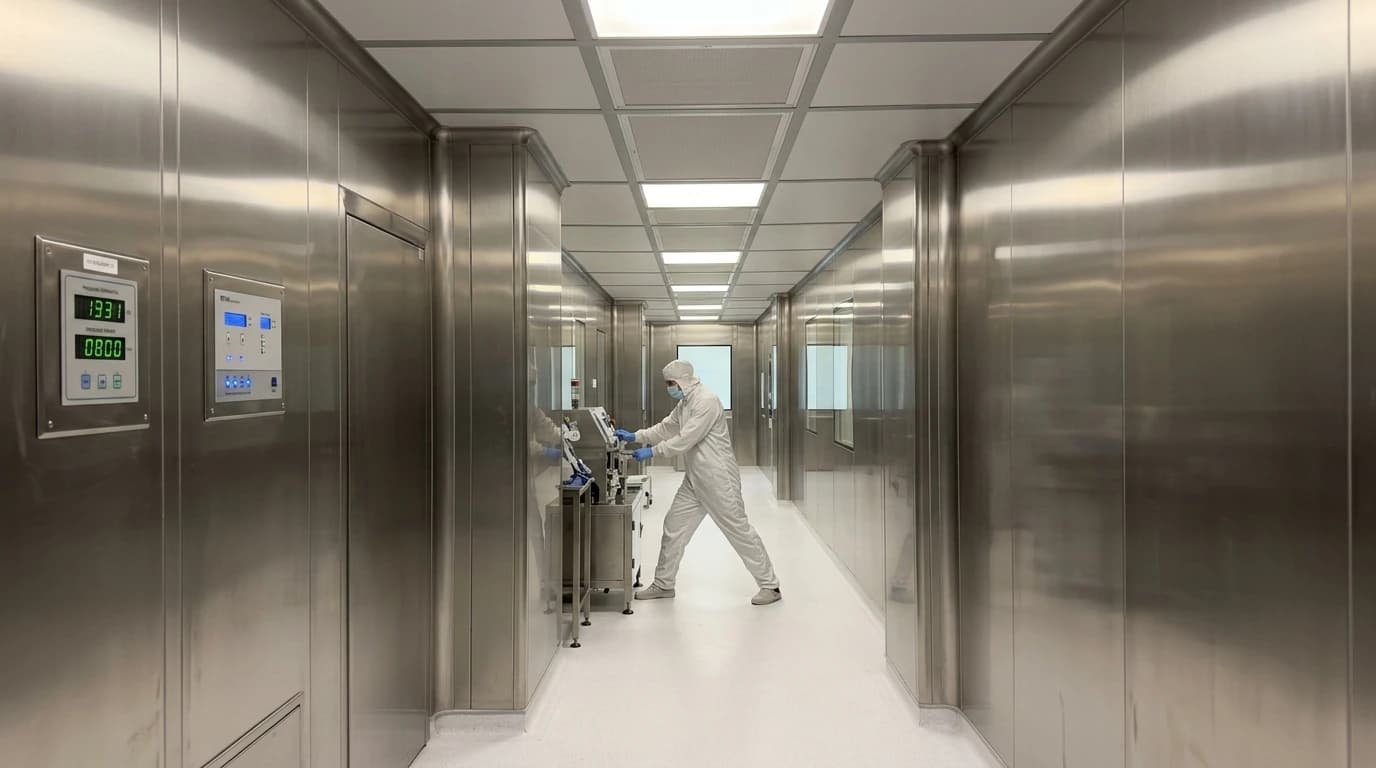
Optimising Cleanroom Airflow Under EU GMP Annex 1 Compliance
How dynamic monitoring can reduce HVAC energy consumption by 25% while maintaining strict ISO 14644-3 particulate control standards.
Pharmaceutical cleanroom airflow optimization is the process of dynamically adjusting heating, ventilation, and air conditioning systems to minimise energy consumption while strictly maintaining the validated environmental parameters required for sterile manufacturing. Facilities engineers operate under intense pressure to reconcile aggressive decarbonisation targets with uncompromising regulatory standards. Sterile drug manufacturing demands exacting contamination control. Balancing these two opposing forces requires continuous, high-fidelity utility monitoring and precise mechanical execution across the entire production lifecycle.
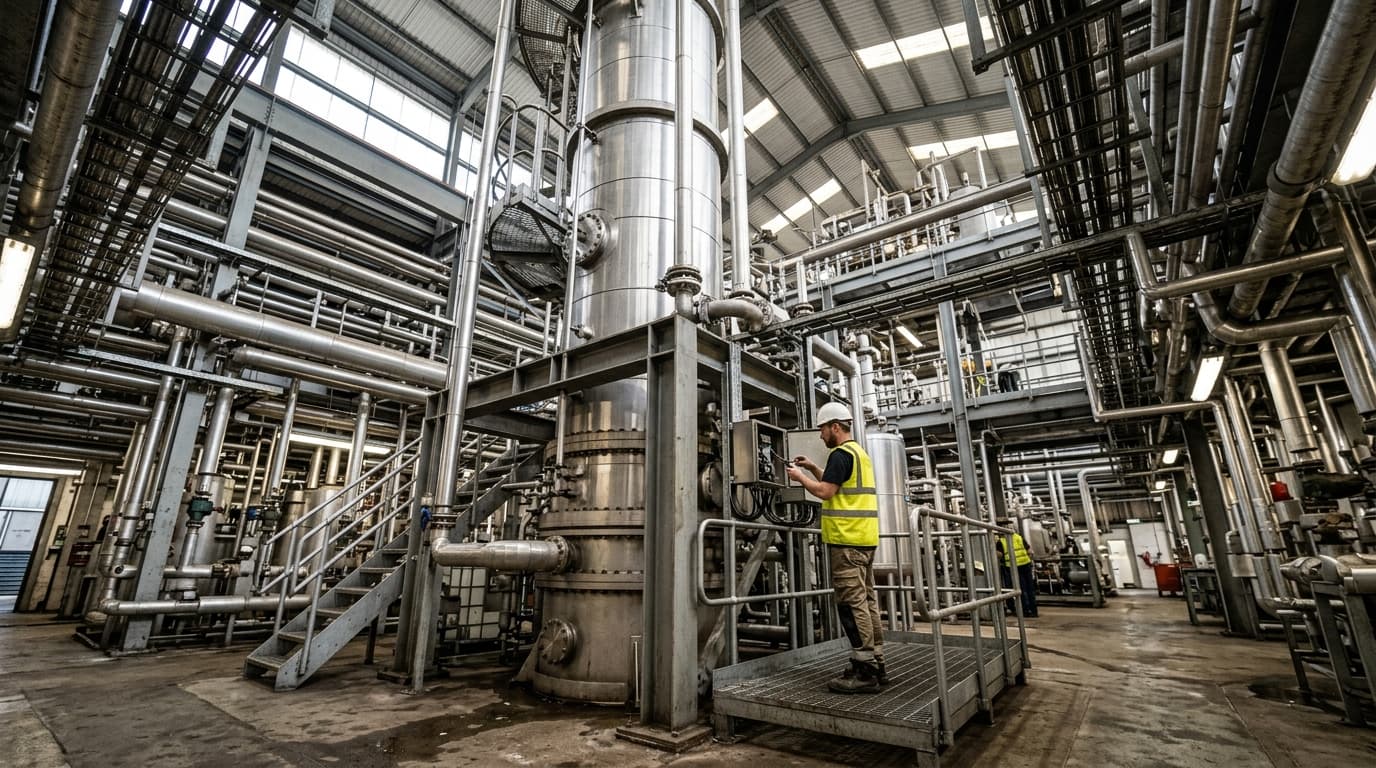
Omni Vision delivers turnkey utility metering, CO2 tracking, and AI-powered production KPI intelligence — giving you real-time dashboards and actionable insights across your entire facility.
The Regulatory Framework: EU GMP Annex 1 and Airflow Management
The Shift to Continuous Environmental Monitoring
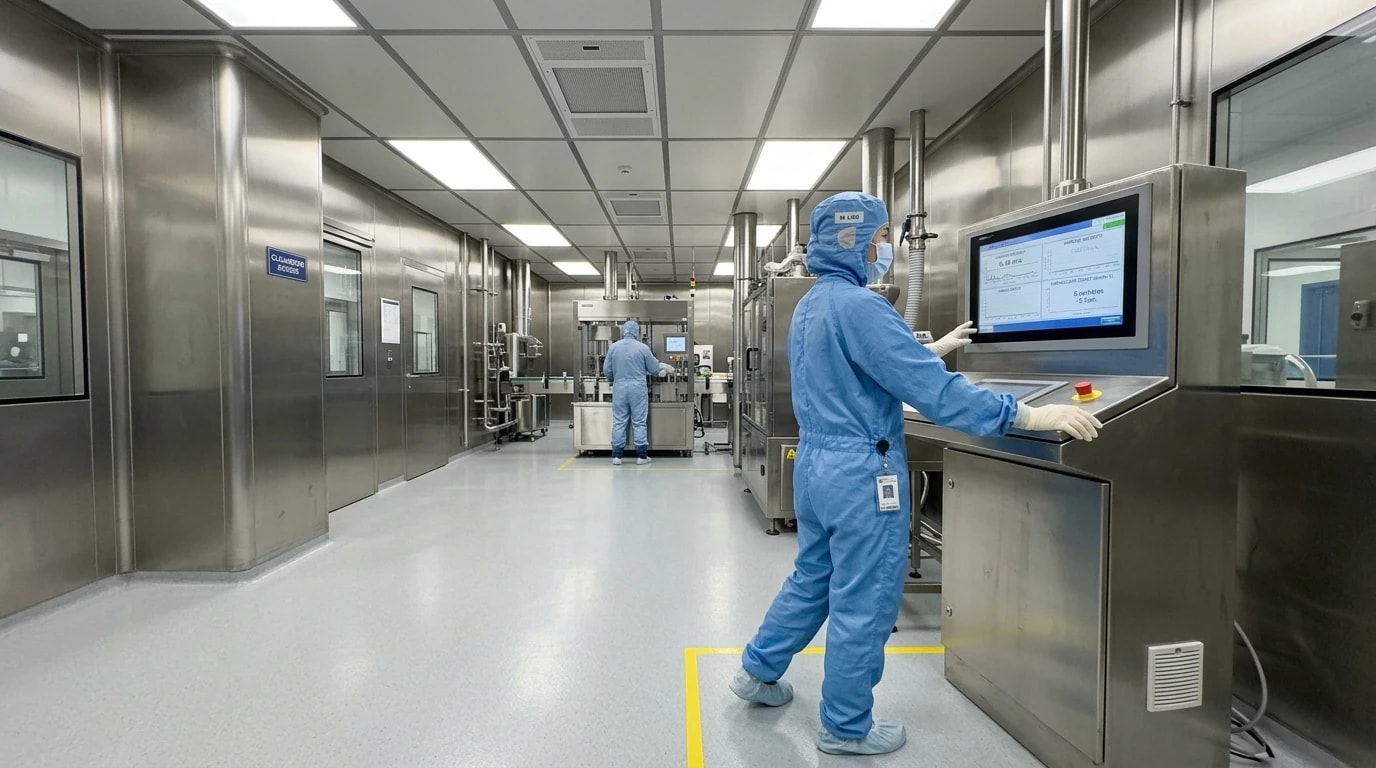
The European Commission's August 2023 revision of EU GMP Annex 1 instituted mandatory changes to sterile manufacturing guidelines. Regulators abandoned periodic classification testing as sufficient standalone evidence of environmental control. Cleanroom managers must now present continuous monitoring data proving that classified zones maintain their particulate limits during dynamic production operations. Facilities operating Grade A and Grade B zones must deploy sensor networks capable of logging differential pressure, viable particulates, and non-viable particulates without interruption. Any reduction in fan speeds or air change rates to save power must immediately correlate with real-time sensor output to prevent process drift.
Risk-Based Contamination Control Strategy (CCS)
Under the revised standard, site operators must execute a documented Contamination Control Strategy (CCS). The CCS functions as a facility-wide blueprint that identifies and mitigates microbial, particulate, and chemical contamination sources. It fundamentally embeds the principles of Quality Risk Management (ICH Q9) into routine operational decisions. Process engineers often use the CCS framework to justify energy efficiency measures. Adjustments to unidirectional airflow volumes or differential pressure setpoints are strictly evaluated against their potential to introduce contamination risks. Documented risk assessments are legally required to demonstrate that modified parameters continue to provide critical zone protection without compromising product sterility.
Balancing Sterility with Energy Intensity
Thermodynamics and compliance frequently clash in pharmaceutical environments. Cleanroom specifications inherently drive massive continuous power demand. The drive to lower utility overheads faces structural barriers constructed by rigid validation procedures. Energy reduction strategies cannot breach the established operating window. If dynamic airflow management lowers the differential pressure beyond the ±5% acceptable relative humidity tolerance or breaches temperature bands, the entire batch faces regulatory rejection. Facility managers must engineer precise control loops that modulate supply air safely above the minimum compliant threshold.
Analysing Cleanroom Energy Consumption and HVAC Loads
High Energy Demands in Grade A, B, and C Environments
Industrial HVAC infrastructure routinely accounts for 60% to 80% of total cleanroom energy consumption in pharmaceutical plants. Maintaining classification standards requires continuous, high-volume air cycling. Cleanrooms operate at 20 to 60 air changes per hour (ACH) to clear suspended particulates. Grade A environments demand continuous unidirectional airflow to deliver first-air protection over open products, whereas Grade B, C, and D backgrounds rely on turbulent flow dilution. This air movement, combined with tight temperature (±2°C) controls, creates severe energy intensity. Traditional systems run at fixed maximum capacities, artificially inflating electricity and chilled water consumption. Dehumidification sequences often sub-cool incoming air to strip latent moisture before activating energy-intensive reheat coils to achieve exact supply temperatures.
Identifying Energy Waste Through Granular Utility Metering
Process optimisation demands granular utility metering across electricity, natural gas, steam, chilled water, and compressed air circuits. Batch-level tracking isolates the exact energy cost per manufacturing run. Installing precision sub-meters allows production teams to map consumption directly against specific air handling units (AHUs) or cleanroom zones. When fan coil units run at full speed during non-production periods, high-frequency meters flag the basal waste. This transition from monthly aggregate billing to high-resolution interval data exposes the hidden inefficiencies within validated environments. Identifying baseload anomalies allows engineering managers to pinpoint exactly where variable frequency drives can trim excess fan speed during facility setbacks without dropping below the minimum validated pressurisation limit.
The Role of Net Zero Pharmaceutical Manufacturing Targets
The UK's transition toward net-zero industrial manufacturing places pressure on the sector. Facilities directors are targeted with achieving a sub-12-month return on investment on decarbonisation projects. Pharmaceutical cleanroom airflow optimization serves as a primary lever for carbon reduction in sterile plants. By deploying automated variable controls and adjusting setpoints during facility setbacks, operators align aggressive sustainability roadmaps with strict contamination control limits.
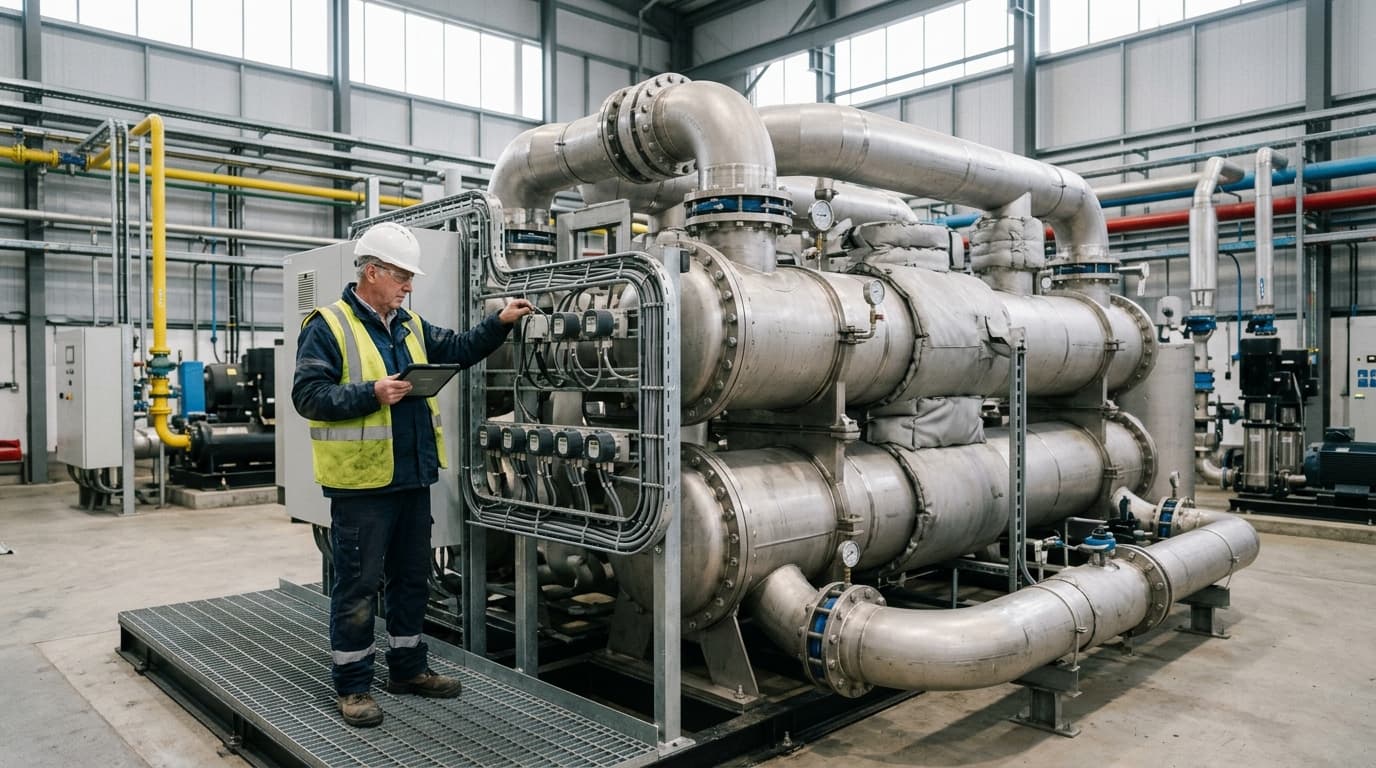
Track energy consumption, emissions, and process parameters with seamless PLC/SCADA integration via Modbus, OPC-UA, and MQTT protocols.
Meeting BS EN ISO 14644-3:2019 Testing Requirements
Cleanroom Recovery Time Performance Metrics
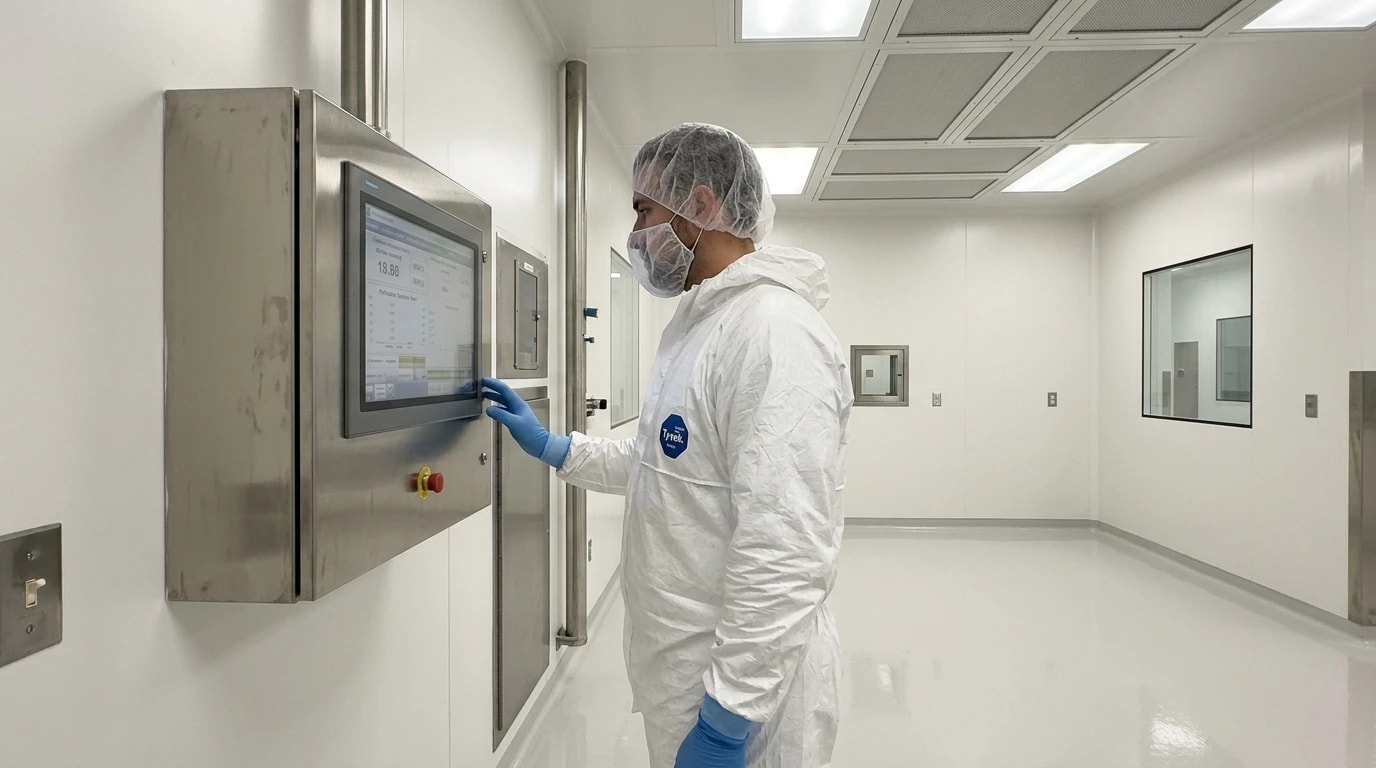
Validating any adjustment to air volumes requires adherence to BS EN ISO 14644-3:2019. This standard dictates the test methods for cleanrooms and associated controlled environments. The recovery performance test calculates the precise time required for a cleanroom to return to its specified "at rest" particulate baseline after being artificially challenged with an aerosol contaminant. If airflow optimization lowers the baseline air change rate, the facility must physically prove that the new airflow volume still clears a contamination event within the validated recovery window.
Particulate Control and Air Change Rates
During recovery testing, technicians introduce a high-concentration aerosol challenge, typically Shell Ondina El oil smoke or an equivalent synthetic compound. The particulate concentration must return to the target baseline rapidly. Industry professionals widely regard dynamic airflow balancing as technically demanding in these scenarios. Modulating fan speeds must not disrupt the cascading pressure regimes that separate Grade B zones from Grade C airlocks. System architects configure setpoints to guarantee positive outward pressurisation, keeping unclassified particulates from penetrating aseptic boundaries.
Read-Only Data Protocols for Audit-Ready Compliance
Extracting performance data from cleanroom logic controllers carries regulatory risk. Writing control commands directly into a validated HVAC system triggers mandatory re-validation under Good Manufacturing Practice protocols. To maintain the validated state, facility engineers extract sensor data using strictly one-way, read-only protocols. By funnelling metrics through secure gateways, the primary control logic remains untouched. This data mirroring strategy provides the continuous audit trails necessary for regulatory inspections while eliminating the costly overhead of re-qualifying the environmental control system.
Implementing the Omni Vision Energy Intelligence Platform
Secure Hardware Integration and Zero-Write Protocols
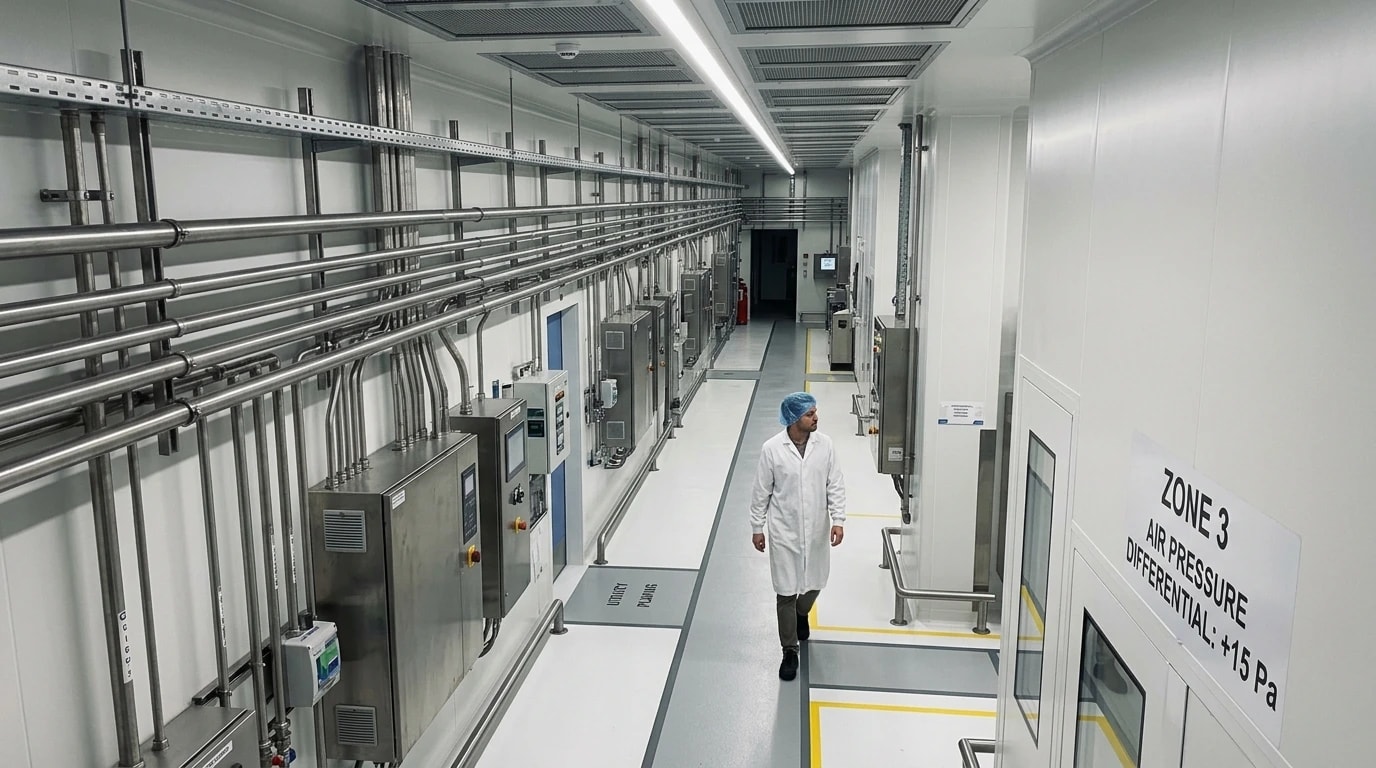
The Omni Vision Energy Intelligence Platform is EnerTherm Engineering’s turnkey solution for industrial energy management in regulated environments. The platform merges precision hardware with non-invasive PLC connectivity to map cleanroom utility consumption accurately. Maintaining strict safety standards dictates that validated HVAC systems remain completely isolated from external command interference. The platform employs stringent zero-write architecture, relying entirely on read-only industrial protocols. This one-way, encrypted data flow guarantees plant operational integrity, satisfying the rigorous demands of pharmaceutical quality assurance teams.
Harnessing Modbus, OPC-UA, and BACnet Connectivity
Connecting legacy infrastructure with modern analytics requires flexible communication standards. Facilities teams typically select Modbus and BACnet to pull existing building management variables, while OPC-UA handles complex machinery data arrays. The Omni Vision platform interfaces with these protocols without interrupting the local control loops. Granular parameters—including variable frequency drive output, primary chilled water valve positions, filter pressure drops, and room-level differential pressure—transmit securely to the cloud. This continuous stream of time-stamped metrics populates central dashboards, transitioning operations from manual spreadsheet tracking to automated, high-definition intelligence.
Real-Time Anomaly Detection via EPSA’s AI Engine
At the centre of the platform sits EPSA, a cloud-based AI analytics engine designed to identify utility waste autonomously. EPSA processes the read-only telemetry from the cleanroom network to establish baseline consumption models. If a chilled water valve sticks open or a supply fan overcompensates due to a clogged pre-filter, the engine detects the deviation instantly. This real-time anomaly detection triggers predictive maintenance alerts before minor inefficiencies escalate into critical compliance deviations. Omni Vision is engineered for an 8-16 week turnkey deployment, translating complex thermodynamic data into actionable maintenance schedules.
Securing ISO 50001 Compliance and CO₂ Emissions Reporting
Aligning with Energy Management Standards
ISO 50001 defines the international framework for continuous improvement in energy performance. In pharmaceutical manufacturing, aligning energy savings with established safety guidelines is essential to protect product viability. The Omni Vision platform provides the structured data foundation required for ISO 50001 certification. By quantifying exactly how much power, gas, and steam the HVAC network draws, the platform enables targeted efficiency upgrades. Energy teams utilise this audit-ready intelligence to verify that optimisation initiatives yield genuine consumption drops rather than shifting loads to different facility zones.
Transitioning to Scope 1 and 2 Emissions Tracking
Global sustainability directives mandate stringent environmental reporting. Facilities must accurately account for direct combustion emissions (Scope 1) and purchased electricity emissions (Scope 2). Omni Vision automates this complex reporting structure. The platform seamlessly converts raw kilowatt-hours and cubic metres of natural gas into accurate carbon equivalents. This automated accounting supports compliance with frameworks including SECR, ESOS, EU ETS, and ISO 14064. Generating verified CO₂ output figures eliminates administrative burdens and ensures transparency for corporate sustainability audits.
Turning Energy per Batch into an Actionable KPI
Mapping energy consumption directly against production output transforms how financial controllers view operational efficiency. Traditional accounting treats electricity and gas as fixed facility overheads. Omni Vision converts these utilities into variable costs directly tied to specific product lines. EPSA’s AI engine correlates utility metering with batch processing schedules, calculating exact energy per batch and cost per tonne metrics. Pharmaceutical cleanroom airflow optimization directly improves these KPIs by eliminating non-value-added utility burn during equipment changeovers, cleaning cycles, or idle periods. By deploying the Omni Vision platform, pharmaceutical operators typically target 15-25% energy cost reductions. This targeted efficiency ensures high-energy sterile facilities remain financially competitive while systematically executing global net-zero commitments.
This article reflects the independent analysis and editorial opinion of EnerTherm Engineering. Product names, trademarks, and brands mentioned belong to their respective owners. EnerTherm Engineering is not affiliated with, endorsed by, or a licensee of any third-party software or product mentioned unless explicitly stated.

Managing Director — EnerTherm Engineering
Dr. François Pierrel is Managing Director of EnerTherm Engineering with over two decades of expertise in thermal design, heat transfer, and industrial energy optimisation. He holds a PhD in Heat Transfer from Cranfield University and a Post-Doctorate from Heriot-Watt University.
