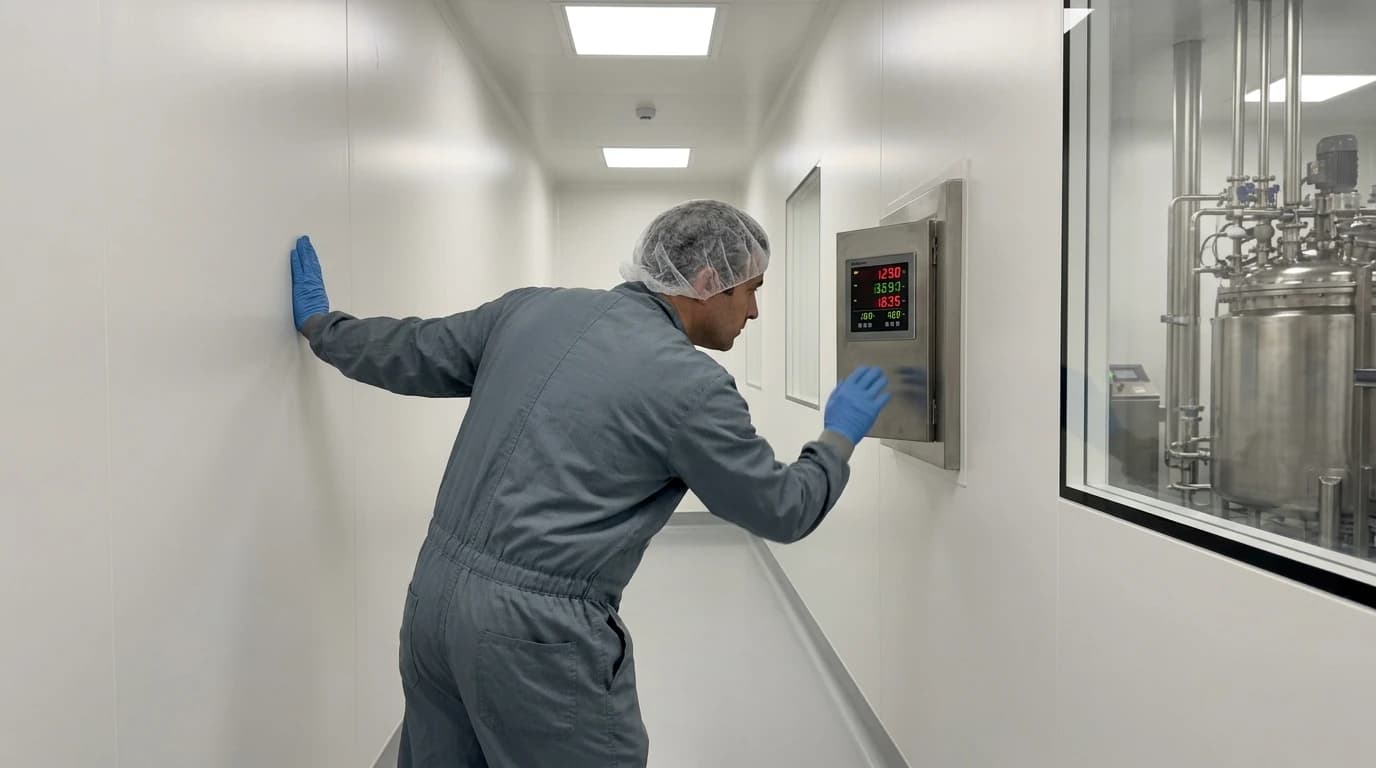
Omni Vision Cuts Pharma Cleanroom Energy by 15-25%
Read-only OPC-UA connectivity secures GMP compliance without system re-validation.
An energy intelligence platform for pharmaceutical manufacturing is a GMP-compliant monitoring and analytics system. It continuously tracks, analyses, and identifies opportunities to optimise utility consumption across high-dependency facility infrastructure without compromising validation status or cleanroom integrity.
Developed by EnerTherm Engineering in collaboration with EPSA's cloud-based AI analytics engine, the Omni Vision Energy Intelligence Platform integrates precision hardware with secure, non-invasive connectivity. Shifting manufacturing facilities from manual spreadsheets to centralised intelligence allows site teams to capture granular utility data. This turnkey architecture monitors six core utility streams in real time: electricity, gas, water, steam, compressed air, and oil. It consistently enables 15 to 25 per cent energy cost reductions, delivering a return on investment (ROI) of under 12 months.
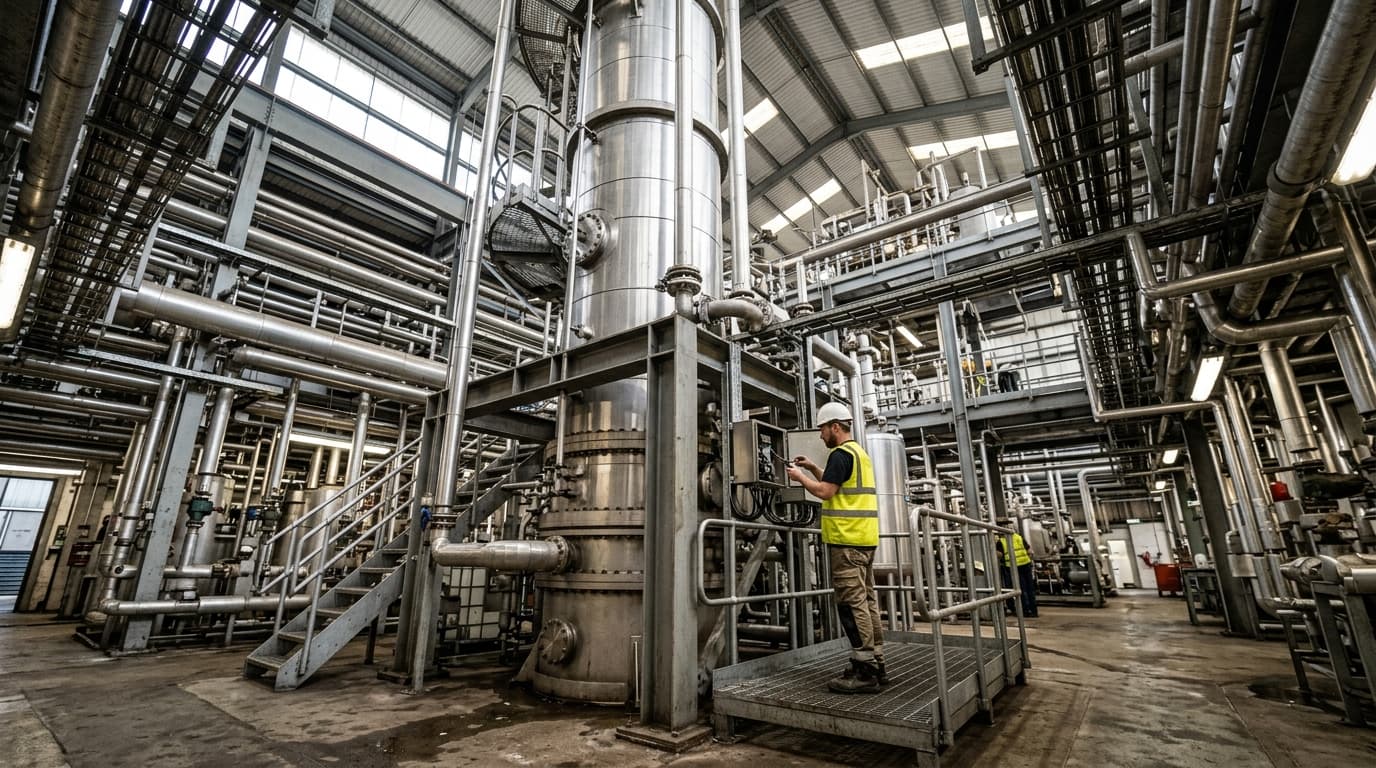
Omni Vision delivers turnkey utility metering, CO2 tracking, and AI-powered production KPI intelligence — giving you real-time dashboards and actionable insights across your entire facility.
Why Cleanroom HVAC Systems Drive Energy-Intensive Production
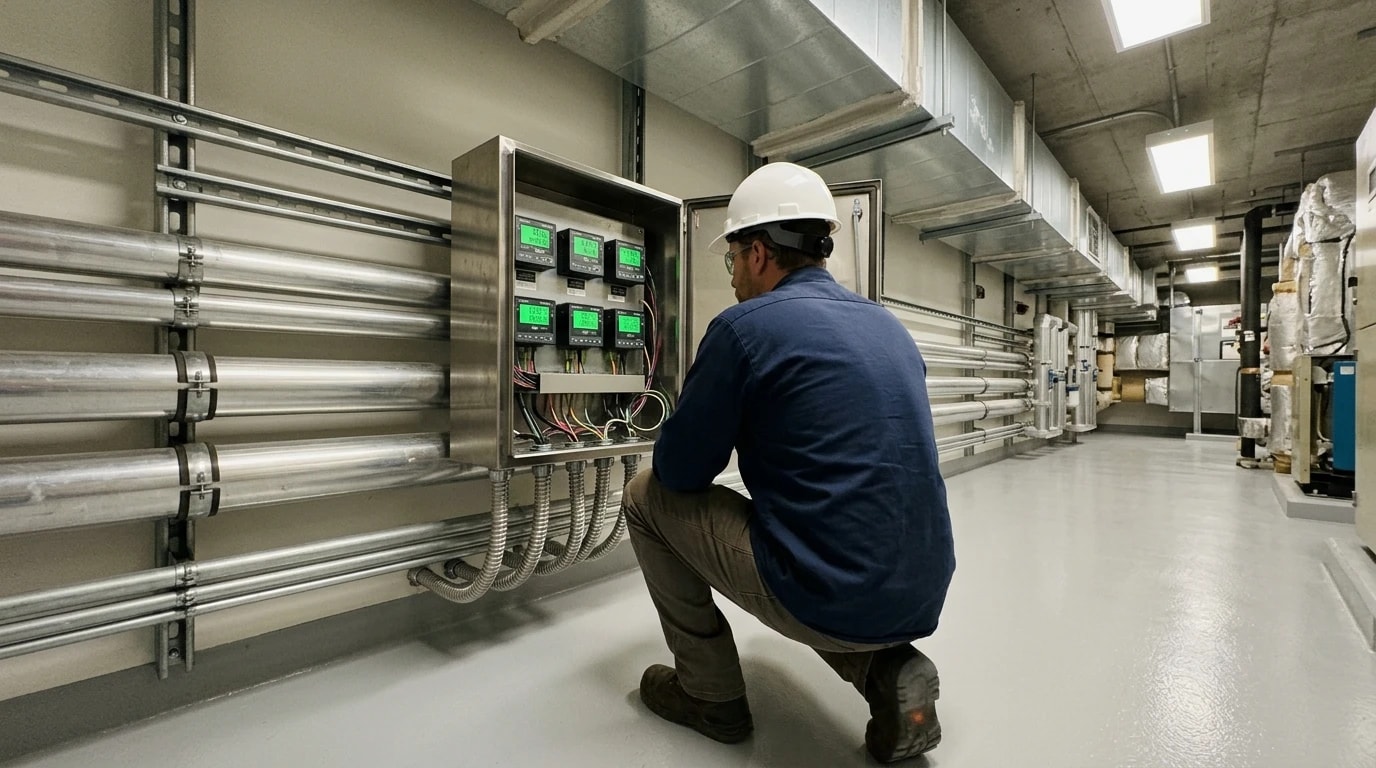
The immense energy demand of pharmaceutical facilities is a direct physical consequence of cleanroom engineering. Indeed, cleanrooms can consume up to 25 times more energy per square metre than standard commercial offices. Heating, ventilation, and air conditioning (HVAC) systems are the primary drivers, typically accounting for 50 to 75 per cent of total facility energy consumption.
Critical Environmental Parameters and Cleanroom Mechanics
To control contamination, cleanroom HVAC systems must continuously circulate, filter, and condition massive volumes of air. High-Efficiency Particulate Air (HEPA) and Ultra-Low Penetration Air (ULPA) filters require immense static pressure to force air through dense media. Engineers must also maintain exact pressure differentials between adjacent zones to prevent cross-contamination. Temperature and relative humidity require exceptionally tight tolerances; a mere 2 °C deviation can ruin active pharmaceutical ingredients (APIs) or disrupt sensitive biologics in specialised labs.
EU GMP Annex 1 Compliance and Particulate Control Standards
Good Manufacturing Practice (GMP) standards, specifically the updated EU GMP Annex 1 (2022 revision) and BS EN ISO 14644-3:2019, mandate strict environmental boundaries. Historically, facilities ran HVAC systems at maximum capacity 24 hours a day to guarantee compliance. This constant operation results in massive utility waste during equipment changeovers, cleaning cycles, or idle night shifts.
Dynamic monitoring allows facilities to safely adjust air change rates during non-operational periods. By linking active energy intelligence with risk-based Contamination Control Strategies (CCS), operators can lower fan speeds during idle windows. This minimises energy consumption while fully maintaining particulate control and sterility boundaries.
| Cleanroom Class (ISO 14644-1:2015) | Typical Air Change Rates (per hour) | Average HVAC Energy Intensity | Validation Requirements (GxP) |
|---|---|---|---|
| ISO Class 5 (Grade A / B) | 240 to 480 | Very High (50 to 75 per cent of room load) | Strict sterile validation, FDA/MHRA GxP compliant |
| ISO Class 7 (Grade C) | 30 to 60 | High (35 to 50 per cent of room load) | Regular bio-burden control, ISO 14644-1:2015 compliance |
| ISO Class 8 (Grade D) | 15 to 25 | Medium (20 to 35 per cent of room load) | General particulate control, standard GMP validation |
Read-Only PLC Connectivity: Overcoming the 21 CFR Part 11 Compliance Barrier
Operations managers often hesitate to implement enterprise-wide energy tracking, fearing intrusive installations will disrupt production. High-dependency systems—including validated sterilisation autoclaves, packaging lines, and Water for Injection (WFI) loops—operate under strict validation parameters.
The Risk of Re-Validation
Modifying the physical wiring, network settings, or control code of a validated Programmable Logic Controller (PLC) threatens its qualification status. Breaking this status forces an expensive, months-long re-validation procedure. Shutting down active manufacturing lines can cost millions in lost output. Maintaining absolute physical and digital separation between process control and energy tracking remains an essential engineering rule.
Zero-Write Architecture and Secure Data Flows
The Omni Vision platform bypasses this issue via a hardware-level, zero-write architecture. Rather than modifying PLC program logic, the platform uses non-invasive hardware to interface with existing networks via secure, read-only protocols, including:
- OPC-UA (Open Platform Communications Unified Architecture): For secure, platform-independent data transmission from SCADA and PLC layers.
- MQTT (Message Queuing Telemetry Transport): For lightweight, encrypted telemetry publishing from edge sensors to cloud systems.
- Modbus TCP/RTU: For direct extraction of electrical and flow data from sub-meters.
- BACnet/IP: For extracting real-time environmental data directly from Building Management Systems (BMS).
This one-way data flow allows the cloud engine to compile and visualise energy draw without any capability to write back to plant controls. Because the platform cannot modify critical process parameters (CPPs), the GxP validation status remains completely intact. This setup aligns with data integrity guidance from the UK Medicines and Healthcare products Regulatory Agency (MHRA) and complies with US FDA 21 CFR Part 11, ensuring data is attributable, legible, contemporaneous, original, and accurate (ALCOA+).
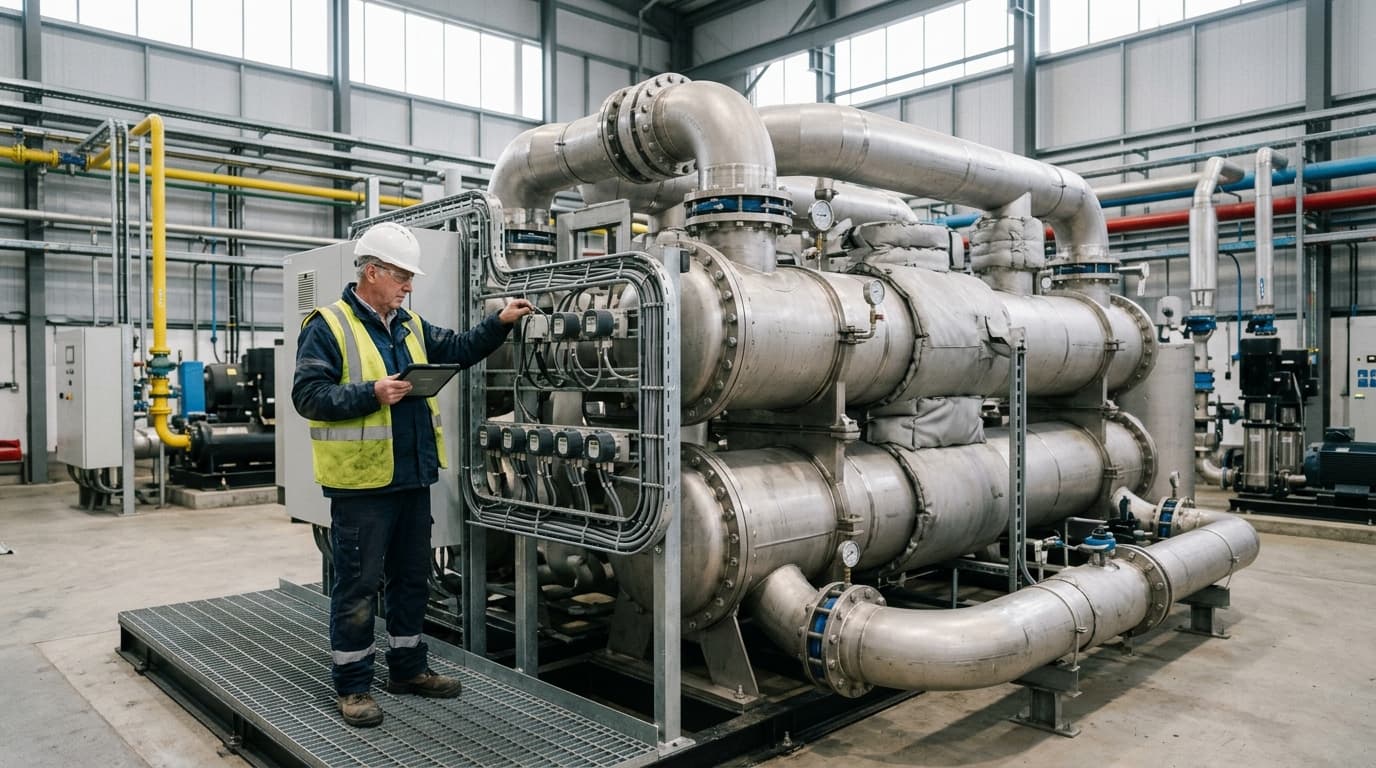
Track energy consumption, emissions, and process parameters with seamless PLC/SCADA integration via Modbus, OPC-UA, and MQTT protocols.
Establishing Granular EnPIs and Energy Baselines under ISO 50001:2018
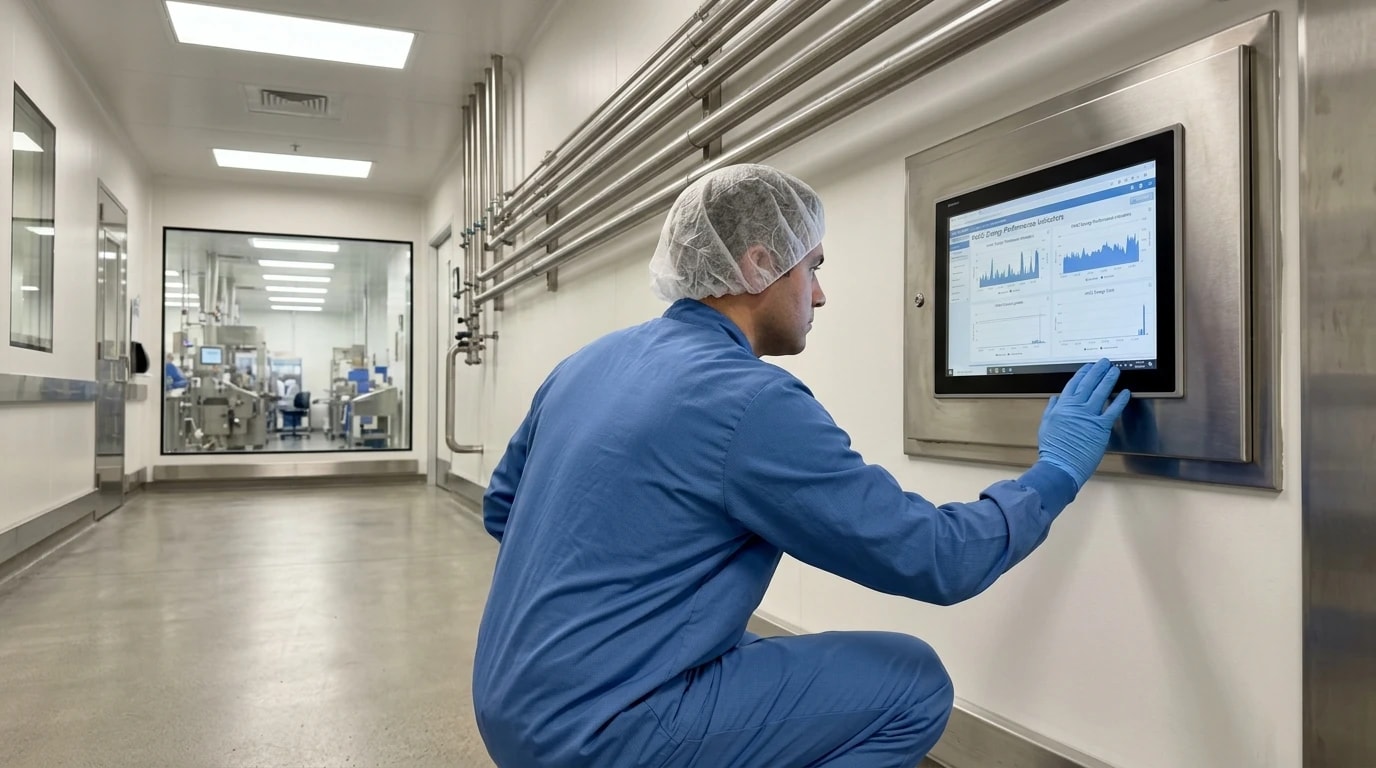
The ISO 50001:2018 standard mandates that certified organisations demonstrate continuous improvement in energy performance. To achieve this, manufacturing sites must define accurate Energy Baselines (EnBs) and Energy Performance Indicators (EnPIs).
Defining Energy Performance Indicators in Sterile Environments
In a sterile manufacturing context, simple indicators like "total monthly kilowatt-hours" are misleading. A drop in consumption might reflect low production rather than actual efficiency gains. Conversely, an energy spike might stem from an intensive production run rather than equipment degradation.
To build meaningful indicators, the cloud-based AI engine automatically merges real-time utility data with production variables. The platform links direct consumption across all six core utility streams with batch telemetry from Manufacturing Execution Systems (MES) or Enterprise Resource Planning (ERP) databases. This allows engineers to calculate precise, production-linked EnPIs, including:
- Energy consumed per production batch (kWh per batch)
- Steam consumption per sterilisation cycle (kg per run)
- Water for Injection volume per unit of finished product (litres per vial)
Mapping Batch-Level Utility Consumption
With these indicators, plants can build normalised energy baselines that account for ambient temperature, humidity, and production volumes. Process engineers typically use a linear regression model to normalise this baseline data:
E=(m⋅P)+cWhere:
- E represents the predicted energy consumption over a defined time interval, measured in kilowatt-hours (kWh).
- m is the marginal energy coefficient, representing the additional energy required to process a single production batch, measured in kilowatt-hours per batch (kWh/batch).
- P represents the production volume, expressed as the number of active batches completed during the interval.
- c represents the baseload energy consumption, representing the static energy draw required to keep cleanrooms and utility systems operating in an idle state, measured in kilowatt-hours (kWh).
Comparing actual consumption (Eactual) against the normalised baseline (Epredicted) isolates true, long-term efficiency gains. This mathematical transparency is exactly what registrars require during annual ISO 50001:2018 audits.
Automated Reporting for SECR and EU ETS Compliance

Pharmaceutical manufacturing faces complex statutory reporting requirements. Gathering this data manually via multiple spreadsheets is slow and highly prone to transposition errors.
Compliance with Streamlined Energy and Carbon Reporting
In the UK, the Streamlined Energy and Carbon Reporting (SECR) framework requires large or quoted companies and limited liability partnerships (LLPs) to disclose annual energy use and emissions. This reporting covers:
- Scope 1 emissions: Direct greenhouse gas emissions resulting from fuels combusted onsite, such as natural gas for steam boilers, or oil used in backup generators.
- Scope 2 emissions: Indirect greenhouse gas emissions associated with purchased electricity imported from the National Grid.
The Omni Vision platform automates this process by aggregating metrics across all six utility streams. Applying the latest government-approved carbon intensity factors, the platform generates audit-ready reports, converting kilowatt-hours of electricity and cubic metres of gas into tonnes of CO₂ equivalent (tCO2e).
The Decarbonisation Impact of Real-Time Carbon Metrics
Larger installations fall under the EU Emissions Trading System (EU ETS) or the UK ETS. These "cap and trade" systems require companies to monitor, verify, and report annual emissions, surrendering carbon allowances to cover their total output.
With 2026 reviews and benchmarks driving up carbon pricing, energy waste directly impacts a facility's bottom line. Automated reporting gives compliance officers continuous access to validated data, eliminating reporting delays, under-reporting penalties, or last-minute verification scrambles.
Operational Deployment: Transitioning to Centralised Intelligence
Industrial IT projects often stall due to lengthy integration times, custom coding, and complex configurations. EnerTherm Engineering avoids this by utilising a standardised, 8- to 16-week turnkey deployment model.
The Turnkey Deployment Model
The process moves through structured phases to prevent disruption to active GxP manufacturing operations:
- Site Survey & Sensor Mapping: Engineers identify existing meters, sub-meters, and PLC nodes across all production lines and cleanrooms.
- Non-Invasive Hardware Installation: External, clamp-on sensors and gateway hardware are fitted to utility lines without breaking pipework or shutting down active processes.
- Read-Only Integration: Gateways are configured to read data from local PLCs and building management systems via secure, outbound-only OPC-UA, MQTT, or Modbus connections.
- Cloud Commissioning: Secure, encrypted cellular or restricted network connections publish this telemetry to EPSA's cloud-based AI analytics engine.
- Dashboard Customisation: Interactive, real-time dashboards are built to present targeted information to operators, facilities managers, and compliance officers.
Quantifying the ROI and Long-Term Savings
Once commissioned, the platform's AI engine actively analyses the facility's utility profile to identify anomalies. It flags compressed air leaks, steam trap failures, or deteriorating HVAC fan bearings by analysing deviations from normal operating baselines.
By identifying these inefficiencies and recommending operational changes—such as dynamically optimising cleanroom airflow during non-operational hours—the platform helps pharmaceutical sites reduce utility bills by 15 to 25 per cent. Combined with rapid, non-invasive installation, these savings ensure the system pays for itself in under 12 months, delivering economic efficiency alongside verified regulatory compliance.
This article reflects the independent analysis and editorial opinion of EnerTherm Engineering. Product names, trademarks, and brands mentioned belong to their respective owners. EnerTherm Engineering is not affiliated with, endorsed by, or a licensee of any third-party software or product mentioned unless explicitly stated.

Technical Manager — EnerTherm Engineering
John Naranjo is Technical Manager at EnerTherm Engineering, bringing specialist expertise in chemical and environmental engineering. He recently led the implementation of Omni Vision, EnerTherm's real-time energy and utility monitoring platform. He holds an MSc in Environmental Engineering from the University of Huelva and a BSc in Chemical Engineering, with memberships in both the Energy Institute and IChemE.
