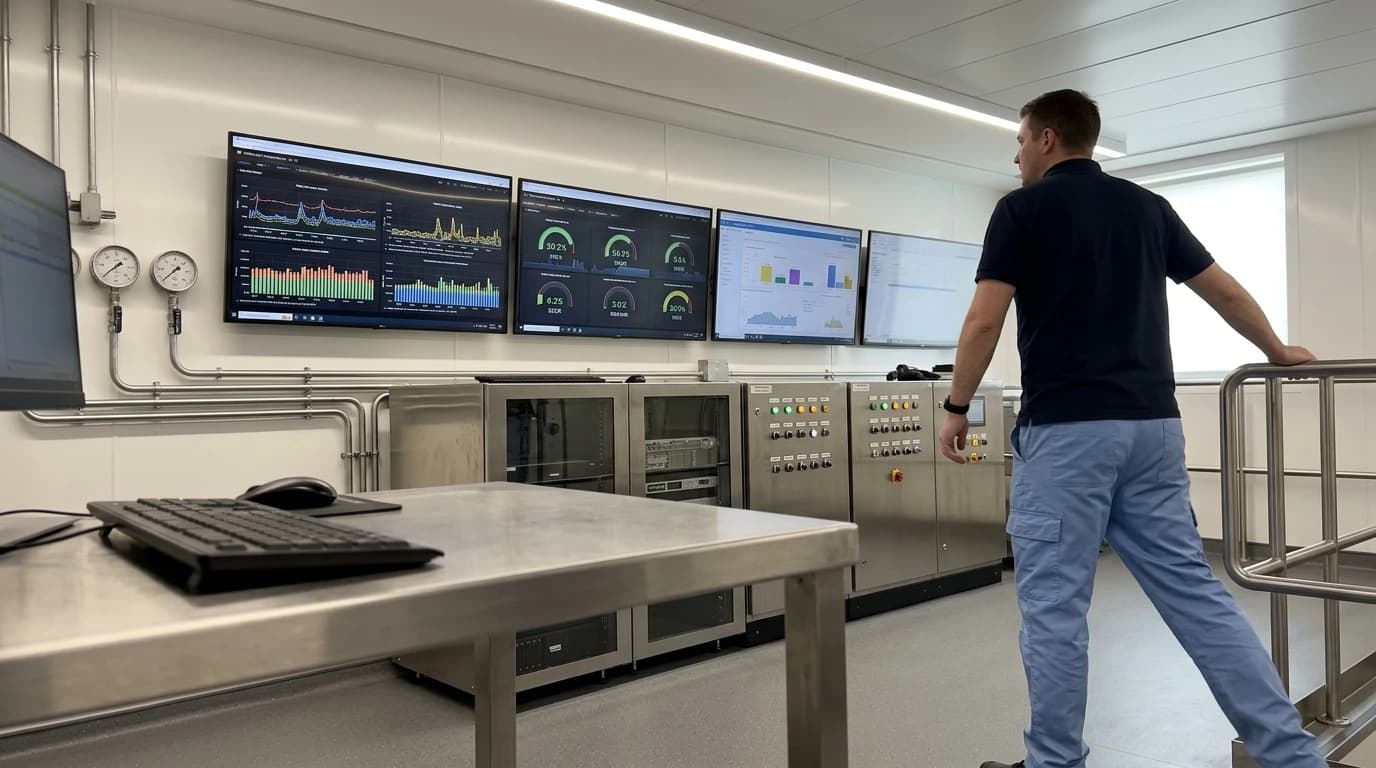
Automating Scope I and II CO2 Reporting in Pharma Facilities
How Omni Vision integrates with GAMP 5 systems to maintain audit-ready SECR compliance.
The global pharmaceutical industry generated 78 million tonnes of CO₂ equivalent emissions in a single year, highlighting the massive energy intensity required to manufacture life-saving therapeutics. According to the My Green Lab 2025 Carbon Impact Report, operational emissions from many major pharmaceutical companies are currently aligning with a 1.5 degree Celsius trajectory, but sustaining this progress requires highly accurate reporting. Scope 1 encompasses direct emissions from owned sources, such as on-site heating systems, emergency diesel generators, and company fleet vehicles. Scope 2 covers indirect emissions generated from purchased energy, such as electricity, district heating, external steam, or cooling. Pharmaceutical manufacturing facilities face mounting pressure from regulatory bodies to quantify and report these figures accurately to satisfy strict UK and European legislative frameworks. Transitioning from manual spreadsheet tracking to automated data collection resolves the severe administrative burden of carbon accounting. Implementing continuous monitoring within high-energy manufacturing environments requires specific architectural strategies to ensure that automated data acquisition systems do not compromise Good Manufacturing Practice (GMP) safety and validation status. The Omni Vision Energy Intelligence Platform provides the technical infrastructure required to achieve these precise compliance mandates.

Omni Vision delivers turnkey utility metering, CO2 tracking, and AI-powered production KPI intelligence — giving you real-time dashboards and actionable insights across your entire facility.
The Regulatory Mechanics of UK SECR and ESOS
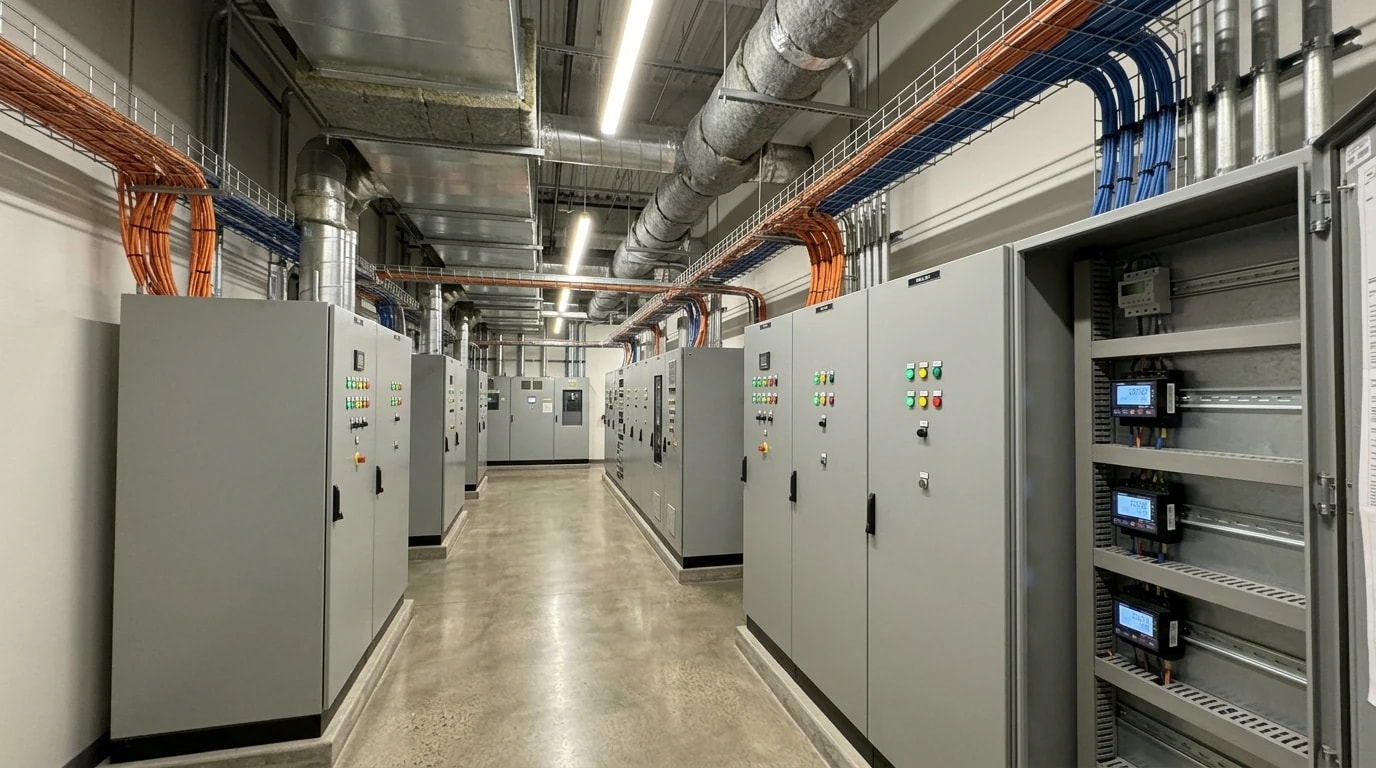
Streamlined Energy and Carbon Reporting Mandates
The UK government enforces the Streamlined Energy and Carbon Reporting (SECR) framework upon large enterprises. SECR compels pharmaceutical manufacturers to publicly disclose their energy consumption and associated greenhouse gas emissions within their annual directors' reports. Compliance officers structure these disclosures around the GHG Protocol Corporate Accounting and Reporting Standard. This standard serves as the foundational framework for calculating Scope 1 and Scope 2 emissions globally, ensuring exact alignment with UK SECR requirements. Gathering precise utility data forms the basis of this reporting. Reliance on estimated billing, aggregated invoices, or intermittent physical meter readings exposes pharmaceutical firms to compliance risks and financial penalties.
ESOS Audit Cycles and ISO 50001 Exemption
The Energy Savings Opportunity Scheme (ESOS) dictates that large UK undertakings undergo mandatory energy assessments. Phase 4 of ESOS places heavy audit requirements on manufacturers, demanding detailed energy reduction action plans and annual progress updates. Facilities holding a valid ISO 50001:2018 energy management certification gain an alternative route to compliance, effectively satisfying the standard ESOS assessment criteria automatically. The ISO 50001:2018 standard mandates continuous improvement in energy performance, verified through rigorous external audits. Real-time data automation replaces manual record-keeping to satisfy these precise external audit requirements. Automated systems provide the necessary unbroken data trails that auditors require to verify baseline energy consumption and subsequent efficiency improvements.
Resolving the GMP Validation Conflict in Energy Monitoring
Maintaining the Validated State
Pharmaceutical cleanrooms, Water for Injection (WFI) systems, and sterilization autoclaves operate under strict validation states defined by regulatory agencies. Any alteration to the control logic or physical configuration of these systems risks breaking their qualification status, potentially forcing costly production halts and re-validation procedures. Plant managers historically hesitated to integrate facility-wide energy monitoring out of concern that intrusive network hardware could interfere with Critical Process Parameters (CPPs). Physical and digital separation between process control equipment and energy tracking systems remains a mandatory engineering requirement.
Applying GAMP 5 Risk-Based Methodologies
Quality Assurance Directors address these validation challenges by applying GAMP 5 (Good Automated Manufacturing Practice) risk-based approaches. Industry professionals widely utilise the GAMP 5 framework to categorise automated manufacturing systems based on their potential impact on product quality and patient safety. Under this framework, energy monitoring hardware falls into a distinct risk category that requires verifiable isolation from primary control systems. Applying GAMP 5 principles ensures that integrating monitoring hardware maintains the validated state of existing pharmaceutical manufacturing equipment.
Securing Data with Zero-Write Architecture
Industrial sites commonly deploy automation protocols such as Modbus, OPC-UA, BACnet, and MQTT to transmit equipment telemetry. The Omni Vision Energy Intelligence Platform integrates precision instrumentation using secure, non-invasive PLC connectivity to interface with these standard protocols. This architecture forces a strict one-way, encrypted data flow from the plant floor to the cloud. The platform guarantees zero-write access to plant systems, preserving both GMP and HACCP compliance status across diverse manufacturing sectors. By establishing this hardware-level barrier, the platform extracts necessary operational data without exposing programmable logic controllers to external commands or network traffic disruptions.

Track energy consumption, emissions, and process parameters with seamless PLC/SCADA integration via Modbus, OPC-UA, and MQTT protocols.
Automating Data Acquisition Across Six Utility Streams
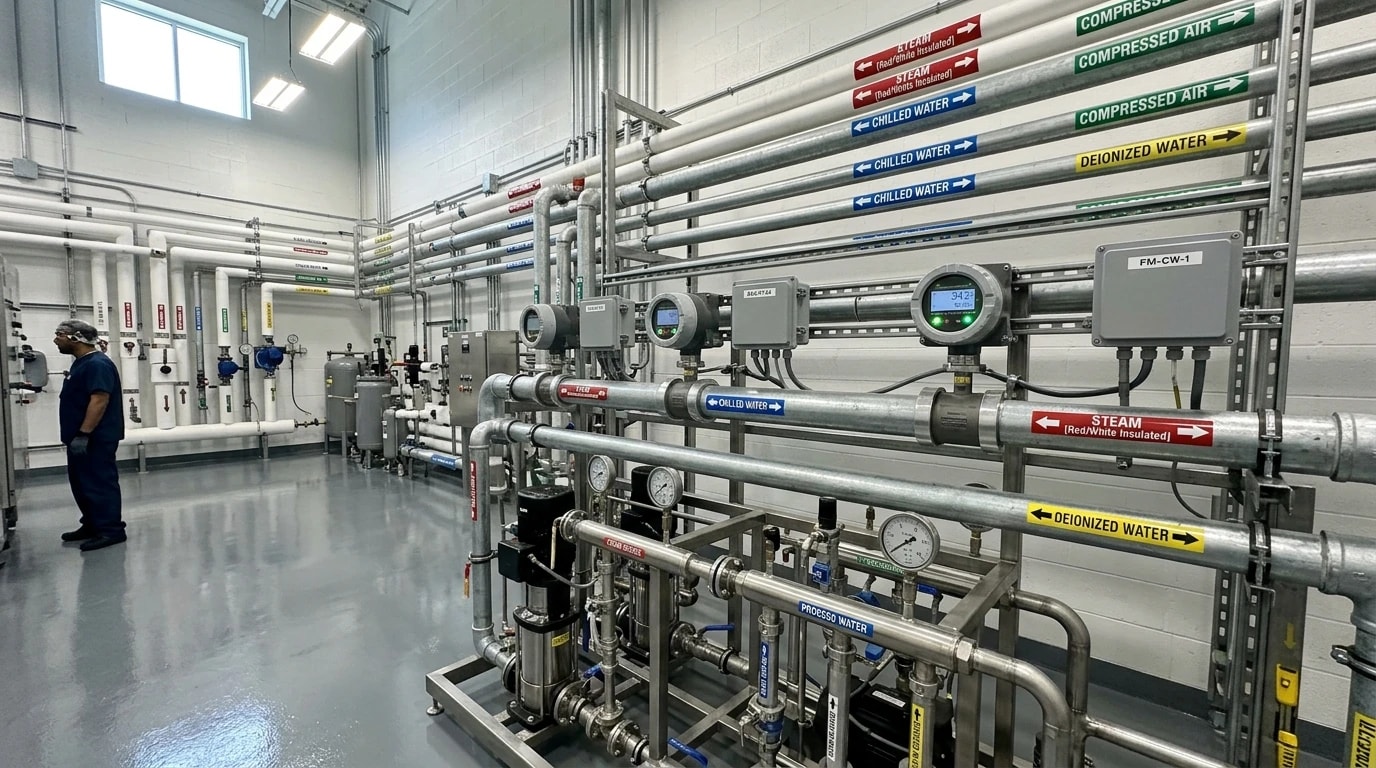
Granular Metering to Replace Legacy Workflows
Accurate Scope 1 and 2 CO₂ reporting demands precise measurement of consumption across all site utility inputs. Omni Vision provides granular, real-time metering of six core utility streams: electricity, gas, water, steam, compressed air, and oil. Capturing natural gas and heating oil consumption directly feeds the calculations for Scope 1 direct emissions. Tracking purchased electricity and external steam usage drives Scope 2 indirect metrics. Legacy facilities often track these utilities via manual spreadsheets populated by monthly meter walk-rounds. This manual approach introduces transcription errors, ignores time-of-use patterns, and fails to identify transient energy waste. Automated instrumentation digitises the entire workflow, logging utility consumption at high-frequency intervals to establish an absolute baseline of facility performance.
Batch-Level Energy Tracking
Pharmaceutical production operates in highly structured batches, requiring complex coordination of HVAC systems, chillers, and process equipment. Analysing energy efficiency requires mapping utility consumption directly against these specific production cycles. The Omni Vision platform correlates continuous utility telemetry with batch execution records from the facility execution system. This alignment generates production-linked key performance indicators (KPIs), such as energy per batch or cost per tonne. Process engineers use these granular metrics to identify highly variable utility draws across identical product runs. EPSA’s cloud-based AI analytics engine processes this batch-level data to execute AI-driven anomaly detection. The software flags unusual consumption spikes during Clean-in-Place or Sterilize-in-Place procedures. Identifying a leaking steam trap or a failing compressed air valve immediately allows maintenance teams to rectify the fault before it materially impacts the monthly carbon total.
Translating Telemetry into Audit-Ready Carbon Data
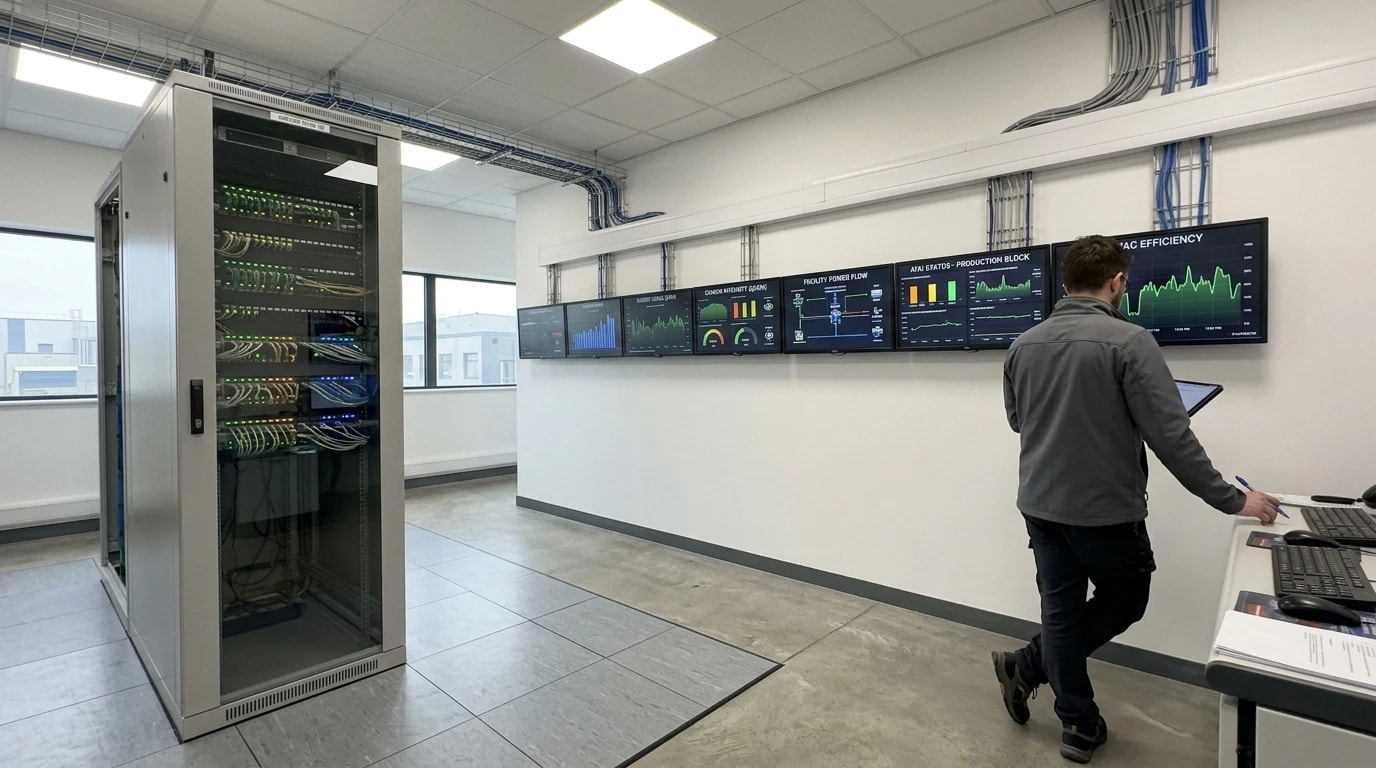
Executing the GHG Protocol Computations
Converting raw utility metrics into formal compliance documentation requires dynamic calculation algorithms. Sustainability Managers widely rely on the GHG Protocol Corporate Accounting and Reporting Standard to assign accurate carbon intensity multipliers to different energy sources. Omni Vision for Pharmaceutical Compliance automates this mathematical conversion. The platform ingests real-time usage data and instantly applies the correct regional emission factors to calculate exact tCO2e (tonnes of CO₂ equivalent) output. This automated translation prevents the arithmetic errors and formatting inconsistencies common in manual spreadsheet workflows, ensuring that corporate reporting accurately reflects physical plant operations.
Preparing for External Verification
Environmental Compliance Officers face intense scrutiny during formal ESOS, SECR, and ISO 50001 verification audits. External assessors demand chronological, untampered data logs to validate reported emissions reductions and energy baselines. Omni Vision consolidates all utility data and calculated emissions within its centralized cloud repository. The platform generates standardized, export-ready reports that meet the specific formatting requirements of external auditors and government compliance bodies. Providing auditors with direct access to cryptographic data trails expedites the verification process, eliminates disputes over data provenance, and proves the efficacy of deployed energy conservation measures.
Achieving Turnkey Deployment and Commercial ROI
Standardised Implementation Architecture
Integrating facility-wide monitoring requires precise project execution to avoid production downtime or interference with ongoing compliance activities. EnerTherm Engineering delivers the Omni Vision system via a standardized 8 to 16 week turnkey deployment model. The process begins with detailed site surveys to map existing utility distribution networks, identifying optimal locations for clamp-on ultrasonic flow meters, inline sensors, and current transformers. Installation teams integrate the necessary instrumentation and configure the non-invasive PLC connectivity without disrupting continuous manufacturing schedules. Final commissioning routes the encrypted telemetry directly into EPSA’s cloud-based AI analytics engine, providing immediate visibility to site stakeholders.
Driving Sub-12-Month Returns Through AI Analytics
Automating Scope 1 and Scope 2 reporting fundamentally alters the financial dynamics of environmental compliance. While pharmaceutical facilities initially seek these systems to satisfy SECR and ESOS mandates, the resulting operational visibility yields immediate commercial benefits. EPSA’s cloud intelligence applies predictive forecasting and continuous anomaly detection to the incoming utility data. By identifying energy waste and optimising cleanroom HVAC inefficiencies, the platform consistently delivers 15 to 25 percent energy cost reductions. This substantial decrease in utility overhead provides a sub-12-month return on investment. Stakeholders ranging from quality control supervisors to corporate sustainability officers gain tailored insights from a single, unified source, successfully migrating operations from reactive reporting to centralized intelligence.
This article reflects the independent analysis and editorial opinion of EnerTherm Engineering. Product names, trademarks, and brands mentioned belong to their respective owners. EnerTherm Engineering is not affiliated with, endorsed by, or a licensee of any third-party software or product mentioned unless explicitly stated.

Managing Director — EnerTherm Engineering
Dr. François Pierrel is Managing Director of EnerTherm Engineering with over two decades of expertise in thermal design, heat transfer, and industrial energy optimisation. He holds a PhD in Heat Transfer from Cranfield University and a Post-Doctorate from Heriot-Watt University.
