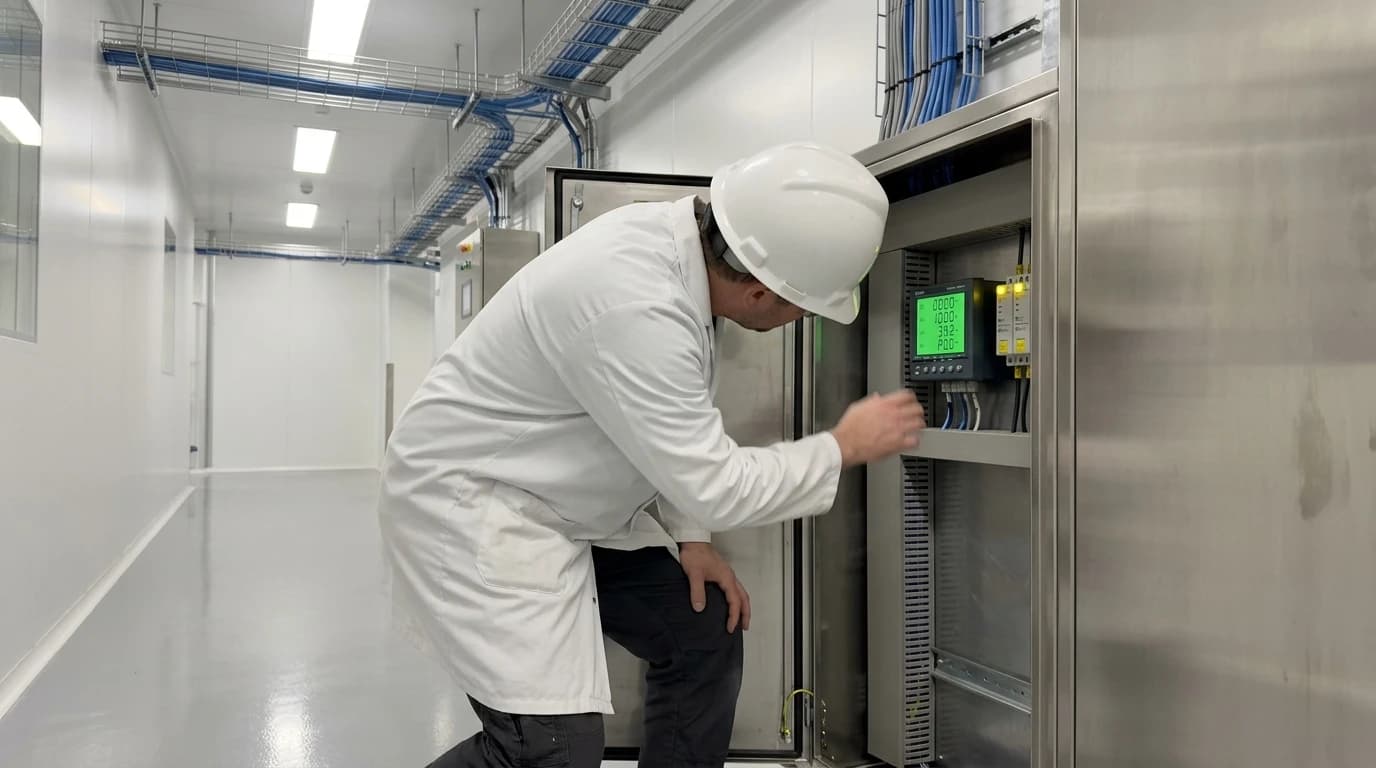
OPC-UA Secures Pharmaceutical Energy GAMP 5 Audits
Using read-only protocols to ensure ALCOA+ data integrity and 15-25% energy savings.
A pharmaceutical energy management system is a specialised operational technology and digital infrastructure designed to track, analyse, and optimise utility consumption across sterile manufacturing environments while maintaining strict compliance with Good Manufacturing Practice (GMP) standards. This digital utility network functions at the intersection of process engineering, sustainability, and quality assurance. Unlike general manufacturing sites where utility management focuses exclusively on cost reduction, sterile production lines must prioritise product safety and manufacturing consistency above all other variables.
Implementing dynamic tracking in these settings requires modernising utility monitoring systems to feed secure, unalterable data directly to cloud-based analytics engines without exposing sensitive industrial control networks to outside tampering. By achieving this balance, facility operators can realise substantial energy cost reductions while maintaining absolute compliance with rigorous global GxP standards.
What is a Pharmaceutical Energy Management System?

A pharmaceutical energy management system coordinates the collection, processing, and analysis of physical utility consumption profiles to drive energy performance improvements across highly controlled manufacturing facilities. The platform aggregates field-level data, helping sustainability officers and site energy managers achieve decarbonisation targets.
Balancing Utility Costs and GMP Standards
Sterile facilities are among the most energy-intensive commercial environments, frequently consuming up to ten times more power than standard offices. Cleanroom operations, constant pressure differentials, and absolute sterile boundaries require continuous HVAC circulation, process chilled water, and high-purity steam. Historically, plant managers avoided adjusting these utilities to prevent disrupting validated cleanroom parameters or losing batch qualification status. This conservative posture led to significant energy waste.
However, a specialised pharmaceutical energy management system allows operators to realise energy cost reductions of 15 to 25 per cent without modifying the environmental states of qualified cleanroom facilities. By establishing clear baselines and monitoring systems, quality control and energy teams can verify that all energy-saving measures maintain strict alignment with regulatory guidelines.
Granular Metering of Six Core Utility Streams
An effective compliance-focused energy platform must record utility movements across all major pathways. This involves capturing high-resolution data from six primary areas:
Electricity: Tracking sub-metered power usage across cleanroom AHUs, production machinery, and chilling plants.
Natural Gas: Monitoring thermal energy inputs to utility boilers and facility heating plant systems.
Industrial Water: Tracking water consumption for cooling towers, boiler feed loops, and purified water generation.
High-Purity Steam: Measuring sterile steam lines used for clean-in-place (CIP) and sterilisation-in-place (SIP) processes.
Compressed Air: Identifying high-cost system leaks and tracing compressor electrical demands.
Process Oil: Recording fuel usage in backup power generation systems and industrial boilers.
Measuring electricity at individual distribution boards, tracking steam mass-flow rates on supply headers, and monitoring compressed air leaks during non-production periods allows the platform to build an accurate thermodynamic model of the facility. This granular visibility provides the foundation for identifying operational inefficiencies, tracking carbon emissions, and compiling audit-ready files for inspectors.
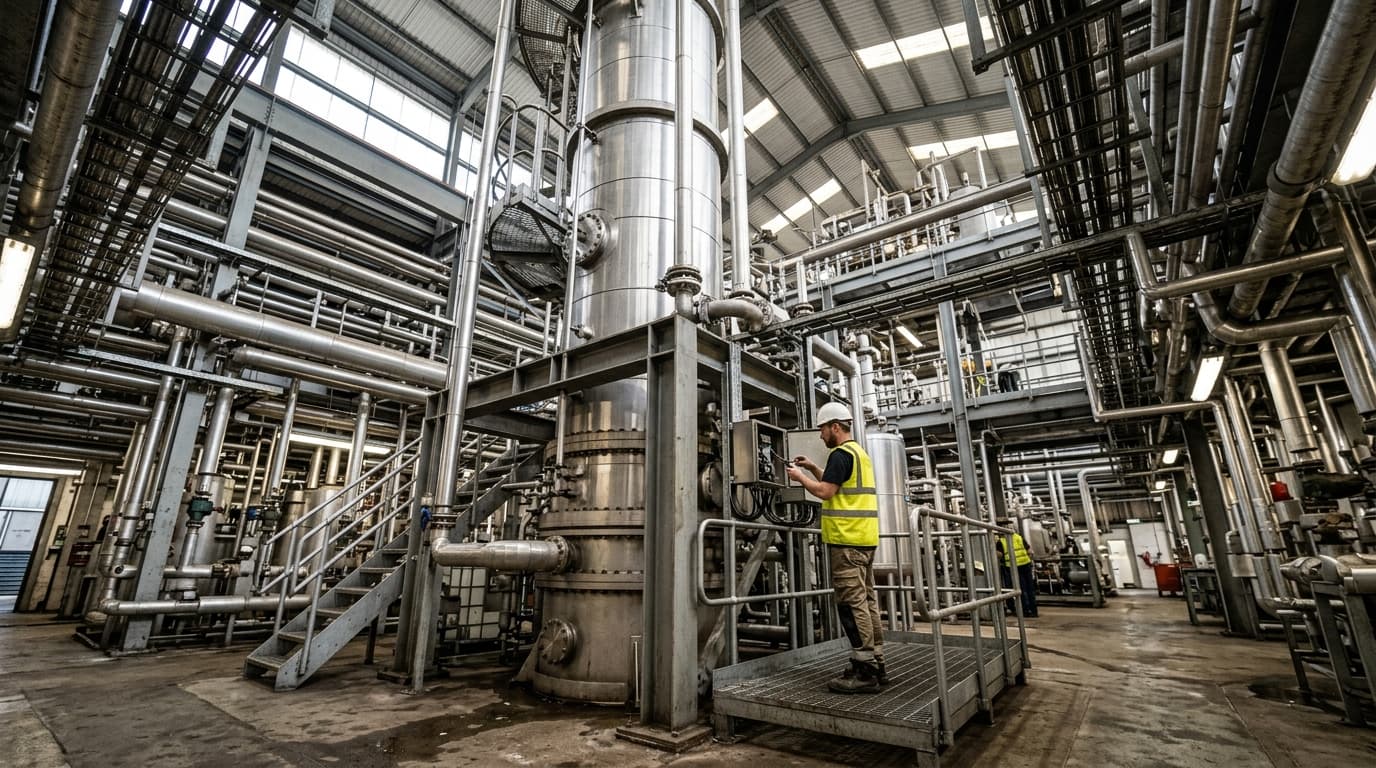
Omni Vision delivers turnkey utility metering, CO2 tracking, and AI-powered production KPI intelligence — giving you real-time dashboards and actionable insights across your entire facility.
GAMP 5 Second Edition Compliance: Aligning Utility Data with ALCOA+ Principles
The International Society for Pharmaceutical Engineering (ISPE) updated the Good Automated Manufacturing Practice standard to GAMP 5 Second Edition in 2022, providing a risk-based approach for validating GxP computerised systems. This standard emphasises data integrity, risk management, and the validation of modern digital technologies, including cloud-based databases and industrial networks. Because utility data is used to verify cleanroom stability and compile compliance reports, the capturing platforms must meet strict verification standards.
The Risk-Based Approach to Computerised System Validation (CSV)
Under the GAMP 5 Second Edition framework, computerised systems are categorised by complexity and risk. Energy management software and utility tracking platforms are classified as GAMP 5 Category 4 (Configured software). This means the software is commercially available but requires custom configuration of parameters, dashboards, and connection profiles to align with the plant’s physical instrumentation.
Validating a Category 4 system requires structured testing of configurations, a clear user requirements specification (URS), and proof that the integration does not impact critical manufacturing processes. Adopting a risk-based validation strategy allows quality assurance teams to focus on high-risk parameters, ensuring utility monitoring supports compliance without adding administrative overhead.
Mapping ALCOA+ Data Integrity Standards
Data integrity is a fundamental requirement for regulatory clearance from bodies such as the UK Medicines and Healthcare products Regulatory Agency (MHRA) and the European Medicines Agency (EMA). Automated utility tracking directly supports the complete lifecycle of data by fulfilling the core ALCOA+ data integrity principles:
Attributable: Every electrical, thermal, or fluid flow measurement is signed with a unique physical device identifier and timestamp, establishing a verifiable trail from source to database.
Legible: Real-time energy logs are preserved in open but protected database structures, ensuring the records remain readable for multi-year regulatory retention cycles.
Contemporaneous: Smart meters and flow transducers record data points instantly during operations, transmitting readings at tight intervals, such as 15-second poll cycles, to capture the exact physical state of the process.
Original: Automated polling extracts readings directly from physical instrumentation registers, avoiding the transcription errors associated with manual log sheets.
Accurate: Instrument calibration data is tracked directly within the database, confirming that utility measurements align with certified equipment tolerances, typically within 0.5 per cent accuracy.
Complete: System databases capture the entire parameter stream, including line voltage, power factor, pressure differentials, and fluid flow rates, providing a complete account of facility operations.
Consistent: Automated data transfer channels apply uniform validation and error-checking routines to all inbound records, preventing data formatting shifts or gaps.
Enduring: The platform saves historical operational records to write-once storage media with secure, off-site cloud backups to ensure long-term preservation.
Available: Regulatory auditors can retrieve complete historical profiles, system alarms, and audit trails instantly from on-site dashboard interfaces.
Securing Data Flow with OPC-UA and Modbus Protocols
Maintaining the validated state of pharmaceutical manufacturing equipment requires absolute boundaries between monitoring systems and active process controllers. If an energy tracking system has write-access to a PLC governing cleanroom ventilation or sterilising autoclaves, any software issue or user error could alter critical processing variables. To eliminate this risk, industrial operations use read-only connectivity protocols to retrieve utility data.
Establishing a Strict Zero-Write Data Boundary
Industrial operations employ protocols such as Modbus TCP and OPC Unified Architecture (OPC-UA) to establish secure, read-only data connections. Modbus TCP provides a direct method for polling numeric registers from plant instruments and basic electrical sub-meters. When communicating with central PLCs (such as Siemens S7 or Rockwell ControlLogix platforms), system integrators lock the connection settings at the physical and software layers.
The edge gateway device is configured with zero-write permissions, preventing any control commands from travelling back to the plant floor. This absolute isolation means the utility tracking system cannot alter any manufacturing parameter, shielding the validated status of the line from external software failures.
The Role of OPC-UA Cryptographic Signatures
For advanced communications across segmented networks, OPC-UA (defined under the IEC 62541 series of standards) provides built-in transport-layer security features. Unlike older industrial protocols, OPC-UA incorporates digital signatures, user authentication, and Advanced Encryption Standard (AES) encryption directly into its communications stack. When transferring data from the factory floor to an enterprise analytics engine, OPC-UA establishes secure tunnels that protect against data interception and spoofing.
The security architecture operates via a structured, one-way pathway:
This structural isolation ensures that even if an incident occurs on the cloud network, the physical control systems on the factory floor remain secure and operational. This protection is a core requirement for passing GAMP 5 computerised system validation audits.
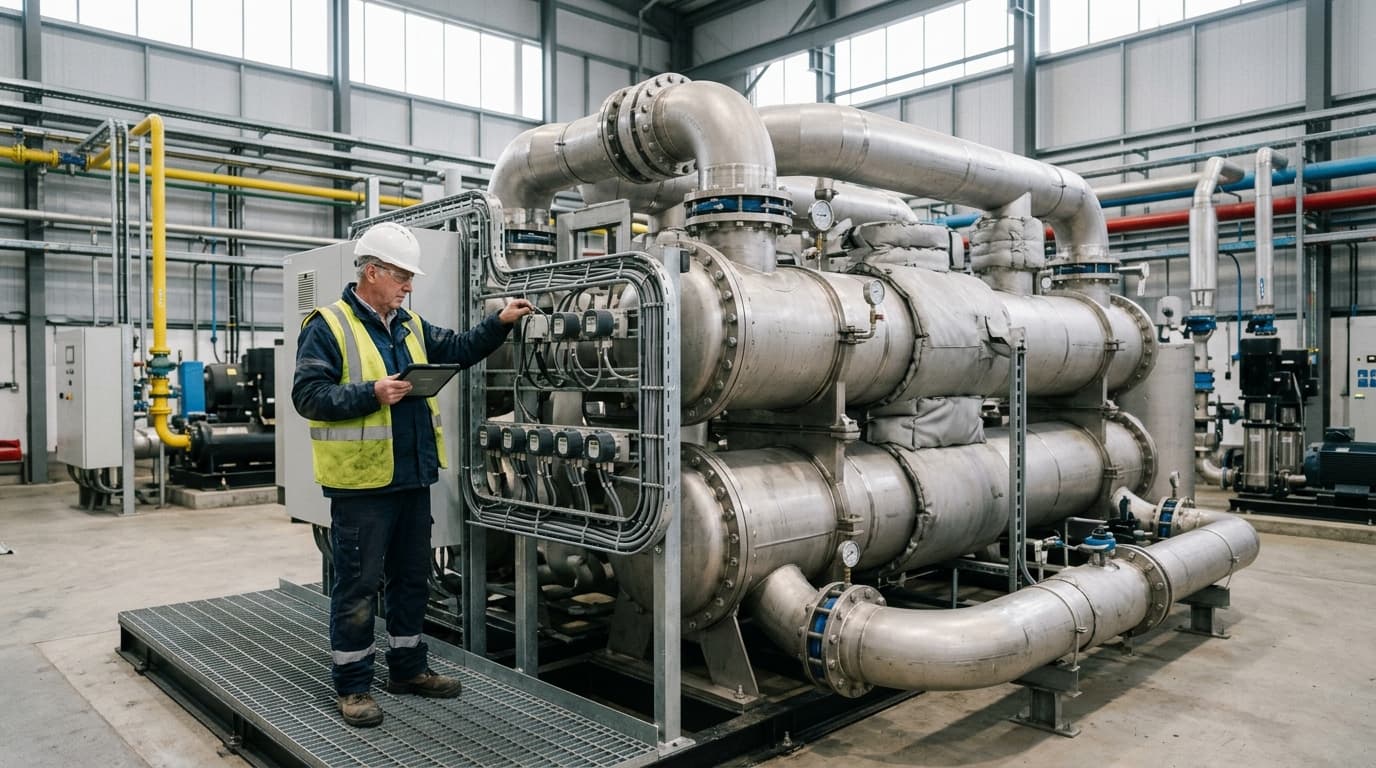
Track energy consumption, emissions, and process parameters with seamless PLC/SCADA integration via Modbus, OPC-UA, and MQTT protocols.
Simplifying ISO 50001:2018 Energy Review Audits
ISO 50001:2018 outlines the international framework for establishing and maintaining an Energy Management System (EnMS). To achieve and maintain this certification, companies must undergo regular verification audits. A fundamental requirement of this process is the "Energy Review" (outlined in Clause 6.3 of the standard), which requires organisations to analyse historical utility consumption and identify areas of Significant Energy Use (SEUs).
Accelerating the Energy Review Process
Completing an Energy Review manually requires plant engineers to inspect dozens of mechanical meters, log values on paper, and compile complex spreadsheets. This approach is highly vulnerable to calculation errors and data gaps, which auditors frequently flag as non-conformances.
Automated utility tracking simplifies this review process by polling consumption data from all parts of the facility in real time. The energy management system aggregates this data, automatically separates consumption by utility type, and identifies which assets, such as water treatment plants or cleanroom chillers, consume the highest proportion of energy. This automated segregation provides an instant, accurate list of SEUs for the auditor.
Establishing Verifiable Energy Baselines (EnBs)
To prove continuous energy improvement (a mandatory requirement for ISO 50001:2018 recertification), facilities must compare current usage against a validated baseline. Modern energy intelligence software establishes these Energy Baselines (EnBs) automatically, adjusting for external variables such as production volumes or ambient outdoor temperatures. This allows auditors to verify energy savings with confidence.
Audit MetricManual Spreadsheet TrackingAutomated Energy IntelligenceData Collection FrequencyMonthly or weekly manual entriesSub-minute real-time pollingRisk of Data AlterationHigh (unlocked cells, manual typing errors)Zero (read-only architecture, encrypted storage)Significant Energy Use (SEU) IsolationRough estimates based on entire building billsExact batch-level and asset-level consumption trackingAuditor Verification SpeedDays spent validating calculations and formulasInstantaneous dashboard access with complete audit trailsCompliance with ALCOA+Poor (lacks contemporaneous and original guarantees)Complete (fully compliant with GAMP 5 data standards)
Optimising Cleanroom HVAC Systems Under Regulation (EU) 2024/573 (F-Gas)

Pharmaceutical cleanrooms rely on complex HVAC systems to maintain strict cleanliness standards (ISO 14644-1 classes). These systems are among the most energy-intensive in any industrial sector, running continuous air-change cycles to extract airborne particles. They are also highly dependent on large-scale refrigeration circuits that historically relied on hydrofluorocarbons (HFCs). The implementation of Regulation (EU) 2024/573, which entered into force on 11 March 2024, introduces aggressive controls on fluorinated greenhouse gases (F-gases), aiming for a complete phase-out of HFCs by 2050.
Navigating the European F-Gas Phase-Down
Under this regulatory phase-down schedule, severe service and maintenance restrictions apply to air-conditioning and heat pump systems utilising high-GWP refrigerants starting in 2026. Consequently, facility managers must transition existing chiller equipment to low global warming potential options, such as propane (R-290, GWP 0.02) or hydrofluoroolefins (such as R-1234yf, GWP 0.5).
When retrofitting or replacing chiller plant equipment, continuous energy tracking is necessary to baseline performance and verify that the new, climate-friendly chilling circuits deliver the required thermal capacity efficiently.
Early Refrigerant Leakage Detection and Air Handling Efficiency
Unidentified refrigerant leaks cause gradual degradation in chiller thermal transfer efficiency. As a system loses refrigerant charge, compressors must run longer and draw more electricity to satisfy the cooling demand of cleanroom air-handling systems. By establishing real-time Coefficient of Performance (COP) monitoring, an automated energy platform identifies these subtle efficiency drops, allowing operators to intervene before a localised gas alarm or system shutdown occurs.
Additionally, tracking variables such as fan motor speeds, pressure drops across HEPA filters, and volumetric airflow rates allows the platform to forecast and identify optimal operational profiles. Engineering teams can then implement these recommended adjustments via the building management system during validated change windows. This structured, predictive approach enables facilities to target HVAC inefficiency while ensuring that cleanroom particle classifications and pressure differentials remain within validated GMP boundaries.
The Architecture of Turnkey Utility Monitoring in Sterile Environments
Deploying utility monitoring systems in active, sterile manufacturing facilities requires non-invasive physical installation techniques. Because any physical modification to process piping or electrical enclosures can cause production downtime and require costly system re-qualification, systems must be installed with minimal process disruption.
Non-Invasive Instrumentation Deployment
Physical deployment teams prioritise non-invasive sensing technologies to maintain the integrity of validated manufacturing lines:
Split-Core Current Transformers (CTs): These sensors clamp directly around existing electrical conductors within distribution boards, allowing power monitoring without disconnecting cables or causing electrical outages.
Clamp-On Ultrasonic Flow Meters: These units are strapped to the exterior of stainless-steel piping to measure thermal energy, chilled water, or purified water flows. Because the sensor does not touch the fluid, the sterile boundary of the piping remains intact.
Thermal Mass Flow Meters: For nitrogen and compressed air systems, these instruments are inserted through existing, isolatable tapping points, tracking gas volumes and identifying costly distribution leaks.
Once the instruments are installed, they are connected to local edge gateways that collect and transmit the data securely.
Calculating Accurate Cost-Per-Batch Metrics
Once the physical data stream is secured through OPC-UA or Modbus protocols, the energy intelligence platform maps utility usage directly to production schedules. By importing batch ID codes from the plant's Manufacturing Execution System (MES), the platform links energy use directly to specific manufacturing runs. This integration produces an invaluable metric: energy consumption per batch.
Tracking utility costs at this granular level allows operational directors to calculate precise cost-to-produce figures for individual runs. It also enables quality assurance teams to verify that cleanroom environmental conditions remained within specified GMP limits during the entire lifecycle of each batch, proving that the facility operates both efficiently and in full compliance with international standards. This data-driven strategy ensures that plants can reduce utility costs, satisfy regulatory audits, and achieve a return on their technology investment within 12 months.
This article reflects the independent analysis and editorial opinion of EnerTherm Engineering. Product names, trademarks, and brands mentioned belong to their respective owners. EnerTherm Engineering is not affiliated with, endorsed by, or a licensee of any third-party software or product mentioned unless explicitly stated.

Technical Manager — EnerTherm Engineering
John Naranjo is Technical Manager at EnerTherm Engineering, bringing specialist expertise in chemical and environmental engineering. He recently led the implementation of Omni Vision, EnerTherm's real-time energy and utility monitoring platform. He holds an MSc in Environmental Engineering from the University of Huelva and a BSc in Chemical Engineering, with memberships in both the Energy Institute and IChemE.
