Retrofitting Energy Monitoring in Chemical Plants Without Downtime
How non-invasive sensing secures ISO 50001 compliance and meets UK SECR reporting mandates.
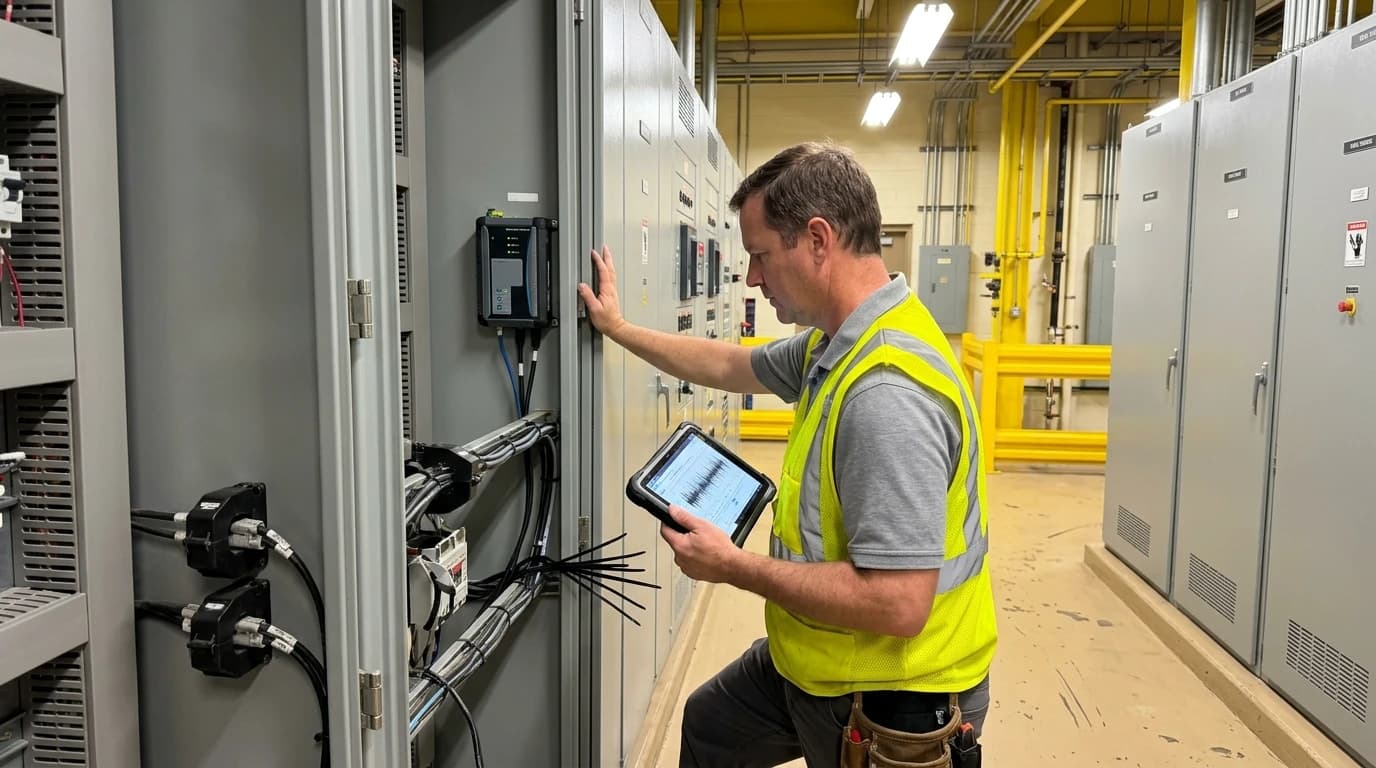
A non-invasive energy monitoring solution is a network of retrofit sensor technologies and data acquisition hardware designed to measure industrial utility consumption without requiring physical pipe penetration, electrical circuit disconnection, or process downtime. For chemical plant operators, these systems solve a critical operational dilemma: how to extract granular utility data from legacy infrastructure without shutting down continuous, highly calibrated manufacturing processes. Traditional inline meters demand process interruption, draining pipelines, and mechanical cutting, which triggers extended downtime and introduces contamination risks. Non-invasive alternatives eliminate these hazards.
By retrofitting surface-mounted flow meters and clamp-on electrical sensors, facility managers establish the precise energy baselines required by modern regulatory frameworks. This approach allows chemical processing facilities to modernise their energy management systems securely, ensuring production remains uninterrupted while gathering the intelligence needed to drive down operational expenditure.
The Financial and Regulatory Drivers for Chemical Plant Retrofits
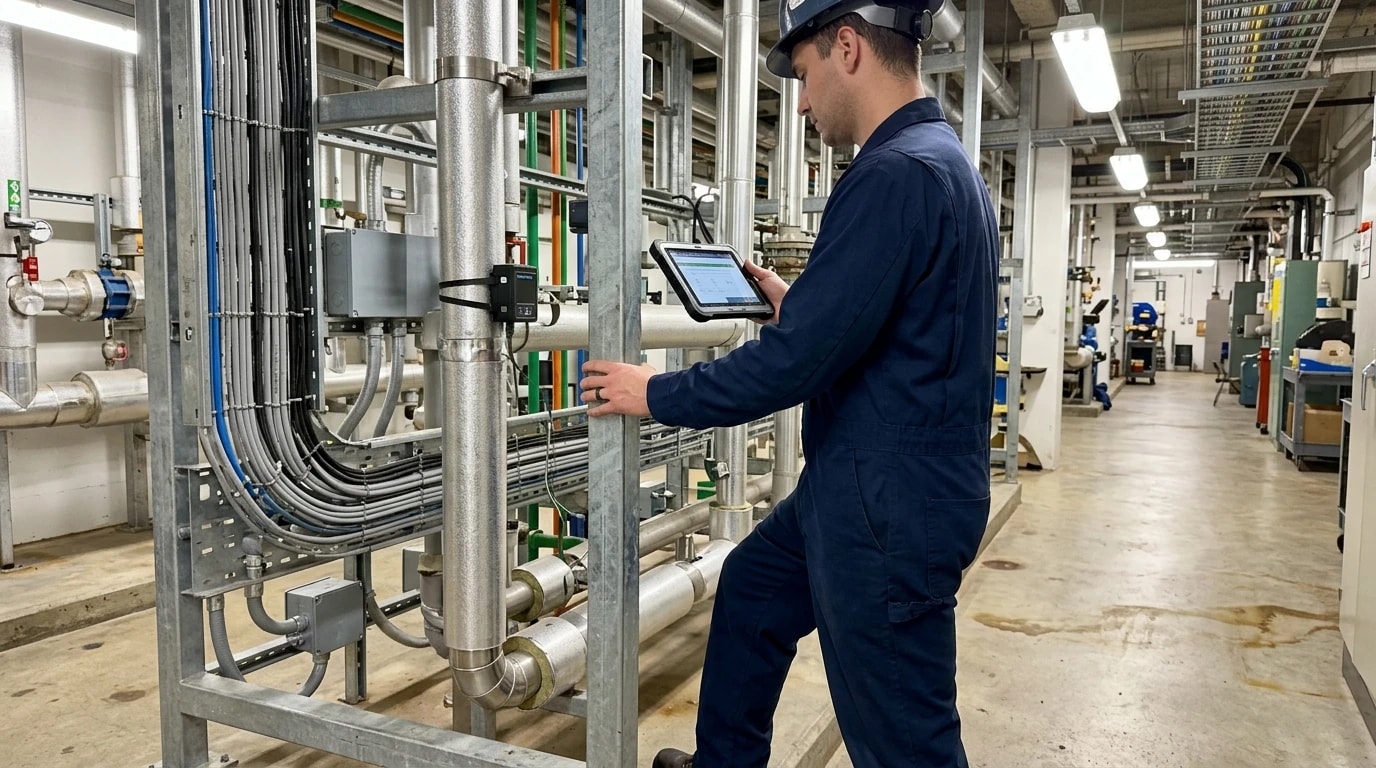
Chemical manufacturing is fundamentally energy-intensive. Facility managers face compounding pressures from volatile wholesale energy markets and tightening statutory reporting mandates.
The Cost of Unmeasured Utility Consumption
Energy costs dominate the financial models of European and UK chemical facilities. Recent industry data indicates that for some chemical companies, energy expenditure now accounts for 50% to 70% of their total cost base. With UK industrial electricity prices currently operating at up to four times higher than equivalent US markets and more than twice as high as those in China, inefficiency directly erodes international competitiveness.
Without sub-metering at the asset level, operators lack the visibility needed to identify waste. A surge in steam consumption on a specific distillation column or an electrical fault causing a cooling tower pump to overwork remains invisible within aggregated monthly utility bills. Non-invasive monitoring provides the diagnostic clarity required to isolate these inefficiencies.
Navigating UK SECR and ISO 50001:2018
Regulatory compliance compels accurate data collection. The UK's Streamlined Energy and Carbon Reporting (SECR) framework legally mandates large companies (those meeting two or more criteria: over 250 employees, a turnover exceeding £36 million, or a balance sheet above £18 million) to publicly disclose their energy use and carbon emissions. SECR specifically requires organisations to publish at least one emissions intensity ratio—such as CO₂e per tonne of chemical output.
Simultaneously, the ISO 50001:2018 standard for energy management systems demands that organisations establish strict energy performance indicators (EnPIs) and precise energy baselines (EnBs). Chemical plants cannot meet these standards using estimated data or manual spreadsheet calculations. Verifiable, automated data collection is a fundamental requirement.

Omni Vision delivers turnkey utility metering, CO2 tracking, and AI-powered production KPI intelligence — giving you real-time dashboards and actionable insights across your entire facility.
Core Technologies in Non-Invasive Energy Monitoring Solutions
Retrieving accurate utility consumption data without stopping production relies on advanced sensor hardware. Two specific technologies form the backbone of these retrofit installations.
Clamp-On Ultrasonic Flow Meters for Steam and Water
To monitor fluid dynamics without breaching containment, process instrumentation teams often specify clamp-on ultrasonic flow meters. These devices use transit-time technology, emitting high-frequency acoustic pulses through the external pipe wall into the fluid stream. By calculating the time differential between pulses travelling upstream versus downstream, the sensors determine the internal flow rate.
This technology is standard practice for monitoring chilled water, hot water, and steam networks feeding chemical reactors. High-quality clamp-on meters achieve an accuracy of ±1% to 3% under optimal conditions. Because the sensors never touch the internal process fluid, they eliminate compatibility issues with corrosive chemicals and sidestep the strict hygiene requirements mandated in Good Manufacturing Practice (GMP) environments.
Split-Core Current Transformers for Electrical Loads
Electrical sub-metering on live distribution boards requires split-core current transformers (CTs). Unlike solid-core CTs, which require technicians to disconnect cables and thread them through the sensor ring, split-core devices feature a hinged magnetic core. Electrical engineers simply snap the CT around the live insulated conductor.
The alternating current in the primary cable induces a proportional secondary current in the CT, which is then safely measured by an energy meter. Modern engineering has largely mitigated the historical accuracy losses caused by the microscopic air gap at the split-core hinge. Today, compliant split-core CTs meet IEC 61869-2 Class 1.0 or Class 0.5 accuracy standards, providing sufficient fidelity for high-resolution building energy management and tenant billing without necessitating a dangerous or costly power shutdown.
ATEX and DSEAR Compliance in Hazardous Zones
Chemical plants frequently operate environments with explosive gas or dust atmospheres. Any retrofit hardware installed in these areas must comply with the Dangerous Substances and Explosive Atmospheres Regulations (DSEAR) in the UK, and carry ATEX certification.
Industry professionals widely deploy ATEX Zone 1 and Zone 2 certified ultrasonic flow meters and intrinsically safe electrical sensors. These devices utilise ruggedised, explosion-proof housings (such as epoxy-coated, copper-free aluminium or stainless steel) and encapsulated components to ensure they cannot act as an ignition source, maintaining absolute safety in hazardous processing areas.
Secure Data Extraction Without System Disruption

Gathering sensor data is only the first phase; transmitting that data safely is critical. Chemical plants rely on highly secure Distributed Control Systems (DCS) and Supervisory Control and Data Acquisition (SCADA) networks. Plant operations directors strictly prohibit any retrofit integration that risks cyber vulnerabilities or system instability.
PLC Connectivity and Industrial IoT Protocols
Modern non-invasive energy monitoring solutions bypass legacy bottlenecks by deploying dedicated edge gateways. These systems communicate with Programmable Logic Controllers (PLCs) via standard industrial protocols such as Modbus, OPC-UA, BACnet, and MQTT.
By tapping into these protocols passively, the monitoring architecture extracts real-time metrics on electricity, gas, water, steam, compressed air, and oil consumption directly from the process level. This setup functions completely independently of the plant's core automation network, avoiding interference with real-time process control.
One-Way Encrypted Data Flow
Security in industrial IoT deployments demands strict isolation. System architects configure these data extraction gateways to operate with a one-way, outbound-only encrypted data flow. The sensors push information to external analytics platforms without accepting incoming commands. This unidirectional architecture guarantees that malicious actors cannot use the energy monitoring layer as an entry vector to manipulate safety-critical control systems, ensuring alignment with industrial cybersecurity best practices.
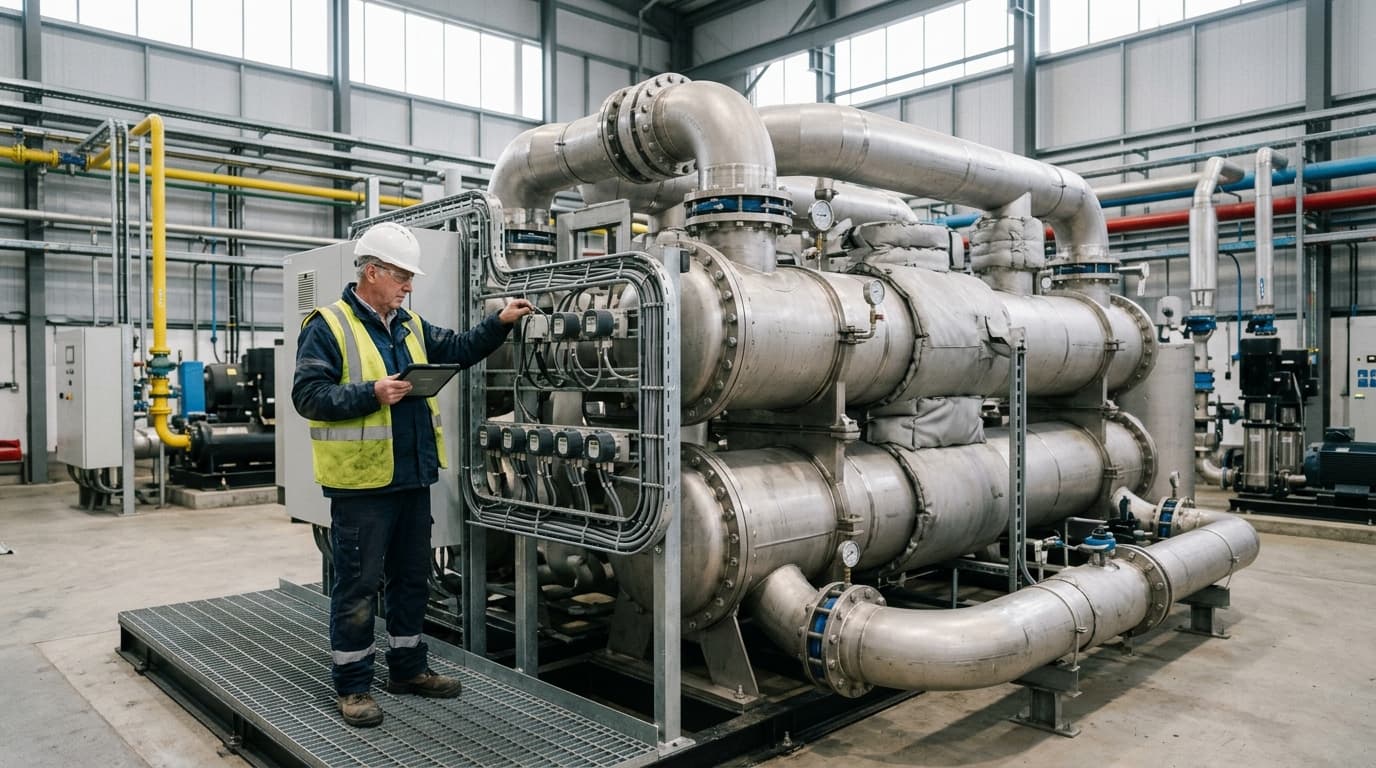
Track energy consumption, emissions, and process parameters with seamless PLC/SCADA integration via Modbus, OPC-UA, and MQTT protocols.
The Omni Vision Energy Intelligence Platform for the Chemical Sector
Transforming raw sensor metrics into actionable financial and operational intelligence requires sophisticated software. EnerTherm Engineering addresses this through the Omni Vision Energy Intelligence Platform, a turnkey solution specifically engineered to process complex chemical manufacturing data.
Mapping Consumption Against Production Output
Stand-alone utility data offers limited value without operational context. The Omni Vision platform integrates directly with EnerTherm Engineering’s precision hardware to correlate energy consumption with real-time production output.
By tracking the exact volume of steam consumed by a distillation column or the electricity drawn by a mixer during a specific shift, the platform calculates process-linked key performance indicators (KPIs). Plant managers receive continuous, dynamic readouts of the precise energy per batch and the total utility cost per tonne of product. This granularity allows finance teams to shift from flat-rate overhead estimations to highly accurate, product-specific cost accounting.
EPSA Cloud-Based AI Analytics
At the core of the Omni Vision platform is EPSA, a cloud-based AI analytics engine designed to interrogate industrial data streams. EPSA establishes baseline models for normal machine behaviour and continuously monitors incoming data against these parameters.
The AI engine executes real-time anomaly detection, instantly flagging deviations such as a sudden drop in compressed air pressure or an unexpected spike in chiller energy use. Furthermore, EPSA provides intelligent consumption forecasting. By analysing production schedules alongside historical usage patterns, the platform predicts future energy demand. Facility managers use these forecasts to implement peak tariff avoidance strategies, deliberately shifting energy-intensive processes—like bulk material heating or tank cooling—to off-peak pricing windows.
Turnkey Deployment and Rapid Return on Investment
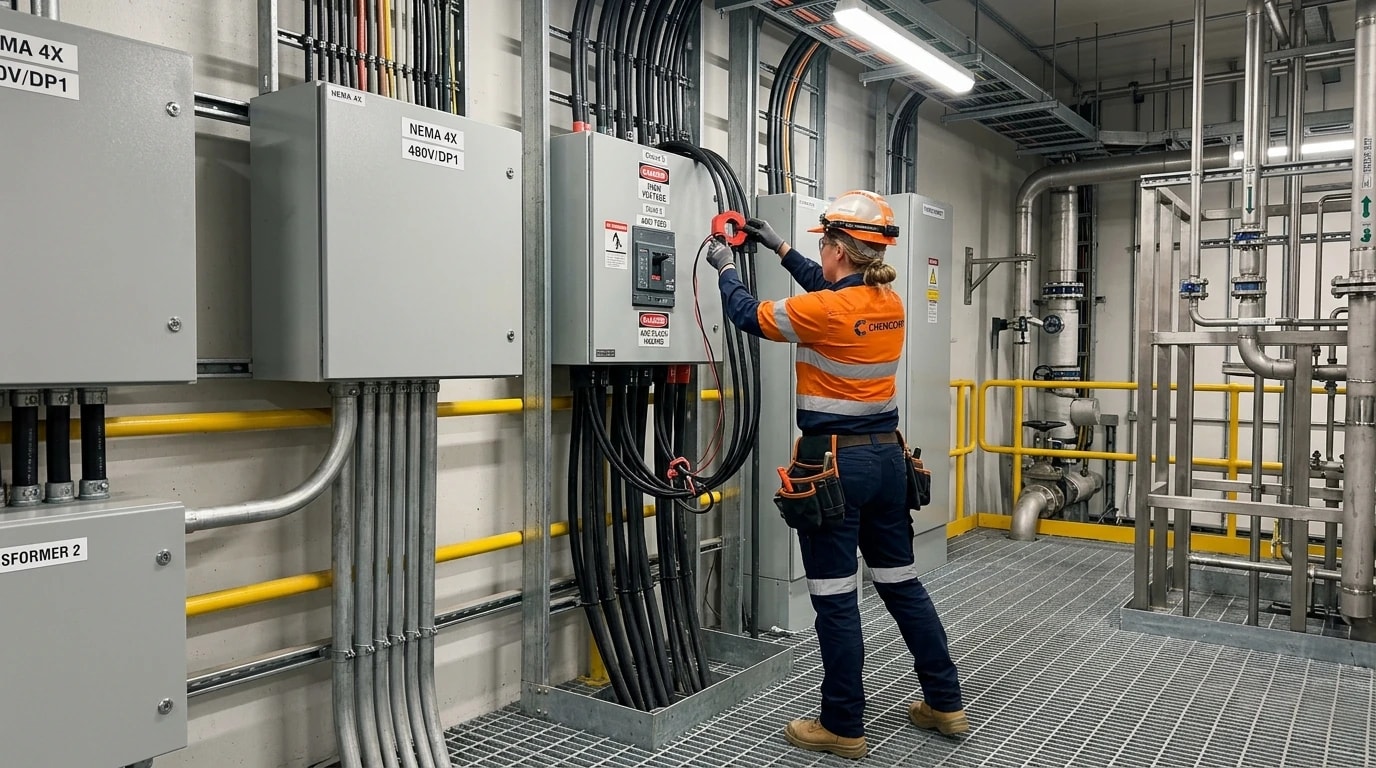
Implementing industrial sub-metering historically required prolonged capital expenditure cycles and extensive mechanical engineering resources. Non-invasive architectures fundamentally alter this dynamic, offering rapid deployment and accelerated financial returns.
The 8–16 Week Implementation Timeline
Because the Omni Vision platform utilises surface-mounted sensors, split-core CTs, and passive PLC connectivity, the physical installation bypasses mechanical teardowns. The entire turnkey deployment—from initial site survey and hardware installation to cloud integration and dashboard commissioning—typically operates on a compressed 8 to 16 week timeline.
This speed ensures that facilities avoid the typical operational drag associated with major infrastructure upgrades. Maintenance engineers do not need to schedule installations around annual shutdown periods; retrofitting occurs in parallel with live production.
Achieving Sub-12-Month ROI and Cost Reductions
The financial objective of energy intelligence is immediate operational expenditure reduction. By eliminating manual spreadsheet tracking and establishing centralised, real-time intelligence, the Omni Vision platform enables aggressive optimisation.
Identifying leaks, correcting inefficient start-up sequences, and executing AI-driven peak tariff avoidance typically drives 15% to 25% energy cost reductions. For high-throughput chemical plants operating with massive utility overheads, these savings consistently yield a sub-12-month return on investment (ROI). The hardware and software effectively pay for themselves within the first year of operation.
Automating Scope I and II CO₂ Emissions Reporting
Carbon reporting is no longer a peripheral corporate social responsibility exercise; it is a strict statutory and financial requirement. As international governments tighten industrial emissions targets, chemical manufacturers must provide precise, verifiable environmental data.
Audit-Ready Data Trails for Global Compliance
The Omni Vision platform automates the translation of raw utility consumption data into standardised carbon equivalent metrics. It generates precise Scope I (direct emissions from owned sources, such as on-site gas boilers) and Scope II (indirect emissions from purchased electricity and steam) reports.
This automated tracking guarantees audit-ready data trails. By continuously logging consumption at the asset level, the system eliminates human calculation errors and provides the exact intensity ratios required by SECR. Furthermore, this verifiable data architecture supports compliance with broader regulatory frameworks, including the Energy Savings Opportunity Scheme (ESOS) in the UK, the EU Emissions Trading System (EU ETS), and international standards like ISO 14064.
Ultimately, retrofitting non-invasive energy monitoring solutions equips chemical plants with the precise intelligence necessary to survive volatile energy markets, execute global sustainability roadmaps, and achieve net-zero compliance without ever halting the production line.
This article reflects the independent analysis and editorial opinion of EnerTherm Engineering. Product names, trademarks, and brands mentioned belong to their respective owners. EnerTherm Engineering is not affiliated with, endorsed by, or a licensee of any third-party software or product mentioned unless explicitly stated.

Managing Director — EnerTherm Engineering
Dr. François Pierrel is Managing Director of EnerTherm Engineering with over two decades of expertise in thermal design, heat transfer, and industrial energy optimisation. He holds a PhD in Heat Transfer from Cranfield University and a Post-Doctorate from Heriot-Watt University.
