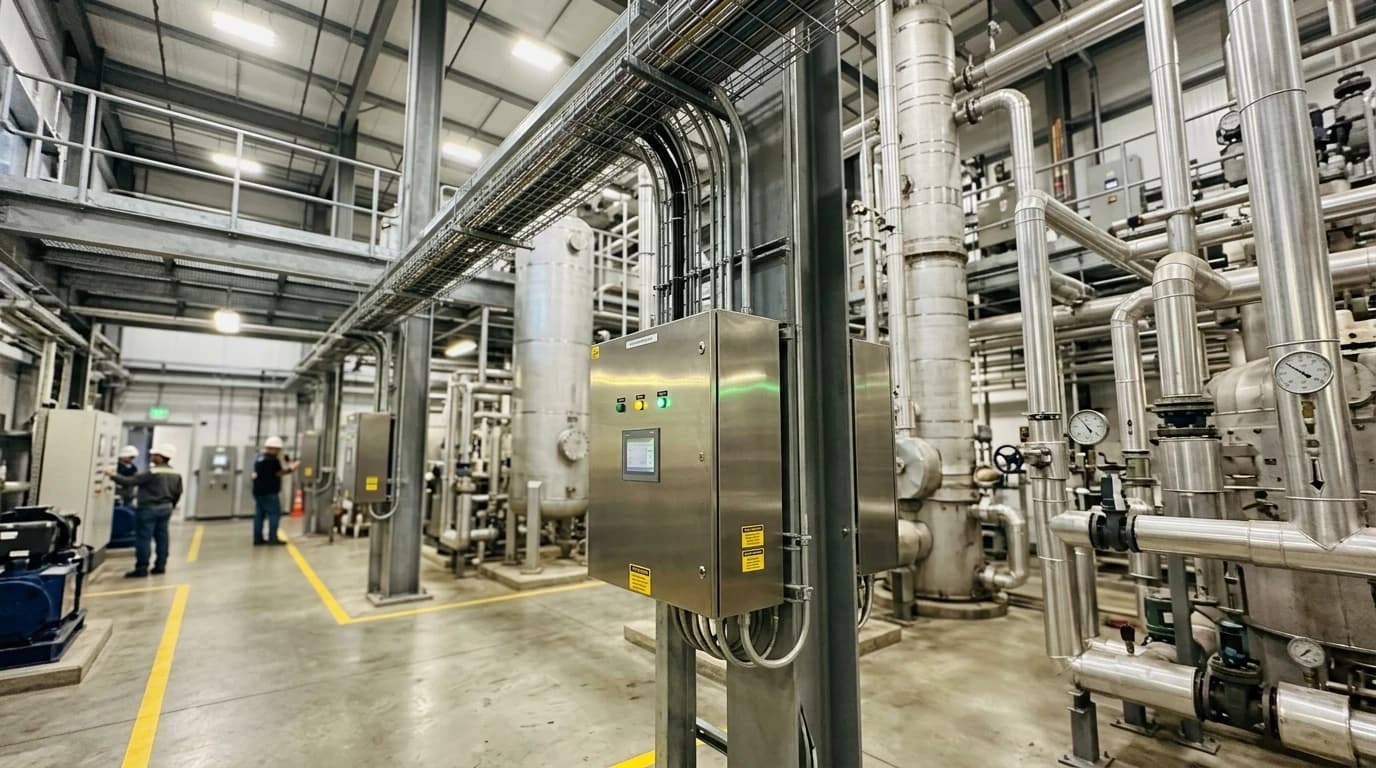
Bridging ISA-95 for Chemical Energy Management
How secure OPC-UA and MQTT extraction cuts chemical facility energy costs by 15-25%.
PLC data integration for energy management is a technical process that connects plant-floor programmable logic controllers (PLCs) to higher-level software systems to collect, contextualise, and analyse real-time utility consumption data. In chemical manufacturing facilities, heavy utility assets—such as fractional distillation columns, batch reactors, industrial boilers, and cooling towers—consume massive quantities of thermal and electrical energy. While PLCs are highly effective at maintaining tight process control, safety, and operational stability, the valuable energy and operational telemetry they handle remains trapped within local control loops.
Bridging this gap requires a structured approach to systems integration. By extracting and normalising data from legacy and modern PLCs, chemical manufacturers can transition from retrospective, spreadsheet-based billing reviews to real-time, production-linked energy intelligence.

Omni Vision delivers turnkey utility metering, CO2 tracking, and AI-powered production KPI intelligence — giving you real-time dashboards and actionable insights across your entire facility.
The ISA-95 Framework for Chemical Energy Management
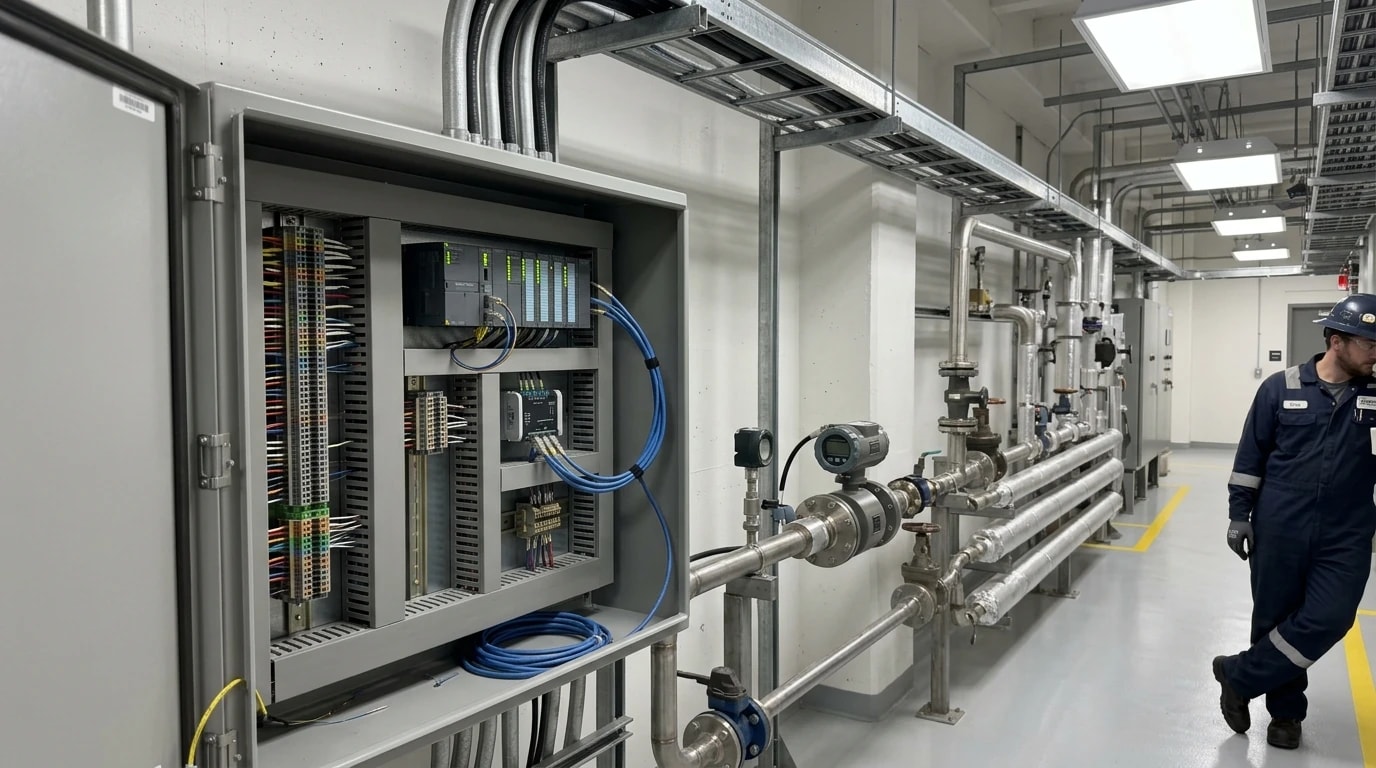
The ANSI/ISA-95 (IEC 62264) standard establishes a functional hierarchy that serves as the blueprint for enterprise-to-control system integration. Resolving the divide between plant automation and corporate energy management requires mapping utility consumption data across these distinct operational levels.
Demarcating Level 1 and 2 Automation Layers
At the base of the ISA-95 pyramid, Level 1 represents physical sensors, actuators, and instrumentation, including flowmeters, temperature transmitters, and sub-meters. Level 2 comprises the control systems—such as PLCs, Distributed Control Systems (DCSs), and Supervisory Control and Data Acquisition (SCADA) platforms—that execute real-time process logic.
In a typical chemical facility, a Siemens S7-1500, Allen-Bradley ControlLogix, or Modicon M580 controller directly monitors parameters like mass flow rates, steam pressure, and electrical current. However, these controllers are dedicated to process safety and output quality. The raw data they register is rarely exposed to energy management software unless a dedicated integration interface is established.
Transitioning to Level 3 and 4 Management Systems
Level 3 covers Manufacturing Execution Systems (MES) and local historians, which oversee production scheduling, batch tracking, and workflow execution. Level 4 represents corporate Enterprise Resource Planning (ERP) and business planning systems.
Traditional energy management relies on monthly utility invoices or manual readings, which operate strictly at Level 4. This approach fails to associate energy consumption with specific manufacturing events.
Connecting Level 2 PLCs to Level 3 and 4 energy intelligence platforms, such as the Omni Vision Energy Intelligence Platform, enables plants to correlate millisecond-level process events with high-resolution energy consumption profiles.
Contextualising Utility Consumption with Production Outputs
Chemical plants cannot evaluate energy efficiency by looking at total energy consumption alone. A drop in electricity or steam usage may simply indicate lower production volumes rather than improved process efficiency.
By integrating PLC batch start/stop signals, recipe parameters, and mass output logs with utility telemetry, the Omni Vision platform calculates precise process-linked Key Performance Indicators (KPIs):
Energy per Batch: The exact kilowatt-hours (kWh) and kilograms of steam (kg) consumed during a specific reaction cycle.
Cost per Tonne: The financial utility cost allocated to each unit of finished chemical product.
Idle Consumption: The energy wasted when a reactor or auxiliary system remains heated or pressurised during non-production periods.
Industrial Protocols for Secure PLC Connectivity
To bridge the gap between Level 2 automation and Level 4 analytics without disrupting critical chemical processes, systems integrators rely on established industrial communication protocols. These protocols must be implemented in a non-invasive, read-only configuration.
ProtocolTypical Physical LayerData StructureBest Suited ForSecurity LevelModbus TCP/RTUEthernet (TCP/IP) or RS-485Flat Register Maps (Holding, Input)Legacy check-meters, steam flow transmitters, older PLCsLow (requires external gateway protection)OPC-UAEthernet (TCP/IP)Hierarchical Object Nodes (Companion Specs)Modern PLC-to-SCADA/MES bridging, secure local integrationsHigh (built-in encryption, certificates)MQTT (Sparkplug B)Ethernet (TCP/IP) or CellularTopic-based Payload (JSON/Protobuf)Cloud-bound transmission, remote assets, tank farmsVery High (outbound-only connections)
Modbus: The Legacy Workhorse
Modbus remains a primary protocol for sub-metering and field instrumentation in chemical facilities. Modbus RTU (over RS-485) and Modbus TCP (over Ethernet) allow gateways to poll specific internal registers.
For example, an integrator can map holding registers containing active power (kW), reactive power (kVAR), current (A), and total energy (kWh) from an electrical sub-meter directly into an edge device. When accessing legacy PLCs, engineers configure read-only register maps, ensuring the integration platform cannot write to control registers or overwrite safety interlocks.
OPC-UA: Secure and Object-Oriented
Open Platform Communications Unified Architecture (OPC-UA) is widely selected for modern automation architectures. Unlike Modbus, which uses flat, unlabelled memory addresses, OPC-UA represents data using rich, hierarchical structures with built-in metadata.
In a chemical plant, process engineers use OPC-UA servers embedded directly within modern PLCs (such as Siemens S7-1500) to expose process tags safely. OPC-UA provides native cryptographic signatures and encryption, preventing eavesdropping and unauthorised access as data moves between Level 2 and Level 3.
MQTT Sparkplug B: Lightweight and Event-Driven
Message Queuing Telemetry Transport (MQTT) combined with the Sparkplug B payload specification is highly effective for pushing data to cloud environments. MQTT operates on a publish-subscribe model, which eliminates the need for continuous polling.
An edge gateway in a chemical facility collects local PLC data and publishes updates only when a value changes beyond a predefined deadband—a process known as report-by-exception. This minimises network bandwidth consumption, making it ideal for large facilities with distributed assets like remote tank farms, effluent treatment plants, and utility yards.
Maintaining Zero-Write Access to Safeguard Plant Integrity
Chemical manufacturing involves volatile reactions, high-pressure lines, and strict Good Manufacturing Practice (GMP) regulations. Modifying a running PLC program to export data is highly risky and often requires extensive re-validation.
The Omni Vision platform achieves secure, non-invasive data extraction by implementing a one-way, read-only architecture. The edge gateways are configured at the physical and protocol levels to block all inbound 'write' commands. This guarantees that the energy platform can never alter process setpoints, inject command logic, or affect safety-instrumented systems (SIS).
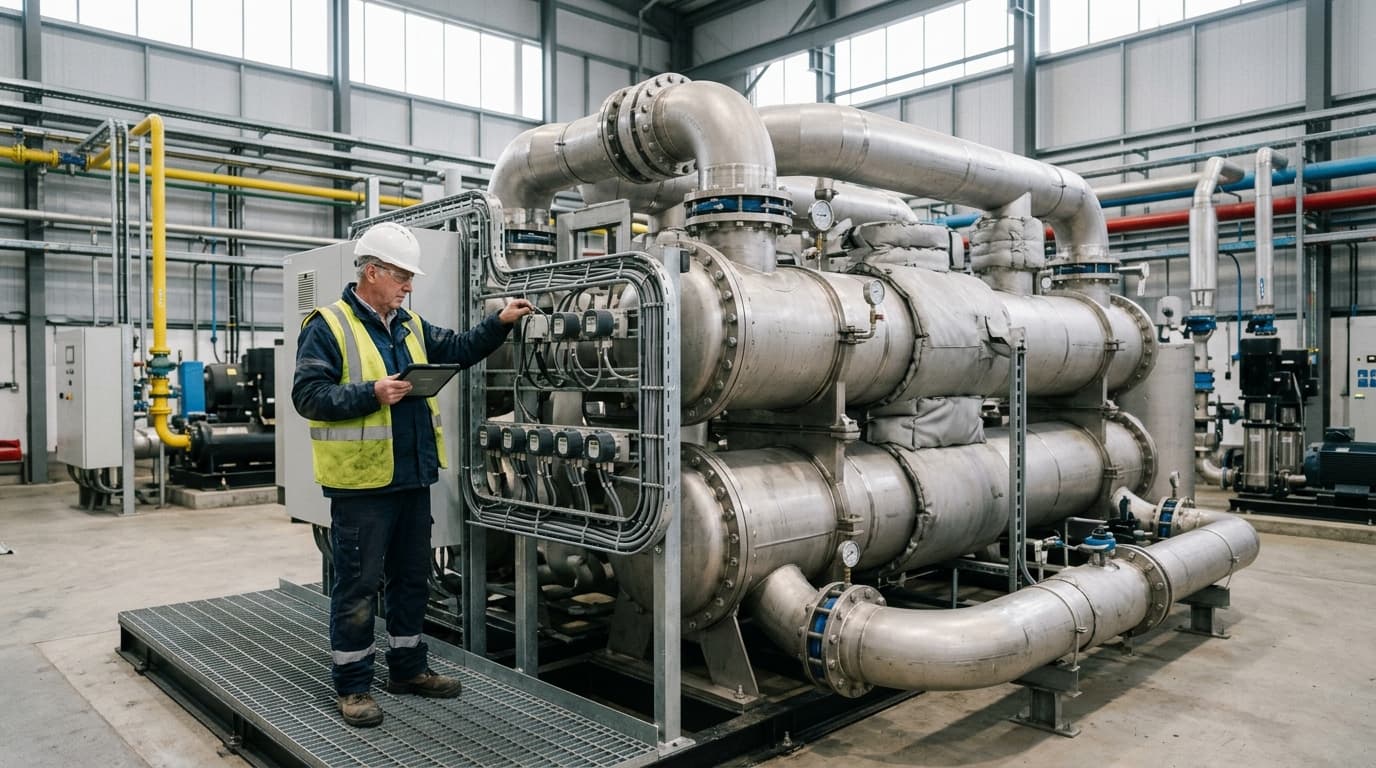
Track energy consumption, emissions, and process parameters with seamless PLC/SCADA integration via Modbus, OPC-UA, and MQTT protocols.
Cybersecurity Architectures Under IEC 62443
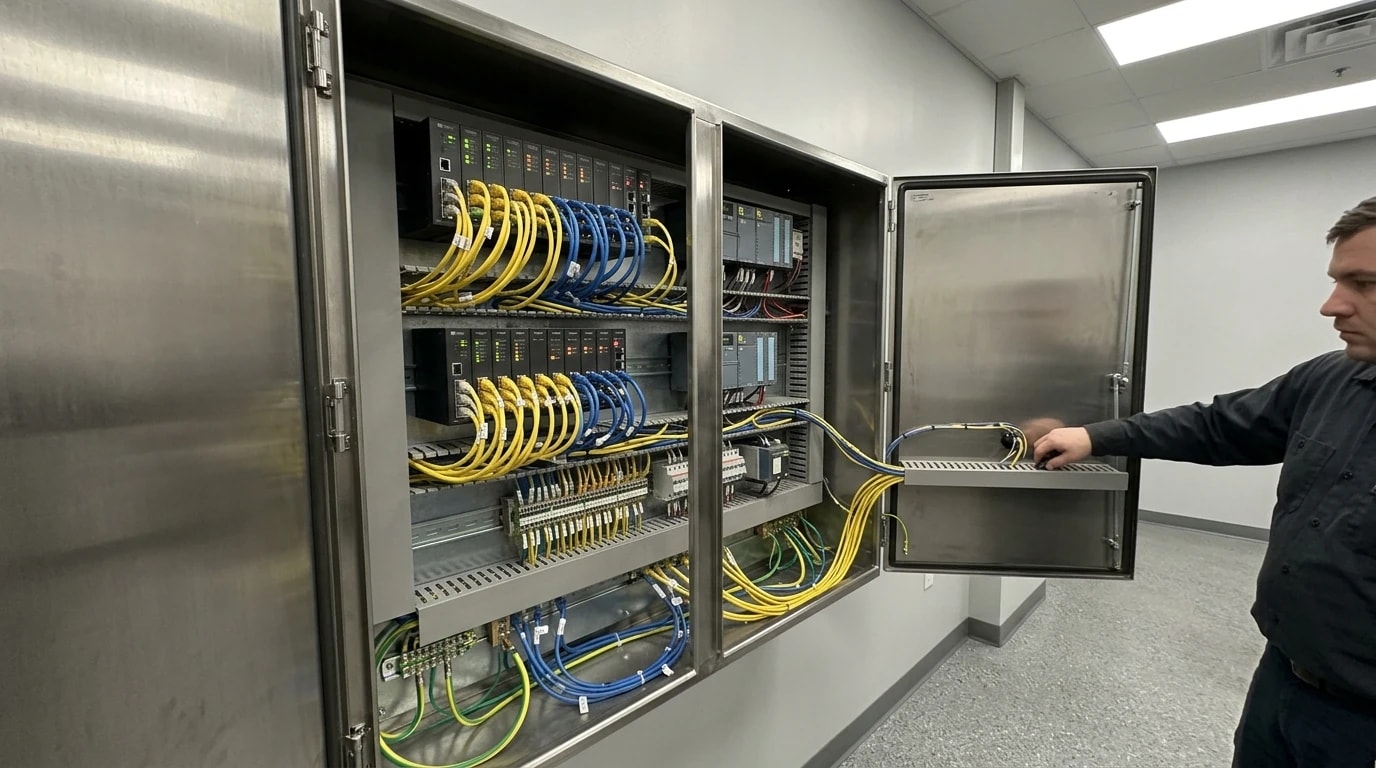
Connecting previously isolated operational technology (OT) systems to higher-level IT networks or cloud environments introduces security risks. To mitigate these threats, integrations must adhere strictly to the IEC 62443 standard, which governs cybersecurity for Industrial Automation and Control Systems (IACS).
Applying the Zones and Conduits Model
IEC 62443 enforces the segmentation of industrial networks into distinct 'Zones' based on risk profiles, with communication between zones restricted to designated 'Conduits'.
The OT Zone (Levels 1-2): Contains the PLCs, SCADA hosts, and safety systems. This zone must remain completely isolated from direct internet access.
The Demilitarised Zone (IDMZ): A buffered zone established between the corporate IT network and the plant OT network.
The IT / Cloud Zone (Level 4): Host to corporate systems and the central energy management software.
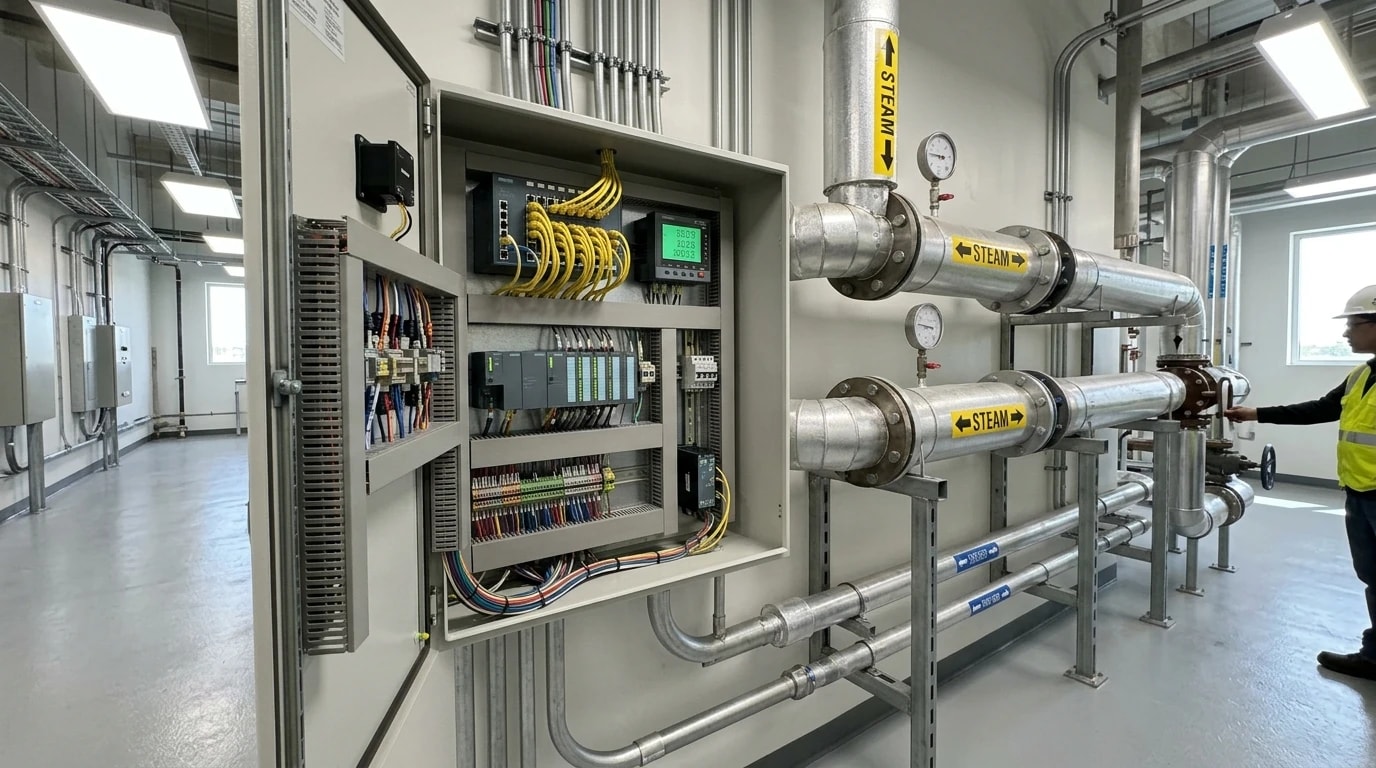
An edge gateway is installed within a secure cabinet on the plant floor. It bridges the OT Zone and the IDMZ, preventing direct, unmonitored communication between the PLC automation layer and the internet.
Hardware-Enforced Network Isolation
To ensure the integrity of the OT Zone, systems integrators employ hardware-enforced isolation techniques:
Dual-Homed Network Interfaces: The edge gateway features independent physical Ethernet ports. One port connects exclusively to the local PLC network (OT), while the other connects to the outbound corporate network or cellular router. There is no internal IP routing enabled between these ports.
Outbound-Only Connections: The gateway establishes a secure outbound connection to the cloud using TLS 1.3 encryption over standard port 443 (HTTPS/MQTTS). The cloud server cannot initiate a connection back to the edge gateway, closing the port to external attack vectors.
Local Store-and-Forward: If the outbound network connection fails, the edge gateway caches up to 30 days of utility and production telemetry locally. Once the connection is restored, the gateway uploads the backlogged data with accurate timestamps, preventing data gaps in compliance logs.
Regulatory Compliance: ISO 50001 Auditing and ESOS Phase 4 in the UK
Implementing PLC data integration for energy management is a vital step for chemical manufacturers working to satisfy strict regulatory reporting frameworks.
ISO 50001 Energy Management Verification and Audit
ISO 50001:2018 defines the requirements for establishing, implementing, and maintaining an Energy Management System (EnMS). Under this standard, organisations must identify Significant Energy Users (SEUs)—such as high-consumption chemical reactors and steam boilers—and establish clear Energy Baselines (EnBs) and Energy Performance Indicators (EnPIs).
Manual readings and monthly bills do not provide the granularity required to track EnPIs effectively. By using PLC data integration, manufacturers capture continuous utility metrics alongside active process variables (such as ambient temperature, batch run times, and raw material throughput). This allows energy managers to use multi-variable regression analysis to normalise EnPIs against external variables, providing auditors with a verifiable, high-fidelity audit trail.
Preparing for the ESOS Phase 4 Compliance Deadline
In the United Kingdom, the Energy Savings Opportunity Scheme (ESOS) is a mandatory energy assessment scheme for large undertakings.
Who Qualifies: Any UK undertaking that employs 250 or more people, or has an annual turnover exceeding £44 million and an annual balance sheet total exceeding £38 million.
Phase 4 Qualification Date: 31 December 2026.
Phase 4 Compliance Deadline: 5 December 2027.
Under ESOS Phase 4, the Environment Agency enforces tighter scrutiny over energy assessments. Companies must measure at least 95 per cent of their total energy consumption and produce detailed action plans with projected, quantifiable energy savings.
Relying on manual spreadsheets to satisfy these audits introduces compliance risks and leads to costly, time-consuming assessments. Real-time PLC integration directly feeds the ESOS evidence pack with precise, continuous process energy data. This simplifies the Lead Assessor's auditing process, reduces operational audit overhead, and translates directly into actionable, verifiable carbon-reduction projects.
Scope 1 and 2 CO₂e Emissions Reporting
To comply with Streamlined Energy and Carbon Reporting (SECR) and the UK/EU Emissions Trading Scheme (ETS), chemical manufacturing plants must calculate and report their greenhouse gas emissions.
Scope 1 (Direct Emissions): Generated by burning natural gas, oil, or chemical feedstocks in boilers, oxidisers, and on-site generation plant.
Scope 2 (Indirect Emissions): Resulting from purchased electricity used to drive pumps, compressors, and chillers.
The Omni Vision platform automates this conversion. By continuously extracting raw flow and electrical data from PLCs, the platform applies up-to-date regional emissions factors to generate audit-ready, real-time reports on carbon dioxide equivalent (CO₂e) output.
Deploying the Omni Vision Platform: The Turnkey Implementation Methodology
Transitioning a chemical plant from siloed PLC systems to centralised energy intelligence requires a structured, proven deployment model. EnerTherm Engineering delivers this through an 8-to-16-week turnkey deployment model, combining physical site integration with cloud-based intelligence.
The 8-to-16-Week Turnkey Deployment Timeline
PhaseWeeksCritical DeliverablesTechnical ActionsPhase 1: Site Audit & SEU MappingWeeks 1–4Utility identification, SEU mapping, network topology reviewAudit electrical, gas, steam, water, compressed air, and oil systems. Review PLC cabinet wiring and network access.Phase 2: Gateway InstallationWeeks 5–8Physical gateway mounting, dual-homed network configurationInstall secure edge hardware. Connect to PLC networks via Modbus, OPC-UA, or proprietary interfaces. Verify read-only configurations.Phase 3: Cloud IntegrationWeeks 9–12MQTT Sparkplug B publishing, database linking, dashboardsEstablish secure TLS 1.3 outbound-only tunnel to the Omni Vision cloud platform. Map PLC memory tags to standard energy metrics.Phase 4: KPI VerificationWeeks 13–16Production-linked KPI validation, automated compliance setupVerify 'energy per batch' and 'cost per tonne' metrics. Configure automated ISO 50001, SECR, and ESOS Phase 4 reporting.
Mapping Six Core Utility Streams
Comprehensive energy management in a chemical plant must cover more than just electricity. The Omni Vision platform integrates six critical utility streams to construct a comprehensive thermal and electrical map of the facility:
Electricity: Monitoring motor currents, power factors, and peak demand spikes.
Natural Gas: Tracking boiler fuel feed rates to calculate combustion efficiency.
Steam: Measuring steam mass flow and pressure to optimise thermal transfer across reactors and distillation jackets.
Water: Auditing cooling tower make-up water and process wastewater volumes.
Compressed Air: Correlating compressor motor power with system pressure to isolate air leak rates.
Oil: Tracking thermal oil heating loops for high-temperature synthesis processes.
EPSA’s AI-Driven Cloud Analytics
Once the gateway establishes a secure, encrypted stream of utility and production metrics, EPSA’s cloud-based AI analytics engine begins processing the data.
The AI continuously runs anomaly detection algorithms, spotting deviations such as a steam control valve sticking open or a cooling pump experiencing motor degradation.
By analysing historical consumption patterns alongside production schedules, the engine provides predictive forecasting. This allows plant operators to schedule energy-intensive batch runs outside of peak tariff intervals, preventing expensive demand charges.
Achieving 15 to 25 per cent Energy Cost Reductions with Rapid ROI
By eliminating idle energy consumption, optimising combustion cycles, and identifying system anomalies in real time, chemical manufacturing facilities consistently achieve 15 to 25 per cent energy cost reductions. With rising energy tariffs and strict regulatory penalties, these savings typically deliver a project payback period of under 12 months.
PLC data integration for energy management represents a practical, high-value investment that transforms trapped plant-floor telemetry into a strategic asset for corporate sustainability, operational efficiency, and regulatory compliance.
This article reflects the independent analysis and editorial opinion of EnerTherm Engineering. Product names, trademarks, and brands mentioned belong to their respective owners. EnerTherm Engineering is not affiliated with, endorsed by, or a licensee of any third-party software or product mentioned unless explicitly stated.

Technical Manager — EnerTherm Engineering
John Naranjo is Technical Manager at EnerTherm Engineering, bringing specialist expertise in chemical and environmental engineering. He recently led the implementation of Omni Vision, EnerTherm's real-time energy and utility monitoring platform. He holds an MSc in Environmental Engineering from the University of Huelva and a BSc in Chemical Engineering, with memberships in both the Energy Institute and IChemE.
