
OPC UA vs Modbus for Industrial Energy Monitoring
Why subscription-based OPC UA prevents PLC CPU saturation during telemetry polling.
An industrial communication protocol comparison such as OPC UA vs Modbus for energy monitoring evaluates how physical utility data is structured, secured and transmitted from plant-floor meters to higher-level energy management systems. Modern industrial facilities operate under strict regulatory standards requiring precise carbon accounting and resource conservation. To satisfy these requirements, process plants rely on continuous telemetry collected from electrical sub-meters, gas flow meters, steam calorimeters and water meters. This multi-utility data serves as the foundation for calculating Scope 1 and Scope 2 greenhouse gas emissions, identifying thermal inefficiencies and demonstrating compliance with environmental audits.
However, extracting this telemetry from factory floors presents a significant integration challenge. Industrial plants typically house a mixture of decades-old legacy machinery and modern automated systems. Systems integrators must choose a communication protocol that can securely transport telemetry without disrupting the deterministic PLC control loops that govern production. The choice between Modbus and OPC UA highlights the operational trade-offs between simplicity, processing overhead and modern data security.
Modbus Architecture: Flat Registers in Industrial Energy Monitoring
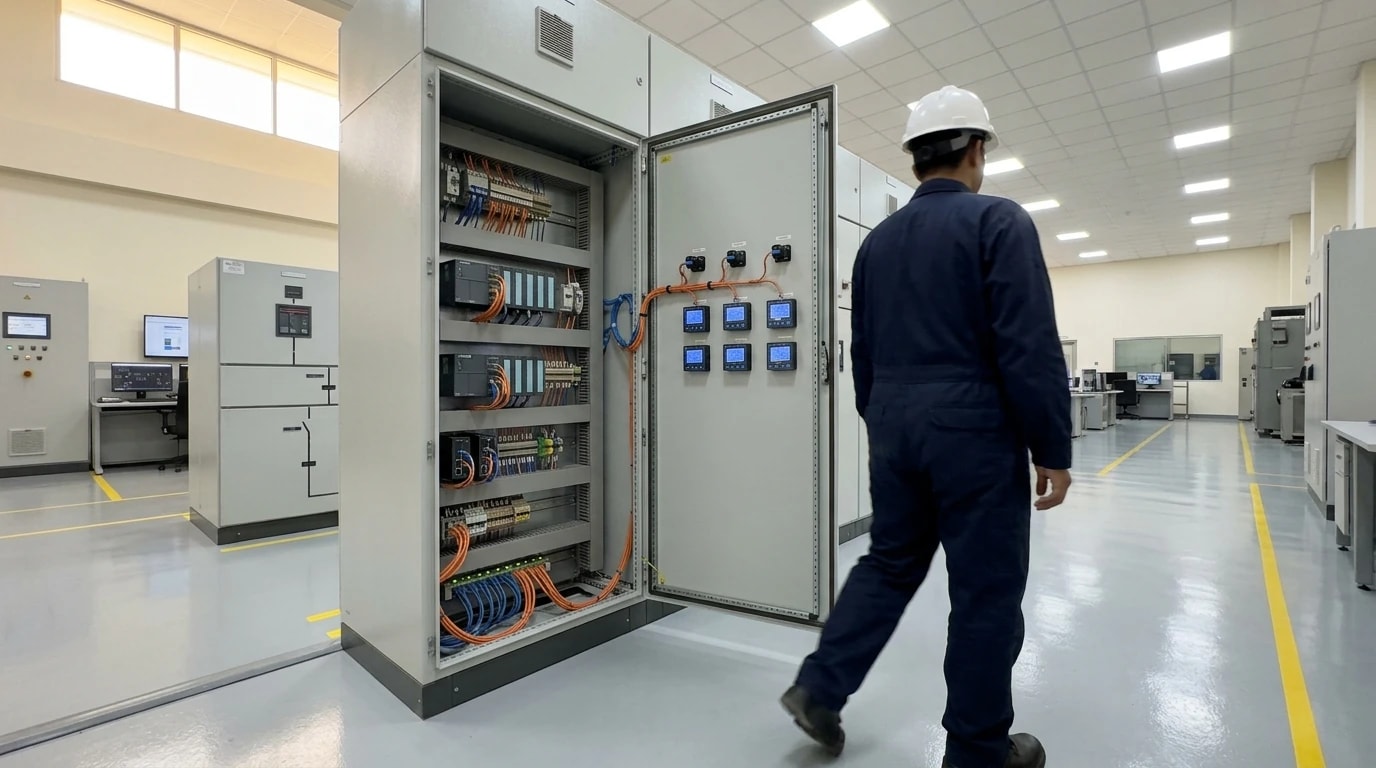
The Modbus protocol, developed by Modicon in 1979, remains a common standard for device-level communication in process manufacturing. Its longevity stems from its open-source nature, simplicity of implementation and low computational requirements.
The Limitations of 16-Bit Register Mapping
Modbus structures data using a client-server architecture, previously referred to as master-slave. Communication relies on a flat, unindexed memory map of 16-bit registers. These registers are divided into four specific tables: discrete inputs, coils, input registers and holding registers. Because the protocol was designed for microprocessors with highly limited memory, it does not support native data types, engineering units or metadata.
For instance, an electrical meter transmitting real-time active power might store its value in holding register 40001. When queried, the meter transmits a raw 16-bit integer such as 154. On its own, this number carries no context. The receiving SCADA system or database has no programmatic way of determining if this value represents 154 watts, 15.4 kilowatts or 1.54 megawatts. The protocol itself cannot communicate the physical unit of measure, the decimal scaling factor or the sensor's health status.
The Operational Costs of Manual Scaling
To reconstruct the physical telemetry, automation engineers must manually construct register maps based on the manufacturer's printed datasheets. If a gas flow meter records cumulative consumption as a 32-bit floating-point value, this number must be split across two consecutive 16-bit registers, such as 40002 and 40003. The integration team must write custom PLC logic or SCADA scripts to poll both registers, reconstruct the 32-bit float and apply the correct multiplier.
This manual mapping process introduces multiple failure points. If an engineer configures the byte order incorrectly (such as Big-Endian instead of Little-Endian), the calculated energy values will be completely corrupted. Furthermore, Modbus lacks native source timestamping. The protocol only transmits the current instantaneous value at the moment of polling. Any network latency or queue delays in the polling loop will result in timestamp misalignment at the historian level, compromising the precision of the logged energy consumption profiles.

Omni Vision delivers turnkey utility metering, CO2 tracking, and AI-powered production KPI intelligence — giving you real-time dashboards and actionable insights across your entire facility.
OPC UA Architecture: Semantic Data Modelling and the IEC 62541 Standard
To overcome the architectural limits of register-based communication, the OPC Foundation established Open Platform Communications Unified Architecture, standardised globally under the IEC 62541 series. This standard represents a shift from flat registers to an object-oriented information model.
Node Hierarchies and Self-Describing Metadata
OPC UA structures data as Nodes within an address space. Nodes can represent variables, devices or complete physical processes. Instead of relying on anonymous registers, each Node contains a rich set of Attributes and References that describe its physical meaning.
Each Node representing steam mass flow contains not only the numerical value but also native metadata. This metadata includes the data type, the engineering units (such as kilograms per hour), high and low limits and a built-in quality state. Furthermore, OPC UA enforces precise source timestamping at the physical device level. When the sensor reads the steam flow, it attaches a high-resolution UTC timestamp directly to the data payload. This timestamp travels with the data payload to the cloud, guaranteeing that the temporal alignment of multi-utility telemetry remains intact, regardless of any downstream network delays.
Automatic Tag Discovery in Multi-Utility Systems
The hierarchical structure of the IEC 62541 standard enables automatic tag discovery, which simplifies plant-wide integration. When an OPC UA client establishes a connection with an OPC UA server, it can browse the server's node tree. Integrators can query and import complete device profiles without manual register mapping.
In multi-utility operations, OPC UA companion specifications define standardised information models for each equipment class. This structure ensures that an electrical sub-meter from one manufacturer and a steam boiler controller from another expose their energy parameters using identical semantic paths. This standardisation eliminates configuration errors, reduces engineering hours and provides immediate, context-rich data to upstream environmental reporting systems.
CPU and Network Performance: High-Cadence Polling vs. Report-by-Exception
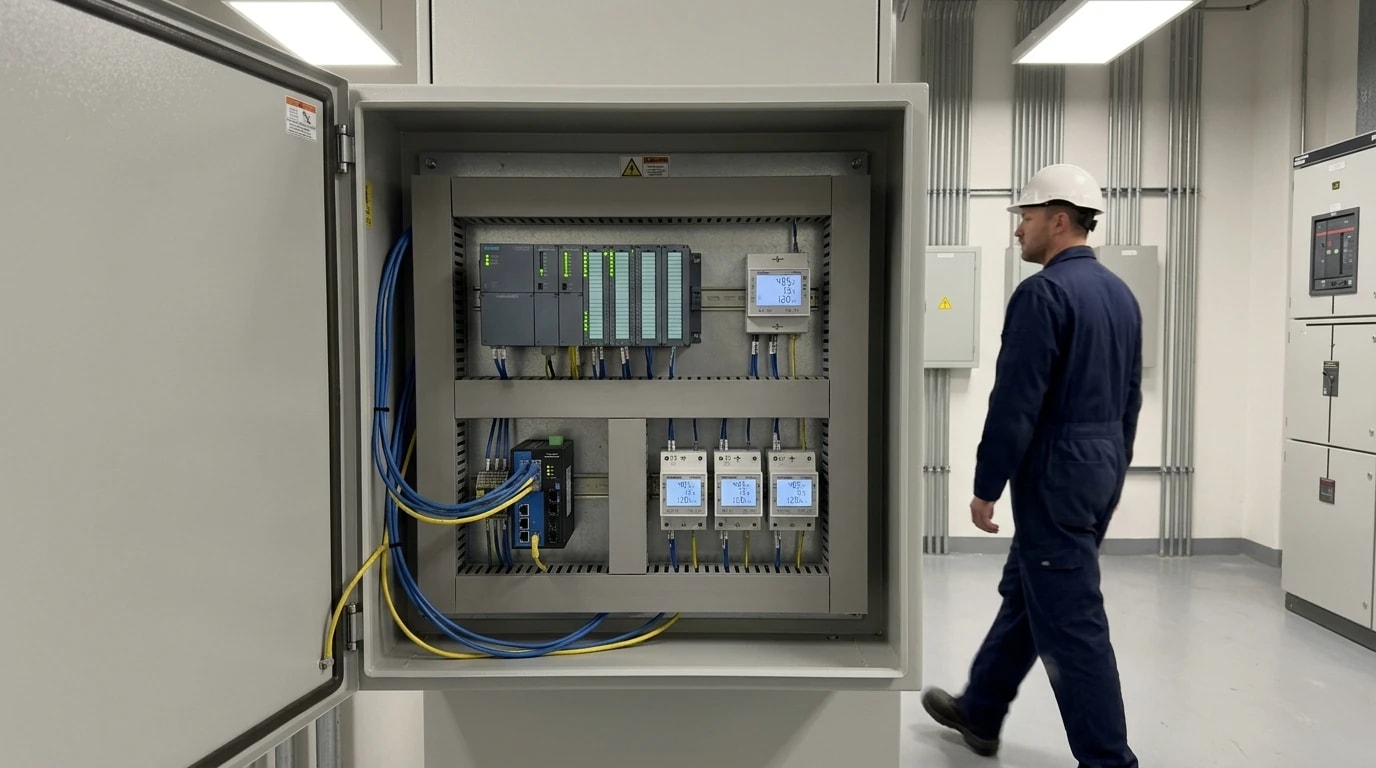
Extracting high-frequency energy data must not interfere with the primary control systems responsible for maintaining plant safety and production quality.
Deterministic PLC Control Loops and CPU Jitter
Industrial PLCs run on deterministic operating cycles to control high-speed machinery, thermal processes and chemical reactions. These control tasks execute on strict microsecond or millisecond schedules. When a SCADA system or energy gateway uses Modbus TCP, it relies on continuous, client-initiated polling.
To capture transient power spikes or rapid fluctuations in steam pressure, the gateway must query the PLC registers at a high cadence, such as every 200 milliseconds. Under this model, the PLC must dedicate significant processing cycles to parse incoming TCP packets, retrieve the requested registers and transmit the responses. If the system monitors hundreds of points, this polling traffic can saturate legacy PLC CPUs. This saturation introduces jitter into the deterministic control loop, causing task overruns or communication dropouts that disrupt manufacturing.
The Subscription-Based Report-by-Exception Model
OPC UA addresses this CPU overhead by utilising a Service-Oriented Architecture (SOA) that implements a subscription-based, report-by-exception model. Instead of continuous polling, the OPC UA client establishes a single subscription with the server.
The client defines a publishing interval and specifies Monitored Items within the server's address space. The OPC UA server inside the PLC samples the local data at the requested rate but only transmits packets when a value changes beyond a configured deadband. For instance, if natural gas flow remains constant or fluctuates within a safe deadband of 0.5 per cent, the PLC transmits no network packets. The server only pushes a data packet when a significant change occurs or when a keep-alive interval is reached. This report-by-exception architecture reduces network bandwidth and minimises PLC CPU utilisation, allowing the controller to maintain its deterministic process control limits without disruption.
| Feature / Metric | Modbus (RTU/TCP) | OPC UA (IEC 62541) |
|---|---|---|
| Data Format & Structure | Flat, anonymous 16-bit register maps | Hierarchical, object-oriented semantic nodes |
| Native Metadata | None (requires external mapping tables) | Built-in attributes (engineering units, scaling limits) |
| Data Security | None (requires external network isolation) | Native TLS, X.509 certificates and message signing |
| Data Transmission Model | Client-initiated cyclic polling | Subscription-based report-by-exception |
| Control Loop Safety | High risk of PLC CPU saturation under fast polling | Low CPU overhead, protects deterministic scanning |
| Data Buffering & History | None (connection loss causes immediate data gaps) | Integrated historical buffering and queueing |
| Timestamping | Recipient-side only (vulnerable to network latency) | Source-side UTC timestamping at the sensor |

Track energy consumption, emissions, and process parameters with seamless PLC/SCADA integration via Modbus, OPC-UA, and MQTT protocols.
Protecting the Factory Floor: Modbus Isolation vs. Native OPC UA Encryption
With the convergence of operational technology (OT) and enterprise IT networks, protecting energy telemetry from cybersecurity threats is a paramount concern.
The Vulnerabilities of Cleartext Modbus TCP/RTU
The Modbus protocol contains no native security mechanisms. Modbus TCP transmits all commands and telemetry in unencrypted, cleartext format over TCP port 502. The protocol contains no mechanisms for user authentication, packet signing or encryption.
Any device connected to the local OT network can intercept the cleartext packets, exposing critical production rates and energy consumption data. More critically, an unauthorised node can issue Modbus write commands to alter PLC register values, which could shut down utility supplies or damage physical equipment. To secure Modbus systems, network engineers must deploy extensive compensating controls. These controls include configuring virtual local area networks (VLANs), installing industrial firewalls and isolating the telemetry path within hardware-based VPN enclaves. These measures increase the complexity of the network architecture and demand substantial engineering maintenance.
Implementing X.509 Certificates and the Basic256Sha256 Profile
OPC UA resolves these security concerns by incorporating a comprehensive, built-in security architecture directly into the IEC 62541 standard. The protocol enforces security at the application, session and transport layers.
To secure data in transit, OPC UA uses standardised security profiles, such as Basic256Sha256. This profile utilises X.509 digital certificates to establish mutually authenticated, encrypted connections between clients and servers. This ensures that only authorised gateway devices can read energy metrics, while protecting the telemetry from packet sniffing and injection attacks using Transport Layer Security (TLS) encryption. To prevent accidental or malicious interference with the physical plant, systems integrators configure the OPC UA connection with read-only permissions. This enforces a strict one-way data flow, ensuring that environmental reporting applications can monitor consumption without writing commands or modifying PLC control code.
Telemetry Integrity: Managing Network Disruptions and Historical Data Buffering
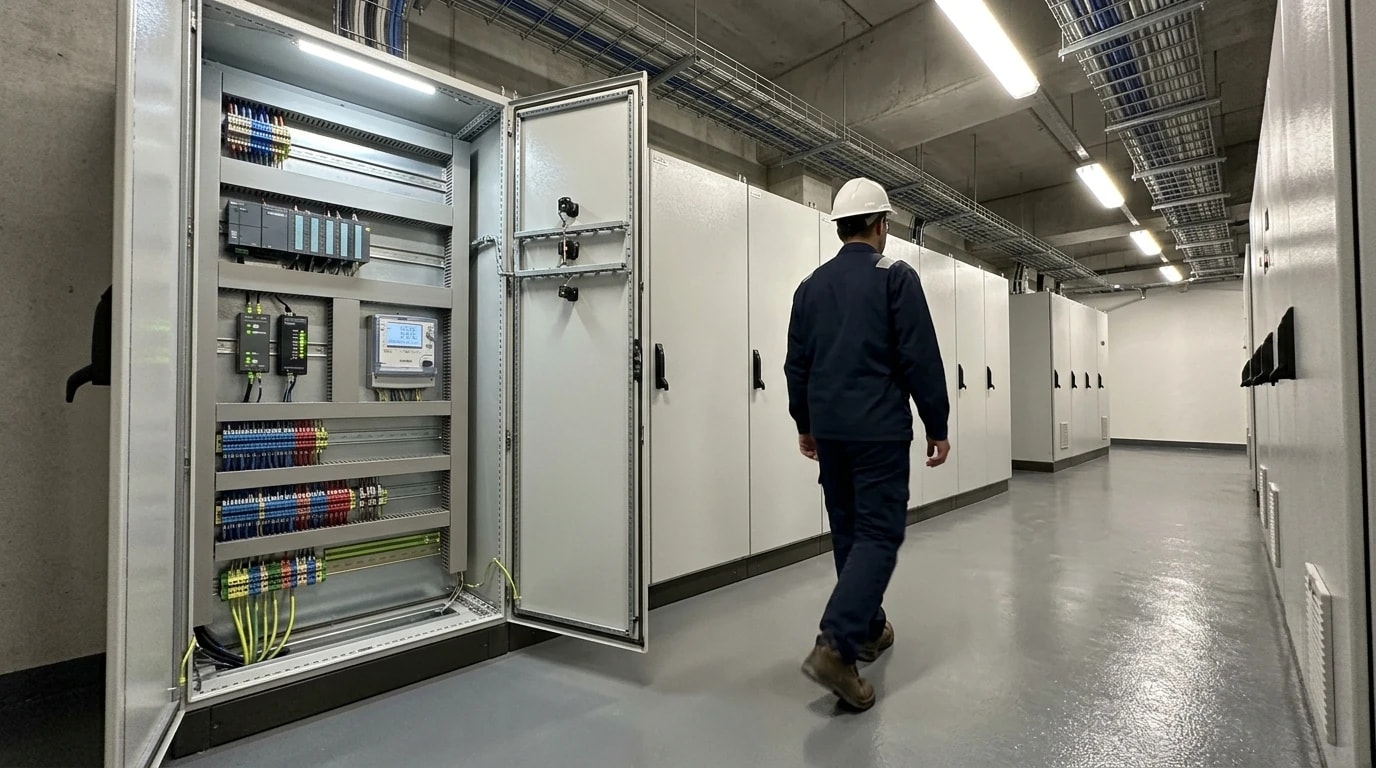
Accurate environmental accounting and carbon reporting require continuous, high-fidelity data streams. Any gaps in energy telemetry can undermine the credibility of emissions compliance.
Buffer Queues and Historical Data Access
Wide-area network (WAN) connections, cellular routers and local industrial Wi-Fi networks are subject to periodic dropouts, signal interference and routing failures. When a connection drop occurs in a Modbus-based system, the data flow halts instantly. Because Modbus meters and simple PLCs have no internal database or queuing memory, the unsent energy data is lost. This leaves permanent gaps in the historian database, forcing operators to manually estimate missing consumption data during audits.
OPC UA prevents this data loss through its integrated historical buffering capabilities. Under the IEC 62541 standard, OPC UA servers support monitored item queues and Historical Data Access (HDA). When the communication channel drops, the OPC UA server in the PLC or local edge gateway continues to collect telemetry, storing the values in a local memory buffer. Each buffered record retains its original, source-side UTC timestamp and quality status. Once the network connection is restored, the client automatically retrieves the buffered historical queue. This process synchronises the central database without manual intervention, ensuring complete, audit-ready data for regulatory compliance.
Scalable Multi-Utility Integration with the Omni Vision Energy Intelligence Platform
Turnkey Non-Invasive Deployment Model
The Omni Vision Energy Intelligence Platform is a comprehensive, turnkey solution designed to integrate both legacy Modbus instruments and modern OPC UA control networks. It monitors six core utility streams: electricity, natural gas, steam, water, compressed air and oil. The platform is deployed using a non-invasive, read-only architecture to extract data without modifying the active PLC logic. This design ensures that factory operations, safety systems and quality standards (such as HACCP and GMP) remain completely unaffected.
For legacy plant areas relying on Modbus sub-meters, the platform installs local industrial gateways. These gateways handle the continuous, high-frequency Modbus register polling on isolated local OT segments, shielding the plant's primary PLC CPUs from communication load. The gateway then compiles the raw register data, adds contextual metadata and formats it into clean OPC UA or MQTT payloads. The gateway pushes this structured data to the cloud using a highly secure, one-way outbound connection, preventing inbound cyber threats.
Powering AI Anomaly Detection and Scope 1 and Scope 2 Compliance
The structured telemetry is received by EPSA Cloud Intelligence, a cloud-based AI analytics engine. This engine uses machine learning to perform predictive forecasting and anomaly detection, identifying energy spikes and thermal leaks before they lead to permit threshold violations. The platform automatically converts the physical consumption data (such as cubic metres of gas or kilograms of steam) into Scope 1 and Scope 2 CO₂ equivalent (CO₂e) emissions values.
By moving from manual, spreadsheet-based tracking to automated, real-time telemetry, industrial operators obtain verified, auditable data. This level of precision is necessary for compliance with UK and EU regulatory frameworks, including the Streamlined Energy and Carbon Reporting (SECR) scheme, the Energy Savings Opportunity Scheme (ESOS), the EU Emissions Trading System (EU ETS) and the ISO 50001:2018 energy management standard. It also supports reporting under the ISO 14064-1:2018 standard, the Task Force on Climate-related Financial Disclosures (TCFD), the Carbon Disclosure Project (CDP) and US EPA regulations.
Delivered via a standardised 8 to 16 week turnkey deployment model, the Omni Vision Energy Intelligence Platform typically delivers a 15 to 25 per cent reduction in energy costs, resulting in a sub-12-month return on investment. This performance is backed by a 12-year track record and more than 150 successful industrial customer installations, providing process plants with the precise data infrastructure required for a sustainable, low-carbon transition.
This article reflects the independent analysis and editorial opinion of EnerTherm Engineering. Product names, trademarks, and brands mentioned belong to their respective owners. EnerTherm Engineering is not affiliated with, endorsed by, or a licensee of any third-party software or product mentioned unless explicitly stated.

Technical Manager — EnerTherm Engineering
John Naranjo is Technical Manager at EnerTherm Engineering, bringing specialist expertise in chemical and environmental engineering. He recently led the implementation of Omni Vision, EnerTherm's real-time energy and utility monitoring platform. He holds an MSc in Environmental Engineering from the University of Huelva and a BSc in Chemical Engineering, with memberships in both the Energy Institute and IChemE.
