AI Energy Optimisation Cuts Food Plant Costs by 15-25%
Non-invasive, read-only telemetry protects HACCP while securing SECR and ESOS compliance.
AI energy optimisation for food processing plants is a data-driven methodology that integrates machine learning algorithms with real-time utility telemetry to identify thermal imbalances, recommend optimised load-shaping, and reduce energy consumption without compromising food safety standards.
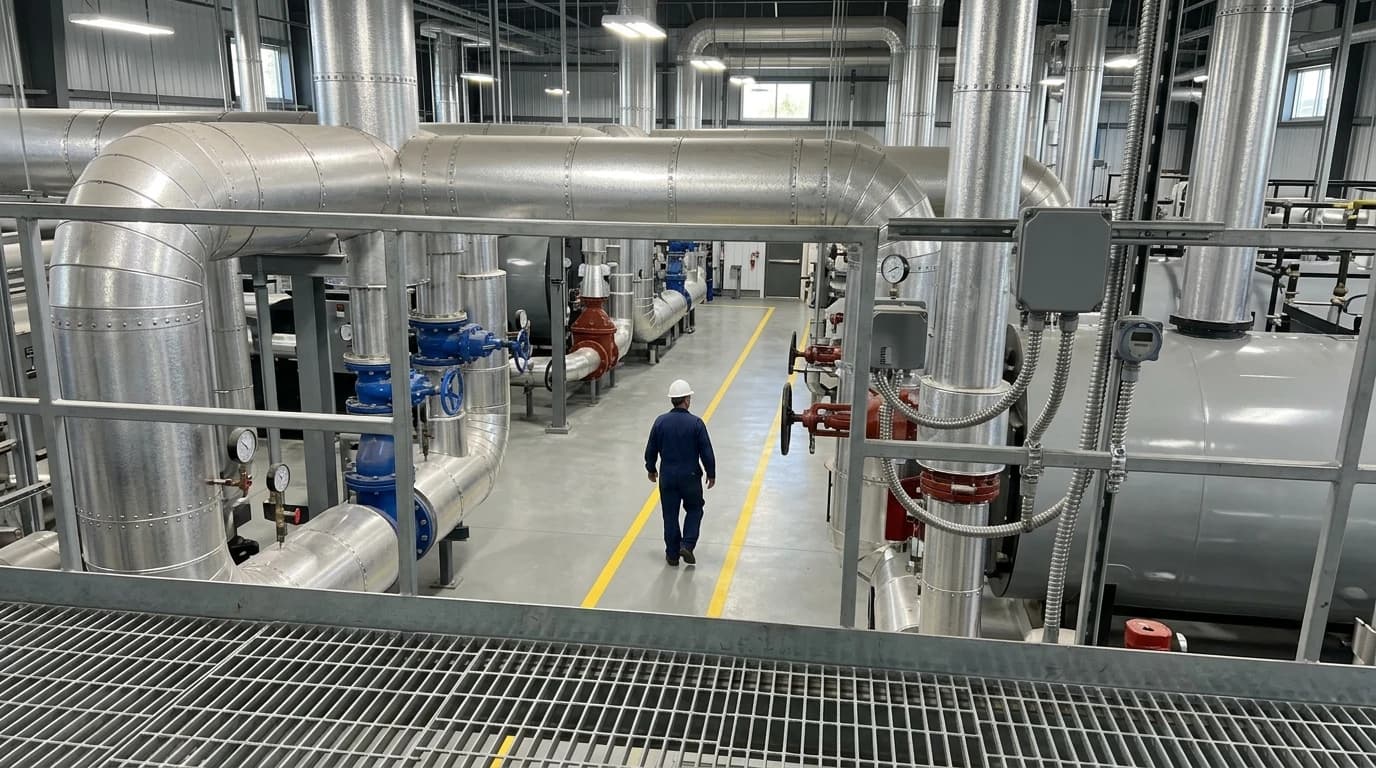
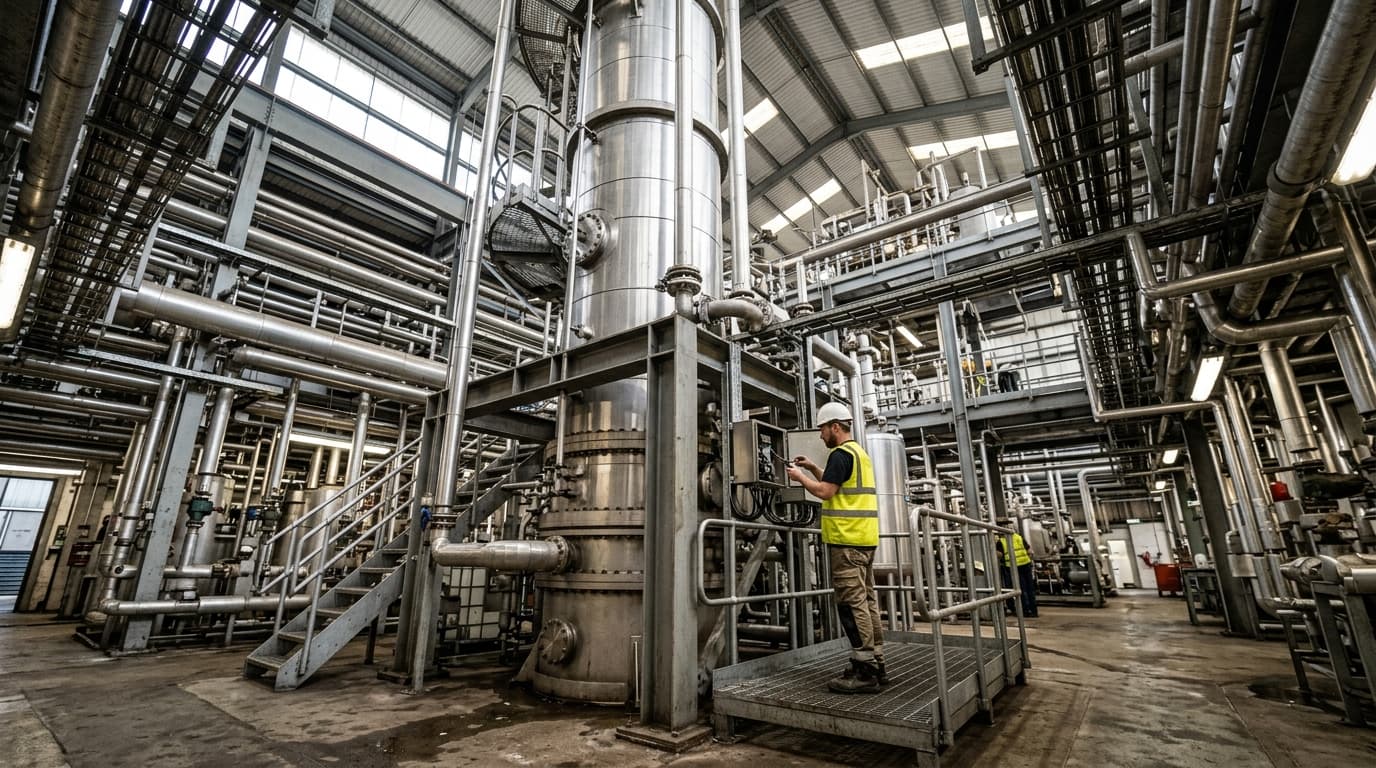
Food and beverage processing operations rely heavily on energy-intensive thermal systems, including industrial steam boilers, industrial refrigeration plants, heat exchangers, and compressed air systems. Historically, plant managers tracked energy consumption using monthly utility bills or manual spreadsheet entries. This lagging approach failed to capture transient spikes in energy usage or correlate utility consumption with specific batch processes.
Omni Vision delivers turnkey utility metering, CO2 tracking, and AI-powered production KPI intelligence — giving you real-time dashboards and actionable insights across your entire facility.
AI Energy Optimisation for Food Processing Plants
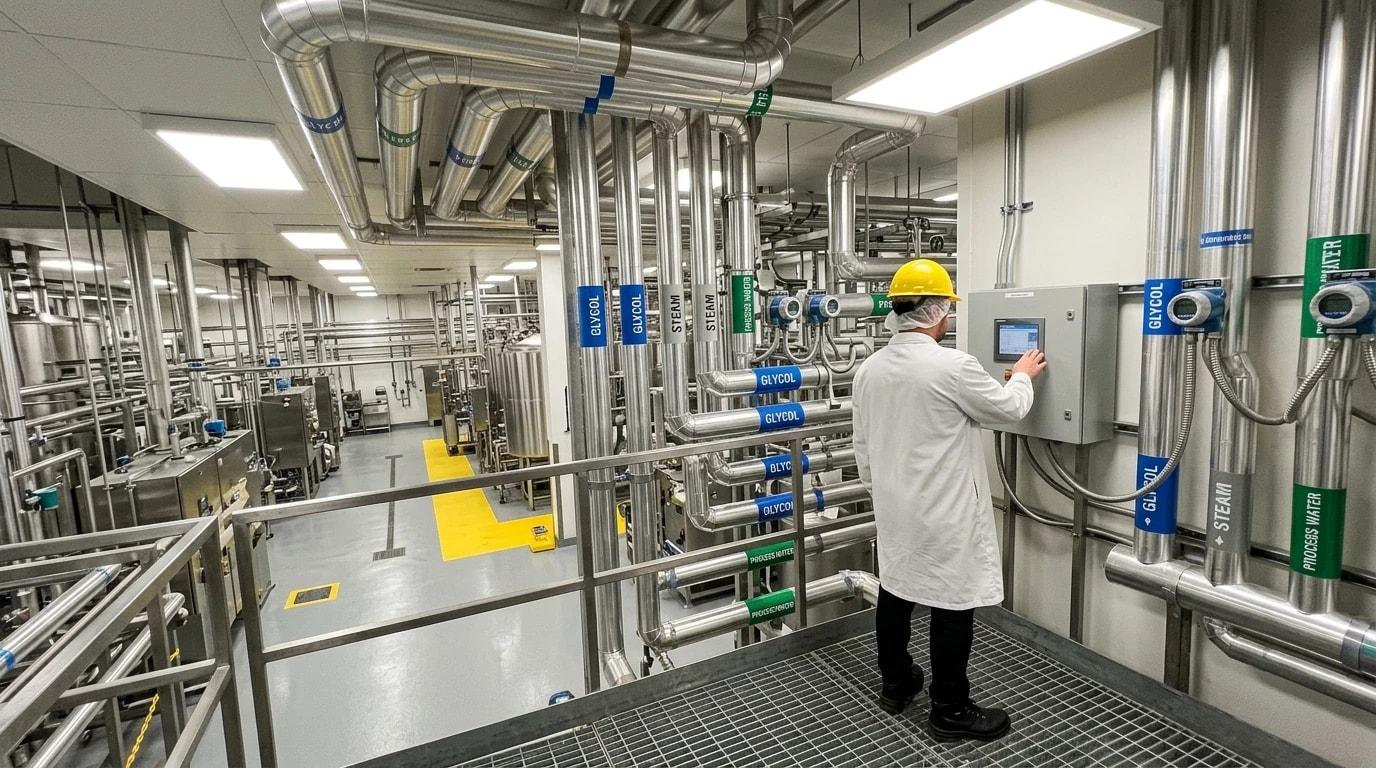
Advanced artificial intelligence engines process thousands of data points per second from on-site sensors. This high-resolution analysis enables food manufacturers to transition from retrospective utility tracking to predictive, real-time energy management. Rather than treating energy as a fixed monthly overhead, plant managers use AI models to understand how specific operational parameters—such as ambient air temperature, batch volume, and machine idle times—directly affect total energy consumption.
Technical Definition and Analytical Scope of Machine Learning
The underlying technology relies on machine learning models trained on historical process data. These models identify the complex, multi-variable relationships between utility consumption and production activities. Once trained, the AI can predict energy demand, detect subtle deviations from normal operating behaviour, and recommend real-time adjustments to minimise waste.
Six Utility Stream Telemetry and Continuous Utility Monitoring
A comprehensive energy strategy requires real-time monitoring across six core utility streams:
- Electricity: Tracking power draw on large compressor motors, packaging lines, and pump drives.
- Natural Gas: Monitoring burner efficiency, boiler combustion, and direct-fired oven fuel consumption.
- Steam: Measuring steam mass flow, boiler feed-water temperatures, and condensate recovery rates.
- Water: Evaluating intake volume, process washing efficiency, and waste-water discharge rates.
- Compressed Air: Pinpointing pressure drops and identifying pneumatic leaks in packaging zones.
- Oil: Tracking thermal oil systems used in deep-frying or high-temperature baking processes.
By integrating these six streams into a single analytical platform, food processing facilities obtain an unprecedented level of visibility. This telemetry allows for immediate identification of waste, such as a compressed air leak or a failing steam trap, which might otherwise persist unnoticed for months.
Overcoming the Legacy Data Bottleneck in Food Plants
Legacy automation systems in food processing facilities often store data in isolated silos. The supervisory control and data acquisition (SCADA) system, the programmable logic controllers (PLCs), and the enterprise resource planning (ERP) systems rarely communicate with one another regarding energy performance. Modern AI integration platforms overcome this bottleneck by aggregating data from these disparate systems, standardising the formats, and pushing the telemetry to a secure cloud-based analytics engine for real-time analysis. This unification allows the AI model to establish a direct relationship between the mass of ingredients processed and the exact kilojoules of energy expended.
Non-Invasive Data Extraction and HACCP Compliance
Any digital intervention within a food manufacturing environment must respect strict hygiene and safety regulations. Hazard Analysis and Critical Control Point (HACCP) frameworks govern critical aspects of food production, meaning that any change to process controls, hardware, or PLC programming requires extensive re-validation and carries a high operational risk.
The Food Safety Risk of Control System Interference
Modifying the control logic of an active PLC in a food processing plant is highly problematic. An unexpected software freeze or control signal override could disrupt critical pasteurisation temperatures, product cooling rates, or mixing times, resulting in immediate food safety failures and the potential loss of complete production runs. For this reason, quality assurance teams strictly forbid any system integration that permits write access to critical control networks.
Read-Only Communication Protocol Standards
To eliminate this risk, modern energy management architectures establish a strictly non-invasive, read-only interface with existing plant PLCs. This protocol-level boundary ensures that the energy monitoring system cannot send command signals back to the machines. System integrators configure communication over industry-standard industrial protocols, including:
- OPC-UA (Open Platform Communications Unified Architecture)
- MQTT (Message Queuing Telemetry Transport)
- Modbus TCP/IP
- BACnet
These protocols permit high-frequency data extraction directly from existing flow meters, temperature transmitters, and motor drives without altering the underlying PLC control logic or violating HACCP validation boundaries.
One-Way Encrypted Data Flow Architecture
Physical and software-based data diodes maintain security at the network edge. The on-site data acquisition panel, built to precise industrial standards, utilises dual-network interface cards (NICs). One NIC connects exclusively to the local plant OT (Operational Technology) network to gather read-only sensor data, while the second NIC connects to the IT network or an outbound cellular gateway. This hardware segregation prevents external traffic from entering the plant control system. The system heavily encrypts all data transmitted to the cloud-based AI engine, ensuring that proprietary production recipes and batch statistics remain secure.
To avoid any physical disruption to production pipework or electrical distribution, engineers utilise non-invasive sensing hardware. For instance, clamp-on ultrasonic flow meters measure water and steam condensate velocity from the outside of the pipe, avoiding the need to cut lines or halt production. Similarly, split-core current transformers clamp around existing electrical feeders without requiring a power shutdown. These non-invasive hardware choices ensure that the physical integrity of the processing plant remains undisturbed, preventing any contamination risks that could compromise HACCP compliance.
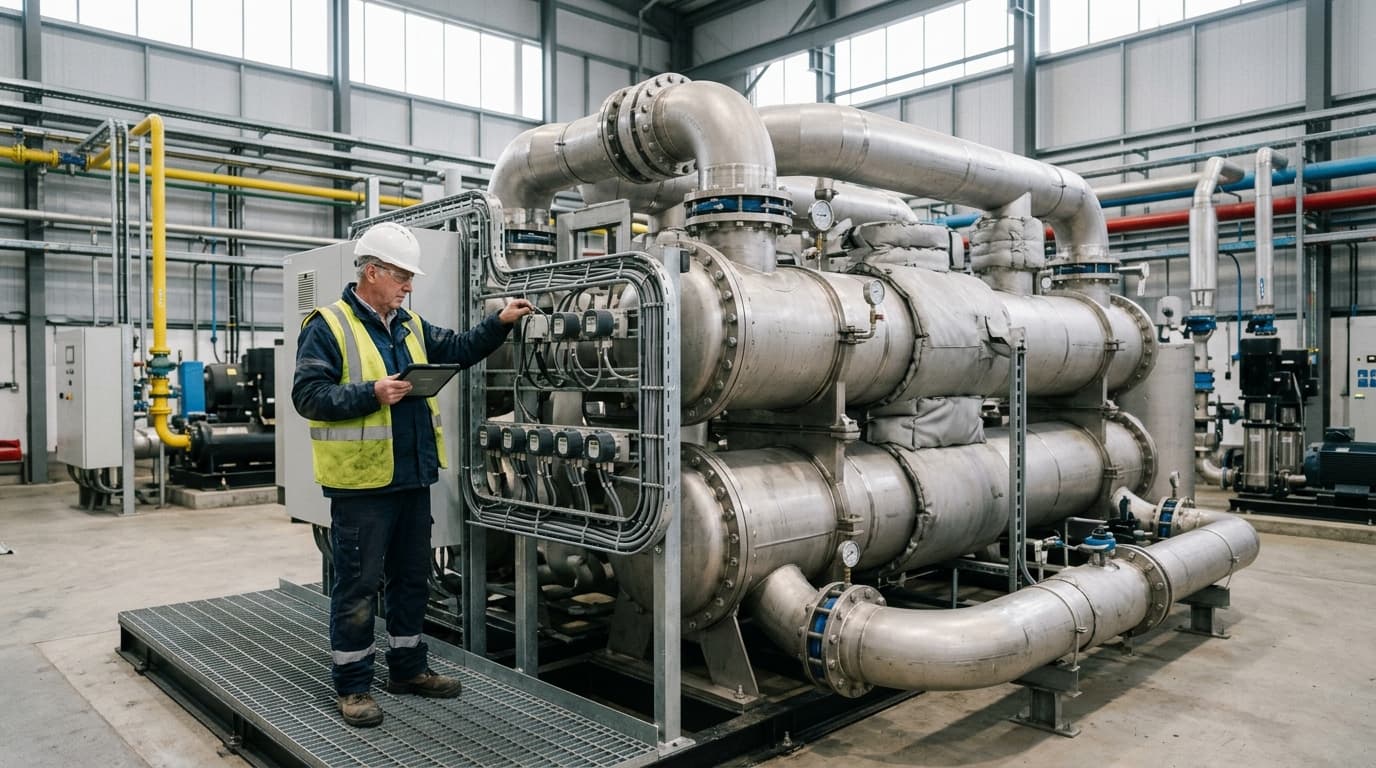
Track energy consumption, emissions, and process parameters with seamless PLC/SCADA integration via Modbus, OPC-UA, and MQTT protocols.
Advanced Thermal Control: Refrigeration Load Balancing and Steam Trap Monitoring
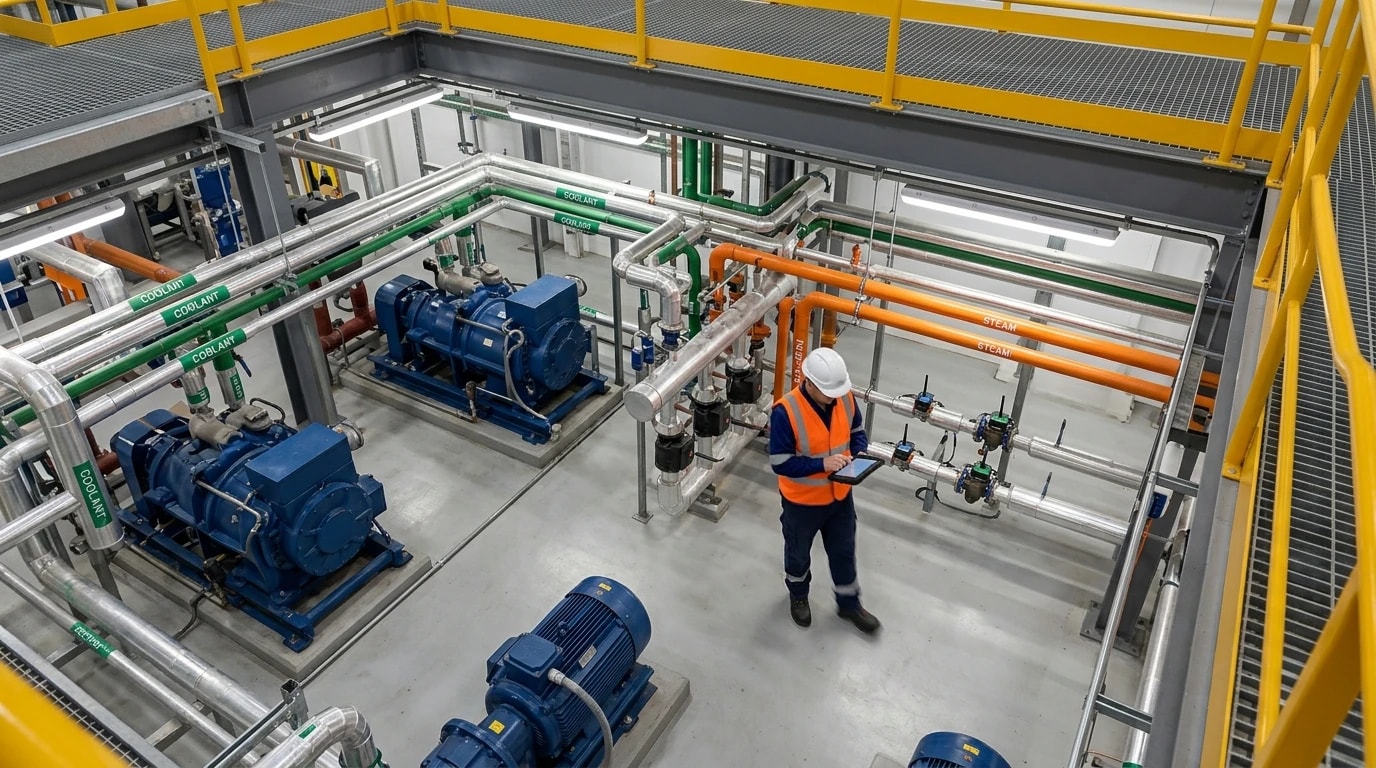
Thermal processes represent the highest operating expenses within a food processing facility. Specifically, industrial refrigeration and steam generation plants represent prime opportunities where AI energy optimisation for food processing plants delivers immediate and substantial savings.
Dynamic Refrigeration Load Balancing for Industrial Chillers
Industrial cold storage, blast freezing, and chilling zones represent a major portion of a food plant's electricity bill. These processes rely on complex ammonia (NH₃) or carbon dioxide (CO₂) refrigeration compressors. In typical plants, multiple compressors operate independently, starting and stopping in response to localised thermostats. This uncoordinated behaviour frequently causes concurrent compressor startups, creating massive, transient spikes in electrical peak demand.
AI analytics platforms address this through dynamic refrigeration load balancing. The cloud-based AI monitors:
- Real-time suction pressures and evaporator temperatures
- Current ambient weather conditions and humidity forecasts
- The thermal mass and cooling profiles of incoming food products
- Live electrical grid tariff rates
By predicting cooling demand hours in advance, the AI forecasts the most efficient scheduling profiles, recommending that operators pre-cool cold storage warehouses during cheaper off-peak tariff periods to utilise the physical food product as a thermal battery. These dynamic insights are implemented by plant operators or existing building management systems (BMS) during validated change windows. By advising on staggered compressor start times to shave peak demand, the algorithm helps teams prevent expensive utility peak-shaving penalties and reduce compressor wear-and-tear.
Thermodynamically, the Coefficient of Performance (COP) of a refrigeration system is highly sensitive to suction pressure. For each 1°C increase in the suction temperature, compressor energy consumption decreases by approximately 2 to 3 per cent. By using machine learning models to forecast cooling loads, the platform identifies opportunities to adjust suction pressure setpoints to the highest safe limit, enabling operators or automated local systems to implement these adjustments safely, maximising the COP without risking product temperature excursions.
Automated Steam Trap Monitoring and Failure Detection
Steam is the primary medium for heating, pasteurisation, and sterilisation in food plants. A typical facility may operate hundreds of steam traps, which are automatic valves designed to discharge condensate and non-condensable gases while trapping live steam. Because steam traps operate continuously under high pressure and temperature, they degrade over time. Industry studies suggest that up to 15 to 20 per cent of unmonitored steam traps in active food plants are failed at any point in time.
When a steam trap fails open, high-pressure steam escapes directly into the condensate recovery system. This forces the industrial boiler to burn significantly more natural gas to maintain process pressure, wasting thousands of pounds in fuel. Conversely, when a steam trap fails closed, condensate backs up into the process equipment. This causes water hammer, which damages pipes, and creates cold spots on heat exchangers. These cold spots are a major food safety hazard, as they can prevent pasteurisers from reaching required thermal thresholds.
To resolve this, modern AI engines monitor steam trap performance using non-invasive acoustic and temperature sensors. Thermal engineering teams clamp these compact, battery-powered sensors directly to the pipework immediately upstream and downstream of each trap. The AI analyses the acoustic vibration frequency and temperature differential. If a trap exhibits continuous high-frequency acoustic emissions and high downstream temperatures, the AI flags it as failed open. If the temperature drops below the saturation curve, it flags it as failed closed. This real-time visibility enables maintenance crews to replace faulty traps within hours rather than waiting for annual manual audits.
Acoustic monitoring is highly precise. While normal condensate discharge creates a periodic, low-frequency sound, escaping live steam generates high-frequency ultrasonic turbulence, typically between 35 kHz and 40 kHz. Algorithms process this ultrasonic signal to distinguish between normal cycling and continuous leakage, preventing false alarms and ensuring targeted maintenance.
Anomaly Detection: Mitigating Batch Spoilage through Real-Time Thermal Analysis
In food production, energy management connects directly to quality assurance. If an unexpected drop in steam pressure or a cooling failure occurs during a production cycle, the product batch may fail to meet mandatory pasteurisation or sterilisation temperatures. If this occurs, the facility must discard the batch, resulting in severe financial loss and waste.
The AI analytics platform continuously monitors energy intensity profiles for active processes. If the energy absorbed by a batch of product deviates from its historical baseline, the AI detects this anomaly in real-time. By alerting operations directors to thermal transfer anomalies before temperature sensors register a critical process failure, the system provides a valuable window for intervention, protecting product integrity and preventing costly batch spoilage.
For example, if a heat exchanger begins to suffer from organic fouling, the rate of heat transfer decreases. Traditional sensors might only trigger an alarm when the output product temperature drops below the safety threshold. The AI, however, detects the anomaly much earlier by analysing the ratio of steam consumption to product flow rate. By identifying this reduction in thermal efficiency, the system alerts the maintenance team to schedule a clean-in-place (CIP) cycle before the temperature falls to a level that would ruin the batch.
Production-Linked Metrics: Batch Energy Tracking and Cost-Per-Tonne Analysis
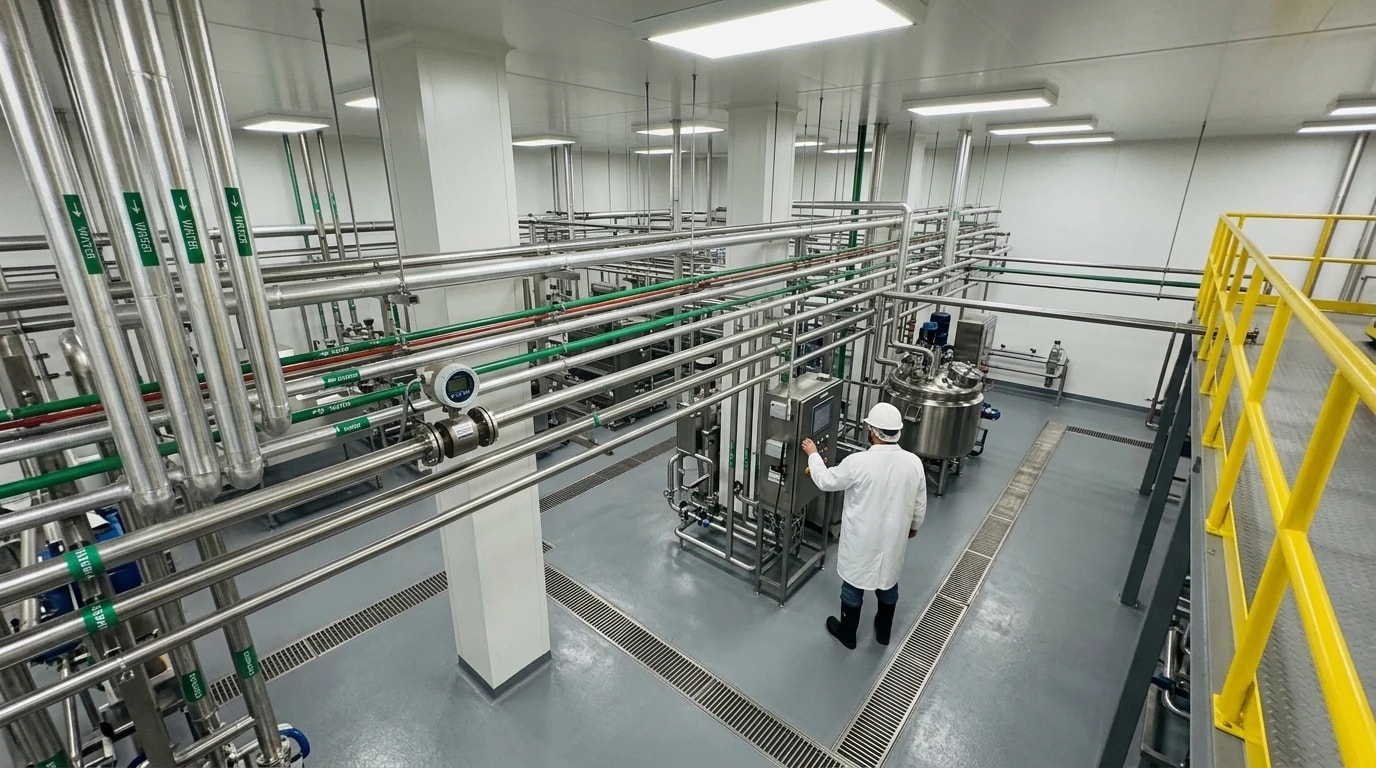
Evaluating total monthly energy consumption does not provide a true picture of operational efficiency. A plant might show lower electricity and gas usage in November than in October, but this may reflect only a lower production volume rather than an improvement in efficiency.
Beyond Simple Utility Metering
To achieve actionable energy intelligence, utility data must be analysed in context. This requires correlating physical utility flows directly with real-time production schedules. Advanced energy intelligence platforms bridge this gap by importing production logs from the plant's Manufacturing Execution System (MES) or ERP software.
By combining energy data with production data, the AI maps the exact quantity of electricity, steam, gas, and water consumed during each distinct production run. The platform calculates key efficiency metrics, such as:
- Energy per Batch (kWh/batch)
- Utility Cost per Tonne (£/tonne of finished product)
- Water Intensity Index (litres of water consumed per kg of product)
Linking SCADA/ERP Data to Energy Intensity
With these metrics, plant managers can compare energy efficiency across different production lines, shifts, and product recipes. For example, the system might reveal that a specific product line consumes 18 per cent more steam per tonne when run on Line 2 compared to Line 1, or that Shift B achieves consistently lower electrical intensity than Shift A.
| Metric | Baseline Operations | AI-Optimised Operations | Total Savings (%) |
|---|---|---|---|
| Electricity Cost per Tonne | £42.50 | £34.85 | 18% |
| Steam Consumption per Tonne | 1,250 kg | 1,025 kg | 18% |
| Water Usage per Tonne | 3,100 L | 2,480 L | 20% |
| Average Batch Carbon | 145 kg CO₂e | 114 kg CO₂e | 21% |
These precise insights eliminate guesswork. Plant managers can identify the root causes of energy spikes, such as poorly calibrated burners, worn heat exchanger plates, or extended machine idling times between batches.
True Cost-Per-Tonne Calculations
With utility prices fluctuating throughout the day, the timing of production runs has a significant impact on profitability. Running energy-intensive processes, such as industrial baking or spray-drying, during peak tariff hours can inflate utility costs. The AI platform allows operations directors to run scheduling scenarios, assessing the financial benefits of shifting production runs to off-peak hours. This capability helps manufacturers reduce their average cost-per-tonne without altering total production output.
Furthermore, different food formulations possess varying physical properties that directly influence energy intensity. High-viscosity products, such as purees and sauces, require significantly more electrical energy for pumping and agitation, and more thermal energy for heat penetration, than low-viscosity liquids. The AI engine automatically adjusts its baseline expectations depending on the product recipe currently running. This dynamic baseline prevents false alarms when switching between different products, ensuring that the calculated cost-per-tonne remains accurate across the product portfolio.
Compliance with ISO 50001:2018, SECR, and ESOS Phase 4
UK and European food manufacturers operate under some of the world's most stringent environmental and energy efficiency mandates. Implementing an advanced AI energy optimisation platform provides the detailed, automated data required to satisfy these statutory obligations.
Aligning with ISO 50001:2018 Frameworks
The ISO 50001:2018 standard provides a global framework for establishing an Energy Management System (EnMS). To achieve and maintain this certification, food processing plants must demonstrate a commitment to continuous energy performance improvement. Traditional systems rely on manual data logging, which makes tracking energy baselines and identifying energy performance indicators (EnPIs) tedious and prone to human error.
AI-driven systems automate the Plan-Do-Check-Act (PDCA) cycle required by ISO 50001:2018. By continually digesting raw telemetry from across the facility, the AI automatically establishes accurate energy baselines (EnBs) and tracks current performance against those baselines in real-time. When a deviation occurs, the platform alerts energy managers, providing immediate, checkable evidence of both the anomaly and the corrective action taken. This dynamic tracking ensures that during internal and external surveillance audits, the facility has a comprehensive, automated log of actions and verified energy savings, simplifying the recertification process.
Under the ISO 50001:2018 framework, organisations must also demonstrate that energy data is used to inform procurement and design decisions. The detailed cost-per-tonne and batch-level insights generated by AI analytics provide the objective data needed to justify capital expenditure on more efficient process equipment, such as upgrading to variable speed drives or high-efficiency condensing boilers.
Streamlining SECR and ESOS Phase 4 Reporting Requirements
Large UK undertakings face mandatory reporting under both the Streamlined Energy and Carbon Reporting (SECR) framework and the Energy Savings Opportunity Scheme (ESOS).
- SECR mandates that in-scope organisations disclose their annual energy consumption and Scope 1 and Scope 2 greenhouse gas emissions (expressed in CO₂e) alongside a narrative of energy efficiency actions taken during the financial year.
- ESOS Phase 4 represents the current compliance cycle, with the qualification test landing on 31 December 2026 and a final notification deadline of 5 December 2027. Under Phase 4, companies must assess at least 95 per cent of their total energy footprint, covering buildings, industrial processes, and transport. Furthermore, Phase 4 makes it mandatory to provide detailed progress updates on previous energy-saving commitments, with penalties of up to £50,000 for non-compliance.
Collecting twelve months of continuous, verified energy data to support the ESOS Phase 4 qualification window is an immense logistical burden for plants relying on manual systems. AI-enabled utility monitoring platforms resolve this by maintaining a continuous, audit-ready data repository. By aggregating electricity, gas, and steam usage automatically, these systems eliminate the need for retrospective utility bill collation. When ESOS Lead Assessors conduct audits, they can access instant, granular historical data, proving the efficacy of energy conservation measures (ECMs) and satisfying the stringent regulatory verification criteria.
Commercial Benefits of Automated Audit-Ready Reporting
Managers should not view compliance merely as an administrative hurdle or a checkbox exercise. Automated, high-resolution reporting transforms regulatory compliance into a mechanism for continuous cost control. When energy audits are supported by real-time data, energy-saving opportunities are identified and implemented in weeks rather than years.
In the food and beverage industry, where profit margins are notoriously tight, saving 15 to 25 per cent on utility costs directly impacts the bottom line. By utilising an intelligent, non-invasive analytics platform, operations directors can secure compliance with SECR and ESOS Phase 4, maintain absolute HACCP compliance, and establish a modern, data-driven approach to production scheduling that minimises waste, prevents batch spoilage, and maximises profitability.
This article reflects the independent analysis and editorial opinion of EnerTherm Engineering. Product names, trademarks, and brands mentioned belong to their respective owners. EnerTherm Engineering is not affiliated with, endorsed by, or a licensee of any third-party software or product mentioned unless explicitly stated.

Technical Manager — EnerTherm Engineering
John Naranjo is Technical Manager at EnerTherm Engineering, bringing specialist expertise in chemical and environmental engineering. He recently led the implementation of Omni Vision, EnerTherm's real-time energy and utility monitoring platform. He holds an MSc in Environmental Engineering from the University of Huelva and a BSc in Chemical Engineering, with memberships in both the Energy Institute and IChemE.
