Designing Modular Industrial Incinerator Systems: A Modern Approach to Waste-to-Energy
In an era defined by increasing industrial output and evolving environmental regulations, effective waste management is no longer a peripheral concern but a critical operational imperative. Traditional landfilling methods are becoming less sustainable due to diminishing space, rising costs, and methane leakage, pushing industries towards more advanced thermal treatment solutions. A modular industrial incinerator system offers a compelling answer, providing a flexible, efficient, and often energy-recovering approach to managing diverse waste streams directly at the source.
These compact, pre-fabricated units represent a significant advancement, offering a decentralised solution for industrial general waste and significant potential for waste-to-energy (WtE) applications in manufacturing. By transforming waste into a valuable resource, a modern modular incinerator not only alleviates disposal burdens but also contributes to a more sustainable and economically viable industrial ecosystem.
Understanding Modular Industrial Incinerator Systems
A modular industrial incinerator system is a pre-designed, often factory-assembled unit that facilitates the controlled combustion of industrial waste. Unlike large, custom-built municipal incineration plants, modular units are typically smaller in capacity, ranging from 5 to 120 tonnes of solid waste per day, or even as small as 12 to 100 kg/h for highly specific industrial applications. Their “modular” nature refers to their standardised, container-sized components that can be easily transported, assembled, and scaled according to specific industrial needs.
These systems are engineered for diverse applications, including the incineration of general industrial solid waste, specific hazardous industrial waste, medical waste, sludge waste, and even some agricultural waste. The core principle involves thermal degradation of waste materials under controlled conditions, producing heat, inert ash, and gaseous emissions. Modern designs adhere to stringent principles like 3T+E (Time, Temperature, Turbulence, and Emissions control) to ensure efficient combustion and minimised environmental impact.
Skid-Mounted vs. Containerised Configurations
To meet diverse spatial and logistical requirements, a commercial modular incinerator is typically designed in one of two configurations:
- Skid-Mounted Systems: The components are built on heavy-duty structural steel skids. This setup is ideal for indoor industrial installations or within existing utility buildings where footprint optimisation and integration with local piping are crucial.
- Containerised Systems: The entire modular incinerator and its ancillary equipment (including controls, fuel tanks, and minor air pollution control devices) are built inside standard 20-foot or 40-foot ISO shipping containers. This provides weatherproofing, eliminates the need for a dedicated building, and allows for rapid "plug-and-play" deployment in remote or temporary environments.
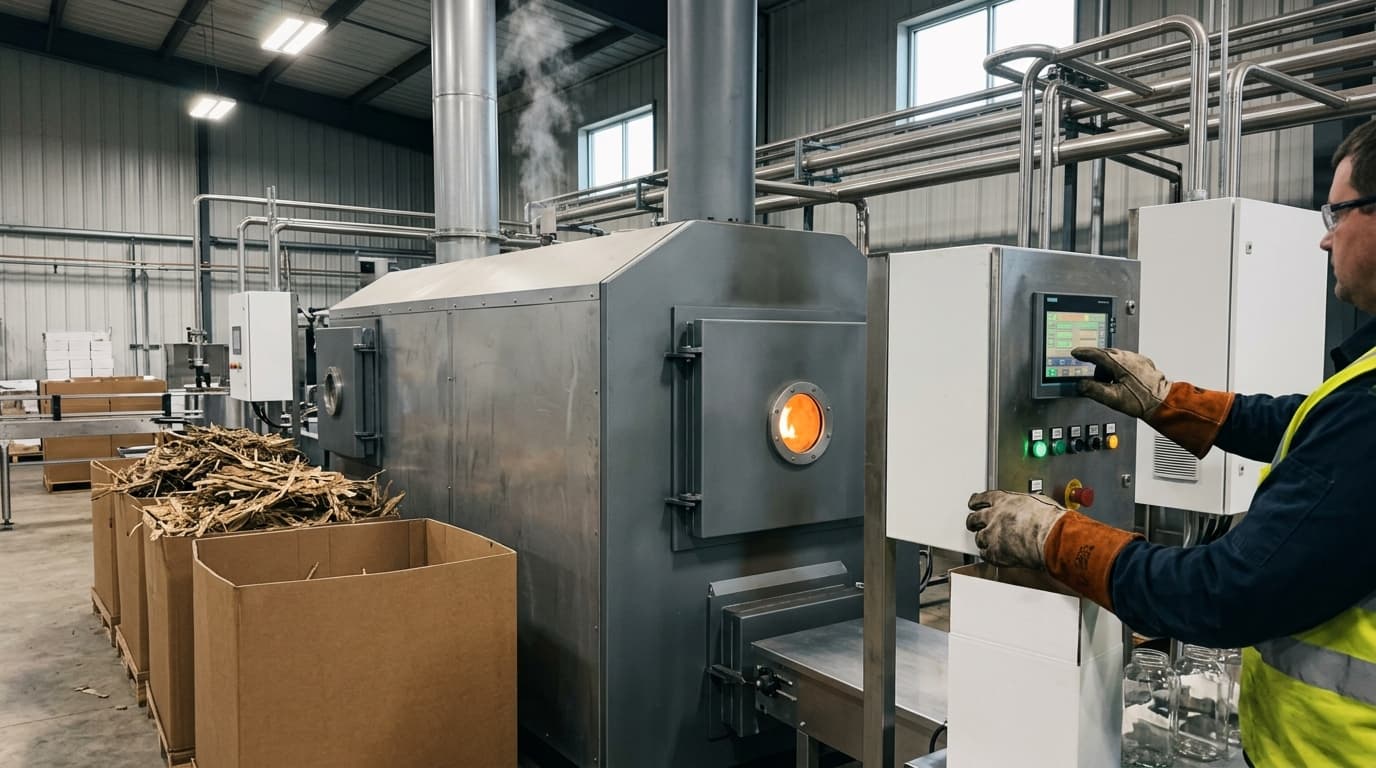
Complete incineration systems for general, agricultural, pharmaceutical, healthcare, and military waste — from under 50kg/h batch to 500kg/h continuous.
Key Advantages of Modular Incineration for Industrial Waste
The adoption of a modular incinerator offers a multitude of benefits for manufacturing, chemical processing, healthcare, and other industrial sectors:
Enhanced Flexibility and Scalability
Modular systems provide unparalleled flexibility. Their pre-fabricated design allows for shorter construction and commissioning times, often within four months from delivery, with overall commercial operation typically within 15 to 18 months. This contrasts sharply with the extensive timelines associated with large-scale, field-erected incinerators.
Furthermore, their scalable nature means that capacity can be adjusted by adding or removing modular incinerator units, making them suitable for evolving waste generation volumes or varying energy demands. They can even be designed as mobile or containerised units for remote locations or temporary needs.
Significant Waste Volume and Weight Reduction
One of the primary benefits of incineration is its ability to drastically reduce the volume and weight of solid waste. Modular units can achieve up to a 90 per cent reduction in waste volume and a 70–75 per cent reduction in weight, transforming combustible materials into inert ash. This significantly minimises the amount of waste requiring landfill disposal, extending the lifespan of existing landfills and reducing associated costs and logistical challenges.
Economic Viability and Cost Savings
Several economic factors drive the attractiveness of modular industrial incinerators:
- Reduced Landfill Costs: By substantially decreasing waste volume, industries can significantly lower or even eliminate landfill tipping fees and transportation expenses.
- Energy Recovery Revenue: Many modern modular incinerators are designed with heat recovery systems, converting waste into usable energy such as electricity, steam, or hot water. This “waste-to-energy” (WtE) aspect can provide a valuable return on investment by offsetting energy costs or generating revenue from energy sales. Payback periods of 3 to 4 years have been reported for some industrial applications.
- Lower Capital Costs per Tonne: On average, capital costs per tonne of capacity can be lower for modular units compared to other municipal solid waste (MSW) incineration options, particularly for small to medium-scale operations.
- Operational Efficiency: Integrated control systems ensure economic feasibility and efficient operation, often featuring simple and reliable processes with low maintenance costs.
On-Site Waste Treatment and Decentralisation
A modular incinerator offers a decentralised approach, allowing for on-site waste management. This eliminates the logistical challenges, costs, and carbon footprint associated with transporting waste to distant landfills or centralised facilities. On-site processing can be particularly beneficial for industries generating specialised or hazardous waste streams, ensuring secure and immediate disposal without secondary transport liability.
Technical Classifications of Modular Incinerators
When selecting or designing a modular incinerator, engineers typically choose between distinct combustion designs based on the physical state and chemical makeup of the waste stream.
1. Controlled-Air (Starved-Air) Systems
Often referred to as pyrolytic incinerators, these systems are highly common in modular designs. In the primary chamber, waste is gasified under sub-stoichiometric (starved-air) conditions. This minimises turbulence and prevents fine particulate matter (ash) from becoming entrained in the gas stream. The combustible gases then travel to the secondary chamber, where excess air is introduced to complete combustion. This design is exceptionally suited for high-calorie, hazardous, and clinical wastes.
2. Excess-Air Systems
In excess-air systems, both the primary and secondary chambers operate with oxygen levels well above stoichiometric requirements. This design is suitable for waste streams with high moisture levels or low calorific values (such as certain sludges and food processing wastes), where high gas velocities and intense turbulence are required to drive off moisture and sustain combustion.
3. Rotary Kiln Modular Units
For highly variable solid wastes, sludges, or drummed materials, a modular rotary kiln provides excellent performance. The slow rotation of the primary cylindrical kiln continuously agitates the waste, ensuring uniform exposure to heat and oxygen. While slightly more complex mechanically, rotary kiln modules offer the highest fuel flexibility of any modular incinerator system.
Core Components and Design Considerations
Designing an effective modular industrial incinerator system requires careful consideration of several key components and operational principles. An incineration system typically comprises a waste feeding system, primary and secondary combustion chambers, an auxiliary fuel system, air supply systems, an ash removal system, and crucial air pollution control (APC) equipment.
Combustion Chambers: Primary and Secondary
At the heart of any modular incinerator are its combustion chambers:
- Primary Chamber: This is where the waste is loaded and initially ignited. Modern modular incinerators often employ controlled-air or starved-air techniques in the primary chamber to reduce the amount of air required for combustion, leading to more efficient burning and lower particulate emissions. Waste moves through this chamber on a hearth or grate, undergoing drying, pyrolysis, and char combustion.
- Secondary Chamber: Required by law in many regions (including Europe, the USA, Australia, and Canada), the secondary chamber ensures more complete combustion of gases and prevents the formation of harmful particulates. Gases from the primary chamber flow here, often aided by an afterburner, operating at high temperatures (a minimum of 850°C, or up to 1100°C to 1200°C for hazardous and clinical wastes) for adequate retention times to decompose compounds like dioxins and furans thoroughly. This chamber provides efficient, turbulent thermal oxidation of combustion gases, with over 2 seconds retention standard.
Thermodynamic Sizing and Residence Time
To ensure complete thermal destruction of volatile organic compounds (VOCs) and halogenated hydrocarbons, engineers calculate the secondary chamber's sizing based on the gas residence time (t). The formula used to determine this is:
t=QgVWhere:
- t is the gas residence time (seconds)
- V is the active volume of the secondary combustion chamber (m³)
- Qg is the volumetric flow rate of the flue gas at the actual operating temperature (m³/s)
To maintain compliance with international environmental directives, such as the EU Industrial Emissions Directive (Directive 2010/75/EU), t must be maintained at ≥2 seconds at a temperature of at least 850°C. If hazardous waste with a content of more than 1 per cent of halogenated organic substances (expressed as chlorine) is incinerated, the temperature required to comply must be at least 1100°C.
Similarly, the thermal capacity of the system is calculated as:
Q=m˙×LHVWhere:
- Q is the thermal heat release rate (kW or MW)
- m˙ is the mass feed rate of the waste (kg/s)
- LHV is the lower heating value of the waste stream (kJ/kg)
Air Pollution Control (APC) Systems
Environmental compliance is paramount, making robust air pollution control systems indispensable. Modern modular incinerators are equipped with advanced APC systems to capture and neutralise harmful emissions. These can include:
- Filters and Baghouses: To capture particulate matter.
- Scrubbers: Acid gas scrubbers (wet, semi-dry, or dry) utilise lime or sodium bicarbonate injection to neutralise acid gases like SO₂ and HCl.
- Selective Catalytic Reduction (SCR) or Selective Non-Catalytic Reduction (SNCR): For nitrogen oxides (NOₓ) removal, often complemented by ammonia reagent for high efficiency.
- Activated Carbon Injection: To adsorb heavy metals, gaseous mercury, dioxins, and furans.
These systems ensure that stack emissions meet stringent environmental standards, such as those set by the US EPA and European regulations like the Industrial Emissions Directive (IED).
Waste-to-Energy (WtE) Components
The integration of waste-to-energy capabilities is a significant driver for modular incinerator adoption. This typically involves:
- Heat Recovery Boilers: These units capture the waste heat from the combustion process, generating steam, hot water, or thermal oil.
- Turbines and Generators: For converting steam into electricity, either for in-house consumption (offsetting 10–15 per cent of gross generation) or for sale to the grid.
- Air Preheaters: Utilising exhaust heat to preheat combustion air, improving overall thermal efficiency.
These WtE components can turn a waste disposal cost into an operating asset, making the system economically self-sustaining or even profitable.
| Parameter | Starved-Air Modular System | Excess-Air Modular System | Rotary Kiln Modular System |
|---|---|---|---|
| Typical Feed Rate | 50 to 1,500 kg/h | 100 to 2,000 kg/h | 200 to 5,000 kg/h |
| Primary Temp. Range | 600°C – 800°C | 800°C – 1000°C | 850°C – 1100°C |
| Particulate Carryover | Very Low | Medium to High | High |
| Optimal Waste Types | Clinical, high-plastic, solid paper/wood | Wet sludges, municipal solids, organic waste | Viscous liquids, toxic drums, heterogeneous solids |
Automation and Control Systems
Modern modular incinerators feature integrated control systems, often including Building Management Systems (BMS) skids and programmable logic controller (PLC) control cabinets. These systems monitor and regulate operating parameters such as temperature, oxygen levels, air flow, and waste feed rates, ensuring optimal combustion efficiency, reduced emissions, and reliable operation. They can also adjust to variations in fuel quality and quantity to deliver a constant energy output.
Ash Handling and Disposal
Post-combustion, the remaining ash, which typically represents 5–10 per cent of the original waste volume, must be managed. Ash removal systems can be wet or dry. It is crucial to note that generated ash may contain toxic elements (such as heavy metals) and often requires proper handling, testing (via TCLP protocols), and disposal in accordance with local hazardous waste regulations.
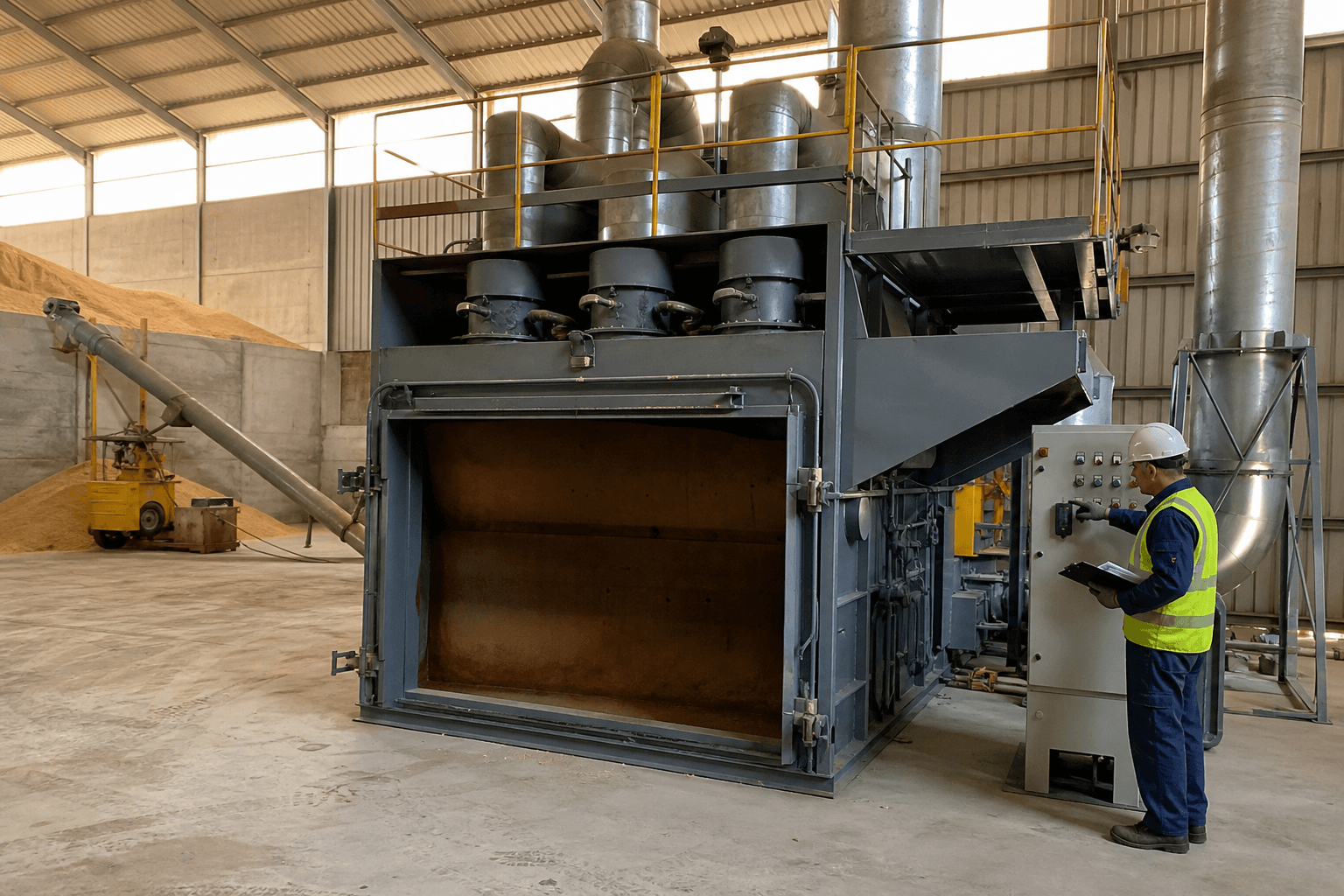
The LitBurn, AgriBurn, AmoBurn, and AniBurn ranges cover every waste disposal need with dual-chamber combustion and scrubbing options.
Waste Stream Characteristics and Fuel Flexibility
The effectiveness of a modular incinerator heavily depends on the characteristics of the waste stream, including moisture content, calorific value, and elemental composition. Industries must perform a thorough waste audit to understand their specific waste profile. Modular systems are particularly suitable for consistent waste streams with favourable calorific values, such as non-recyclable plastics, wood, cardboard, rags, and various industrial solid wastes. Some advanced modular waste-to-energy plants can handle a wide range of non-hazardous solid wastes and biomass fuels with varying calorific values and moisture content.
Proper pre-preparation of waste, including sorting, shredding, and drying, can significantly enhance incineration efficiency and reduce long-term operating costs. This ensures consistent feeding and optimal combustion, preventing issues like incomplete combustion and higher emissions.
Environmental Compliance and Public Perception
While modular incinerators offer numerous advantages, their design and operation must prioritise environmental protection and address public concerns.
- Emission Control: Despite advanced pollution controls, inadequate combustion, particularly at low temperatures, can release harmful pollutants such as particulate matter, acid gases, heavy metals, carbon monoxide, and highly toxic dioxins and furans. Consistent monitoring, experienced staff, and significant resources are critical for safe operation and ensuring compliance with strict emission limits. Starting and shutting down incinerators, when temperatures are below optimal, can contribute significantly to annual emissions, highlighting the importance of continuous, controlled operation.
- Ash Management: The residual ash must be properly characterised and disposed of, as it can contain toxic elements.
- Regulatory Hurdles: Compliance with national and international environmental regulations (such as the IED in Europe and US EPA standards) is paramount. Challenges can arise in regions with weak monitoring and enforcement or where smaller plants may not be subject to full environmental impact assessments (EIAs).
- Public Perception: Public concerns about emissions and potential health impacts can pose barriers to facility siting. Transparent community engagement and publicly available environmental performance data are essential to build trust and address these concerns effectively. Incinerators should be situated away from residential and cultivated areas, considering factors like wind direction. Modern incinerators, with their clean combustion and flue gas cleaning technologies, have not identified apparent health effects for neighbouring areas.
The Future of Industrial Waste Management
Modular industrial incinerator systems are at the forefront of sustainable waste management and energy recovery in the manufacturing sector. Their ability to drastically reduce waste volume, generate valuable energy, and adapt to specific industrial needs positions them as a critical tool for businesses seeking to optimise operations, reduce environmental impact, and achieve greater energy independence. As technology continues to advance and environmental pressures mount, the design and implementation of these innovative modular incinerator systems will play an increasingly vital role in shaping a more sustainable industrial future.
