
Revolutionizing Industrial Waste Incineration: A Look at Emerging Trends
The challenge of industrial waste management is growing, driven by increasing manufacturing output and stringent environmental regulations. While traditional incineration has long been a method for reducing waste volume and generating energy, the industry is now undergoing a significant transformation. Emerging trends in industrial waste incineration technology are focusing on enhancing efficiency, minimizing environmental impact, and maximizing resource recovery, moving towards a more sustainable future.
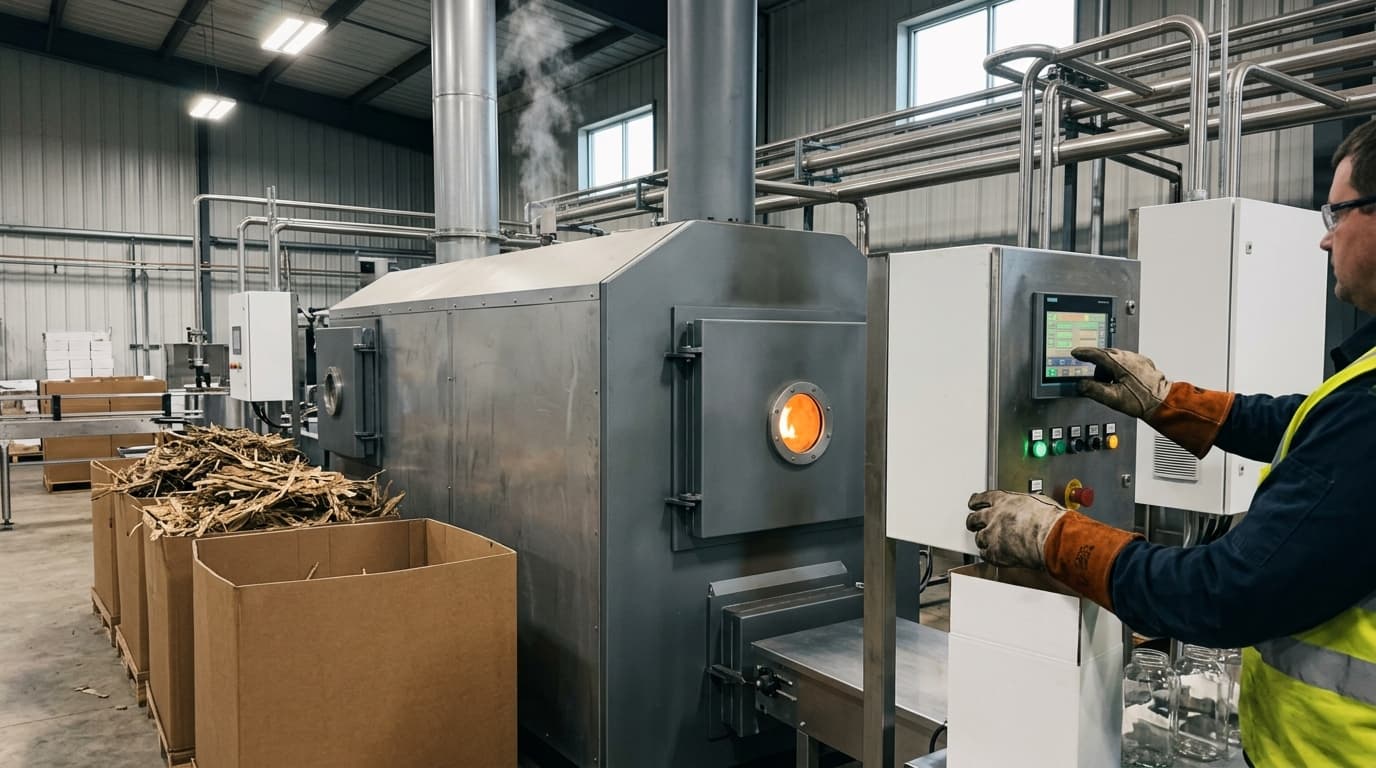
Complete incineration systems for general, agricultural, pharmaceutical, healthcare, and military waste — from under 50kg/h batch to 500kg/h continuous.
The Evolving Landscape of Industrial Waste Treatment
Industrial incineration involves high-temperature thermal treatment of combustible industrial waste, aiming to reduce waste volume, mitigate environmental impact, and recover energy. Modern facilities leverage advanced pollution control technologies to minimize harmful emissions like particulates, dioxins, and furans. These advancements are critical as concerns about climate change and public health drive the need for cleaner and more efficient waste disposal methods.
The Shift Towards Waste-to-Energy (WtE) Systems
One of the most prominent trends is the widespread adoption and advancement of Waste-to-Energy (WtE) systems. These technologies convert non-recyclable industrial and municipal waste into electricity, heat, or fuel, reducing reliance on fossil fuels and lowering greenhouse gas emissions. The WtE market, particularly in North America and Europe, is experiencing robust growth, with a projected compound annual growth rate (CAGR) of 4.04% from 2025 to 2035 for the global incinerator market.
Advanced WtE plants are integrating sophisticated combustion systems and waste heat recovery technologies to maximize energy efficiency. For example, advanced heat exchangers and boiler systems are designed to capture a greater percentage of thermal energy, which can then be used for district heating, industrial processes, or additional power generation. Some modern WtE facilities achieve efficiency levels of up to 80% through cogeneration.
Advanced Thermal Treatment Technologies
Beyond conventional incineration, alternative thermal treatment methods are gaining traction, offering higher energy yields and lower emissions. These technologies include gasification and pyrolysis, which are seeing increased research and development efforts.
Pyrolysis: Decomposing Waste Without Oxygen
Pyrolysis is a thermal degradation process that heats organic waste materials in the absence of oxygen at temperatures typically above 430°C. This process breaks down waste into valuable byproducts such as bio-oil, syngas (synthetic gas), and biochar. Pyrolysis is considered a cleaner technology, producing fewer dioxins and furans compared to traditional incineration because oxygen is not present for their formation.
Emerging trends in industrial waste pyrolysis equipment include:
- Integration of AI and IoT: To optimize processes and enable predictive maintenance, improving efficiency and reducing downtime.
- Modular and Scalable Designs: Offering flexibility for various waste streams and capacities, making them adaptable for different industrial settings.
- Focus on Waste-to-Value Products: Maximizing the utility of outputs, such as using biochar for soil amendment.
- Combined Systems: Integrating pyrolysis with other technologies like gasification for enhanced efficiency.
Gasification: Converting Waste into Fuel Gas
Gasification is another advanced thermal treatment method that converts carbonaceous substances in waste into a primarily gaseous product (syngas) using very high heat and a controlled, low amount of oxygen. This syngas can then be used as a fuel for electricity generation or as a chemical feedstock. Gasification is highlighted for its potential to provide higher energy yields and lower emissions compared to conventional incineration.
Plasma gasification, a more advanced form, utilizes an electrically ionized gas (plasma) at extremely high temperatures to convert organic waste into syngas and inorganic waste into an inert vitrified slag. This method can manage mixed or hazardous wastes while producing clean energy.
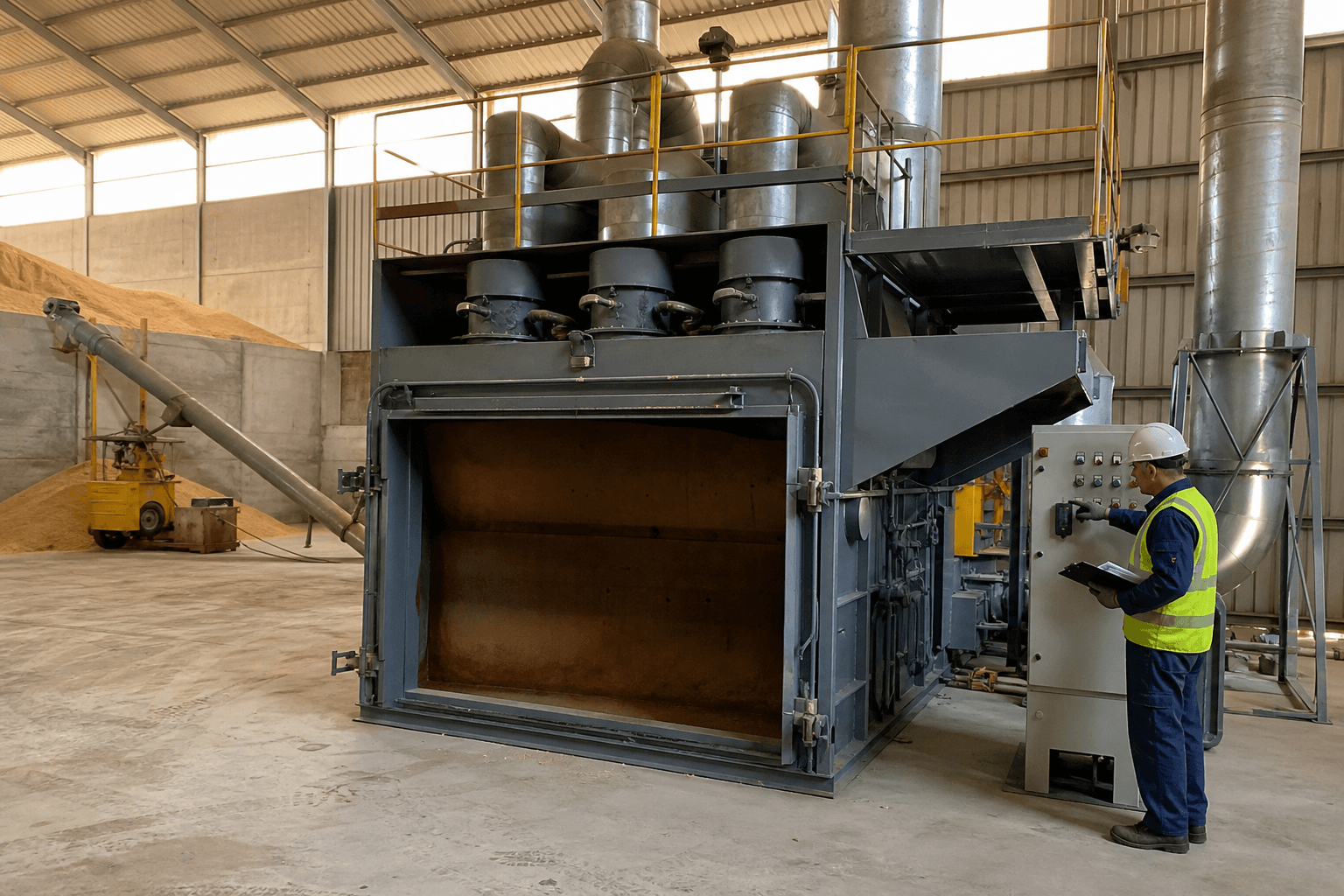
The LitBurn, AgriBurn, AmoBurn, and AniBurn ranges cover every waste disposal need with dual-chamber combustion and scrubbing options.
Emission Control and Decarbonization Innovations
Reducing emissions remains a critical focus for industrial waste incineration. Significant advancements are being made in air pollution control systems and decarbonization technologies.
Sophisticated Air Pollution Control Systems
Modern incinerators are equipped with advanced filtration systems capable of trapping over 99.9% of particulates and drastically reducing emissions of harmful substances. These systems often incorporate:
- Selective Catalytic Reduction (SCR) and Selective Non-Catalytic Reduction (SNCR): For reducing nitrogen oxides.
- Lime Spray Dry Scrubbers: To neutralize and remove acidic gases like sulfur oxides and hydrogen chloride.
- Activated Carbon Injection: To adsorb and remove heavy metals, dioxins, and furans.
- Fabric Filters (Baghouses): For superior fine-particle emission control, increasingly favored over traditional wet air-pollution control systems, especially in larger facilities.
These technologies ensure that emissions not only meet but often exceed stringent regulatory standards.
Carbon Capture, Utilization, and Storage (CCUS)
A groundbreaking trend is the integration of Carbon Capture, Utilization, and Storage (CCUS) technologies into waste incineration facilities. CCUS aims to prevent large amounts of carbon dioxide (CO₂) from being released into the atmosphere by capturing it directly from exhaust gases.
The process typically involves:
- Capture: CO₂ is captured from the flue gas using solvents or sorbents after combustion.
- Transport: The captured CO₂, often in a dense fluid or liquid form, is piped or trucked to storage sites.
- Storage: Geological formations, such as depleted oil and gas fields or deep saline aquifers, are used for secure, long-term storage of millions of tonnes of CO₂.
An extension, Carbon Capture, Utilization, and Storage (CCUS), involves utilizing captured CO₂ to create valuable products before storing any excess. Potential applications include concrete curing, plastics production, and synthetic fuel manufacturing. European operators are actively exploring CCUS to make waste-to-energy plants a net-zero solution.
Operational Efficiencies and Digital Integration
The drive for greater efficiency and sustainability is also leading to significant advancements in the operational aspects of industrial incineration.
Modular Designs and Advanced Combustion Systems
New incinerator designs, such as Mitsubishi Heavy Industries Environmental & Chemical Engineering Company's (MHIEC) V-type stoker, are increasing combustion efficiency and reducing residual waste. These designs optimize the system's shape and structure, allowing for installation in smaller sites and offering modularity for scalability. Modular incinerators can be pre-engineered to reduce capital costs and allow for smaller initial capacities that can be expanded over time.
AI, IoT, and Real-Time Monitoring
The integration of artificial intelligence (AI) and the Internet of Things (IoT) is poised to revolutionize industrial incineration. These technologies enable process optimization, predictive maintenance, and real-time operational monitoring, allowing for quick adjustments in parameters to enhance efficiency and reduce downtime. Advanced sensory devices, such as thermographs, are crucial for this real-time oversight.
Conclusion
The industrial waste incineration sector is experiencing dynamic growth and innovation, driven by the dual pressures of increasing waste generation and stringent environmental regulations. Emerging trends—from advanced waste-to-energy systems and alternative thermal treatments like pyrolysis and gasification to cutting-edge emission controls and carbon capture technologies—are transforming incineration into a more sustainable and environmentally responsible waste management solution. The integration of digital technologies like AI and IoT further promises to optimize operations, paving the way for a greener, more efficient industrial future.
