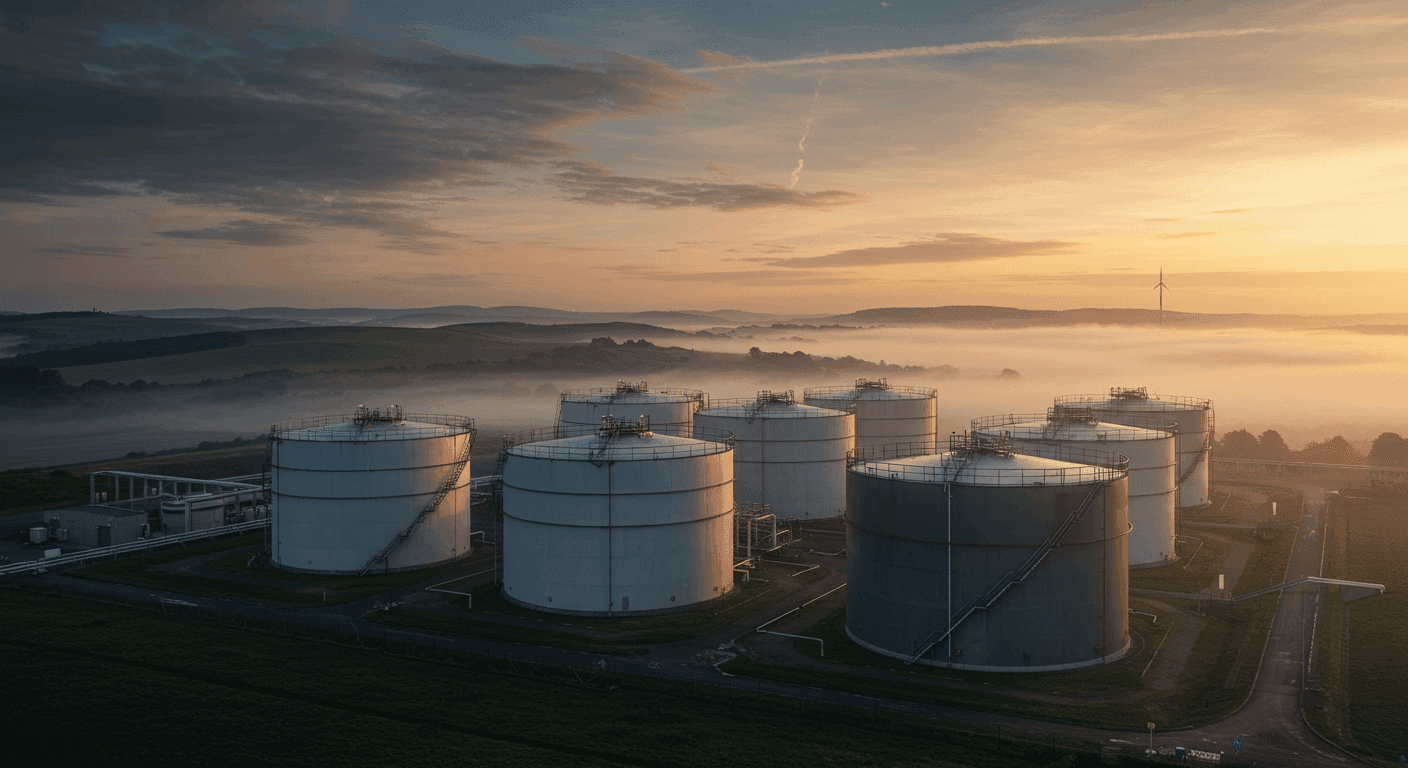
UK’s Ambitious Gas and Hydrogen Storage Project Gears Up for 2025 Investment Decision
A major energy storage project in the UK, poised to be among the nation’s largest, is making significant strides towards a final investment decision (FID) in 2025. This ambitious undertaking, known as the Marram Energy Storage Hub (MESH), is designed to provide a secure and dependable supply of both natural gas and green hydrogen for the UK market for over 20 years. The project is a key component of the UK’s strategy to transition to a low-carbon economy and enhance energy security.
Project Overview and Strategic Importance
The MESH project, spearheaded by EnergyPathways, is strategically located in the East Irish Sea. It is designed as a fully decarbonized and electrified zero-emission facility, powered by the renewable wind farms of the UK Irish Sea region. This ensures that the energy storage hub is not only contributing to energy security but is also aligned with the UK's net-zero targets. The facility is expected to store more than 500 million therms of energy once operational, potentially starting at the end of 2027. This capacity is equivalent to the size of the Rough facility, which is currently the UK’s largest gas storage facility. In the longer term, the facility aims to harness the UK’s excess wind power by producing and storing green hydrogen.
Key Milestones Achieved
EnergyPathways has recently secured a crucial license from the North Sea Transition Authority (NSTA) to operate Block 110/4a, which encompasses the MESH project. This regulatory approval is a prerequisite for the submission of the field development plan (FDP) and environmental statement (ES), marking a significant step towards achieving FID later this year. This approval underscores the government’s confidence in EnergyPathways’ operational capabilities.
In addition, EnergyPathways has partnered with PDi, a UK-based subsea engineering firm, to conduct engineering studies for the Marram field development's tie-in connection. This follows the appointment of Wood as the project's lead engineering partner. These strategic partnerships are crucial for the project's technical progression through the pre-front-end engineering and design (FEED) phase.
What is a Final Investment Decision (FID)?
A Final Investment Decision (FID) is a critical point in the lifecycle of a project where the project stakeholders formally commit to proceeding with the investment. This decision is made after extensive feasibility studies, detailed planning, and risk assessments to ensure the project’s viability and profitability. In the energy sector, FID is the final step in determining whether to move forward with the construction of an infrastructure project. It signifies that the project has secured the necessary financial backing, regulatory approvals, and technical partnerships to proceed. For the MESH project, reaching FID in 2025 will mark a major turning point towards operational readiness.
Significance of FID in Energy Projects
FID is essential for several reasons:
- Financial Commitment: It signifies a formal commitment of financial resources to the project.
- Project Advancement: It allows the project to move from the planning and design phase to the construction and implementation phase.
- Investor Confidence: It assures investors that the project has been thoroughly vetted and is likely to proceed to completion.
- Contract Awards: Following an FID, contracts for engineering, procurement, and construction are typically awarded.
The Role of Hydrogen Storage
The MESH project is particularly significant due to its focus on both natural gas and green hydrogen storage. Hydrogen is increasingly recognized as a key component of the UK's future energy mix. As a clean fuel, it can be used in various applications, including transportation, heating, and power generation. However, hydrogen storage is a critical challenge that needs to be addressed to ensure a reliable supply.
UK's Hydrogen Storage Needs
The UK is aiming for 10 GW of low-carbon hydrogen production capacity by 2030. This target necessitates significant investment in hydrogen storage and transport infrastructure. Large-scale hydrogen storage will be crucial for harnessing surplus renewable power. It allows for the storage of excess energy produced by renewable sources like wind and solar, which can then be used during peak demand or periods of low renewable energy generation.
Salt Cavern Storage
The MESH project is planned to use salt caverns for hydrogen storage. This technology is proven to be safe and cost-effective, particularly at large scales. Salt caverns are formed by pumping water into the ground to dissolve the salt and create large underground chambers. These caverns are ideal for storing large volumes of gas or hydrogen, maintaining a stable environment for long-term storage. They are viable in only a few UK areas: Dorset, East Yorkshire, and Cheshire. The MESH project’s location in the East Irish Sea gives it a strategic advantage in terms of geological suitability.
Other Key Energy Storage Projects in the UK
While the MESH project is gaining significant attention, there are several other important energy storage projects underway in the UK:
- UK Energy Storage (UKEn): UKEn is developing salt cavern hydrogen storage projects in South Dorset and East Yorkshire. Their Dorset project aims for a maximum annual capacity of 10 TWh, potentially meeting up to 17% of the UK's hydrogen storage needs by 2050.
- Stublach Gas Storage Project: Operated by Storengy UK, this is the largest on-shore gas storage facility in the country, located in Cheshire, with a commercial storage capacity of 4.5 TWh. It utilizes 20 underground salt caverns.
- Aldbrough Hydrogen Storage: A project proposed by Equinor and SSE Thermal, this facility aims to repurpose an existing natural gas storage site on the East Yorkshire coast for storing hydrogen with an initial expected capacity of at least 320 GWh.
- Sunnica Solar-plus-Battery Energy Storage System: This project features a 500,000kW lithium-ion battery, expected to be commissioned in 2025.
- DP World London Gateway – Battery Energy Storage System: A 320,000kW lithium-ion battery energy storage project, also slated for commissioning in 2025.
Battery Energy Storage Systems (BESS)
In addition to gas and hydrogen storage projects, Battery Energy Storage Systems (BESS) are also playing a crucial role in the UK's energy storage landscape. These systems use lithium-ion batteries to store electricity, providing a flexible and responsive solution for managing grid fluctuations. The UK is expected to see its BESS capacity reach around 8GW in 2025, with several large projects coming online.
- NatPower UK: NatPower is developing two 1GW BESS projects, named the Mowbray Energy Storage project and the Bellmoor Energy Storage project, both located in North Yorkshire and planned for completion by 2028.
Cap-and-Floor Mechanism
To further stimulate investment in long-duration energy storage (LDES), the UK government is implementing a cap-and-floor mechanism from 2025. This scheme aims to provide revenue certainty for investors by guaranteeing revenues above an agreed floor and offering protection to consumers by limiting revenues to an agreed cap. This mechanism is expected to accelerate the deployment of LDES technologies, which are vital for balancing the intermittency of renewable energy sources.
The Path Forward
The MESH project, along with other significant energy storage initiatives, is a crucial step in ensuring the UK's energy security and facilitating its transition to a low-carbon economy. The anticipated FID in 2025 is a major milestone, paving the way for construction to begin and for the project to become a vital part of the UK's energy infrastructure. As the UK continues to increase its reliance on renewable energy, these storage facilities will play an increasingly important role in stabilizing the grid, reducing price volatility, and enabling the integration of green hydrogen into the energy system.
