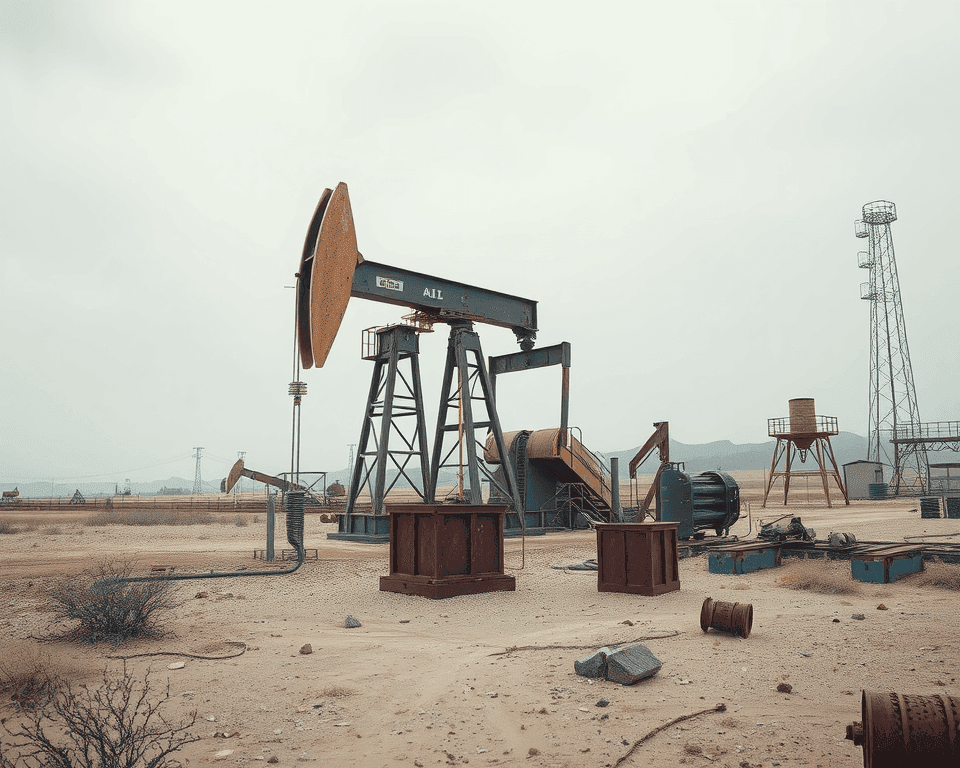
Abandoned Oil Wells Could Find New Life as Energy Storage Sites, Research Suggests
A recent study highlights the potential of repurposing abandoned oil and gas wells into energy storage sites, offering a novel approach to address both environmental concerns and the growing demand for renewable energy storage solutions. This innovative strategy could transform these liabilities into assets, providing a cost-effective and sustainable way to store energy.
The Promise of Repurposing Abandoned Wells
Addressing a Growing Problem
There are over two million idle oil and gas wells in North America alone, with a significant portion abandoned and potentially leaking methane, a potent greenhouse gas. Addressing the environmental risks associated with these wells is a critical priority for regulators and environmental scientists alike.
A Dual Benefit: Storage and Sustainability
Converting these wells into energy storage facilities offers a dual benefit: remediating environmental hazards and providing much-needed energy storage capacity. This approach aligns with the increasing focus on renewable energy and the need for reliable storage solutions to support intermittent sources like solar and wind power.
The Idle and Abandoned Well Crisis in Kern County
To understand the scale of this opportunity, one must look at Kern County, California—the historical heart of the state's oil and gas industry. Kern County contains one of the densest concentrations of oilwells in the United States, making it ground zero for both the idle well crisis and pioneering energy storage solutions.
The Scale of the Problem in Kern County
Kern County is home to massive, historic fields such as the Midway-Sunset, Kern River, and Elk Hills fields. However, decades of production have left a challenging legacy:
- Tens of Thousands of Idle Wells: Out of California's estimated 40,000+ idle wells, over 70% are located within Kern County.
- The Threat of Desertion: Many of these wells are "orphan" or near-orphan wells, where the original operators have gone bankrupt, leaving the financial burden of decommissioning to the public.
- Environmental Hazards: Unplugged abandoned wells in Kern County pose ongoing risks of methane migration into the atmosphere and localised groundwater contamination in the San Joaquin Valley.
The California Geologic Energy Management Division (CalGEM) faces ballooning costs to plug these wells. Traditional plugging and abandonment (P&A) operations can cost anywhere from £80,000 to over £150,000 per well, depending on depth and structural integrity. Repurposing these assets into energy storage systems presents a commercially viable alternative that can fund well remediation while expanding the local green economy.
Innovative Technologies for Energy Storage
Geo2Watts: Thermal Energy Storage
Geo2Watts, a California-based company, is pioneering the conversion of abandoned wells into thermal energy storage systems. Their “borehole battery” concept uses solar power to heat a thermal storage substance, like sand, within the well. This stored heat can then be used to generate electricity when needed, providing a dispatchable, zero-emissions energy source.
How it Works:
- The well is prepared by plugging the producing zones and ensuring the remaining casing is structurally sound.
- The well is filled with a thermal storage material and a proprietary heat exchanger.
- Solar thermal collectors heat pressurised water, which transfers heat to the storage material.
- The stored heat is extracted and converted into electricity through a thermal power plant.
Renewell Energy: Gravity-Based Storage
Renewell Energy is exploring the use of abandoned wells for gravity energy storage. This involves suspending a heavy weight within the well and using excess grid energy to lift the weight. When energy is needed, the weight is lowered, and the controlled descent drives a generator to produce electricity.
NREL's Research on Gravity Energy Storage Systems (GESS)
The National Renewable Energy Laboratory (NREL) has also explored the potential of converting idle wells near existing grid infrastructure into utility-scale gravity energy storage systems (GESSs). These systems utilise the depth of the wells to raise and lower weights, storing and releasing energy as needed.
To quantify the theoretical energy capacity of a gravity-based system in a deep wellbore, researchers use the fundamental potential energy equation:
E=m⋅g⋅hWhere:
- E is the potential energy stored in Joules (J)
- m is the mass of the suspended weight in kilograms (kg)
- g is the acceleration due to gravity (9.81 m/s2)
- h is the effective vertical depth of the wellbore in metres (m)
By utilising heavy, high-density materials within deep, vertical wellbores, even a single repurposed well can provide highly responsive, short-duration storage to help balance rapid fluctuations on the local electrical grid.
The GeoTES Project in Kern County, California
A Solar Energy Storage Solution
Kern County is set to become home to a groundbreaking geological thermal power storage (GeoTES) project. This project aims to store solar power in depleted oil well reservoirs, representing the first attempt of its kind in the San Joaquin Valley.
Leveraging Existing Infrastructure and Expertise
The GeoTES project cleverly repurposes existing equipment and techniques. Superheated water, stored in the oilfield's depleted reservoirs, is pumped through a geothermal ground loop to a turbine, generating electricity.
This approach benefits from unique local factors:
- Geological Suitability: The sedimentary layers in Kern County's oil fields possess excellent thermal insulation properties, allowing the reservoir rocks to retain heat over extended periods with minimal thermal dissipation.
- Skilled Local Workforce: Kern County possesses a highly skilled workforce of petroleum engineers, drillers, and geologists. This project offers a direct transition pathway, allowing workers to apply their subsurface expertise to geothermal and thermal storage technologies without leaving the region.
Comparative Analysis: Plugging vs. Repurposing
The table below outlines the core differences between traditional well decommissioning and converting an abandoned well in Kern County into an active energy storage asset:
| Feature | Traditional Well Plugging (P&A) | Repurposing for Energy Storage (GeoTES/GESS) |
|---|---|---|
| Primary Objective | Permanent sealing of the wellbore | Conversion to a functional energy asset |
| Average Cost Profile | Sunk cost with zero financial return | Capital expenditure offset by long-term power generation revenue |
| Environmental Impact | Mitigates local methane leaks | Mitigates leaks and provides dispatchable renewable energy |
| Grid Integration | None | Helps stabilise local grids during peak demand periods |
| Job Preservation | Short-term contract work | Long-term operations, maintenance, and engineering roles |
Advantages of Repurposing Abandoned Wells
Cost-Effectiveness
Repurposing existing wells can be far more cost-effective than developing new energy storage sites from scratch. The existing infrastructure—including the drilled wellbore, access roads, and surrounding land leases—significantly reduces upfront development and permitting costs.
Environmental Benefits
Converting abandoned wells reduces the risk of methane leakage and other environmental hazards associated with idle wells. It also promotes the wider deployment of renewable energy sources by providing a reliable, long-duration storage solution to offset solar and wind intermittency.
Job Creation
These projects can create new jobs in the renewable energy sector, particularly in regions with a deep history of oil and gas production. The skills and technical expertise of former oilfield workers can be readily transferred to these new geothermal and gravity-storage roles, supporting a just transition for fossil-fuel-dependent communities.
Challenges and Technical Considerations
Well Integrity and Diagnostic Testing
A crucial aspect of repurposing any abandoned well in Kern County is ensuring its structural integrity. Before retrofitting can occur, developers must conduct rigorous testing, including:
- Cement Bond Logging (CBL): To verify that the cement layer between the steel casing and the surrounding rock formation is intact and free of voids.
- Ultrasonic Imaging: To detect internal corrosion or thinning of the steel well casing.
- Pressure Testing: To guarantee the wellbore can withstand the pressures associated with thermal fluid circulation or heavy mechanical loads.
Regulatory Framework
Clear regulatory frameworks are needed to govern the conversion and operation of these energy storage facilities. In California, developers must navigate a complex regulatory landscape involving CalGEM, the California Energy Commission (CEC), and local county planning departments to secure the necessary permits.
Public Acceptance
Gaining public acceptance for these projects is essential. Engaging with local community groups in Kern County to address concerns about subsurface pressure, groundwater safety, and long-term environmental monitoring is key to ensuring successful project implementation.
The Future of Energy Storage
A Key Component of Renewable Energy Transition
Repurposing abandoned oil and gas wells for energy storage represents a significant step towards a sustainable energy future. As the world transitions to renewable energy sources, innovative storage solutions like these will play a crucial role in ensuring a reliable and affordable energy supply.
Potential for Widespread Adoption
With millions of abandoned wells worldwide, the potential for widespread adoption of this technology is substantial. By turning these liabilities into assets, we can remediate legacy environmental damage while building a cleaner, more resilient energy grid.
