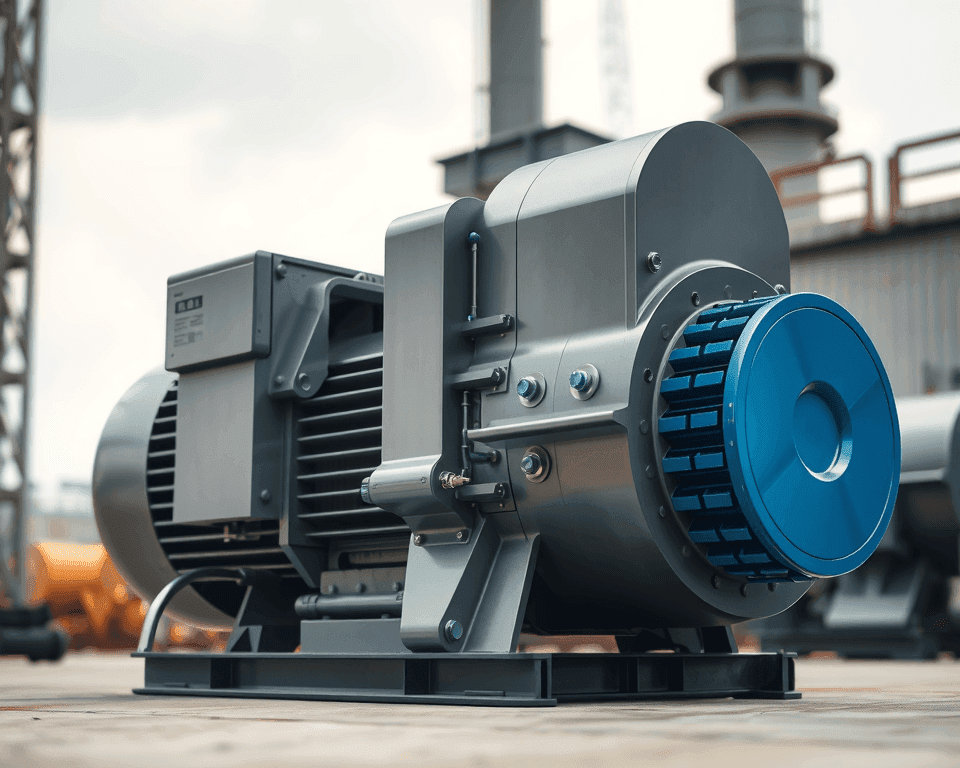
Smart Motors: Revolutionizing Industrial Energy Efficiency
Electric motors silently power everything from pumps and fans to conveyors and compressors. However, their ubiquitous presence also makes them significant energy consumers. Traditional motors, often operating at fixed speeds with outdated technology, contribute to substantial energy waste. Fortunately, a new generation of "intelligent" electric motors is emerging, promising to revolutionise industrial energy efficiency and drive down operating costs.
A smart motor (or intelligent motor) is an advanced, highly integrated propulsion system that combines a high-efficiency electric motor with an on-board variable speed drive (VSD), embedded sensors, microcontrollers for edge-level computing, and network connectivity. By integrating these components into a single unit, the smart motor autonomously optimises its local operation in real time, communicating vital status data to broader industrial control systems.
The Problem: Inefficient Motors in Industry
It is estimated that motors consume over 45% of the world's electricity, with an even higher share in the industrial sector. A significant portion of these systems are outdated, fixed-speed models that run at full capacity regardless of the actual workload. This results in wasted energy, inflated utility bills, and a larger carbon footprint.
- Fixed-Speed Operation: Most industrial pumps and fans rely on fixed-speed motors. Instead of modulating motor speed to control output, these systems often use mechanical throttling valves or dampers. This is highly inefficient; it is the equivalent of driving a car with the accelerator fully depressed while regulating speed using only the brakes.
- Outdated Technology: Many operating motors rely on older designs with lower energy efficiency ratings (IE1 or IE2), leading to greater internal energy losses through heat and friction.
- Lack of Control: Traditional motors lack the sophisticated control systems needed to dynamically optimise performance based on real-time process demands.
- Limited Data: Without sensors and data analytics, it is difficult to monitor motor performance, identify running inefficiencies, or detect early mechanical degradation.
The Solution: Intelligent Motors to the Rescue
Intelligent motors represent a significant advancement in electric motor technology. They integrate advanced features, such as VSDs, sophisticated control systems, sensors, and communication capabilities, to optimise performance, reduce energy consumption, and improve overall reliability.
Key Features of Intelligent Motors
- Variable Speed Drives (VSDs): Integrated VSDs allow smart motors to continuously adjust their speed and torque in response to changing workload demands. By matching motor output to actual load requirements, energy losses are dramatically reduced.
- Advanced Control Systems: Intelligent control algorithms run directly on the motor's embedded processors, ensuring optimal electromagnetic flux and torque production under varying operational conditions.
- Integrated Sensors: Built-in sensors monitor critical physical parameters such as stator winding temperature, bearing vibration, three-phase current, and voltage harmonics, providing real-time data on motor health.
- Communication Capabilities: Smart motors communicate with external supervisory systems via modern industrial protocols (such as Modbus TCP, EtherNet/IP, PROFINET, or IO-Link), enabling seamless integration with SCADA and industrial automation networks.
- Predictive Maintenance: By analysing high-frequency sensor data at the edge, intelligent motors can identify early signs of bearing wear, insulation breakdown, or shaft misalignment, allowing operators to schedule maintenance before a catastrophic failure occurs.
Benefits of Using Intelligent Motors
- Improved Energy Efficiency: IE5 synchronous reluctance motors (SynRM) can reduce energy losses by up to 40% compared to standard IE3 induction motors. IE5 motors convert electrical energy into mechanical energy with unparalleled efficiency, minimising heat generation and wasted power.
- Reduced Energy Costs: A more efficient motor can save from several hundred to several tens of thousands of pounds over its operating lifetime, depending on its power rating and annual run hours.
- Extended Equipment Lifespan: Because intelligent motors adjust their speed to match actual load requirements, they lower mechanical stress and thermal loading, which significantly extends the physical lifespan of both the motor and its coupled rotating equipment (such as pumps, fans, and gearboxes).
- Predictive Maintenance: Intelligent motor control systems collect and process real-time health diagnostics, shifting maintenance strategies from reactive or calendar-based intervals to highly targeted, condition-based interventions.
- Enhanced Process Control: Built-in microcontrollers offer high precision and accuracy in speed and torque regulation, improving overall manufacturing consistency and product quality.
- Reduced Downtime: Embedded predictive analytics flag developing anomalies early, preventing unexpected breakdowns and highly disruptive production stops.
- Smaller Footprint: Modern smart motors often integrate the drive directly into the motor housing. This eliminates the need for separate, bulky drive cabinets, resulting in an industrial drive package that can be up to 60% smaller than conventional separate-component installations.
- Environmental Benefits: Lower electricity consumption translates directly to lower grid demand, resulting in reduced CO₂e emissions and a smaller corporate carbon footprint.
- Drop-in Replacement: Advanced engineering in modern smart units, such as the VIDAR motor, allows them to replace conventional fixed-speed motors as direct "drop-in" upgrades. This eliminates the need for complex structural redesigns, extensive wiring modifications, or expensive external clean-room enclosures for separate drives.
IE5 Motors: The Gold Standard in Efficiency
The International Electrotechnical Commission (IEC) defines international energy efficiency (IE) classes for low-voltage three-phase motors under standard IEC 60034-30-1. Under this classification, IE1 represents standard efficiency and IE5 represents ultra-premium efficiency. IE5 motors represent the absolute pinnacle of current energy-efficient motor design.
Key Advantages of IE5 Motors
- Ultra-High Efficiency: IE5 motors minimise internal winding and core losses, converting electrical energy into mechanical power with exceptional performance across the entire load profile.
- Reduced Energy Losses: An IE5 SynRM can reduce energy losses by up to 40% compared to an equivalent IE3 induction motor, leading to rapid capital payback.
- Lower CO₂ Emissions: By significantly lowering electrical draw, widespread adoption of IE5 motors directly drives down industrial greenhouse gas emissions.
- Cooler Operating Temperatures: Higher efficiency means less energy is lost as heat. Cooler running temperatures prevent thermal degradation of winding insulation and bearing grease, extending the operational lifespan of the machine.
- Quiet Operation: Because IE5 SynRM motors run cooler and generate fewer electromagnetic harmonics, they operate much more quietly than traditional induction motors, improving workshop safety and working conditions.
SynRM Technology: A Key Enabler of IE5 Efficiency
Synchronous reluctance motors (SynRM) combine the high-performance characteristics of permanent magnet motors with the structural simplicity and rugged reliability of traditional induction motors. SynRM technology is a key driver behind the realisation of IE5 efficiency ratings:
- Magnet-Free Design: Unlike permanent magnet synchronous motors, SynRM motors do not require rare-earth magnets. This eliminates dependency on volatile global supply chains and reduces the environmental impact associated with mining heavy metals.
- High Efficiency: SynRM rotors have no windings or cage conductors, meaning there are virtually no rotor I2R copper losses. This absence of rotor losses is what allows them to easily meet and exceed IE5 standards.
- Simple Maintenance: SynRM motors share the same mechanical simplicity and bearing arrangements as standard AC induction motors, requiring no specialised maintenance procedures.
- Precise Control: When paired with a smart drive running Direct Torque Control (DTC) or advanced vector control, SynRM motors achieve highly precise speed and torque regulation without needing fragile external encoders or speed sensors.
Real-World Applications and Case Studies
The industrial benefits of intelligent motors are well-documented across multiple sectors:
- VIDAR Smart Motor: In a municipal pumping station application, replacing a single fixed-speed AC induction motor on an industrial water pump with an integrated VIDAR smart motor decreased total system power consumption by 52%.
- ABB IE5 SynRM Motors: Multiple industrial case studies utilising integrated SynRM motor and VSD packages have demonstrated sustained energy bill reductions ranging from 14% to 25% when compared to the legacy motors they replaced.
- Tenaris Steel Plant: By deploying ABB Ability™ Smart Sensors on low-voltage motors driving critical cooling pumps and fans, engineering teams were able to capture real-time vibration and temperature anomalies. The system flagged early-stage bearing damage, allowing planned maintenance to occur during scheduled shutdowns and preventing catastrophic in-service failures.
Strategies for Implementing Intelligent Motors
Transitioning an industrial facility to smart motor technology requires a structured, strategic approach to maximise return on investment (ROI).
- Conduct a Comprehensive Energy Audit: Baseline your facility's current energy consumption. Target legacy, continuous-duty fixed-speed motors (such as those running 24/7 on pumps, fans, and compressors) where the application of speed control will yield the highest returns.
- Establish a Dedicated Energy Management Team: Appoint cross-functional leads from engineering, maintenance, and finance to oversee efficiency upgrades, track performance metrics, and calculate life-cycle cost savings.
- Invest in Energy-Efficient Systems: Prioritise replacement projects using IE5-rated smart motors with integrated variable speed drives to simplify installation and guarantee optimal motor-drive pairing.
- Optimise Fluid and Mechanical Processes: Take advantage of the affinity laws when applying smart motors to centrifugal pumps and fans. The fluid power (P) required by a pump or fan is proportional to the cube of its rotational speed (N):
Where $$P_1$$ and $$P_2$$ represent power, and $$N_1$$ and $$N_2$$ represent rotational speed. Because of this cubic relationship, reducing a fan or pump's speed by just 20% can cut its consumed energy in half.
5. Implement Smart Manufacturing Technologies: Connect your smart motors to your central Industrial Internet of Things (IIoT) platforms. This permits remote monitoring, advanced fleet diagnostics, and automated alerts. 6. Provide Technical Training and Education: Ensure maintenance technicians and plant operators are fully trained on how to read smart motor diagnostic dashboards, interpret vibration spectrum data, and configure drive parameters. 7. Transition to Proactive Asset Care: Combine smart motor diagnostics with regular cleaning and scheduled mechanical alignment checks. This ensures your high-efficiency assets continue to run under optimal mechanical conditions, protecting your energy efficiency gains.
The Role of Predictive Maintenance
Predictive maintenance is a cornerstone of smart motor technology, transforming how industrial plants manage asset health. Under this approach, continuous sensor inputs feed into edge diagnostics. If an anomaly is flagged, the system alerts operators so they can schedule a planned work order, ultimately achieving zero unplanned downtime.
Key Elements of Predictive Maintenance
- Continuous Condition Monitoring: High-resolution sensors mounted inside or directly on the motor frame measure physical variables—including tri-axial vibration, winding temperature, magnetic flux leakage, and acoustic emissions—while the asset is in active operation.
- Data Analytics and Edge Computing: Raw sensor measurements are processed directly on-board or via local gateways to extract key health indicators, filter out background operating noise, and calculate running trends.
- Machine Learning Algorithms: Cloud-based platforms apply historical models to detect complex anomalies, isolating specific failure modes such as inner-race bearing pitting, rotor bar cracks, or stator winding insulation degradation.
- Remote Diagnostics: Cloud connectivity enables off-site reliability engineers to inspect motor health signatures from anywhere in the world, facilitating rapid, data-driven decision-making.
Benefits of Predictive Maintenance
- Minimised Unplanned Downtime: Critical issues are flagged weeks or months in advance, allowing repair work to be coordinated with planned facility shutdowns.
- Lower Maintenance Overheads: Maintenance crews only rebuild or replace components when actual wear is detected, avoiding the unnecessary expense of premature calendar-based rebuilds.
- Extended Equipment Lifespan: Catching minor issues (like coupling misalignment or minor bearing wear) early prevents them from escalating into severe mechanical damage that can ruin the entire motor core.
- Improved Safety: Eliminating catastrophic mechanical failures (such as locked bearings or stator fires) drastically reduces workplace hazards for nearby plant personnel.
Overcoming Barriers to Adoption
While the operational and environmental advantages of smart motors are clear, several factors can delay their adoption in industrial environments:
- Higher Initial Capital Expenditure (CAPEX): Smart motors and IE5-class packages require a higher upfront investment than standard IE3 induction motors. However, because energy costs typically represent over 90% of a motor's total life-cycle cost, the CAPEX difference is usually recovered within 12 to 24 months of continuous operation.
- Legacy Infrastructure Compatibility: Retrofitting older plants with smart technology can be perceived as complex. Modern smart motors overcome this by using standard frame sizes (such as IEC or NEMA standards), acting as direct physical "drop-in" replacements without requiring structural changes to existing machinery mounts.
- IT-OT Integration and Cybersecurity: Connecting industrial operational technology (OT) to enterprise IT networks or cloud platforms raises valid security concerns. Industrial operators can address this by implementing edge-level isolation, utilising read-only communication gateways, and selecting smart motor platforms that conform to robust cybersecurity standards like the IEC 62443 series.
- Skills Gap: Transitioning from traditional mechanical maintenance to digital diagnostics requires new competencies. Forward-thinking organisations bridge this gap by partnering with equipment manufacturers who provide comprehensive training, intuitive software interfaces, and remote diagnostic support services.
