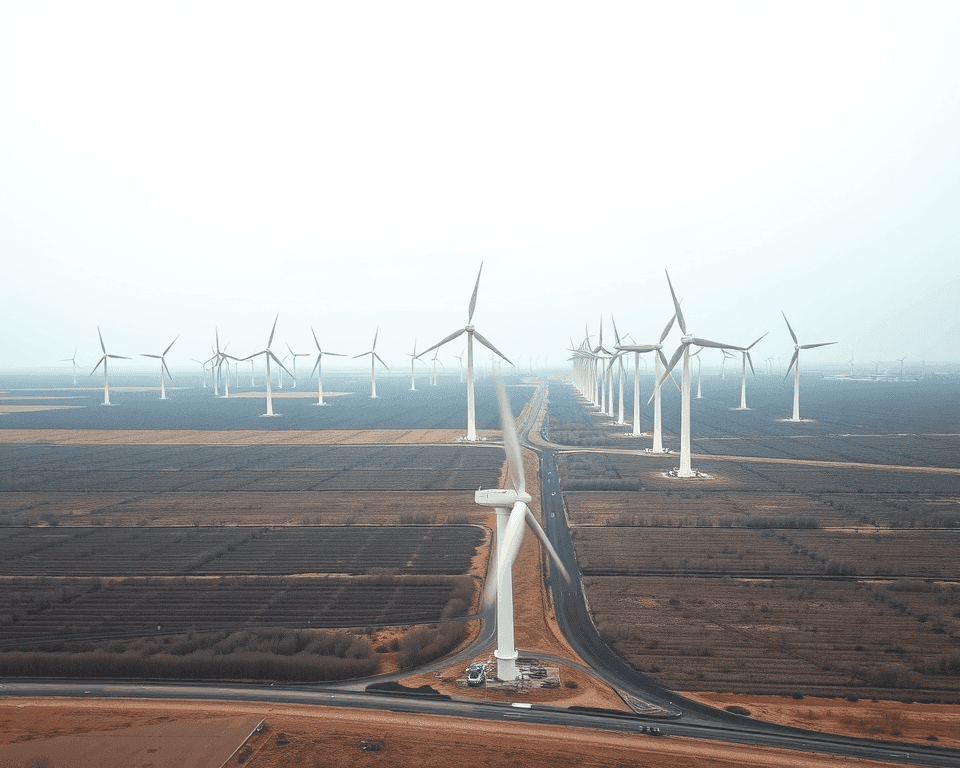
China’s Wind Power Dominance Continues Amidst Patchy Domestic Demand
China's dominance in the global offshore wind market is becoming increasingly evident, fuelled by significant domestic demand and strategic global expansion. While internal demand may experience fluctuations, Chinese wind turbine manufacturers are solidifying their position as leaders, impacting both domestic and international marine energy sectors.
Chinese OEMs Lead Global Wind Turbine Market
Chinese wind turbine original equipment manufacturers (OEMs) have surged to the forefront of the global industry. In the offshore sector, these players have translated their immense domestic manufacturing scale into global market leadership.
| Manufacturer (OEM) | 2023 Global Capacity Installed (GW) | Global Ranking | Key Offshore Turbine Innovations |
|---|---|---|---|
| Goldwind | 16.3 | 1st | Ultra-large offshore wind turbines, direct-drive technology |
| Envision | 14.1 | 2nd | Smart energy systems, deepwater marine configurations |
| Windey | 10.1 | 4th | Semi-submersible foundation compatibility |
| Mingyang | 9.9 | 5th | Typhoon-resistant offshore models up to 20 MW+ |
The top five OEMs control 54% of the global wind market, indicating a highly consolidated sector. This domestic surge is closely tied to China's ambitious clean energy targets, particularly the 14th Five-Year Plan which mandated a 50% increase in renewable energy generation between 2020 and 2025. This policy framework spurred accelerated installations, with offshore capacity playing an increasingly vital role. China connected 6.6 GW of new offshore wind capacity to the grid in 2025 alone, bringing its total operational offshore capacity to 48.4 GW.
Impact on Western Manufacturers
The rise of Chinese wind turbine manufacturers has placed substantial competitive pressure on Western counterparts. While American and European companies held 44% of the market share in 2021, this figure decreased to 22% in 2022. Western developers and manufacturers faced severe financial headwinds due to rising interest rates, supply chain disruptions, and stalling domestic installations. In contrast, Chinese OEMs have leveraged local economies of scale to offer competitive pricing, with turbine prices averaging at least 20% lower than those of European and US manufacturers.
The China Offshore Wind Market: Scale, Technology, and Deepwater Frontiers
The china offshore wind market has evolved from a subsidised developmental sector into a self-sustaining global powerhouse. Rapid scaling, technological maturity, and the pursuit of deepwater resources have placed China at the absolute centre of global offshore wind expansion.
| Province / Developer | Key Marine Dynamics & Projects | Technology Focus |
|---|---|---|
| Guangdong, Fujian, Shandong, Jiangsu | Large-scale coastal clusters close to industrial demand centres | Minimising long-distance transmission losses, grid parity integration |
| Mingyang Smart Energy, Goldwind, CSSC Haizhuang | Rapid upscaling of marine turbines (16 MW to over 20 MW) | Typhoon-resistant rotors exceeding 260 metres in diameter |
| Deepwater Frontiers | Transitioning from shallow waters to deep offshore zones | Floating platforms, semi-submersible foundations, dynamic subsea cabling |
| Co-location Initiatives | Dual-use marine spatial planning | Integrating offshore wind with marine ranching (aquaculture) and green hydrogen |
Having surpassed Europe in cumulative installed offshore capacity, China's coastal provinces are driving large-scale marine energy clusters to supply major industrial demand centres along the eastern seaboard. To lower the Levelised Cost of Electricity (LCOE), Chinese OEMs are rapidly launching ultra-large offshore wind turbines designed to withstand super-typhoons in the South China Sea. As shallow nearshore sites fill up, developers are moving further out to sea, driving intensive research and development in floating offshore wind platforms, semi-submersible foundations, tension-leg platforms, and advanced subsea mooring systems. Following the phase-out of national feed-in tariffs (FiTs) at the end of 2021, the sector has transitioned to a market-oriented renewable energy pricing system, often co-locating turbines with aquaculture and green hydrogen facilities to maximise commercial returns.
China's Expanding Global Footprint
Chinese wind turbine manufacturers are expanding their international presence, particularly in the offshore wind sector. While Goldwind and Envision dominate export markets, overseas orders for Chinese offshore-capable turbines are rising. In the first half of 2024, China received 5 GW of wind turbine orders from abroad, representing a 47% year-over-year increase. By the end of 2023, China had exported nearly 15.6 GW of wind turbines across 54 countries and regions, with long-term forecasts suggesting total Chinese wind turbine exports could surpass 100 GW over the next decade.
| Driver | Description |
|---|---|
| Proven Track Record | Demonstrated reliability of large-scale marine turbines in extreme Pacific environments |
| Cost Advantages | Highly competitive pricing stemming from extensive local supply chains and massive production capacity |
| Favourable Financing | Flexible payment terms and competitive financing structures offered by Chinese manufacturers |
Challenges and Opportunities
Despite its rapid expansion, the offshore wind sector faces specific market challenges alongside new opportunities. Intense domestic competition has driven down turbine prices, raising profitability concerns for major manufacturers. Additionally, global supply chain bottlenecks and quality assurance for massive dynamic subsea cables remain critical considerations.
However, the opportunities remain vast. Global offshore wind power is on track to reach key milestones, with China contributing a substantial portion of new global installations. Floating offshore wind technology presents a major frontier for technological growth, allowing developers to harness deeper waters where winds are stronger and more consistent.
Future Outlook
The global offshore wind energy market continues on a strong growth trajectory. Rising investments in clean marine energy, expanding coastal grid connections, and the global demand for decarbonisation are driving rapid capacity additions.
| Metric | Details & Projections |
|---|---|
| Global Market Growth | Valued at USD 174.5 billion in 2024, with significant expansion anticipated through 2034 |
| Offshore Share of Installations | Reached 92.5 GW globally by the end of 2025, with China representing 48.4 GW |
| China's Future Offshore Additions | Expected to add approximately 153 GW of offshore capacity over the next decade (2026–2035) |
As coastal provinces pursue ambitious net-zero targets, the development of offshore wind serves as a direct mechanism to displace coal-fired generation in China's most populous and industrialised regions.
Projections for China's Offshore Wind Energy Market
The outlook for the China offshore wind market is exceptionally strong, characterised by rapid grid integration and high-capacity installations. Market research indicates that China’s offshore wind market size is expanding at a compound annual growth rate (CAGR) of approximately 12%, driven by provincial development pipelines.
Rather than focussing on distant inland projects, coastal provinces such as Guangdong, Jiangsu, and Fujian are prioritising offshore wind farms. Guangdong alone possesses an offshore wind pipeline designed to avoid millions of tonnes of carbon dioxide emissions annually, reinforcing the marine environment as the primary theatre for China’s next-generation clean energy transition.
China's Offshore Wind Market: Leading Global Marine Energy
China's leadership in the global offshore wind sector is well established. Underpinned by decisive provincial policies, rapid technological scaling, and competitive manufacturing, Chinese offshore turbine manufacturers are well positioned to sustain their leadership. Although challenges like profitability and grid connection logistics remain, the ongoing technological pivot towards deepwater floating arrays and integrated marine aquaculture ensures that the China offshore wind market will remain at the forefront of the global energy transition.
