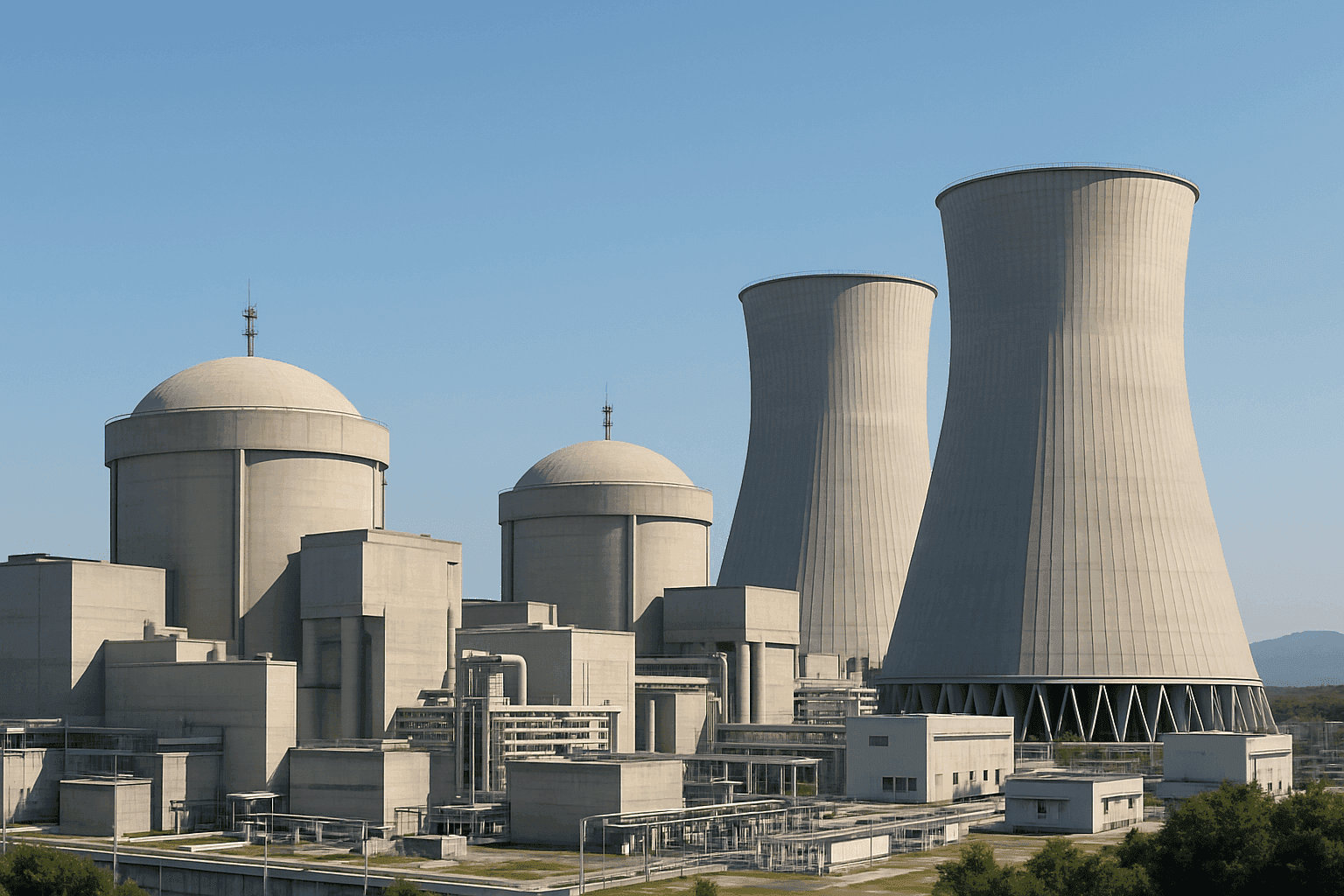
China’s Nuclear Marvel: Qinshan Plant Breaks Continuous Operation Record!
China's Qinshan Nuclear Power Plant has achieved a remarkable feat, setting a new standard for continuous operation in the nuclear energy sector. Unit 1 of the Qinshan Phase III nuclear power plant, located near Shanghai in Zhejiang province, was taken offline on May 1, 2025, after an impressive 738 days of uninterrupted operation. This achievement marks a new record for the longest continuous operation of a power reactor in China and a world record for an operating run for a Candu-6 reactor.
A Milestone in Nuclear Energy
The accomplishment of the Qinshan Nuclear Power Plant is a testament to China's growing expertise and commitment to nuclear energy. This milestone not only highlights the plant's operational efficiency but also underscores the significant role nuclear power plays in China's energy mix.
Key Highlights of the Record-Breaking Operation:
- 738 Days of Continuous Operation: Unit 1 operated without interruption for over two years, demonstrating exceptional reliability.
- Record for Candu-6 Reactor: This achievement sets a new global benchmark for Candu-6 reactors, showcasing their potential for sustained performance.
- Significant Power Generation: During its latest operating cycle, which began on April 24, 2023, Unit 1 generated over 12.5 billion kilowatt-hours of electricity.
- Environmental Benefits: The electricity generated is equivalent to reducing standard coal consumption by 3.8 million tonnes and decreasing carbon dioxide emissions by 9.97 million tonnes, highlighting the environmental benefits of nuclear power.
Qinshan Nuclear Power Plant: A Pioneer in China's Nuclear History
The Qinshan Nuclear Power Plant is not only a major power generation facility but also a symbol of China's nuclear ambitions and capabilities.
A Brief History:
- Early Beginnings: Construction of the Qinshan Nuclear Power Plant began on March 20, 1985.
- First Domestically Designed Plant: Phase I of the plant featured a 300 MWe pressurized water reactor (PWR), which was the first nuclear power station designed and built in China. It commenced commercial operation in 1994.
- Expansion and Development: Over the years, the plant has expanded to include multiple units with different reactor types and capacities.
- Phases II and III: Phase II is home to four operating CNP-600 PWRs, while Phase III consists of two 750 MWe pressurized heavy water reactors supplied by Atomic Energy of Canada Ltd, commissioned in 2002 and 2003.
- Largest Nuclear Power Base: Today, Qinshan is the largest nuclear power base in China, comprising seven reactors. It boasts an annual output of approximately 52 billion kilowatt-hours.
Contributions to China's Energy Sector:
- Clean Energy: Qinshan Nuclear Power has fueled China's economic growth with its clean and efficient nuclear energy.
- Innovation and Talent Development: The plant has served as a catalyst for innovation and talent development in nuclear technology.
- Safety Management: Qinshan's safety management systems have set benchmarks in the industry, achieving over 170 reactor years of safe operation.
The Candu-6 Reactor and Its Significance
The record-breaking performance of Unit 1 at Qinshan Phase III is particularly significant due to its Candu-6 reactor. Candu reactors are pressurized heavy water reactors (PHWRs) designed for online refueling, which contributes to their high operational efficiency.
Key Features of Candu Reactors:
- Pressurized Heavy Water Reactors (PHWRs): Candu reactors use heavy water as a moderator and coolant, enhancing their neutron economy.
- Online Refueling: These reactors can be refueled without being shut down, allowing for continuous operation and high capacity factors.
- International Presence: There are currently nine Candu-6 reactors in operation worldwide, including units in Romania, Argentina, Canada, China, and South Korea.
Refurbishment and Life Extension
As the Qinshan Nuclear Power Plant approaches the end of its initial 30-year design life, the operator, Third Qinshan Nuclear Power Company, is undertaking a refurbishment program to extend the life of the reactors. This includes:
- Refurbishing Reactors and Fuel Channels: The refurbishment will allow the Candu units to continue generating power for another 30 years.
- Utilizing Technological Improvements: The life extension project will incorporate the latest technological advancements to expedite the process and enhance performance.
Global Context and Future Prospects
While Qinshan's Unit 1 has set a new record for Candu-6 reactors, the world record for continuous operation of a nuclear reactor is held by Darlington Unit 1 in Canada, which operated for 1106 days until February 5, 2021.
China's Nuclear Ambitions:
- Expanding Nuclear Capacity: China has been actively expanding its nuclear power capacity, with plans for new reactors and advancements in nuclear technology.
- Innovation in Nuclear Heating: Qinshan Nuclear Power has also been involved in innovative projects such as nuclear energy heating, demonstrating its commitment to cleaner and carbon-neutral energy use.
A Symbol of Nuclear Excellence
The Qinshan Nuclear Power Plant's recent achievement is a significant milestone in the nuclear energy sector. It highlights the plant's operational excellence, the reliability of Candu-6 reactors, and China's growing capabilities in nuclear technology. As Qinshan continues to innovate and expand, it will undoubtedly play a crucial role in shaping the future of nuclear energy in China and beyond.
