Earth’s Kryptonite Twin: Jadarite’s Potential to Power Europe’s Electric Car Revolution
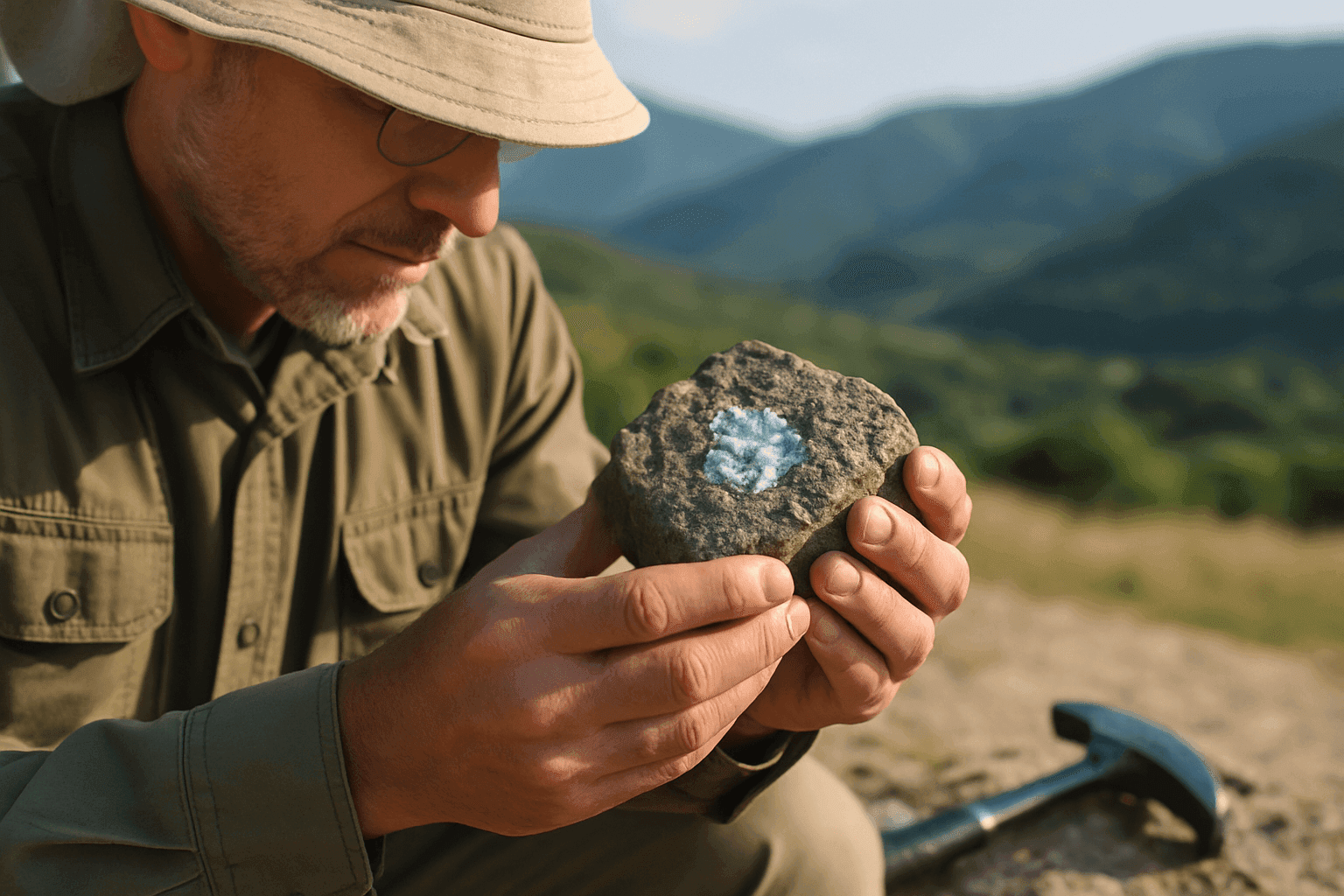
Jadarite, a mineral with a chemical composition remarkably similar to Superman's fictional weakness, Kryptonite, is garnering attention not for its potential to fell superheroes, but for its capacity to support a low-carbon future in Europe. This unique mineral, found only in the Jadar Valley of Serbia, contains significant reserves of lithium and boron, both critical elements in the production of electric vehicles and other green technologies. The Jadar lithium deposit has the potential to supply a substantial portion of Europe's lithium needs, potentially powering a significant percentage of the continent's electric car fleet. However, the road to realising this potential is fraught with challenges, including environmental concerns and local opposition.
The Discovery and Composition of Jadarite
In 2004, geologists from the multinational mining group Rio Tinto discovered an unusual mineral in the Jadar Valley near Loznica, Western Serbia. This mineral, named jadarite after the Jadar River, was officially recognised by the International Mineralogical Association (IMA) in November 2006 under the designation IMA 2006-036.
It was later confirmed as a unique lithium sodium borosilicate hydroxide, with the chemical formula:
LiNaSiB3O7(OH)The discovery made global headlines when Dr Chris Stanley of the Natural History Museum, London, noted that jadarite's chemical composition is strikingly similar to that of Kryptonite, the fictional substance that weakens Superman, as described in the 2006 film Superman Returns. In the movie, a crate of Kryptonite is labelled with the scientific name: sodium lithium boron silicate hydroxide with fluorine. While jadarite does not contain fluorine and is a chalky white rather than a glowing green, the mineralogical coincidence captured the public's imagination.
Physical and Crystallographic Properties
Jadarite is a white, earthy, monoclinic silicate mineral with a dull lustre. Crystallising in the monoclinic crystal system (space group P21/c), its unit cell parameters have been calculated as:
- a=6.76 A˚
- b=13.80 A˚
- c=7.69 A˚
- β=124.12∘
The unit cell volume (V) can be derived using the standard monoclinic volume formula:
V=a⋅b⋅c⋅sin(β)Substituting these parameters yields an approximate unit cell volume of 594.6 A˚3. Jadarite has a Mohs hardness rating of 4.5 to 5, which makes it relatively soft compared to other silicate minerals like quartz or feldspar. It is non-radioactive and exhibits a weak pink-to-orange fluorescence under short-wave ultraviolet light.
Chemical Composition Breakdown
Jadarite is unique because it concentrates both lithium and boron in high weight percentages within a single mineral structure. The oxide breakdown by weight percentage is approximately:
| Component | Chemical Formula | Weight Percentage (approx. %) |
|---|---|---|
| Boron trioxide | B2O3 | 47.2% |
| Silicon dioxide | SiO2 | 27.2% |
| Sodium oxide | Na2O | 14.0% |
| Lithium oxide | Li2O | 7.3% |
| Water (Hydroxyl) | H₂O | 4.3% |
Unlike spodumene, lepidolite, or petalite (the primary hard-rock lithium minerals), jadarite contains a significant amount of boron. Boron is a valuable industrial co-product used in high-strength borosilicate glass, wind turbine blades, and permanent magnets.
The Significance of Jadarite
Jadarite's significance lies in its high content of lithium and boron, two elements that are essential for various industrial applications. Lithium is a key component in lithium-ion batteries, which are used in electric vehicles, energy storage systems, and portable electronic devices. Boron is used in alloys, ceramics, glasses, and other applications.
The Jadar deposit is one of the largest lithium deposits in the world, estimated to contain 136 million tonnes of lithium-rich ore. Professor Richard Herrington of the Natural History Museum notes that within this geological reserve, there is nearly 100 million tonnes of the specific jadarite mineral itself. If mining is approved, he suggests the site's total reserves could theoretically supply nine-tenths of all the lithium Europe needs for its electric vehicles over the project's lifetime.
Geology of the Jadar Basin
The Jadar basin is an intramontane lacustrine basin formed during the Miocene epoch. Jadarite occurs within thick, lacustrine, sedimentary sequences, primarily consisting of tuffaceous pelites, siltstones, and marls. The mineral is found as fine-grained, nodular concretions ranging from millimetres to several centimetres in size, embedded within these sedimentary layers.
This lacustrine origin contrasts sharply with the world’s major hard-rock lithium deposits, such as the Greenbushes pegmatite in Australia, which consist of igneous spodumene. Because it is hosted in soft sedimentary rocks, extracting jadarite ore requires different mining and processing methodologies.
Jadarite and Europe's Electric Vehicle Ambitions
Europe is committed to transitioning to a low-carbon economy, with electric vehicles playing a central role in this transition. The demand for lithium-ion batteries is expected to surge in the coming years as electric vehicle production increases. However, Europe currently relies heavily on imports of lithium from other regions, such as Australia and South America.
The Jadar lithium mine has the potential to significantly reduce Europe's dependence on foreign sources of lithium. The mine could supply a substantial share of the EU's demand for critical raw materials needed for electric vehicles, batteries, and energy storage systems. If the Jadar project begins operations, it will be the first lithium mine in Europe located in a populated area.
President Vučić of Serbia stated that the mine is expected to produce 58,000 tonnes of lithium carbonate annually, enough to supply 17 per cent of Europe's electric vehicle production, or about 1.1 million cars. Other sources suggest that the mine could cater to up to 25 per cent of the continent's projected demand.
Strategic Autonomy and the EU Critical Raw Materials Act
The geopolitical significance of jadarite has risen with the introduction of the European Union's Critical Raw Materials Act (CRMA). The CRMA aims to ensure that by 2030, at least 10% of the EU's consumption of critical materials is mined domestically, and 40% is processed within the bloc.
Because Serbia is a candidate country for EU accession and shares close economic ties with the European single market, the Jadar project is viewed as a vital asset for European strategic autonomy. It would allow European automotive manufacturers—including BMW, Mercedes-Benz, and the Volkswagen Group—to source battery-grade lithium with a significantly lower transport footprint and transport emissions than materials shipped from South America or Australia.
The Jadar Project: Challenges and Controversies
Despite its potential benefits, the Jadar project has faced significant challenges and controversies. The project has been met with strong opposition from local residents and environmental activists who are concerned about the potential environmental and social impacts of the mine.
Environmental Concerns
One of the primary concerns is the potential for water pollution. The Jadar deposit is located beneath the Jadar River, and there are fears that mining activities could contaminate the river and surrounding groundwater. Environmentalists also worry about the use of large quantities of water and chemicals in the lithium extraction process, which could further degrade water quality and harm aquatic ecosystems.
Unlike conventional spodumene processing, which requires energy-intensive calcination at temperatures exceeding 1,000 ∘C to convert alpha-spodumene to beta-spodumene, jadarite processing relies on a hydrometallurgical digestion process. This involves leaching the mineral with sulphuric acid (H2SO4) at a moderate temperature of around 90 ∘C to 95 ∘C according to the following generalised chemical reaction pathway:
LiNaSiB3O7(OH)+H2SO4→Li2SO4+Na2SO4+H3BO3+SiO2-residueThis chemical process yields lithium sulphate (Li2SO4) and boric acid (H3BO3). While the low-temperature acid digestion is thermodynamically efficient, it requires large quantities of sulphuric acid, raising concerns about potential chemical spills, acid mist, and the management of massive volumes of gypsum and silica-rich waste tailings.
Another concern is the potential for land degradation. The mining project would require the clearing of large areas of land, which could lead to soil erosion, loss of biodiversity, and disruption of agricultural activities.
Social Impacts
The Jadar project could also have significant social impacts on local communities. The mine would require the relocation of some households, and there are concerns about the potential for increased noise, dust, and traffic. Some residents fear that the mine could disrupt their traditional way of life and harm their health and well-being.
Project Suspension and Revival
In response to public and environmental pressure, the Serbian government revoked licenses for the Jadar project in January 2022. However, in January 2024, President Vučić stated that the government wants to hold further talks with Rio Tinto and that there should be more public discussion over whether the project should go ahead.
In July 2024, the Serbian Constitutional Court ruled that the government's decision to revoke the spatial plan for the mine was unconstitutional, effectively clearing the legal hurdles for the project's revival. Shortly after, the European Commission signed a Memorandum of Understanding with the Serbian government, establishing a strategic partnership on sustainable raw materials, with a view to the potential development of the Jadar mine. German Chancellor Olaf Scholz has called it a “good project for Serbia” and “an important European project.”
Community Opposition
Despite the potential economic benefits, many locals mistrust the project, believing that only politicians will benefit. There have been ongoing protests against the mining project, with tensions escalating after a documentary labelled those who oppose it as Russian agents. Critics argue that the environmental costs will be borne locally in Western Serbia, while the economic benefits are exported to Western European car manufacturers.
The Future of Jadarite and European Lithium Supply
The future of the Jadar project remains uncertain. The Serbian government is weighing the potential economic benefits of the mine against the environmental and social risks. Rio Tinto is working to address the concerns of local communities and environmental groups.
If the Jadar project proceeds, it could become a major source of lithium for Europe's electric vehicle industry. However, the project must be developed in a sustainable and responsible manner, with careful attention to environmental protection and community well-being.
Alternative Lithium Sources
While the Jadarite mine has been touted as a key to Europe's green future, it is important to consider alternative sources of lithium. Other lithium mining projects are being implemented or planned in Europe:
- The Barroso Project (Portugal): A hard-rock spodumene project developed by Savannah Resources, also facing local opposition and environmental reviews.
- The Cinovec Project (Czech Republic): Hosted in a historical tin-tungsten zinnwaldite granite deposit, offering a significant hard-rock lithium resource.
- Geothermal Brines (Upper Rhine Graben, Germany/France): Direct Lithium Extraction (DLE) from deep geothermal brines, which has a significantly lower surface footprint.
- Nevada, USA: Lithium Americas corporation has secured permits to mine lithium at Thacker Pass, a massive volcanic claystone deposit.
Environmental Responsibility
It is crucial that any lithium mining project, including the Jadar project, adheres to the highest environmental standards. This includes minimising water usage, preventing water pollution, and protecting biodiversity. Mining companies should also engage in transparent and meaningful consultations with local communities to address their concerns and ensure that they benefit from the project.
Rio Tinto has pledged to use dry-stack tailing systems rather than wet tailings dams, which reduces the risk of catastrophic dam failures. This method filters out water from the mineral waste, leaving a dry cake that is progressively backfilled into the underground mine workings or stacked and vegetated on the surface.
Conclusion
Jadarite, the “Kryptonite” mineral found only in Serbia's Jadar Valley, holds significant potential to fuel Europe's electric vehicle revolution. Its high lithium content could help reduce Europe's reliance on foreign lithium sources and support the continent's transition to a low-carbon economy. However, the Jadar project faces significant challenges, including environmental concerns and local opposition. The future of the project will depend on the ability of the Serbian government, Rio Tinto, and local communities to find a sustainable and responsible path forward.
