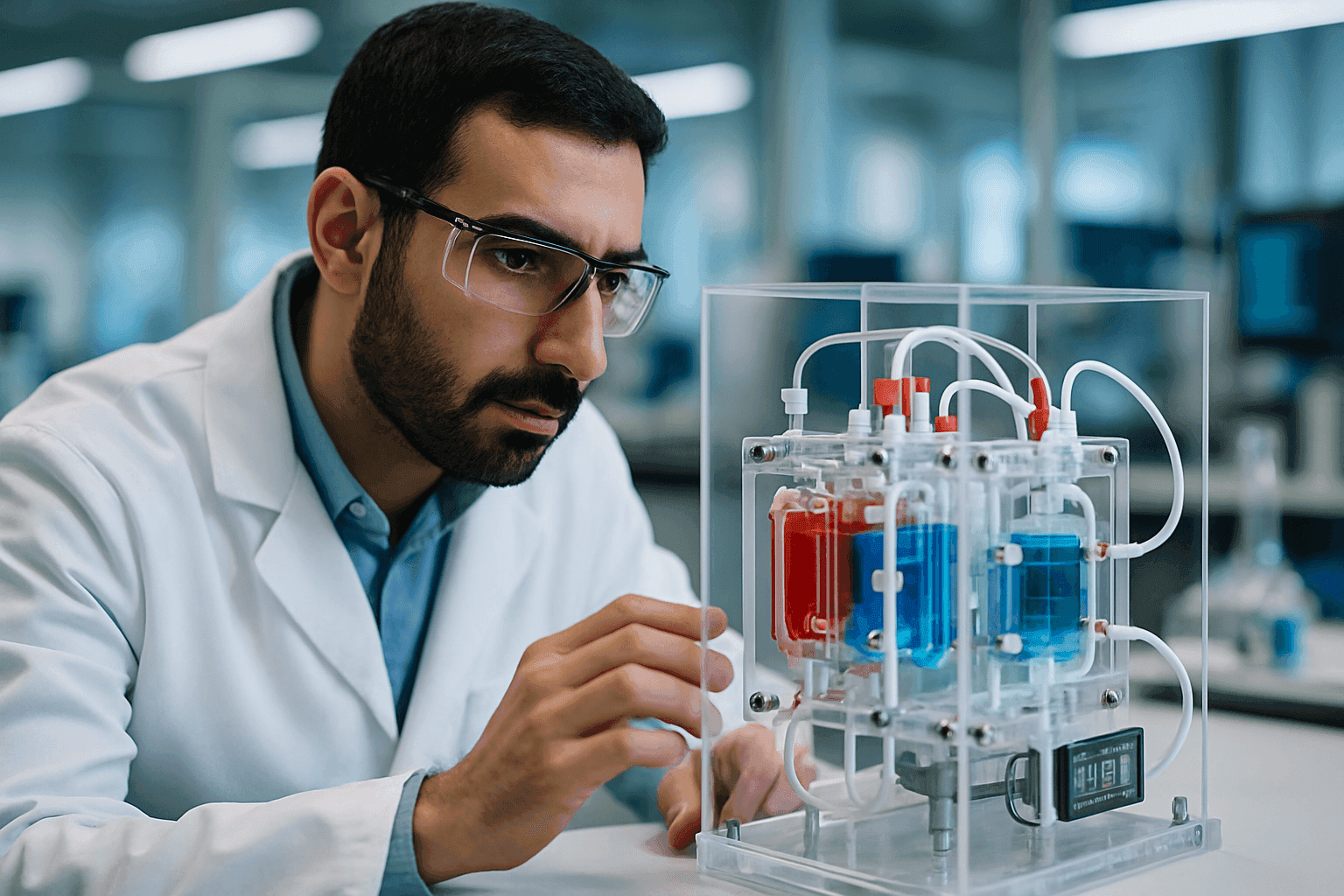
Glucose-Powered Flow Battery Utilizes Vitamin B2 for Sustainable Energy
Imagine a world where your home battery is powered by sugar and a common vitamin. Researchers have made significant strides towards this reality, unveiling a novel glucose flow cell battery that harnesses the power of vitamin B2, also known as riboflavin, and glucose. This bio-inspired innovation, drawing parallels from human metabolism, could revolutionize sustainable energy storage by offering a safer, more affordable, and environmentally friendly alternative to traditional battery technologies.
This groundbreaking technology, developed by a scientific team including Jong-Hwa Shon, Ruozhu Feng, and Wei Wang, positions riboflavin as a crucial electron shuttle within a prototype flow battery design. By integrating this vital electron mediator, the battery efficiently converts the chemical energy stored in sugar molecules into an electrical current, paving the way for a new generation of bio-derived energy solutions.
The Science Behind the Sweet Power: How it Works
The glucose-powered flow battery functions by mimicking the body's natural processes for energy generation. At its core, a flow battery stores electrochemical energy in two liquid electrolytes that circulate through the system. As these electrolytes flow, chemical reactions occur at the electrodes, converting stored chemical energy into electrical energy.
The Role of Glucose as a Fuel Source
Glucose, a simple sugar readily available from biomass or industrial production, serves as an abundant and low-cost electrolyte in this innovative battery. Unlike previous glucose fuel cell prototypes that relied on expensive and difficult-to-scale noble metal catalysts to break down sugar molecules, this new design offers a more practical approach.
Vitamin B2: The Key to Efficient Electron Transfer
The critical breakthrough lies in the utilization of vitamin B2 (riboflavin) as a catalyst. Riboflavin acts as an electron shuttle, facilitating the transfer of electrons between the electrodes and the glucose electrolyte. This mechanism is inspired by metabolic cofactors like FAD (flavin adenine dinucleotide) which play vital roles in biological energy storage. Riboflavin's stability in alkaline environments, which are typical for flow cell electrolytes, makes it an ideal biological mediator, allowing for efficient electron transfer without the need for metal inclusion.
The researchers constructed the battery with carbon materials for both the positive and negative electrodes. In one experimental setup, the electrolyte flowing around the negative electrode contained an active form of riboflavin and glucose. The positive electrode's electrolyte included potassium ferricyanide or, for more practical large-scale use, oxygen, both in a basic pH solution.
Advantages of the Riboflavin-Glucose Flow Battery
This new vitamin-mediated glucose flow battery offers several compelling advantages, positioning it as a promising candidate for future energy storage solutions:
Sustainable and Environmentally Friendly Materials
A core strength of this riboflavin-glucose flow cell is its reliance on abundant, non-toxic, and environmentally benign materials. This contrasts sharply with traditional energy storage devices that often depend on rare, expensive, and sometimes toxic metals, aligning with global efforts to reduce reliance on critical metal supply chains and address environmental concerns.
Cost-Effectiveness and Affordability
The use of readily available glucose and vitamin B2 significantly contributes to the cost-effectiveness of this battery. According to lead researcher Jong-Hwa Shon, this technology presents a vision for developing residential energy storage systems that are not only safer but also more affordable and sustainable.
Enhanced Power Density and Performance
In demonstrations, a flow cell containing potassium ferricyanide exhibited a power density at room temperature comparable to existing flow cell batteries that use vanadium metal. While a version using oxygen at the cathode showed slower reactions, the researchers note it still demonstrated improved power density compared to previous reports of glucose flow batteries. In fact, the glucose-O2 fuel cell achieved a peak power density of 13 milliwatts per cm², which is reportedly 20 times greater than previously reported values for similar glucose flow battery systems.
Room Temperature Operation
The chemical-to-electrical energy transfer in this battery occurs efficiently at room temperature and ambient pressure. This eliminates the need for complex thermal management systems, further simplifying the design and reducing operational costs.
Future Implications and Overcoming Challenges
This glucose-riboflavin flow battery holds profound implications for the renewable energy landscape. By tapping into metabolic-like pathways to convert common biological molecules into electric power, it represents a significant intersection of biotechnology and electrochemistry. This innovation could contribute to a more resilient and environmentally responsible energy infrastructure, especially for integrating intermittent renewable energy sources like solar and wind power.
The research team acknowledges some challenges, such as the potential for oxygen to break down riboflavin in the presence of light, leading to self-discharge. However, they are actively working on mitigating these drawbacks through chemical stabilization strategies and advanced cell engineering to protect riboflavin from photolytic damage, thereby enhancing the longevity of these oxygen-driven flow cells. These advancements could unlock the full practical potential of bio-derived glucose batteries for deployment in both grid-scale and residential energy storage platforms.
The development of this glucose-powered flow battery using vitamin B2 marks a paradigm shift, moving away from traditional metallic catalysts to harnessing nature's own molecular machinery for electricity generation. This pioneering technology could be a turning point in how sustainable power is generated and stored, contributing to a future with cleaner and more affordable energy solutions.
