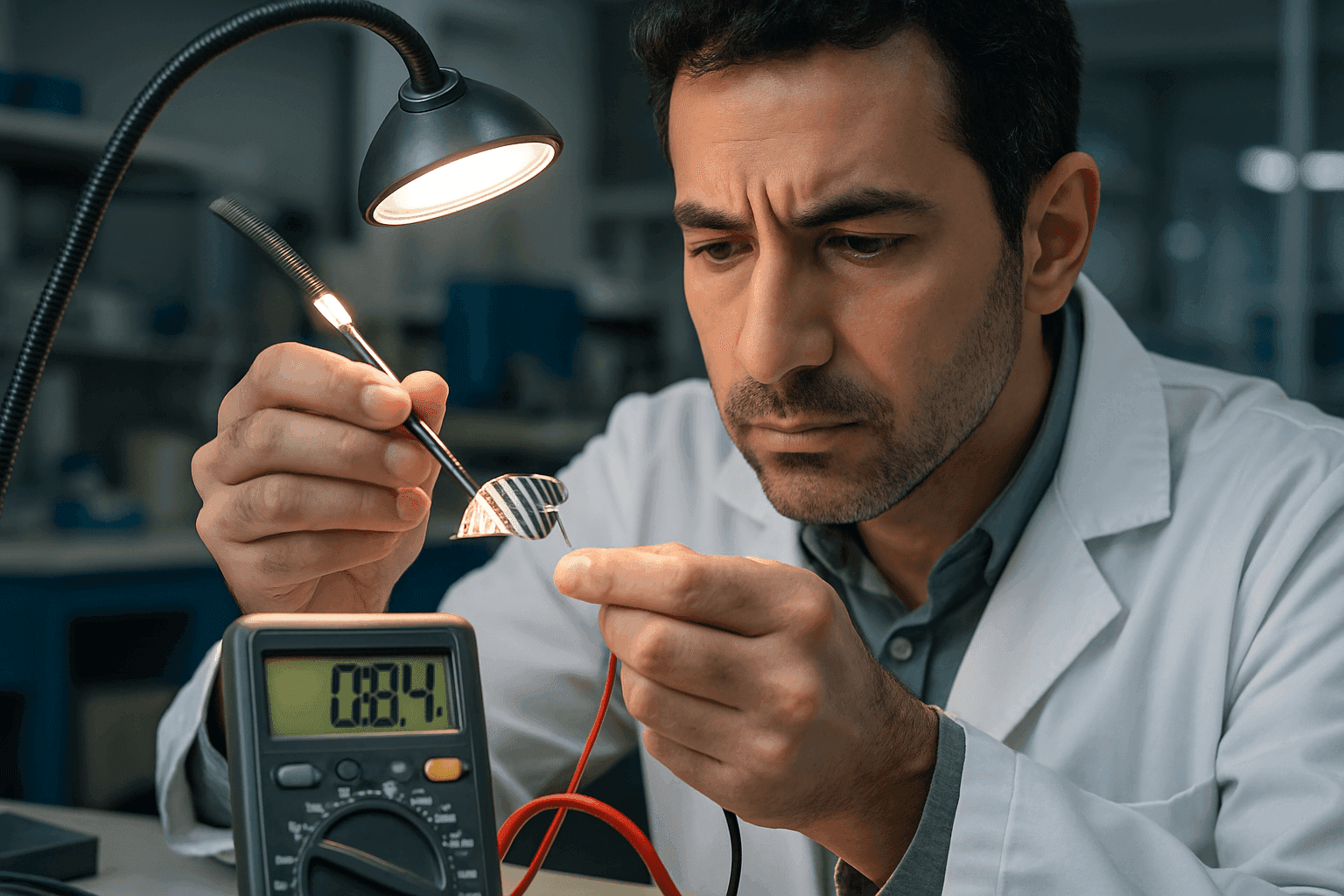
Indoor Solar Cells Revolutionized: Perovskite Technology Delivers Unprecedented Efficiency
Imagine a world where your smart devices, sensors, and even remote controls never need their batteries changed, continuously powered by the ambient light within your home or office. This vision is rapidly becoming a reality thanks to groundbreaking advancements in indoor solar cell technology, particularly with the emergence of perovskite materials. Recent research highlights a significant leap in efficiency, with new perovskite indoor solar cells achieving power conversion rates far exceeding those of conventional indoor photovoltaic solutions.
The Rise of Indoor Solar Power
While traditional silicon solar panels are optimized for direct sunlight, a vast amount of light energy within buildings, from LEDs and fluorescent bulbs, remains untapped. This “indoor light” environment, typically ranging from 100 to 2,000 lux, offers a consistent yet low-intensity energy source. Harnessing this ambient light can lead to self-sustaining low-power electronics, reducing reliance on disposable batteries and contributing to a more sustainable Internet of Things (IoT) ecosystem. Early indoor solar cells, often based on amorphous silicon (a-Si), struggled with low efficiency in these dim conditions.
Perovskites: A Game-Changer for Low-Light Environments
Perovskite solar cells (PSCs) utilize a unique class of materials with a specific crystal structure that makes them exceptionally well-suited for converting low-intensity indoor light into electricity. Unlike silicon, the bandgap of perovskites can be precisely tuned, allowing them to efficiently absorb the specific wavelengths of light emitted by indoor artificial light sources. This adaptability gives them a distinct advantage over their silicon counterparts, which are primarily designed for the broader spectrum of sunlight.
How Perovskite Cells Excel Indoors
Perovskite materials offer several key attributes that make them ideal for indoor photovoltaics (IPVs):
- Tunable Bandgap: Perovskites can be engineered to match the spectral characteristics of indoor lighting, which differs significantly from natural sunlight.
- High Open-Circuit Voltage (Voc): They can achieve high voltages even under dim light, which is crucial for powering low-power electronics.
- Defect Tolerance: Perovskites demonstrate a remarkable tolerance to imperfections in their crystal structure, which simplifies manufacturing and can contribute to performance.
- Cost-Effectiveness and Flexibility: Perovskite cells can be manufactured using low-temperature processes and solution-based techniques, potentially leading to significantly lower production costs compared to traditional silicon cells. They can also be made thin, lightweight, and flexible, enabling their integration into a wide array of devices and surfaces.
Recent Breakthroughs in Efficiency
Recent research has pushed the boundaries of indoor perovskite solar cell efficiency to impressive levels. Scientists from Taiwan's Ming Chi University of Technology, National Taiwan University of Science and Technology, and Chang Gung University have developed perovskite solar cells that achieved a remarkable 42% power conversion efficiency (PCE) under 1,000 lux LED illumination (equivalent to typical indoor office lighting). This breakthrough was achieved by optimizing the nickel oxide/perovskite interface using self-assembled monolayers (SAMs) to improve carrier transport and reduce defects.
Another notable achievement comes from National Yang Ming Chiao Tung University in Taiwan, where researchers created perovskite solar cells with a power conversion efficiency of 38.7% under 2,000 lux conditions, comparable to common office fluorescent lights. This advancement was made possible by adjusting the molecular composition of the perovskite layers to fine-tune their bandgap for indoor light absorption and by employing a chelating agent to enhance defect passivation. Such efficiencies represent a substantial improvement over older indoor photovoltaic technologies, with some perovskite cells outperforming amorphous silicon cells by many folds in low-light conditions. For example, while some amorphous silicon cells might operate at around 4-7% efficiency indoors, the new perovskite cells reaching nearly 40% or more truly signify a leap in energy capture, effectively delivering significantly more usable power from the same amount of ambient indoor light. Another study reported a record efficiency of 40.1% under warm LED light by implementing a holistic trap-passivation strategy for the perovskite film.
Powering the Future: Applications of Indoor Perovskite Solar Cells
The high efficiencies and flexible nature of indoor perovskite solar cells unlock a vast range of potential applications for powering the burgeoning Internet of Things (IoT) and other low-power electronics. These devices could become truly self-powered, eliminating the need for frequent battery replacements or wired connections. Potential applications include:
- Smart Home Devices: Sensors, smart locks, thermostats, and lighting controls can operate autonomously.
- Wearable Technology: Fitness trackers, smartwatches, and other personal electronics could be charged by indoor light.
- Medical Devices: Small, continuous power sources for health monitoring gadgets without external power.
- Wireless Sensors: Powering environmental sensors in industrial or commercial settings.
- Remote Controls and Keyboards: Eliminating the need for disposable batteries in everyday consumer electronics.
Addressing Challenges for Widespread Adoption
Despite their impressive performance and potential, perovskite solar cells still face challenges that researchers are actively working to overcome. Stability, both short-term and long-term, remains a key area of focus for wider commercialization. Additionally, concerns regarding the toxicity of lead, a common component in many high-efficiency perovskite formulations, are being addressed through research into lead-free alternatives and encapsulation methods to prevent leakage. The ongoing efforts in defect passivation and material optimization are critical to enhancing their durability and ensuring their viability for ubiquitous indoor energy harvesting.
Conclusion
The rapid advancements in perovskite technology are transforming the landscape of indoor solar power. With power conversion efficiencies now reaching over 40% under typical indoor lighting, these innovative cells are poised to fundamentally change how we power small electronics and IoT devices. As research continues to tackle challenges related to stability and material composition, perovskite indoor solar cells promise a future where our devices are not just smart, but also sustainably self-sufficient, drawing energy from the very light that illuminates our indoor spaces.
