Japan’s Helical Fusion Achieves World-First Nuclear Fusion Coil Test Milestone
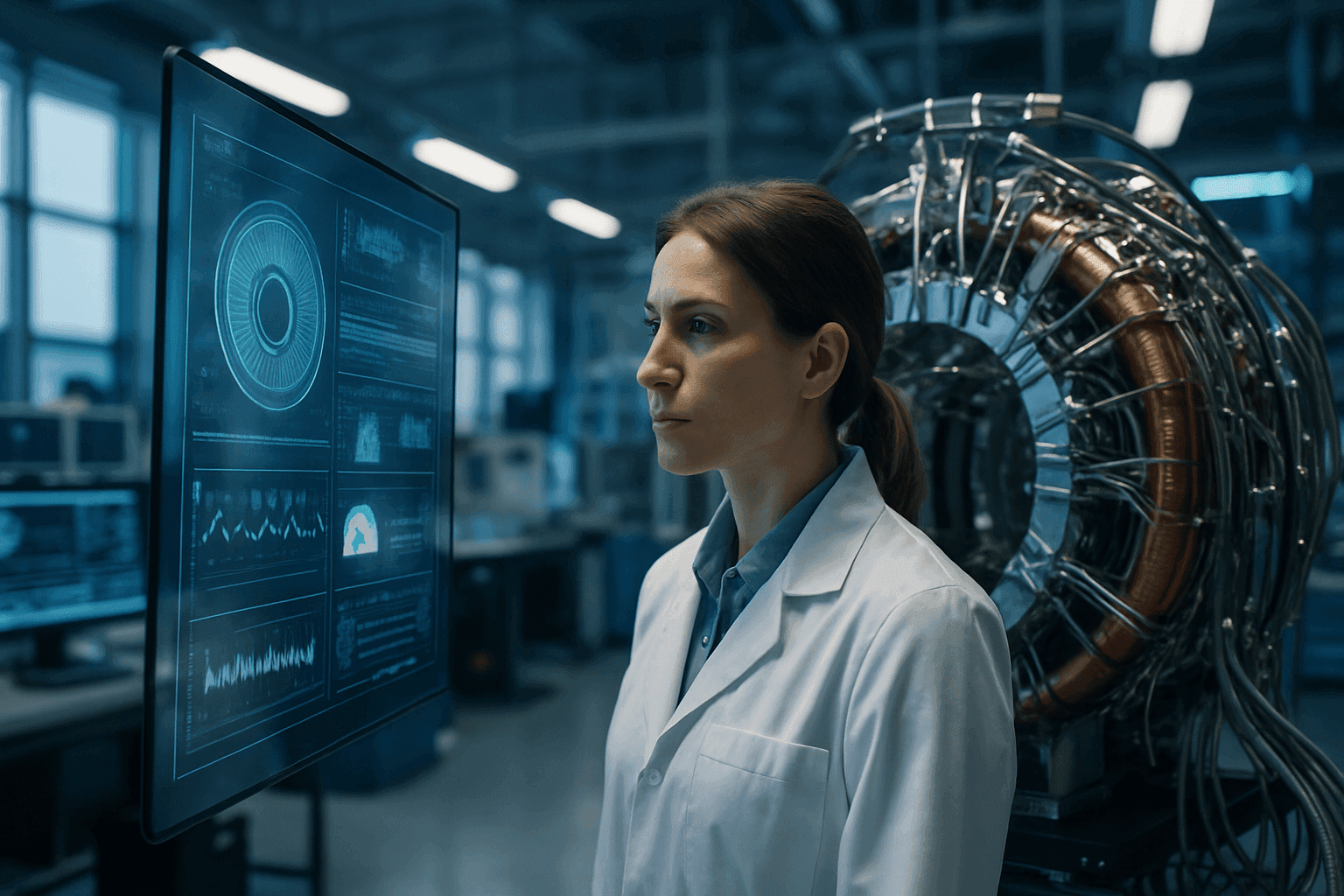
TOKYO, Japan – A Japanese startup, Helical Fusion, announced on Monday, October 27, 2025, a significant “world first” in nuclear fusion research, successfully completing a crucial performance test of a high-temperature superconducting (HTS) coil under conditions replicating a real fusion reactor. This breakthrough marks a pivotal step towards the commercialization of nuclear fusion, demonstrating the coil's ability to maintain a stable current flow under superconducting conditions while accurately replicating the complex magnetic fields found within a fusion device.
Landmark Achievement by Helical Fusion
Tokyo-based Helical Fusion's announcement highlights a major advancement in the global quest for clean, limitless energy. The company's successful test of a full-sized HTS coil, designed for use in an actual commercial reactor, involved replicating the intricate magnetic environment within a fusion device, including both self-generated and external magnetic fields. This rigorous testing confirmed the coil's capability to achieve a stable flow of current under superconducting conditions, a feat described as unprecedented by the company.
The Role of Superconducting Coils in Fusion
Superconducting coils are indispensable components in magnetic confinement fusion devices, such as stellarators and tokamaks. They generate the powerful magnetic fields necessary to contain and control the superheated plasma—a state of matter where atomic nuclei fuse, releasing immense energy. Maintaining these strong magnetic fields efficiently and stably is critical for sustaining a fusion reaction and preventing the plasma from touching the reactor walls, which would cause it to cool and the reaction to cease. The use of high-temperature superconductors is particularly promising as it could potentially simplify cooling requirements compared to traditional low-temperature superconductors.
Replicating Reactor Conditions
The core of Helical Fusion's achievement lies in testing the HTS coil under conditions that closely mimic the operational environment of a commercial fusion reactor. This involved subjecting the coil to the combined influence of its own magnetic field and external magnetic fields, crucial for understanding its performance in complex electromagnetic interactions. This successful demonstration validates the design and engineering of large-scale HTS conductors for practical fusion energy applications.
The Promise of Helical Stellarators
Helical Fusion specializes in the development of the Helical stellarator, an alternative magnetic confinement approach to the more commonly known tokamak. The company is leveraging over 60 years of expertise in helical fusion technologies, inherited from institutions like the National Institute for Fusion Science (NIFS). This latest success enables Helical Fusion to proceed with the manufacturing and construction of its integrated demonstration device, Helix HARUKA, which is designed to prove the feasibility of continuous and stable fusion reactions.
The company aims to launch Helix KANATA, its first commercially viable fusion power plant, in the 2030s. This ambitious timeline underscores the company's belief that this coil test demonstrates the possibility of achieving fusion power generation before other global competitors.
Broader Japanese and Global Fusion Efforts
Japan has been a significant player in nuclear fusion research for decades, with various institutions contributing to advancements in the field.
JT-60SA and International Collaboration
Beyond private ventures like Helical Fusion, Japan is also a key participant in major international fusion projects. The JT-60SA, a collaborative project between Japan and Europe, is the world's largest operational superconducting tokamak. Located in Naka, Japan, this facility achieved “first plasma” in October 2023 and was officially inaugurated in December 2023, representing a significant milestone for magnetic confinement fusion. The JT-60SA aims to provide crucial scientific information and develop human resources for the even larger International Thermonuclear Experimental Reactor (ITER) project under construction in France.
The Global Race for Fusion Energy
The global pursuit of nuclear fusion energy is intensifying, with significant investments from governments and private companies across the United States, China, Europe, and other nations. The U.S. Lawrence Livermore National Laboratory (LLNL) achieved a historic milestone in December 2022 by demonstrating fusion ignition with a net energy gain using inertial confinement fusion. Recent developments also include the UK Atomic Energy Authority successfully stabilizing plasma instabilities in a spherical tokamak using 3D magnetic coils in October 2025. These diverse efforts highlight a collective drive to harness fusion as a clean, abundant, and safe energy source that produces minimal radioactive waste and no greenhouse gas emissions.
The Path to Commercial Fusion
While Helical Fusion's coil test is a significant engineering triumph, the journey to a commercially viable fusion power plant involves overcoming several complex scientific and technological hurdles. These include achieving continuous and stable operation, producing more energy than the system consumes (net electricity output), and ensuring efficient component maintenance.
Japan's government has shown strong support for nuclear fusion research, with Prime Minister Sanae Takaichi championing the sector. The government plans to increase funding and revise its national strategy to accelerate the introduction of fusion energy into the grid, potentially by the 2030s. This includes opening up upgraded facilities at core research institutes to the private sector to foster collaboration and accelerate development.
This latest achievement by Helical Fusion reinforces Japan's position at the forefront of fusion energy innovation and brings the world closer to realizing the dream of clean, virtually limitless power.
