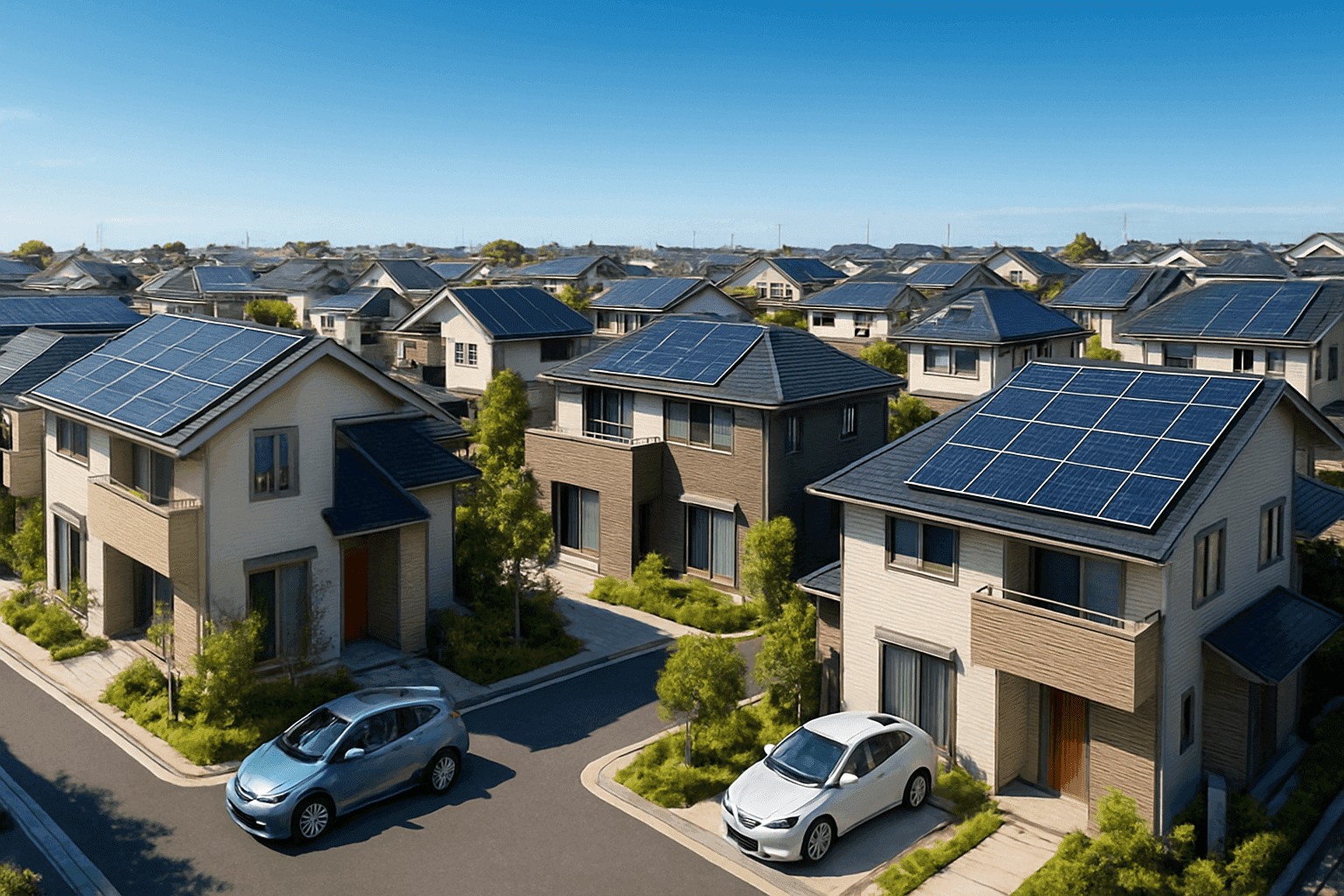
Japan’s Solar Revolution: Powering the Future with Rooftops & EVs
Japan, a nation renowned for its technological prowess and commitment to sustainability, is on the cusp of an energy revolution. A recent study by Tohoku University reveals that combining rooftop solar panels with electric vehicle (EV) batteries could meet a staggering 85 per cent of Japan's electricity demand and slash carbon dioxide emissions by 87 per cent. This groundbreaking research highlights a promising pathway for Japanese municipalities to achieve carbon neutrality by leveraging existing infrastructure – rooftops and vehicles – rather than relying solely on large-scale energy systems.
The Dawn of SolarEV Cities: A Practical Solution
As the urgency of climate change intensifies, cities and municipalities worldwide are actively seeking ways to decarbonise their energy systems. Japan, with its unique geographical challenges – mountainous terrain and limited land for solar farms – faces particular hurdles. However, the country boasts over 8,000 square kilometres of rooftops and a rapidly expanding EV market.
The convergence of rooftop photovoltaic (PV) systems and EV batteries, dubbed the "PV + EV" system or "SolarEV City", offers a pragmatic and cost-effective solution to accelerate the transition to renewable energy and achieve energy self-sufficiency.
Addressing Key Questions
The Tohoku University study sought to answer three pivotal questions:
- What is the decarbonisation potential of PV + EV systems across all municipalities in Japan?
- What regional factors influence their effectiveness?
- How can these findings inform national and local energy policy?
To tackle these questions, the research team conducted a comprehensive techno-economic analysis encompassing all 1,741 municipalities in Japan. Their model assumed that 70 per cent of rooftops would be equipped with 20 per cent-efficiency PV panels and that EVs with 40 kWh batteries would serve as household storage, utilising approximately half of their battery capacity for grid flexibility.
Striking Findings: A Glimpse into a Sustainable Future
The study's findings were nothing short of remarkable:
- Rooftop PV could generate 1,017 TWh annually – exceeding Japan's total electricity generation in 2022.
- A PV-only system could supply an average of 45 per cent of municipal electricity needs.
- The PV + EV system could boost this figure to an impressive 85 per cent.
- The combined system could drastically reduce CO₂ emissions from electricity and driving.
- Energy costs could potentially decrease by 33 per cent by 2030.
These results paint a compelling picture of a future where Japan's energy needs are largely met by decentralised, renewable sources, reducing reliance on fossil fuels and imported energy.
The Rise of Rooftop Solar in Japan
Rooftop solar panels in Japan have been gaining rapid traction due to their environmental benefits, falling technology costs, and strong government support. Unlike utility-scale solar farms, which face land scarcity and regulatory hurdles in Japan's mountainous regions, rooftop systems capitalise on underutilised space directly above where energy is consumed.
Leading Brands and Market Structure
For homeowners and businesses looking to install solar panels in Japan, the market offers a blend of highly reliable domestic electronics giants and competitive international manufacturers.
- Domestic Manufacturers: Historically, Japanese brands like Sharp, Kyocera, Panasonic, and Mitsubishi Electric have dominated the residential solar sector. These companies are favoured for their high-quality engineering, long-term warranties, and products specifically designed to withstand local environmental conditions.
- International Manufacturers: Global giants such as Hanwha Qcells, Canadian Solar, and Jinko Solar have captured significant market share in Japan. They offer highly efficient monocrystalline panels at competitive price points, making solar adoption more economically accessible.
Average Costs and Return on Investment (ROI)
The financial dynamics of installing solar panels in Japan have improved dramatically over the last decade.
- Residential Systems: A typical 4 kW to 5 kW residential solar panel system in Japan costs between 800,000 JPY and 1,500,000 JPY (approximately £4,200 to £8,000), including installation and inverter costs.
- Payback Period: With average residential electricity tariffs in Japan being relatively high, most homeowners can expect to recoup their initial investment within 8 to 12 years through a combination of reduced electricity bills and feed-in tariff payments.
- Asset Appreciation: Homes equipped with modern PV systems are increasingly valued in the Japanese real estate market, particularly those that meet Net Zero Energy House (ZEH) standards.
Physical and Climatic Resilience
Japan’s diverse climate requires solar panels to be exceptionally durable. Installers must account for specific regional challenges:
- Seismic Activity: Mounting systems must comply with strict Japanese building codes to ensure panels remain secure during earthquakes.
- Typhoons and High Winds: In southern regions like Okinawa and Kyushu, solar installations are engineered with heavy-duty wind-resistant framing.
- Snow Accumulation: In northern Japan (Hokkaido and Tohoku), panels are installed at steeper angles to allow snow to slide off easily, and structural frames are reinforced to handle heavy snow loads.
- Salt Damage: Coastal properties require specialised salt-resistant panels and mounting brackets to prevent corrosion from sea spray.
Advantages of Rooftop Solar
- Decentralised Energy Production: Rooftop solar generates electricity close to the point of consumption, minimising the need for long-distance transmission lines and reducing grid distribution losses.
- Enhanced Grid Resilience: This decentralised approach enhances grid resilience, particularly in the face of natural disasters like earthquakes and typhoons, where localised backup power can save lives.
- Cost-Effectiveness: Government subsidies and the ability to sell surplus energy back to the grid make rooftop solar a sound economic investment for homeowners.
The Role of EV Batteries in a Renewable Energy System
Electric vehicles are rapidly gaining popularity in Japan as the country strives to reduce its dependence on fossil fuels and lower carbon emissions. Government policies, infrastructure development, and automotive giants like Toyota and Nissan are driving the transition toward cleaner transport.
EV Batteries: Key to Grid Stability
EV batteries play a key part in integrating renewable energy sources like rooftop solar into the grid. These batteries can store excess solar energy generated during peak daylight hours and discharge it when needed, providing a reliable electricity source during peak evening demand periods or when solar generation is low.
Furthermore, the integration of Vehicle-to-Home (V2H) technology allows Japanese households to use their electric cars as emergency backup generators during power outages caused by natural disasters, bridging the gap between mobility and home energy security.
The Synergy Between Solar and EVs: A Powerful Combination
The combination of rooftop solar and EV batteries is particularly potent due to the physical synergy between the two technologies. By connecting solar panels to smart EV charging systems, excess solar energy can be directly diverted to charge electric vehicles, further optimising household energy use and reducing reliance on the grid.
Benefits of the Combined System
- Reduced Reliance on Fossil Fuels: The combined system significantly reduces dependence on imported fossil fuels, enhancing Japan's national energy security.
- Lower Carbon Emissions: By replacing fossil fuel-based electricity generation and combustion-engine transportation with integrated clean power, the system dramatically lowers individual carbon footprints.
- Cost Savings: Reduced utility bills, coupled with avoiding expensive petrol costs, provide significant, long-term financial benefits to consumers.
Japan's Energy Sector: A Complex Transition
Japan's energy industry faces unique challenges shaped by its geography, resource limitations, and historical events. The 2011 Fukushima Daiichi nuclear disaster had a profound impact, leading to the temporary shutdown of all nuclear reactors for safety inspections and a subsequent, heavy reliance on fossil fuel imports.
Current Energy Mix
As of 2025, Japan's energy mix comprises:
- Fossil Fuels: Over 72 per cent of electricity generation relies on coal, oil, and natural gas, with liquefied natural gas (LNG) remaining a cornerstone of Japan's baseload energy supply.
- Renewable Energy: Renewables account for approximately 20 per cent of electricity generation, with solar power leading the way, followed by hydropower, wind, and biomass.
- Nuclear Energy: Following stringent safety upgrades and regulatory approvals, several nuclear reactors have resumed operations, contributing about 4 per cent to 6 per cent of the energy mix.
Key Challenges
- Energy Security: Japan imports over 90 per cent of its energy resources, making its economy vulnerable to global supply chain disruptions and geopolitical price fluctuations.
- Decarbonisation Goals: Achieving carbon neutrality by 2050 requires a massive reduction in fossil fuel reliance and a rapid expansion of renewable and nuclear energy capacities.
- Geographic Constraints: Japan's mountainous terrain and limited land availability pose severe challenges for large-scale utility solar and onshore wind projects, making urban rooftop installations essential.
Overcoming Obstacles: Paving the Way for a Renewable Future
Despite the challenges, Japan is actively pursuing policies and municipal initiatives to promote renewable energy and achieve its ambitious decarbonisation targets.
Government Initiatives and Mandates
- Feed-in Tariff (FIT) & Feed-in Premium (FIP) Systems: Introduced in 2012, the FIT system incentivised early solar growth by guaranteeing fixed purchase rates for solar electricity. To integrate solar more effectively into the competitive market, Japan has transitioned larger commercial installations to the market-linked FIP system, while maintaining supportive FIT rates for residential users (typically around 16 JPY/kWh in recent years).
- Strategic Energy Plan: Japan's Seventh Strategic Energy Plan sets ambitious targets for renewable energy, projecting that it will account for 40 to 50 per cent of power generation by 2040, surpassing thermal power as the primary source of domestic electricity.
- Tokyo's Mandatory Solar Panel Policy: In a groundbreaking move, the Tokyo Metropolitan Government has made solar panel installations mandatory for new homes built by large-scale homebuilders starting in April 2025. Kawasaki City has announced similar plans, signalling a shift toward mandatory urban solar integration nationwide.
- Offshore Wind Development: The government is actively promoting offshore wind energy, aiming for 10 GW of capacity by 2030 and 30 to 45 GW by 2040, including floating offshore wind farms along its deep coastal waters.
- Subsidies and Financial Incentives: Local municipalities across Japan offer supplementary subsidies that can cover a significant portion of the installation costs for solar panels, high-efficiency inverters, and home battery storage systems.
Addressing Challenges
- Grid Congestion: Japan's electricity grid is uniquely divided into two zones operating at different frequencies (50 Hz in East Japan and 60 Hz in West Japan), which limits the ability to transmit surplus power between regions. The government is investing heavily in high-voltage frequency converter stations to mitigate this bottleneck.
- High Installation Costs: Historically, solar installation costs in Japan have been higher than the global average. The government is addressing this through financial support for R&D, streamlined permit processes, and competitive auction systems for non-residential solar power.
- Public Awareness and Local Acceptance: While some scepticism persists, catastrophic weather events have increased public interest in self-reliant home energy systems. Educational programmes and community-led solar initiatives are gradually shifting public perception.
A Vision for the Future: SolarEV Cities and Beyond
The Tohoku University study provides a compelling, data-backed vision for Japan's energy future, where decentralised renewable energy sources play a central role. The widespread adoption of rooftop solar panels and EV batteries has the potential to transform Japan's energy sector, reducing reliance on fossil fuels, lowering carbon emissions, and enhancing local energy security.
Key Developments to Watch
- Next-Generation Solar Cells: The commercialisation of lightweight, flexible perovskite solar cells, which can be applied to windows and curved building surfaces, opening up new urban spaces for solar generation in dense cities like Tokyo and Osaka.
- Smart Charging Infrastructure: The scaling of vehicle-to-grid (V2G) networks that automatically balance power loads based on real-time weather and electricity pricing.
- Localised Energy Markets: The development of peer-to-peer (P2P) energy trading markets, allowing neighbours to trade stored solar electricity directly using blockchain technology.
Conclusion: A Sustainable Energy Future Within Reach
As Japan strives to achieve energy independence and meet its climate goals, the widespread adoption of rooftop solar panels and EV batteries holds immense potential. By harnessing the power of the sun and leveraging the storage capabilities of electric vehicles, the country can significantly reduce its reliance on imported fossil fuels and transition towards a cleaner, more resilient energy future.
With advancements in technology and ongoing research in energy storage solutions, the vision of rooftop solar and EV batteries supplying 85 per cent of Japan's electricity needs is no longer a distant dream but a tangible reality within reach. As government mandates and subsidies continue to lower the barrier to entry, residential solar panels are set to become a defining feature of Japan's modern urban environment.
