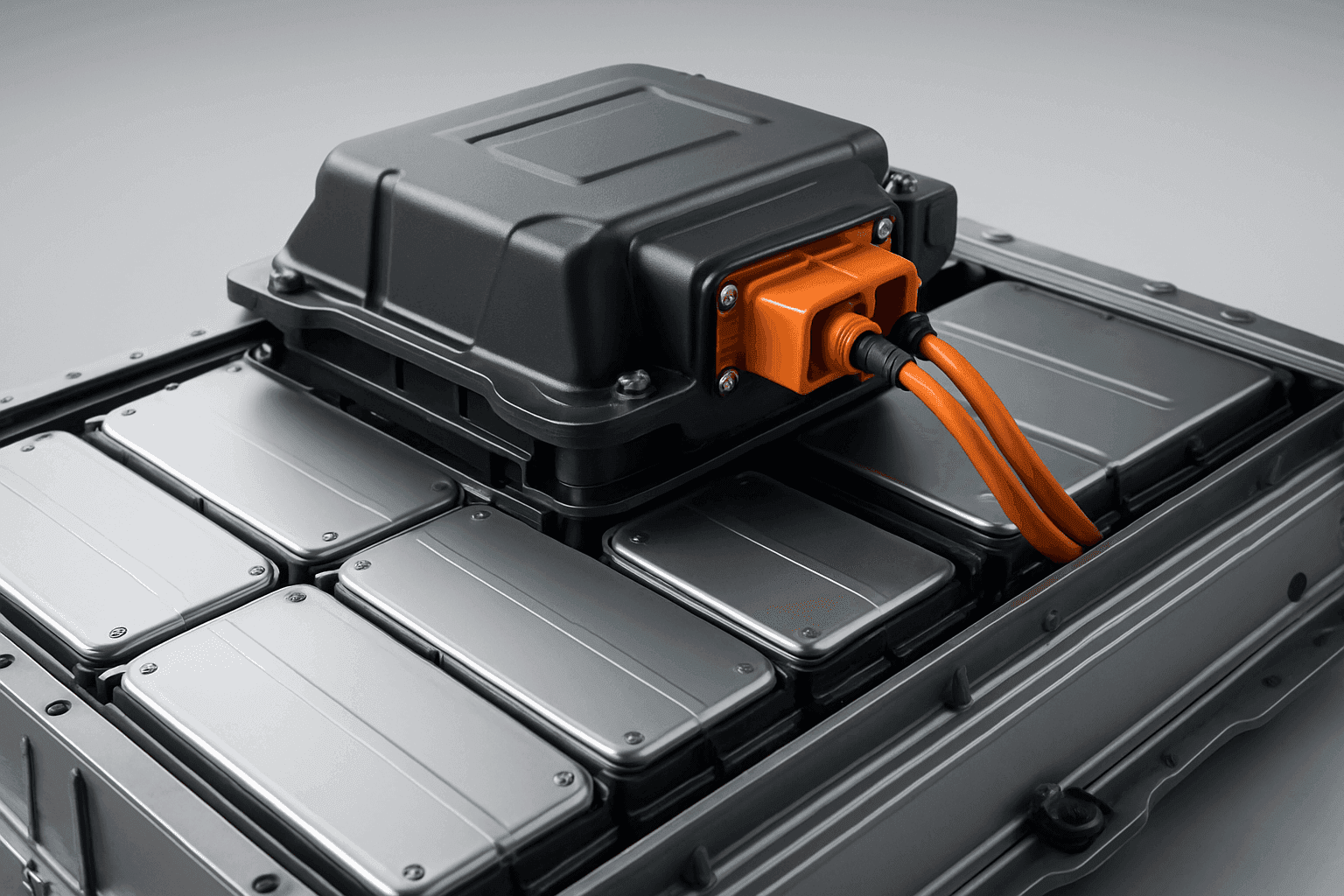
No Fire, No Explosion: The New Standard in EV Batteries
The electric vehicle (EV) industry is evolving rapidly, with safety under increasing scrutiny. China’s new “No Fire, No Explosion” national safety standard raises the bar for battery protection. Contemporary Amperex Technology (CATL) recently became the first company to receive test reports under the standard, while manufacturers including Gotion High-Tech continue to develop battery-safety technology. This article examines what “no fire, no explosion” means in practice, how the standard is tested and the approaches companies are taking.
What is the ‘No Fire, No Explosion' Standard?
China's mandatory national standard for battery safety, GB 38031-2025, strengthens safety requirements for EV traction batteries. It was released on 28 March 2025 and takes effect on 1 July 2026. Following an internal thermal-runaway event, batteries must not catch fire or explode for two hours. Smoke must not enter the passenger compartment. The requirement moves beyond warning occupants of a dangerous battery failure: the battery system must contain the event and protect people in the vehicle.
Thermal runaway is a self-accelerating chain reaction in which a battery cell generates heat faster than it can release it safely. It can be triggered by an internal short circuit, mechanical damage, overcharging, manufacturing defects or severe external heating. A failing cell can transfer heat to neighbouring cells, causing thermal propagation across a module or pack. GB 38031-2025 is intended to reduce the consequences of that propagation.
The standard does not assume battery failures can never occur. It requires a failure not to develop into a fire or explosion that threatens occupants.
Key Changes in the New Standard
The most significant change is the thermal-diffusion test. GB 38031-2020 required a warning signal at least five minutes before a fire or explosion; GB 38031-2025 requires no fire or explosion for two hours after thermal runaway, with no smoke entering the passenger compartment.
An early warning can give a driver time to stop, but it cannot alone prevent heat, flames or pressure spreading through the battery pack. The “No Fire, No Explosion” approach requires cell design, pack structure, thermal barriers, venting and battery controls to work together.
Battery makers must also pass tougher safety tests:
- Thermal Diffusion Testing: Evaluates whether a deliberately initiated thermal runaway spreads through the battery system without causing fire or explosion, while ensuring smoke does not endanger occupants.
- Bottom Impact Testing: Evaluates battery protection when the underside experiences an impact, an area vulnerable to road debris and underbody collisions.
- Fast-Charging Cycle Safety Testing: Requires batteries to endure 300 fast-charging cycles before an external short-circuit test. This assesses whether repeated high-power charging reduces safety margins over time.
CATL: The First to Comply
Contemporary Amperex Technology Co. Limited (CATL), the world's largest battery maker, announced on 29 April that it had received testing reports for GB 38031-2025. Battery cells and battery packs were tested, making CATL the first company to do so. CATL submitted its Qilin battery for inspection, first introduced in June 2022.
The Qilin battery is the third generation of CATL's cell-to-pack (CTP) technology, with volume utilisation efficiency of 72% and energy density of up to 255 Wh/kg. Cell-to-pack architecture reduces intermediate structural layers, but the closer integration of cells makes thermal design and fault isolation especially important. CATL says the battery has a stable load-bearing structure and improved protection against thermal runaway.
CATL also says its first-generation No Thermal Propagation (NP) technology has been in production since 2020. A CATL representative said meeting the new requirements demands collaboration between automakers and battery manufacturers, as battery safety also depends on vehicle crash structures, cooling-system integration, electrical protection and software controls.
Gotion High-Tech: Innovating for Safety and Performance
Gotion High-Tech is also a major battery manufacturer with a focus on safety and innovation. Established in 2006 and headquartered in Hefei, Anhui Province, Gotion specialises in lithium iron phosphate (LFP) and nickel-cobalt-manganese (NCM) materials and cells, power battery packs, energy storage systems (ESS) and battery management systems (BMS).
Battery safety is not determined by chemistry alone. LFP cells are often valued for thermal stability, while NCM cells can offer high energy density; both require robust engineering at cell, module, pack and vehicle level. Monitoring, cooling, electrical isolation and controlled venting help prevent a local cell failure becoming a pack-level event.
Gotion Guard: Intelligent Battery Protection
In March 2025, Gotion High-Tech debuted Gotion Guard, an independently developed intelligent battery-protection system. It provides real-time monitoring and early-warning services for power and energy-storage batteries.
Such systems can monitor temperature, voltage, current and insulation status. They identify abnormal behaviour early enough for operators or vehicle systems to reduce charging power, isolate an affected circuit, alert the driver and support a controlled response before a failure escalates. Early warning complements, rather than replaces, the physical protections required by the standard.
Key Battery Innovations
Gotion has invested heavily in research and development and reports several battery-technology breakthroughs:
- Gemstone Battery: An all-solid-state battery technology with an energy density of 350 Wh/kg, more than 40% higher than conventional NCM batteries. It has passed a 200-degree hot-box test. Gotion began developing solid-state batteries in 2017 and aims for commercial availability by 2030.
- Stellary Battery: Uses Gotion's second-generation silicon-carbon material and a fast-charging electrolyte, enabling charging from 10% to 70% state of charge in nine minutes. The battery pack dissipates 70% of heat externally within three seconds to prevent thermal propagation. It also uses a wireless BMS.
- G-Current Battery: Uses 5C fast-charging technology and can charge to 80% in 9.8 minutes and 90% in 15 minutes. It is compatible with LFP, LMFP and NCM chemistries for battery-electric and hybrid vehicles.
These developments address a central engineering challenge: higher charging rates and greater energy density increase heat generation and place greater demands on materials, cooling and control systems. Safety innovation must preserve performance while limiting the initiation and spread of thermal runaway.
Commitment to R&D and Global Expansion
Gotion allocates more than 10% of annual revenue to research and development. The company has established eight R&D centres and four validation platforms worldwide, employs more than 7,000 R&D personnel and holds more than 10,000 patents. Volkswagen Group is Gotion’s largest shareholder, and the company is establishing four regional business units and 20 overseas manufacturing sites.
Validation capacity matters as safety standards become more demanding. Manufacturers must test cell chemistries, production consistency, pack assembly, crash protection, charging behaviour and the ability of a complete battery system to prevent fire and explosion after a severe fault.
Implications of the New Standard
The new “No Fire, No Explosion” standard has several implications for the EV battery industry:
- Enhanced Safety: By requiring battery systems to prevent fires and explosions following thermal runaway, the standard is intended to reduce the risk of injury or death in a severe battery failure.
- Clearer Safety Benchmark: The standard gives automakers, suppliers and consumers a more meaningful benchmark than warning time alone. Compliance concerns a battery system’s behaviour under a defined failure condition, not simply the presence of an alarm.
- Industry Consolidation: Stricter requirements may drive consolidation. Smaller manufacturers may struggle to meet them, leading to mergers and acquisitions by companies with greater resources for research, development and manufacturing upgrades.
- Technological Advancements: The standard incentivises improved thermal management, more robust cell designs, thermal barriers, controlled venting, stronger pack structures and safer battery chemistries.
- Increased Costs: Meeting the standard is likely to increase research, development and manufacturing costs. These costs may be passed to consumers through higher EV prices, at least in the short term.
The Future of Battery Safety
The “No Fire, No Explosion” standard raises the expectation from warning occupants about a hazardous event to containing it without fire or explosion. CATL has taken the lead in testing under the standard, while companies including Gotion High-Tech continue to develop technologies intended to meet its requirements.
Credible battery-safety progress combines measures that prevent failures where possible, detect abnormal conditions early and ensure that thermal runaway does not become a fire or explosion if it occurs.
