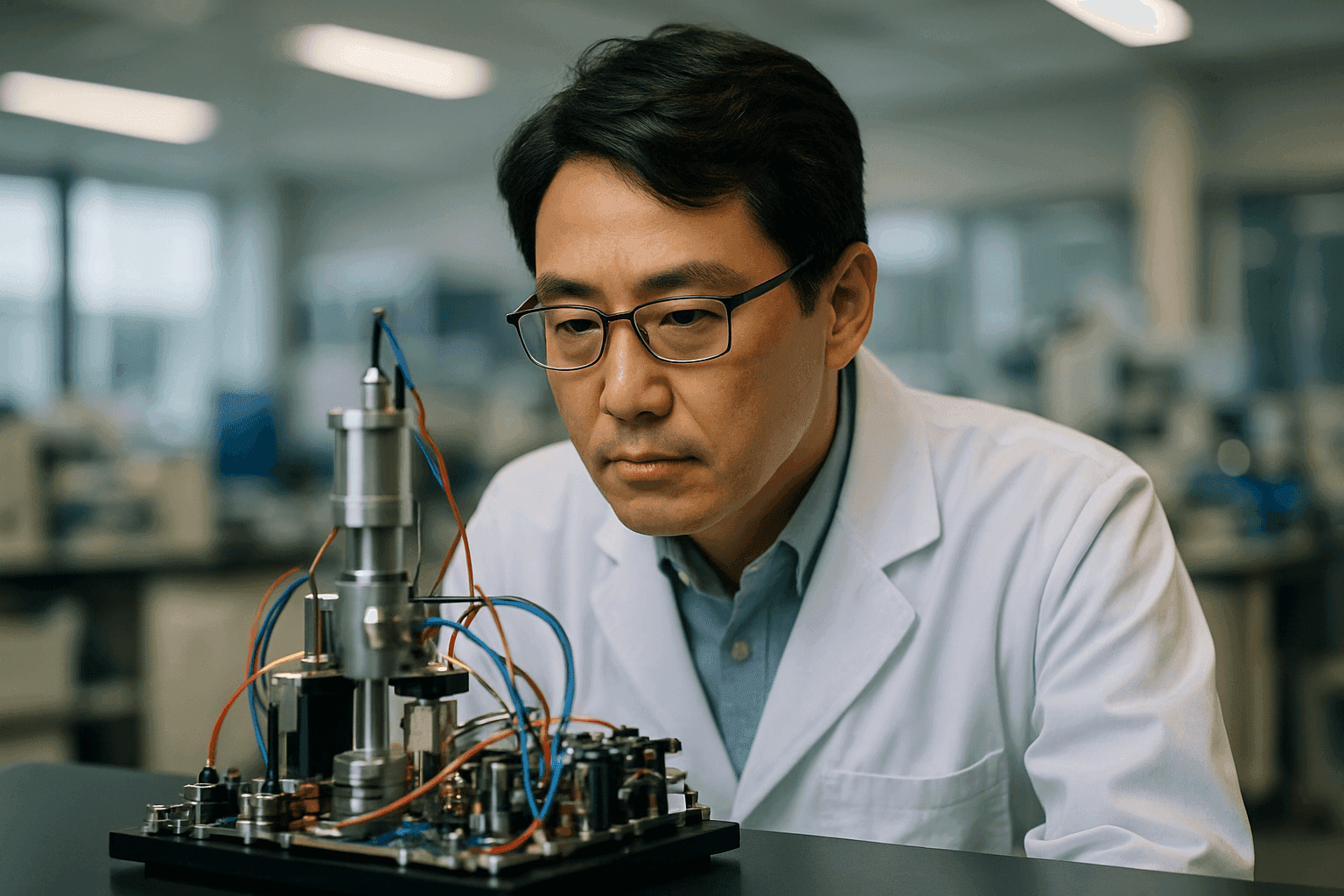
Quantum Energy Harvesters Shatter Thermodynamic Limits, Paving Way for Sustainable Future
Imagine a world where your smartphone recharges itself from the waste heat it generates, or where industrial processes reclaim nearly all their lost energy. This ambitious vision moves closer to reality thanks to groundbreaking research from Japan, where scientists have developed a quantum energy-harvesting method that surmounts long-standing thermodynamic limits, including the well-known Carnot efficiency. This paradigm-shifting discovery promises to revolutionize energy conversion, unlocking unprecedented levels of efficiency for electronics and quantum computing.
The Enduring Challenge of Thermodynamic Limits
For centuries, the principles of thermodynamics have dictated the maximum efficiency at which heat can be converted into useful work. Central to this understanding are concepts like the Carnot efficiency, which sets a theoretical upper bound for heat engines operating between two temperatures in thermal equilibrium. In practical applications, the Curzon-Ahlborn efficiency further refines these limits by considering efficiency at maximum power output. These fundamental barriers have meant that vast amounts of waste heat, generated by everything from microelectronics to large-scale power plants, have traditionally been deemed unrecoverable.
Conventional energy-harvesting technologies, while valuable, have always operated within these constraints. They typically convert ambient waste heat into electricity, but their performance is fundamentally capped by the laws governing systems in thermal equilibrium. This limitation has historically led to significant energy dissipation into the environment, representing a colossal loss of potential energy.
A Quantum Leap: Beyond Thermal Equilibrium
The breakthrough, spearheaded by Professor Toshimasa Fujisawa from the Institute of Science Tokyo (Science Tokyo), in collaboration with Senior Distinguished Researcher Koji Muraki from NTT Basic Research Laboratories, Japan, redefines what's possible in energy harvesting. Their innovative technique bypasses these traditional thermodynamic barriers by venturing into the realm of quantum mechanics, specifically by utilizing quantum states that do not undergo thermalization.
The Role of Tomonaga-Luttinger Liquids
At the heart of this quantum solution lies the Tomonaga-Luttinger (TL) liquid. This is a special type of one-dimensional electron system that, due to its unique quantum properties, exhibits non-thermal behavior. Unlike conventional systems where heat introduced spreads out evenly, leading to thermal equilibrium, a TL liquid retains its non-thermal, high-energy state. This crucial characteristic allows the system to hold onto energy in a form that is not subject to the same dissipation mechanisms that limit classical heat engines.
The Experimental Proof
To demonstrate their concept, the research team designed an experiment where waste heat from a quantum point contact transistor was injected into a TL liquid. This non-thermal heat was then transported several micrometers to a quantum-dot heat engine, a microscopic device engineered to convert heat into electricity via quantum effects. The results were remarkable: this unconventional heat source produced a significantly higher electrical voltage and achieved superior conversion efficiency compared to systems relying on conventional, quasi-thermalized heat sources. The experiment showed that the technique surpassed not only the Carnot efficiency but also the Curzon-Ahlborn efficiency.
Implications for a Sustainable Future
This groundbreaking research, detailed in their paper published in Communications Physics on September 30, 2025, represents more than just a scientific curiosity; it signifies a paradigm shift in our approach to energy conversion.
Enhanced Energy Efficiency and Sustainable Electronics
The ability to efficiently convert waste heat into usable power with efficiencies exceeding established thermodynamic limits has profound implications. Low-power electronic devices, such as smartphones and sensors, could become significantly more efficient, potentially leading to extended battery life or even self-powered operation through localized waste heat recovery. This could dramatically reduce reliance on traditional energy sources and contribute to a more sustainable electronic ecosystem.
Advancements in Quantum Computing
Quantum computers, while powerful, generate substantial amounts of waste heat, which poses a significant challenge to their operation and scalability. This new quantum energy-harvesting method offers a potential solution by enabling the conversion of this otherwise problematic waste heat back into usable power, thereby addressing one of the major hurdles in the development of future quantum technologies.
Broader Industrial and Technological Impact
Beyond personal electronics and quantum computing, the principles demonstrated by this research could be applied to industrial processes and power generation, where enormous amounts of heat are routinely wasted. Recovering even a fraction of this previously unrecoverable energy could lead to substantial gains in overall industrial efficiency and a significant reduction in environmental impact.
The Future of Energy Harvesting
Professor Fujisawa notes that these findings open the door to a new generation of energy harvesting by leveraging non-thermal quantum states. “Our findings suggest that waste heat from quantum computers and electronic devices can be converted into usable power via high-performance energy harvesting,” he remarked. This research underscores the power of interdisciplinary collaboration, merging condensed matter physics, quantum electronics, and thermodynamics to challenge entrenched scientific dogmas and catalyze innovation in sustainable energy technologies. As further efforts in this field progress, we can anticipate a future where technologies are not only more powerful but also inherently more sustainable.
