Revive Your Ride: How to Get 90% EV Battery Life Back
Electric vehicles (EVs) are becoming increasingly popular, but concerns about battery life remain a significant hurdle for potential buyers. While EV batteries are designed to last a long time, they do degrade over time, reducing the vehicle's range and performance. However, there's good news: it might be possible to recover up to 90% of a “dead” EV battery's life with some minor replacements. This article will explore how EV batteries degrade, how much life you can expect from them, and how minor replacements can potentially revive a failing battery.
Understanding EV Battery Degradation
EV batteries, like all batteries, degrade over time. This degradation is a natural process influenced by several factors:
- Temperature: Both high and low temperatures can negatively affect battery health. Extreme heat accelerates chemical reactions within the battery, leading to faster degradation, while cold temperatures can reduce the battery's ability to efficiently accept and hold a charge.
- Charge Cycles: Each charge and discharge cycle puts stress on the battery, causing wear and tear. Deep discharges (draining the battery completely) are generally more harmful than shallow cycles (using only a small portion of the battery's capacity).
- Time: Batteries degrade over time, even when not in use. This “calendar aging” occurs from the moment the battery is manufactured.
- Charging Habits: Regularly charging to 100% or depleting the battery completely before recharging can accelerate degradation. Fast charging, while convenient, can also contribute to degradation due to the increased heat generated.
How Long Do EV Batteries Really Last?
Despite the factors that contribute to degradation, EV batteries are surprisingly durable. The government mandates that EV manufacturers warranty their batteries for at least 8 years or 100,000 miles. Some manufacturers, like those in California, extend that warranty to 10 years or 150,000 miles.
Studies have shown that EV batteries degrade at an average rate of about 2.3% of maximum capacity per year. Recent research suggests that EV batteries may even last up to 40% longer than previously thought. This means that the average EV battery could potentially last for around 280,000 miles or more.
Even after 15 years of use, an EV battery may still have around 75% of its original capacity. At this point, the battery may no longer be suitable for powering a car, but it can still be used for other applications, such as powering homes, buildings, or the electricity grid.
The Potential for Battery Revival
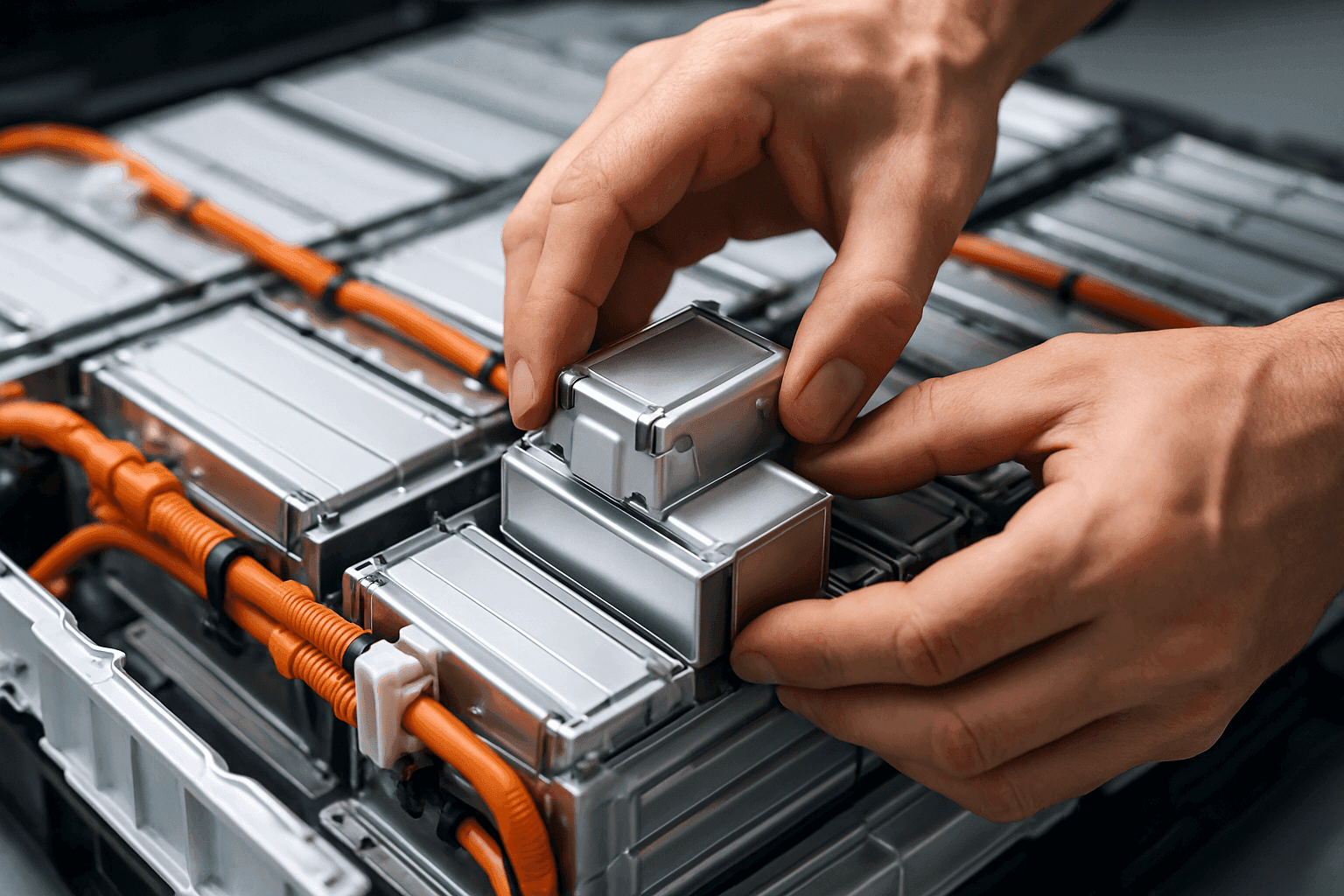
Lithium-ion batteries are made up of many individual cells. When a battery degrades, it's often not the entire pack that fails, but rather a few individual cells. Instead of replacing the entire battery pack, it may be possible to simply replace the dead or underperforming cells.
Battery repair centers are emerging as a solution for extending the life cycle of EV batteries. These centers employ high-voltage experts who are certified to work on lithium-ion batteries. Their primary mission is to repair failed batteries so they can be placed back in vehicles, avoiding the need for a full replacement.
If a battery can't be repaired for continued use in a vehicle, there are still options to keep it out of the waste stream. The repair center can either send it to a partner company for a second life in non-automotive applications (usually energy storage) or to a recycling company where the raw materials are reclaimed for manufacturing new EV batteries.
Getting 90% Life Back: A Realistic Goal?
While the claim of recovering 90% of battery life with minor replacements might be optimistic, it highlights the potential for extending EV battery life through targeted repairs. The feasibility of achieving this level of recovery depends on several factors:
- The Extent of Degradation: If the battery has only experienced minor degradation, replacing a few weak cells could potentially restore a significant portion of its original capacity.
- Battery Design: Some battery designs may be easier to repair and recondition than others.
- Availability of Replacement Cells: The availability and cost of compatible replacement cells will also play a role.
- Expertise of the Repair Technician: Proper diagnosis and repair require specialized knowledge and skills.
Even if 90% recovery isn't always possible, replacing individual cells can still be a cost-effective way to extend battery life and avoid the expense of a full replacement.
Maximizing Your EV Battery Life
While battery repair and cell replacement are promising options, the best approach is to maximize your EV battery life from the start. Here are some tips:
- Follow Manufacturer Guidelines: Adhere to your EV's specific guidelines for optimal battery performance and keep your vehicle's software updated.
- Maintain Moderate Temperatures: Store and operate your EV in moderate climates whenever possible. Park in a garage or shaded area to avoid extreme temperatures.
- Avoid Extreme Charging and Discharging: Keep your battery charge between 20% and 80% for most of the time. Avoid regularly charging to 100% or depleting the battery completely.
- Limit Fast Charging: While convenient, frequent use of DC fast chargers can contribute to battery degradation. Use AC chargers for your daily charging needs and reserve fast chargers for longer trips.
- Drive Sensibly: Avoid aggressive acceleration and braking, as these can put extra stress on the battery.
- Maintain an Optimal State of Charge for Storage: If you plan to store your EV for an extended period, charge the battery to around 50%.
The Future of EV Batteries
As EV technology continues to evolve, battery technology is also advancing rapidly. Future batteries are expected to be more durable, more energy-dense, and faster to charge. Recycling processes are also becoming more efficient, allowing for the recovery of valuable materials from end-of-life batteries.
Carmakers could update their EV battery management software to take advantage of new findings and to maximize battery longevity under real-world conditions.
These advancements will not only make EVs more appealing to consumers but also contribute to a more sustainable transportation system.
EV Battery FAQs
- How much does it cost to replace an EV battery? Replacing an EV battery can cost between $12,000 and $40,000.
- Can EV batteries be recycled? Yes, EV batteries can be recycled, and the recycling process can recover up to 90% of lithium and 98% of other valuable metals.
- What happens to EV batteries after they are no longer suitable for use in vehicles? EV batteries can be repurposed for energy storage in homes, commercial buildings, and grid applications.
- Do EV batteries degrade linearly? No, battery degradation is not linear. There is often an initial loss of capacity, followed by a slowing of degradation.
- Is it better to charge an EV battery to 100%? For most EV owners, it is better to charge up to 80% for daily use. Charging to 100% should be reserved for longer trips.
Conclusion
While EV battery degradation is a concern, it's not a reason to avoid electric vehicles. EV batteries are designed to last a long time, and there are several steps you can take to maximize their lifespan. Emerging technologies like battery repair centers and cell replacement offer the potential to revive failing batteries and extend their useful life. As battery technology continues to improve, the future of EV batteries looks bright.
