Silicon Battery Breakthrough: US Firm Achieves 1,000 Cycles
A US-based firm has achieved a significant milestone in battery technology, reporting a silicon battery that has reached 1,000 cycles while maintaining 80% of its initial capacity. This breakthrough represents a major step forward in improving the lifespan and performance of lithium-ion batteries, particularly for applications in electric vehicles (EVs), consumer electronics, and energy storage systems.
The Promise of Silicon Anodes
Traditional lithium-ion batteries typically use graphite anodes. Silicon has emerged as a promising alternative due to its significantly higher theoretical capacity for lithium storage. This means silicon anodes can potentially store more energy than graphite anodes of the same size and weight. Silicon boasts a capacity of 3600 mAh/g, dwarfing graphite's 360-370 mAh/g. This higher capacity translates to increased energy density, which is crucial for extending the range of EVs and the runtime of other devices.
However, silicon anodes also face challenges. A major hurdle is silicon's substantial volume change—expanding up to 300%—during the charge and discharge cycles. This expansion can cause mechanical stress, leading to cracking and pulverization of the electrode, loss of electrical conductivity, and rapid capacity fade, ultimately shortening the battery's lifespan.
Overcoming the Challenges: Innovative Solutions
To address these issues, researchers and companies are developing various strategies to stabilize silicon anodes and improve their performance. These strategies include:
- Silicon-carbon composites: Combining silicon with carbon materials can help to buffer the volume changes and maintain the structural integrity of the anode.
- Silicon-graphite composites: Similar to silicon-carbon composites, these materials leverage the existing infrastructure for graphite anodes while incorporating silicon for enhanced energy density.
- Silicon oxides: Using silicon oxides in small amounts can minimize detrimental effects, though this approach may limit the performance benefits of silicon.
- Pure silicon materials and silicon nanostructures: Some companies are focusing on novel designs and structures of pure silicon to manage the expansion and contraction during cycling.
- Advanced binders: Employing advanced binding materials can help stabilize the electrode, especially in silicon-rich anodes, ensuring robust cycle life and performance.
Nexeon: Pioneering Silicon Anode Technology
Nexeon, a UK-based company, has emerged as a leader in developing advanced silicon anode materials. Their approach involves creating engineered porosity at the particle level, combined with optimized anode designs. This helps to accommodate the volume changes of silicon during charging and discharging, preventing degradation of the cell and providing good cycle life.
Nexeon offers two flagship materials:
- NSP1™: This technology replaces a small fraction of the graphite in the anode with silicon. The silicon expands within the structure but does not degrade the cell, resulting in good cycle life. NSP1™ is designed for use in silicon-graphite hybrid electrodes, up to 10% by weight.
- NSP2™: This material unlocks the full specific capacity benefits of silicon, allowing for a greater replacement of graphite. Nexeon's proprietary anode structure contains the expansion characteristics, achieving greater capacity over graphite while retaining good cell cycle life.
Nexeon's silicon anode materials are designed as “drop-in” replacements for graphite, meaning they can be integrated into existing battery manufacturing processes without requiring significant changes or capital investments. This makes it easier for battery manufacturers to adopt the technology and improve the performance of their products.
Commercialization and Partnerships
Several material manufacturers, including Nexeon, Advano, Sila Nanotechnologies, Elkem, Group14, NanoGraf, and OneD Materials, have announced the commercial production of silicon active materials for Li-ion batteries. Nexeon is on track to deliver silicon anode material starting in 2025, fulfilling a supply agreement with Panasonic.
Nexeon has also established partnerships with automotive OEMs and battery cell manufacturers to further develop and commercialize its technology. These collaborations aim to deliver improved battery performance for a sustainable future.
Recent Developments in Silicon Anode Batteries
The silicon anode battery market is experiencing significant growth, driven by the demand for high-capacity, fast-charging batteries. Recent developments include:
- Novacium: In March 2025, Novacium announced that its GEN3 18650 batteries, using silicon-based anode material, maintained a capacity of over 3,000 mAh after 1,000 cycles, retaining approximately 80% of their original capacity.
- Group14 Technologies and BASF: In May 2025, Group14 and BASF announced a market-ready silicon battery solution that exceeds 1,000 cycles with 80% capacity retention under standard conditions.
- ProLogium Technology: In October 2024, ProLogium premiered its 100% silicon composite anode battery, boasting enhanced energy density and fast-charging performance.
- Amprius Technologies: Amprius has introduced its SiCore™ product platform, offering high-energy-density batteries for electric mobility applications. Their SiCore batteries deliver energy densities of up to 400 Wh/kg and can endure up to 1,200 full discharge cycles.
These advancements demonstrate the rapid progress in silicon anode technology and its potential to revolutionize the battery industry.
The Future of Silicon Batteries
The future of silicon batteries looks promising, with ongoing research and development efforts focused on further improving their performance, lifespan, and cost-effectiveness. As the technology matures, silicon anodes are expected to play an increasingly important role in a wide range of applications, including:
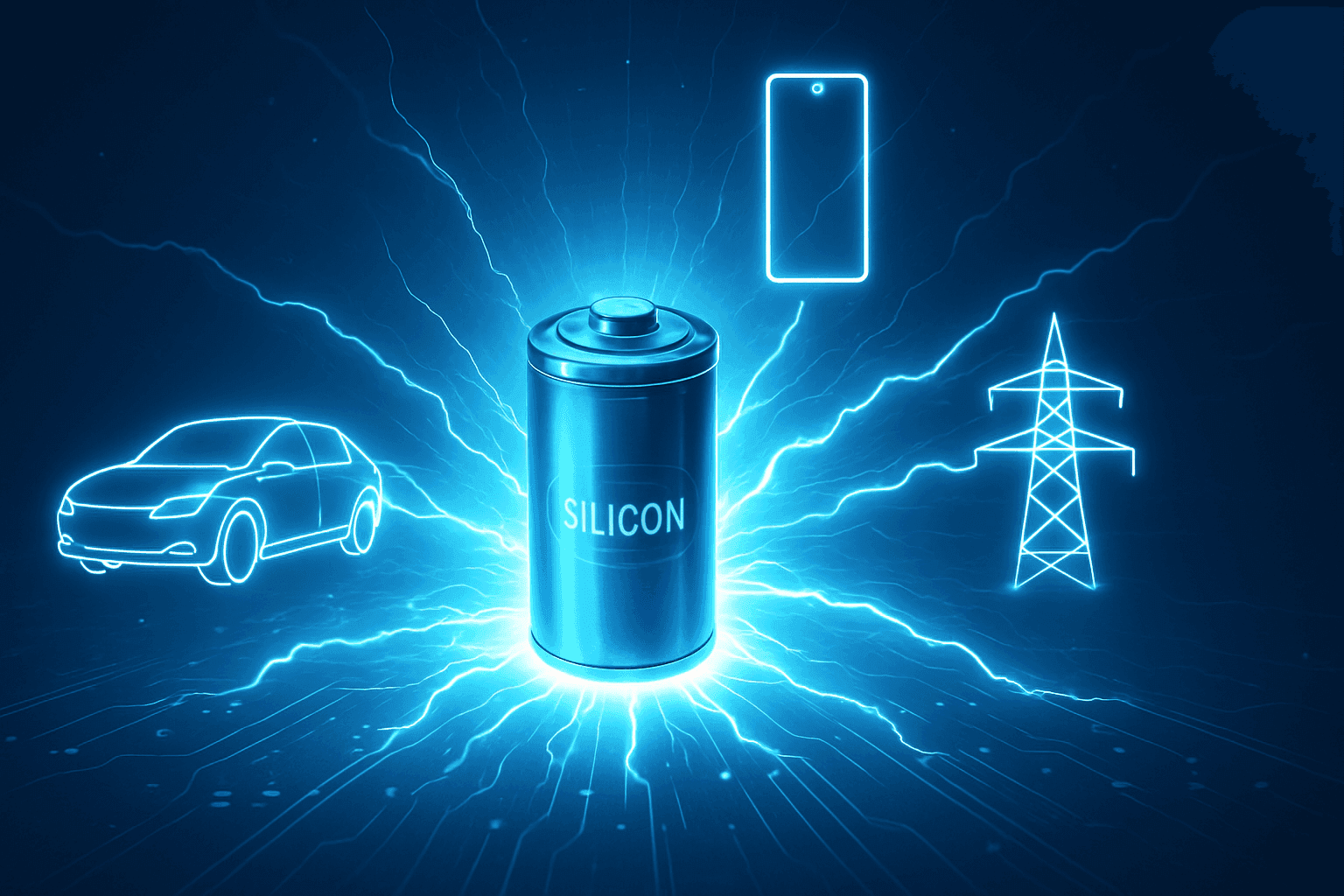
- Electric Vehicles: Silicon anodes can increase the range and reduce the charging time of EVs, addressing two key consumer concerns.
- Consumer Electronics: Silicon batteries can extend the runtime of smartphones, laptops, and other portable devices.
- Energy Storage Systems: Silicon anodes can improve the performance and lifespan of batteries used in grid-scale energy storage systems, supporting the transition to renewable energy.
- Aviation: High-energy batteries are crucial for electric aircraft, and silicon anodes can contribute to achieving the necessary energy density and power capacity.
While challenges remain, the recent breakthroughs and ongoing innovation in silicon anode technology suggest that these batteries are poised to play a significant role in shaping the future of energy storage. The US firm's achievement of 1,000 cycles with 80% capacity retention marks a major step toward realizing the full potential of silicon batteries.
