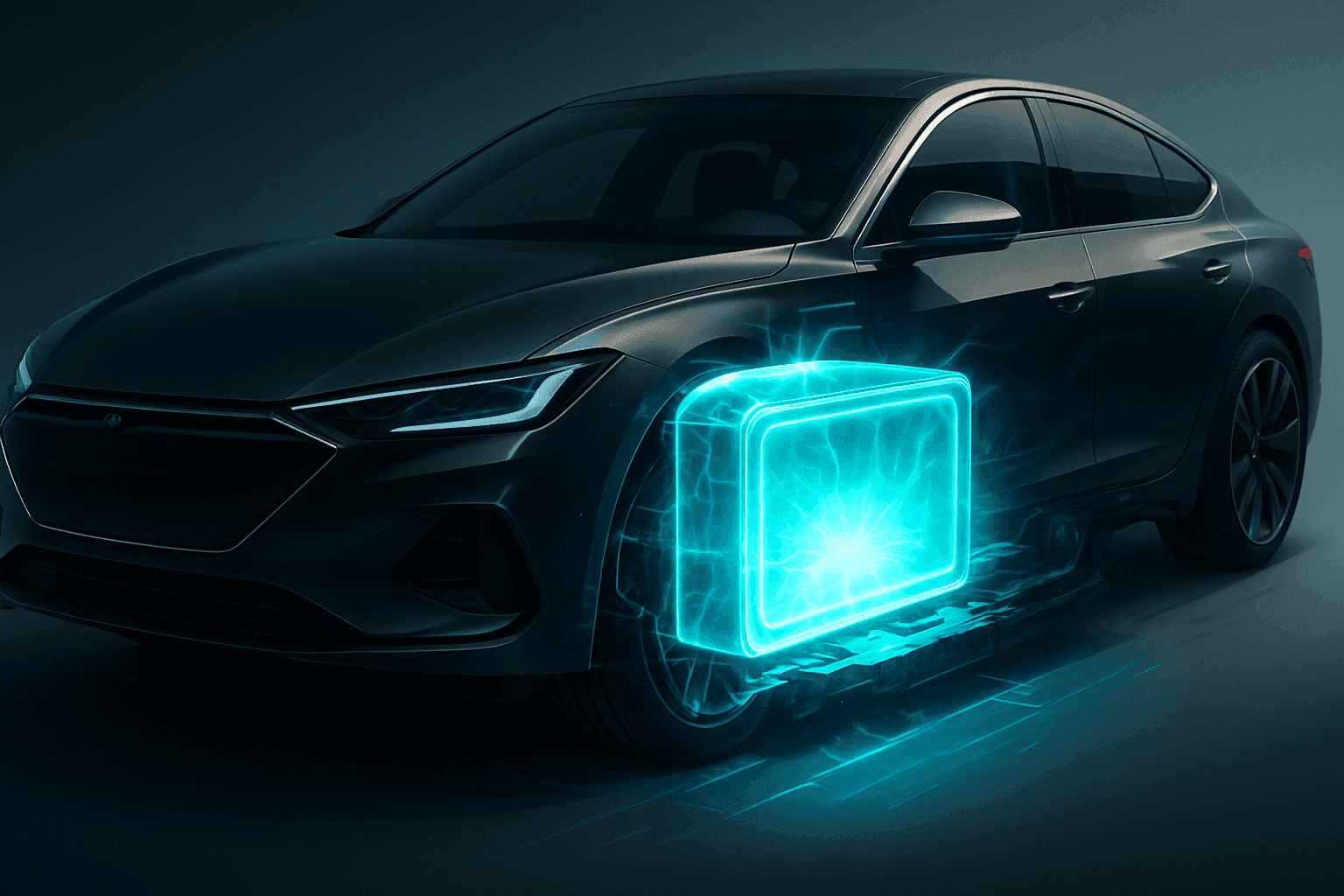
Solid-State Batteries: The Game-Changer for Electric Vehicles
Electric vehicles (EVs) are rapidly gaining popularity as a sustainable alternative to traditional petrol-powered cars. However, one of the main limitations of EVs is their battery technology. Traditional lithium-ion batteries, while effective, have drawbacks such as limited range, long charging times, and safety concerns. Enter solid-state batteries (SSBs), a promising next-generation technology poised to revolutionise the EV industry.
What are Solid-State Batteries?
A solid-state battery is a type of battery that uses a solid electrolyte to conduct ions between the electrodes, instead of the liquid or gel polymer electrolytes found in conventional lithium-ion cells. This fundamental difference in physical state offers a wide array of advantages over traditional energy storage systems.
Key Components of a Solid-State Battery
- Anode: Typically made from lithium metal or a similar high-energy material, bypassing the carbon/graphite host structures used in traditional cells to allow for direct lithium plating.
- Cathode: Made from composite materials such as lithium cobalt oxide (LCO), lithium iron phosphate (LFP), or nickel manganese cobalt (NMC), integrated with solid electrolyte particles to maintain ionic contact.
- Solid Electrolyte: A solid material that facilitates the movement of ions between the anode and cathode. Materials proposed for use as electrolytes include ceramics (such as oxides, sulphides, and phosphates) and solid polymers.
How Solid-State Batteries Work
Solid-state batteries function similarly to lithium-ion batteries, but with a crucial difference: the electrolyte is solid. During charging and discharging, lithium ions (Li+) move between the anode and cathode through this solid medium.
During discharge, lithium atoms at the anode lose electrons to the external circuit and become lithium ions. These ions travel through the solid electrolyte matrix to the cathode. During charging, this process is reversed. The solid electrolyte enhances safety and stability by eliminating volatile organic liquid solvents, thereby minimising the risk of leaks and fires and improving thermal stability under high load conditions.
To maintain efficient ion transport, the total internal resistance (Rtotal) of the cell must be minimised. We can model this internal resistance using the following equation:
Rtotal=Ranode+Rcathode+Rbulk+RinterfaceWhere:
- Rtotal is the total internal resistance of the battery cell.
- Ranode is the internal resistance associated with the anode reaction.
- Rcathode is the internal resistance associated with the cathode reaction.
- Rbulk is the bulk ionic resistance of the solid electrolyte material.
- Rinterface represents the solid-solid interfacial charge-transfer resistance between the solid electrolyte and the respective electrodes.
Optimising the interfacial contact to reduce Rinterface remains one of the premier engineering challenges in modern solid-state battery development.
Technical Comparison: Lithium-Ion vs. Solid-State Batteries
| Metric | Traditional Lithium-Ion Batteries | Solid-State Batteries (SSB) |
|---|---|---|
| Electrolyte State | Liquid organic solvent (e.g. LiPF6 in EC/DMC) | Solid inorganic ceramic, polymer, or sulphide |
| Anode Material | Graphite or Silicon-Graphite composites | Pure Lithium metal or Silicon-dominant |
| Gravimetric Energy Density | 150 – 300 Wh/kg | 350 – 500+ Wh/kg (Projected) |
| Volumetric Energy Density | 600 – 800 Wh/L | 800 – 1,100+ Wh/L (Projected) |
| Operating Temperature Range | -20°C to 60°C | -30°C to 100°C+ |
| Cycle Life | 1,500 – 2,000 cycles | 8,000 – 10,000+ cycles |
| Risk of Thermal Runaway | Moderate to High (Flammable solvents) | Extremely Low (Non-flammable solid barrier) |
Advantages of Solid-State Batteries over Lithium-Ion Batteries
Solid-state batteries offer numerous advantages that could significantly improve the performance and safety of EVs.
Higher Energy Density
Solid-state batteries can store more energy per unit volume or weight compared to lithium-ion batteries. This is mainly due to the use of lithium metal anodes, which have a much higher theoretical specific capacity (3,860 mAh/g) than the graphite anodes (372 mAh/g) used in lithium-ion batteries. Experts estimate that solid-state batteries could have up to twice the energy density of current lithium-ion batteries.
- Increased Range: Higher energy density translates to a longer driving range for EVs, potentially exceeding 600 miles on a single charge. This addresses range anxiety, a major concern for potential EV buyers.
- Compact and Lightweight Designs: The higher energy density of solid-state batteries enables more compact and lightweight battery pack designs. Lower vehicle mass reduces the energy required to overcome inertia and rolling resistance, improving handling, acceleration, and regenerative braking efficiency.
Enhanced Safety
Solid-state batteries are generally considered safer than lithium-ion batteries because the solid electrolyte reduces the risk of short circuits and overheating, which can lead to fires or explosions in liquid-based batteries.
- Reduced Thermal Runaway: Non-flammable and chemically stable solid electrolytes reduce the thermal runaway, fire, and explosion risks typically associated with liquid electrolytes.
- Broader Electrochemical Stability: Solid-state batteries offer broader electrochemical stability, higher thermal stability, and greater mechanical strength, which helps suppress dendrite growth and reduce fire risk.
Faster Charging Times
The solid electrolyte and lithium metal anode combination enables faster ion transfer under high currents, which can reduce charging times compared to lithium-ion batteries. Without the risk of liquid solvent decomposition at high voltages, charging rates can be safely accelerated.
Some manufacturers are ambitiously targeting charging times of under 15 minutes for a full charge. Samsung announced that they expect future EVs to be able to pick up 600 miles of range in around 9 minutes.
Longer Lifespan
Solid-state batteries are expected to have a longer life than lithium-ion batteries because the solid electrolytes are more stable and less prone to the chemical degradation that affects liquid electrolytes over thousands of operational cycles.
- Increased Cycle Life: Solid-state batteries can withstand more charge-discharge cycles without degrading, thereby increasing the lifespan of the battery. Solid-state batteries are capable of enduring 8,000 to 10,000 cycles under controlled operating conditions, while lithium-ion batteries typically last for 1,500 to 2,000 charge cycles before dropping to 80% capacity.
- Reduced Battery Waste: With the longer life of solid-state batteries, we may not need to replace batteries as frequently, reducing the environmental impact of battery waste.
Improved Performance in Extreme Temperatures
Solid-state batteries can operate across a wider temperature range than liquid-based batteries, allowing for better use in extreme weather conditions without suffering from solvent freezing at low temperatures or rapid decomposition at high temperatures. Factorial Energy's electrolyte system is designed to work in temperatures ranging from -30°C to 45°C.
More Sustainable Materials
Solid-state batteries don't need as many of the rare and harmful materials that lithium-ion batteries require, such as cobalt and nickel in the quantities traditionally consumed. Depending on the class of solid electrolyte chosen, the solid electrolyte can be made from a wider range of cheaper, more abundant, and more environmentally friendly materials.
Simplified Recycling
The solid electrolyte can simplify the pyrometallurgical and hydrometallurgical recycling of old batteries as there's no risk of toxic gas emission, leakage, or environmental contamination from volatile organic liquid electrolytes. This can contribute to more sustainable practices in the EV industry.
Solid Electrolyte Material Families
To understand the development of the solid-state battery, it is vital to categorise the three primary classes of solid electrolytes being researched today:
1. Oxide-Based Ceramic Electrolytes
Oxides, such as LLZO (Lithium Lanthanum Zirconium Oxide) and LATP (Lithium Aluminium Titanium Phosphate), offer excellent chemical stability, exceptionally high thermal stability, and safety. However, they are highly brittle and exhibit high interfacial resistance due to their hard, ceramic nature, which makes roll-to-roll manufacturing difficult.
2. Sulphide-Based Inorganic Electrolytes
Sulphides, such as LGPS (Lithium Germanium Phosphorus Sulphide), exhibit the highest ionic conductivity at room temperature, sometimes surpassing liquid electrolytes. They are softer and more ductile than oxides, allowing for better contact at the electrodes. However, they are highly sensitive to moisture; exposure to ambient humidity generates toxic hydrogen sulphide (H2S) gas, requiring specialised inert manufacturing environments.
3. Polymer-Based Electrolytes
Solid polymer electrolytes, typically based on PEO (Polyethylene Oxide) complexes mixed with lithium salts, are highly flexible, easy to manufacture using existing roll-to-roll processes, and cost-effective. However, their ionic conductivity at room temperature is relatively poor, often requiring the battery to be heated to 60°C or higher to operate efficiently.
Challenges and Limitations of Solid-State Batteries
Despite their numerous advantages, solid-state batteries face several challenges that need to be addressed before they can be widely adopted in mass-market vehicles.
Cost
Solid-state batteries are currently far more expensive to produce than lithium-ion batteries due to the use of novel materials, low-yield initial manufacturing runs, and the lack of supply chain scale. The synthesis of high-purity solid electrolytes requires specialised, energy-intensive processes, driving up the overall bill of materials (BOM).
Manufacturing
Large-scale production of solid-state batteries faces several engineering hurdles. Notably, the sulphide-based solid electrolytes in some solid-state batteries are highly sensitive to moisture and must be processed in dry rooms with dew points below -40°C to prevent degradation and hazardous gas release. Furthermore, sintering ceramics at high temperatures without creating microscopic cracks or voids requires extremely precise control.
Ionic Conductivity
While some solid electrolytes (particularly sulphides) can offer high ionic conductivity, the average bulk ionic conductivity of most solid electrolytes at room temperature is generally lower than that of the liquid organic electrolytes used in conventional lithium-ion batteries. This can limit power output under cold starts or high-acceleration demands.
Lithium Dendrite Growth
Although solid-state batteries offer greater mechanical strength, lithium dendrite growth remains a primary failure mechanism. During rapid charging, lithium ions can deposit unevenly on the anode surface, forming microscopic, needle-like structures called dendrites. These dendrites can propagate through the grain boundaries of ceramic solid electrolytes, eventually bridging the gap between the anode and cathode, causing an internal short circuit and battery failure.
Automakers Investing in Solid-State Battery Technology
Several major global automakers are investing heavily in the development of solid-state battery technology to secure a competitive edge in the next decade of electrification.
- Toyota: Toyota is aiming for the commercial launch of its solid-state battery technology in 2027 or 2028. Toyota is advancing its plans for solid-state EV batteries, aiming to achieve a range of up to 750 miles on a single charge, with a fast charging time of just 10 minutes.
- Stellantis: In 2026, Stellantis integrated Factorial's advanced FEST solid-state battery cells into a Dodge Charger Daytona development vehicle, initiating a real-world road-testing programme. This milestone follows the successful validation of Factorial Energy's automotive-sized solid-state cells.
- Volkswagen: In collaboration with QuantumScape, Volkswagen is developing an anode-free solid-state battery design that could potentially support a 311,000-mile lifespan with minimal range loss over time.
- Hyundai: Hyundai has revealed its plans to transition towards solid-state battery technology, filing numerous patents for solid-state electrolyte deposition and thermal management systems to improve energy density and performance.
- BYD: BYD aims to begin "demonstration use" of its solid-state batteries by 2027, with large-scale adoption and integration into its high-volume passenger vehicles expected post-2030.
The Future of Solid-State Batteries
Solid-state batteries hold immense potential to revolutionise the EV industry by offering improved performance, safety, and longevity compared to traditional lithium-ion batteries. While challenges remain in terms of cost reduction, material science, and high-throughput manufacturing, ongoing global research and development efforts are steadily paving the way for widespread commercialisation.
Mass production of high-volume automotive packs is projected to commence around 2030, with the first premium commercial EVs equipped with solid-state batteries hitting the market shortly beforehand. As solid-state battery technology matures, it is poised to play a crucial role in shaping the future of electric vehicles and accelerating the global transition to a sustainable transport ecosystem.
