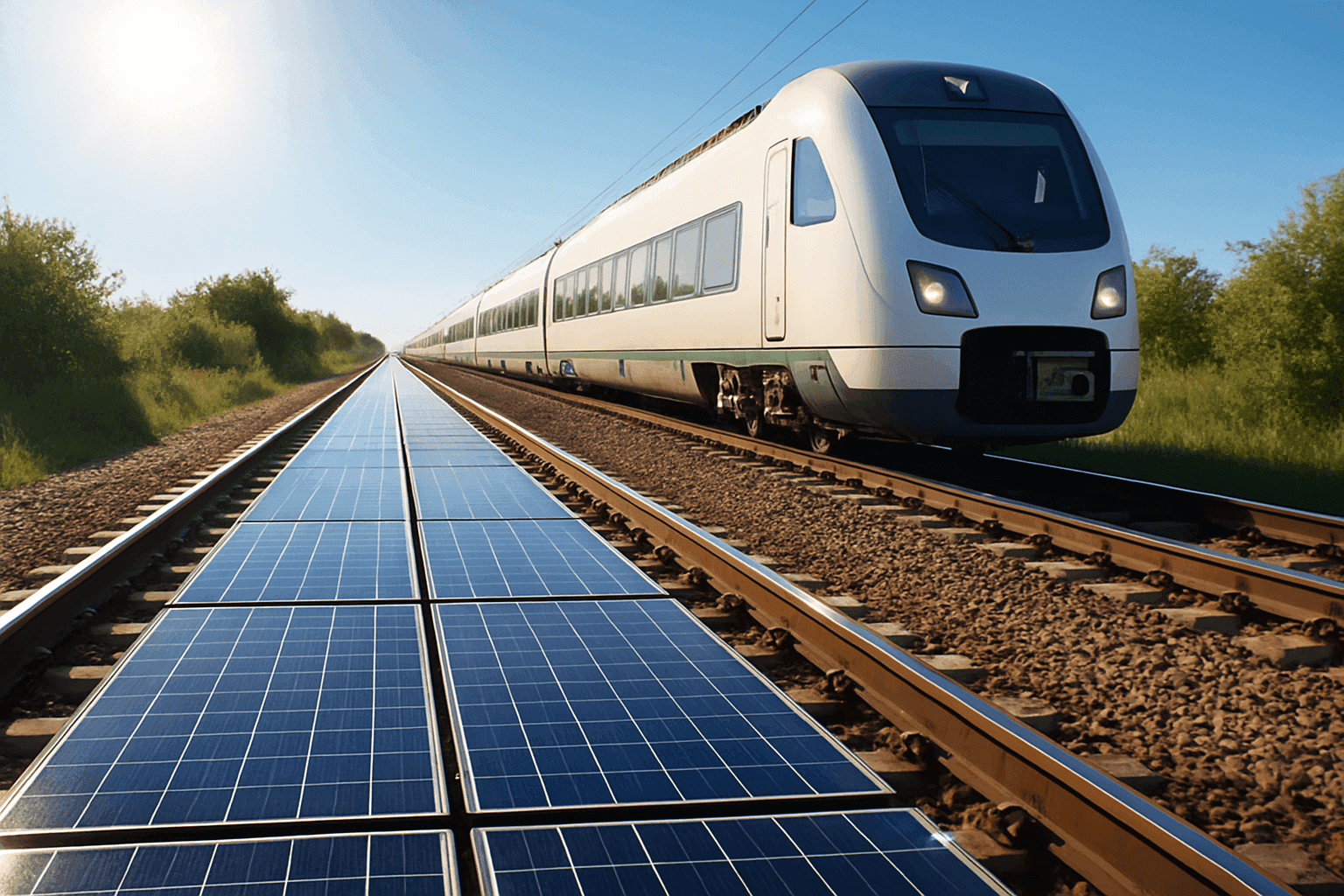
Sun-Ways: Revolutionizing Railways into Solar Powerhouses
Imagine trains gliding along tracks, not just transporting people and goods, but also generating clean energy. That's the vision of Sun-Ways, a Swiss startup aiming to transform the world's railways into vast solar power plants. By installing removable solar panels between the tracks, Sun-Ways hopes to revolutionize photovoltaic energy production and contribute to a more sustainable future.
The Spark of an Idea: From Train Station to Innovation
The idea struck Joseph Scuderi, Sun-Ways' founder, in 2020 while waiting for a train. He wondered about the potential of the unused space between the tracks. Five years later, Sun-Ways has installed 100 meters of solar panels on tracks in Buttes, a small village in western Switzerland. This pilot project marks a significant step towards realizing Scuderi's vision.
How It Works: Laying Solar “Carpets” on Railways
Sun-Ways' solution involves placing removable solar power plants between railroad tracks, utilizing a patented technique that ensures the safe passage of trains and allows for railway infrastructure maintenance. The panels are designed to be installed and removed easily, either manually or by a machine developed by the Swiss track maintenance company Scheuchzer. This machine can install or remove nearly 1,000 square meters of solar panels in just a few hours, making large-scale deployment fast and cost-effective.
The “full black” solar panels, measuring 1 x 1.7 meters, are equipped with an anti-reflective filter to prevent glare. They are designed to fit standard railway gauges and can be adapted for different gauges if needed. The panels are also robust, having been tested for stability with trains passing at speeds up to 150 km/h and winds up to 240 km/h.
Powering the Future: Potential and Benefits
The potential of this technology is immense. Sun-Ways estimates that if solar panels were installed on half the world's rail lines, it would significantly boost renewable energy production.
Here are some of the potential benefits:
- Clean Energy Generation: By utilizing unused space, Sun-Ways can generate electricity without visual or environmental impact, unlike large-scale ground installations.
- Meeting Energy Needs: In Switzerland alone, the 5,000 km of railroad tracks could generate 1 terawatt-hour (TWh) of electricity annually, potentially meeting nearly one-third of the country's public transport electricity needs.
- Reducing Carbon Emissions: The project could lead to significant CO₂ savings. Sun-Ways estimates a reduction of 180,000 tons of CO₂ for 5,000 km of rails.
- Supporting Sustainable Railways: Sun-Ways envisions a future where trains draw power directly from the tracks, making operations nearly self-sufficient and promoting cleaner transportation solutions.
Challenges and Solutions
Despite the promising outlook, Sun-Ways faces several challenges:
- Soiling and Mechanical Pressure: Heavy soiling and mechanical pressure could reduce energy yields. However, experts believe technical solutions can minimize these risks. Sun-Ways is also exploring the use of cylindrical brushes attached to trains to clear snow and dirt from the panels.
- Snow Accumulation: Snow accumulation, particularly in regions with harsh winters, is a concern. Sun-Ways is actively working on solutions to minimize disruptions caused by snowfall.
- Maintenance and Safety: Ensuring that the installation and removal of panels do not interfere with the normal operation of the railway system is crucial. The removable design of the panels addresses this concern, allowing for easy maintenance and replacement work on the tracks.
- Durability: Tests are being conducted over the next three years on panel coating, soiling, and the system's impact on rail infrastructure. The data will help determine whether rail operations can run safely with a removable solar array mounted between the tracks.
Current Projects and Future Expansion
Sun-Ways has already completed the world's first removable solar plant installed directly on an active railway line in Buttes, Switzerland. The setup includes 48 photovoltaic modules, delivering a total capacity of 18 kW. The plant will supply 16 MWh of electricity annually to the public grid. Passenger trains began operating over the panels on April 28, 2025.
The company is also collaborating on similar projects in South Korea, Spain, and Romania and has held exploratory talks with potential partners in China and the United States. Sun-Ways aims to expand its technology beyond Switzerland's 5,000 kilometers of railways, targeting Germany, Austria, Italy, the United States, and Asian markets.
A Vision for a Solar-Powered World
Sun-Ways' innovative approach has garnered attention from around the globe. Delegations from Belgium, France, Indonesia, Israel, and South Korea attended the inauguration of the pilot project in Switzerland to assess potential deployment in their home countries.
By turning railways into solar power plants, Sun-Ways is not only contributing to a cleaner environment but also paving the way for a more sustainable and energy-efficient future. The project represents a significant step towards harnessing the untapped potential of existing infrastructure for renewable energy generation.
