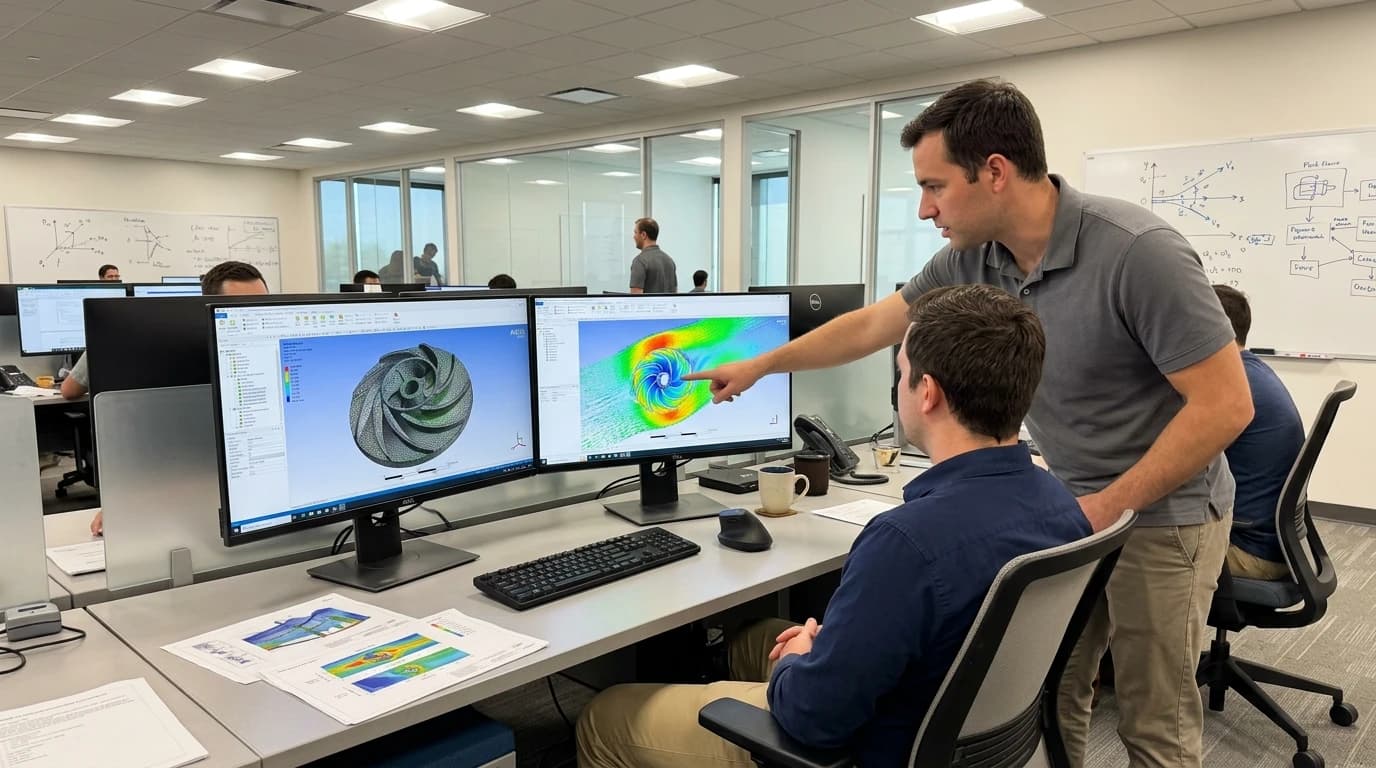
The AI Revolution in Simulation and Modeling
The worlds of simulation and modeling, long critical for understanding complex systems and predicting future outcomes, are undergoing a profound transformation driven by artificial intelligence (AI). Far from merely augmenting existing capabilities, AI is redefining the very essence of how virtual environments are created, executed, and leveraged, promising unprecedented levels of speed, accuracy, and accessibility across diverse industries.
Traditionally reliant on intricate mathematical formulas and immense computational power, simulation has enabled engineers and scientists to test designs, refine processes, and anticipate behaviors without the risks and costs of real-world experimentation. Now, the integration of AI, particularly machine learning (ML), is not just speeding up these processes but also enhancing the depth and fidelity of predictions, allowing for the exploration of scenarios once deemed impossible.
Accelerating Simulation with AI and Machine Learning
One of the most immediate and impactful changes AI brings to simulation and modeling is a dramatic increase in speed and efficiency. Complex simulations that once required days or weeks on supercomputers can now be completed in seconds or minutes.
Surrogate Models and Reduced Order Modeling (ROM)
Machine learning algorithms are being trained on data from traditional, high-fidelity simulations to create “surrogate models” or “reduced order models” (ROMs). These AI models can quickly approximate the behavior of complex systems without needing to solve intricate physical equations from scratch every time. This allows engineers to explore thousands of design variations rapidly, significantly accelerating the design and optimization process. For instance, a centrifugal pump simulator can evaluate thousands of configurations in seconds using learned models instead of solving equations repeatedly.
AI-Powered Emulators
Researchers have developed deep learning-based methods that can accelerate simulations by billions of times, allowing for near real-time visualization of physical phenomena. These AI-powered emulators quickly approximate detailed simulations, offering an “AI shortcut” that helps scientists maximize their time at experimental facilities.
Cloud-Native Platforms and Parallel Processing
The convergence of AI with cloud computing further amplifies speed. Cloud-native simulation platforms enable engineers to run thousands of design variants in parallel, unburdened by local hardware limitations. This massive parallel processing capability is essential for training AI models and executing complex simulations at scale.
Enhancing Accuracy and Realism in Models
Beyond speed, AI significantly improves the accuracy and realism of simulation and modeling, refining existing models and enabling dynamic adaptation to new data.
Data-Driven Refinement
Machine learning algorithms can analyze vast amounts of historical and real-time data to identify subtle patterns and relationships that traditional models might miss. This data-driven approach allows AI to refine existing simulation models, leading to more precise projections and realistic outcomes. For example, a logistics company using AI-driven simulations can predict delivery times with 95% accuracy.
Generative AI for Synthetic Data and Scenario Creation
Generative AI (GenAI) is playing a crucial role by creating highly realistic synthetic data. This is invaluable when real-world data is scarce, sensitive, or expensive to obtain. GenAI can fill in missing data, build variants on current data, and generate training datasets for AI models that handle rare or “edge” cases. This capability ensures that simulations remain current and reflective of real systems, bolstering their predictive accuracy.
Dynamic Adaptation
AI-informed simulations can adapt in real time, incorporating evolving data and conditions. This dynamic nature allows models to respond fluidly to changing inputs, providing more robust and relevant insights, particularly in complex systems like autonomous vehicles or climate modeling.
Automation and Accessibility: Democratizing Simulation
AI is also making simulation more accessible to a broader audience, moving it beyond the exclusive domain of highly specialized experts.
Automating Complex Workflows
AI automates many labor-intensive tasks within the simulation workflow, such as meshing, parameter sweeps, and optimal compute settings selection. This automation streamlines development, execution, and analysis, saving significant time and resources.
Intuitive Interfaces and Generative Input
The rise of large language models (LLMs) and conversational AI is simplifying the interaction with simulation tools. Users can potentially generate complex simulations from plain text queries, reducing the need for extensive coding expertise. This democratization allows designers and non-experts to leverage powerful simulation capabilities through user-friendly, often cloud-native, applications.
New Frontiers in Design and Predictive Capabilities
The integration of AI is not just improving existing simulation practices; it is enabling entirely new forms of innovation and predictive power.
Generative Design
AI, particularly generative design, allows algorithms to explore multiple design options and propose optimal solutions based on a set of constraints and objectives. For example, in aerospace, generative AI can learn from previous projects and independently propose optimized designs for structural components, leading to lighter and stronger parts. Similarly, in shipbuilding, it can quickly propose flow-optimized hull shapes to improve fuel efficiency.
Advanced Predictive Modeling
AI has evolved simulation models into sophisticated predictive tools. By combining machine learning with historical data, predictive modeling can forecast future outcomes, customer behavior, or potential risks with high accuracy. This enables proactive planning and informed decision-making across various sectors, from finance to manufacturing.
Digital Twins
AI is a cornerstone for creating and enhancing high-fidelity digital twins—dynamic, virtual replicas of physical assets, processes, or systems. These digital twins are continuously updated with real-time data and AI-powered analysis, acting as a bidirectional bridge between the physical and digital worlds. They enable real-time monitoring, simulation, forecasting, and optimization, playing a crucial role in Industry 5.0 for optimizing operations, predicting maintenance needs, and developing adaptive strategies.
Challenges and the Future Outlook
While the benefits are transformative, the integration of AI into simulation and modeling also presents challenges. Concerns around data privacy and security, particularly in sensitive fields like healthcare, remain significant. Ensuring the ethical use of AI and maintaining transparency in its decision-making processes are crucial to building trust and confidence in these advanced systems.
Nevertheless, the future of simulation and modeling is inextricably linked with AI. This powerful synergy is creating an “upward spiral” where simulation data trains and improves AI models, and in turn, AI makes simulations faster, easier, and more comprehensive. As AI technologies continue to advance, they will not only refine traditional computational paradigms but also inspire innovative approaches to long-standing theoretical questions, ushering in a new era of scientific discovery and engineering innovation.
