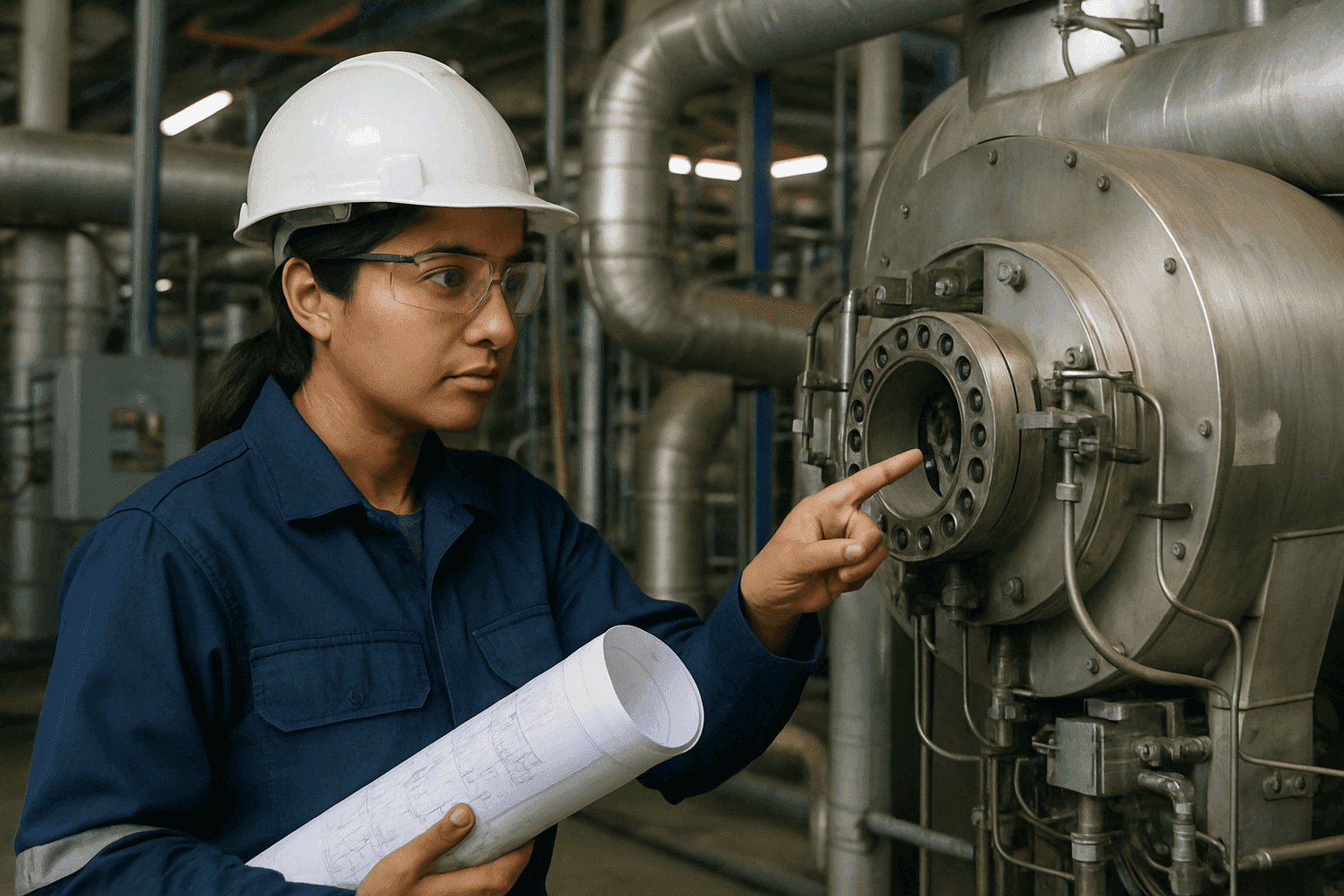
The Critical Role of Burner Design in Process Heater Performance
Process heaters are the workhorses of industries like chemical processing and oil and gas, responsible for elevating fluid temperatures to facilitate crucial reactions and operations. Their efficiency, safety, and environmental compliance hinge significantly on the design and performance of their burners. Far from being a mere ignition source, an industrial process burner is a highly engineered, sophisticated device whose precise burner design directly dictates heat transfer effectiveness, operational stability, and pollutant emissions.
Fundamentals of Process Burner Design
To achieve optimal thermal performance, burner design must match the specific draft and fuel characteristics of the furnace. Process burners are typically categorised by how they draw and mix combustion air:
- Natural Draft Burners: These rely entirely on the negative atmospheric pressure (draft) created by the heater stack buoyancy to draw in combustion air. They are mechanically simple and robust, making them highly reliable, though they offer less precise control over excess air and are sensitive to ambient wind conditions.
- Forced Draft Burners: These use an external fan or blower to deliver combustion air directly to the burner plenum. This configuration allows for high-velocity mixing, smaller burner dimensions, more compact flame shapes, and the implementation of air preheat systems to boost overall thermal efficiency.
- Induced and Balanced Draft Burners: These systems actively balance the pressure within the firebox using combination fans, maintaining an optimal pressure profile that maximises combustion stability while preventing flue gas leakage.
Furthermore, the design of the burner tile (or quarl) is critical. The tile shapes the air-flow pattern as it enters the furnace, radiating heat back to the incoming fuel stream to promote rapid ignition and stabilise the flame root.
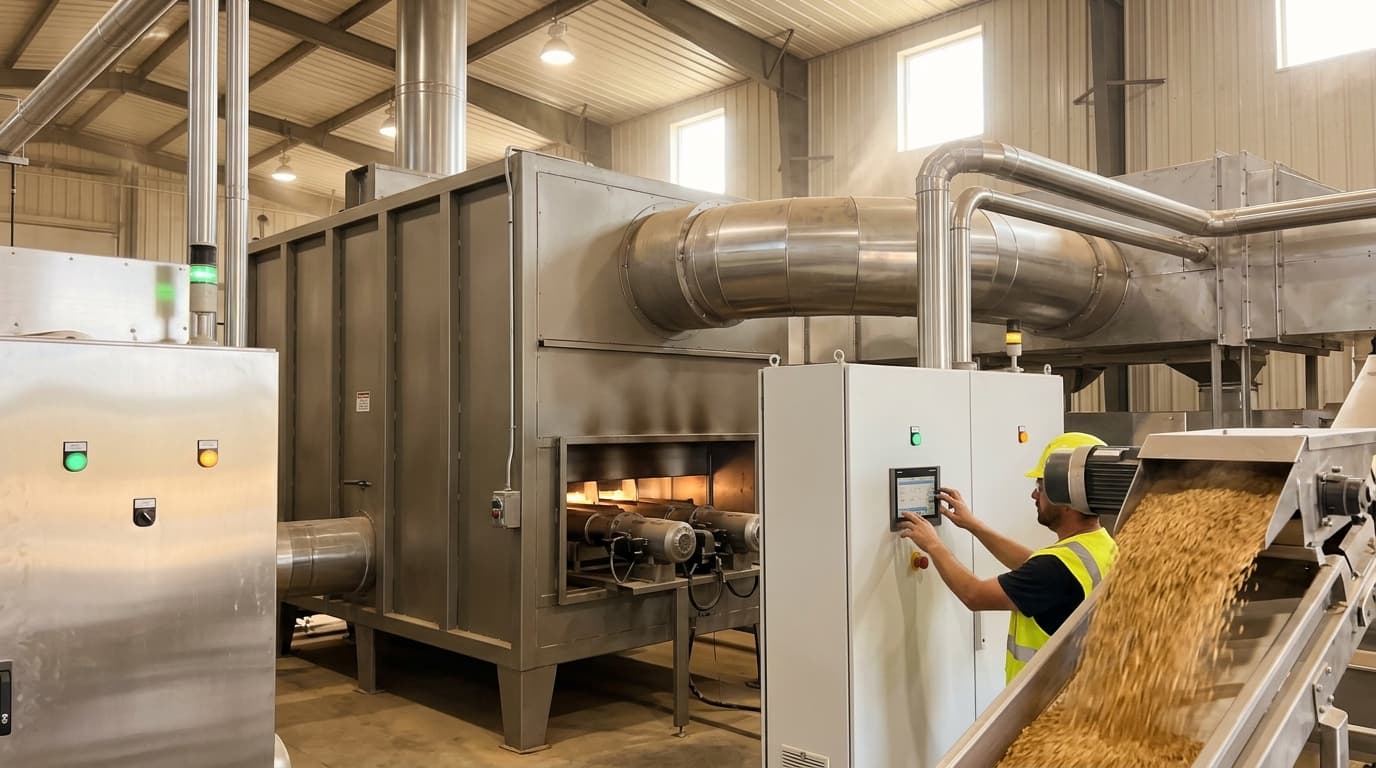
Direct and indirect-fired process heating systems for grain drying, baking, textile finishing, metal treatment, and industrial thermal processes.
Heat Transfer Efficiency and Flame Characteristics
The primary function of a process heater is to transfer heat from combustion gases to the process fluid flowing through tubes. This heat transfer occurs predominantly through radiation in the radiant section and convection in the convection section. Burner design profoundly influences how effectively this heat transfer takes place.
Flame Shape and Size
The shape and size of the flame are critical factors determined by burner design. A well-designed burner creates a flame that ensures optimal heat distribution across the radiant tubes, preventing hot spots that can lead to material stress, tube damage, and inefficient heating.
- Round Flames: Often produced by freestanding burners placed in the middle of the firebox, with radiant tubes lining the walls. This configuration is cost-effective but heats tubes from one side, limiting its use where circumferential heat flux distribution is critical.
- Flat or Rectangular Flames: Typically generated by wall-fired burners, often called radiant wall burners. These burners heat the firebox refractory wall, which then radiates heat uniformly toward the tubes. Many flat-flame wall burners utilise the Coandă effect, where the fuel-air mixture is directed along the refractory tile surface, clinging to the wall and creating a thin, highly uniform sheet of flame that heats the refractory tile to incandescence. While more costly to build due to lower tube surface area per firebox volume, they offer superior control over heat flux and temperature profiles, making them preferred for applications like coker heaters and steam cracking furnaces where precise control is paramount. Flat flames also provide better radiant coverage of horizontal tubes compared to round burners.
Flame impingement, where the flame directly contacts the heater coils, is a severe issue that can cause localized overheating and damage to the coil material, leading to equipment failure. Proper burner design ensures the flame's shape and position prevent such contact.
Combustion Air and Fuel Mixing
Burners are engineered to precisely mix fuel and air for complete combustion. The air-to-fuel ratio is paramount for achieving the best combustion efficiency, which directly translates to higher heater efficiency and reduced fuel consumption.
- Primary, Secondary, and Tertiary Air: Burners typically introduce air in stages to control the combustion rate. Primary air is often premixed with the fuel or introduced at the burner tip, while secondary and tertiary air are adjusted through registers or staged ports downstream. Optimising these ratios is crucial for flame stability and shape.
- Excess Air Control: While excess air is necessary for complete combustion and safety, too much can significantly reduce efficiency by lowering flame temperature and carrying away heat through the exhaust stack. Conversely, insufficient air leads to incomplete combustion, forming high levels of carbon monoxide (CO) and hydrogen (H2), which drastically reduce efficiency and can cause damage if combustion completes in the convection section. Optimal excess oxygen levels in the flue gas are typically around 2-3% by volume for gaseous fuels, regulated via automated damper actuators and oxygen trim loops.
Operational Stability and Flexibility
Beyond heat transfer, burner design impacts the overall operational stability, control, and adaptability of the process heater to varying conditions.
Turndown Ratio
The turndown ratio defines a burner's ability to modulate its heat output from maximum to minimum firing rates while maintaining stable combustion. A high turndown ratio is highly beneficial for energy efficiency, especially during low-load conditions, as it minimises cycling losses from frequent on/off operations.
- Impact on Control: A higher turndown ratio allows for more precise temperature control, ensuring the heater responds quickly and accurately to changes in heat demand.
- Burner Type Variation: Direct-fired process burners often have high turndown ratios (e.g., 25:1 or 30:1), enabling modulation from 4% to 100% of full fire. Indirect-fired burners typically have lower turndown ratios, around 2:1. The ultimate limit of turndown in a process burner is governed by the minimum gas velocity required to prevent flashback (in premixed designs) or flame lift-off and instability (in nozzle-mix designs).
Fuel Flexibility and Wobbe Index Compatibility
Modern industrial processes often require the ability to fire a range of fuels, including natural gas, fuel oil, and various refinery off-gases whose compositions can fluctuate significantly. Burner design is key to accommodating this variability.
When dealing with variable gaseous fuels, the Wobbe Index (WI) is the primary parameter used to compare the combustion energy output of different fuel gas compositions through a given burner nozzle:
WI=SGHHVWhere:
- WI is the Wobbe Index of the fuel gas (typically measured in MJ/m3).
- HHV is the higher heating value of the fuel gas (measured in MJ/m3).
- SG is the specific gravity of the fuel gas relative to air (dimensionless).
If the Wobbe Index of the supply gas varies by more than ±5%, the burner design must be engineered to handle the altered fuel flow rates without suffering from flame instability, lifting, or excessive emissions.
- Combination Burners: Many burners are designed as “combination” gas-oil burners, capable of firing exclusively on gas, exclusively on oil, or sometimes both simultaneously. Achieving good performance across different fuel types requires careful design, as strategies for one fuel may conflict with another.
- Hydrogen-Ready Burners: With the transition to cleaner energy, burners are increasingly designed to operate efficiently with hydrogen (H2) or hydrogen-blended fuels, ensuring future adaptability. Hydrogen has a significantly higher laminar flame speed (approximately 2.5 m/s compared to methane's 0.4 m/s) and a much broader flammability range. This increases the risk of flashback and can lead to elevated flame temperatures, which in turn spikes thermal NOₓ generation. A robust process burner design for hydrogen-ready heaters must feature altered nozzle geometry, specialised metallurgy to resist hydrogen embrittlement, and staged combustion configurations to control the peak flame temperature.
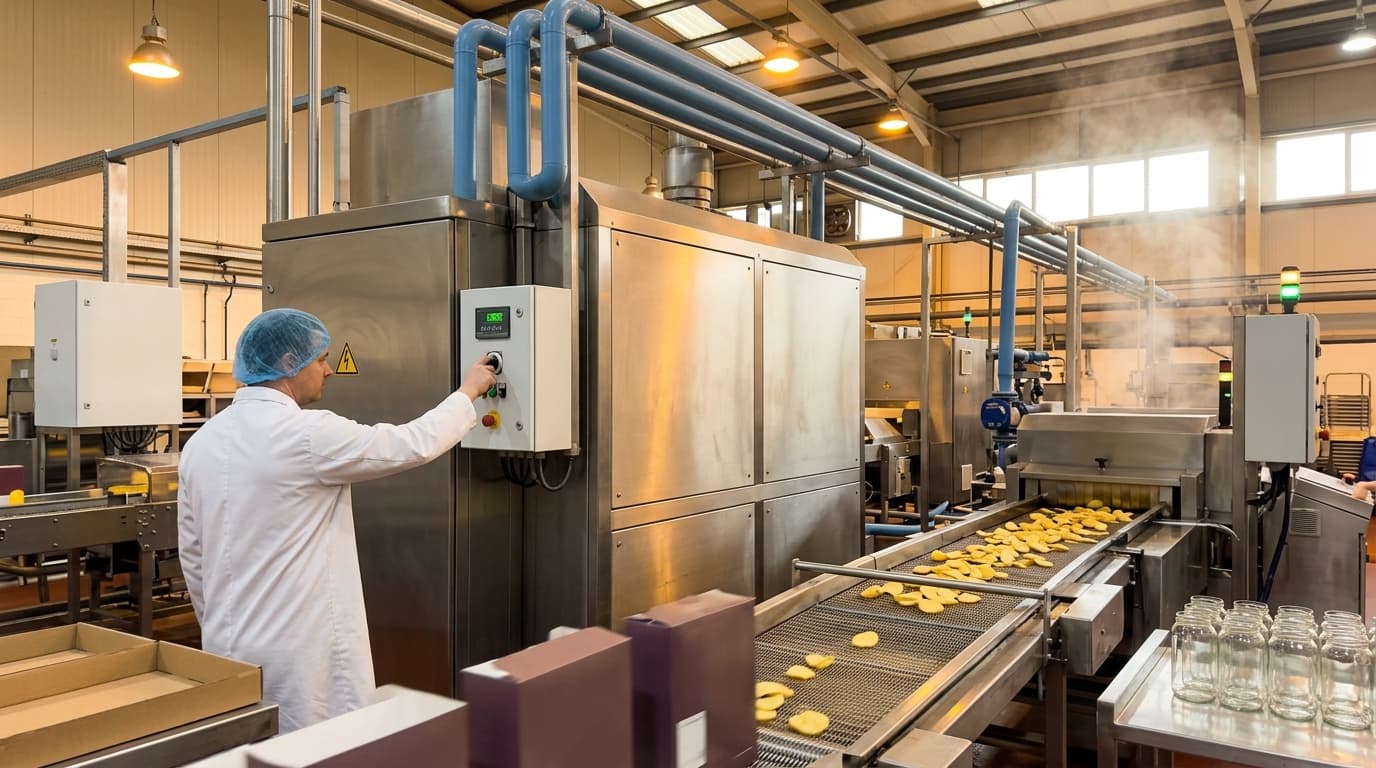
Reliable process heat generation from 100kW to 10MW+ — gas, oil, or biomass-fired, with precise temperature control and high turndown ratios.
Environmental Compliance and Emissions Reduction
Environmental regulations increasingly mandate lower pollutant emissions from industrial sources. Burner design plays a pivotal role in minimising the formation of harmful compounds, particularly nitrogen oxides (NOₓ) and carbon monoxide (CO).
NOₓ Reduction Strategies
NOₓ formation is sensitive to high flame temperatures, oxygen concentration, and residence time in the flame zone. Low NOₓ (LNB) and Ultra-Low NOₓ (ULNB) burners employ various design strategies to mitigate these factors:
- Staged Combustion: This involves separating the fuel and/or air into multiple stages, delaying mixing, and creating fuel-rich or fuel-lean zones to reduce peak flame temperatures and oxygen availability, thereby inhibiting NOₓ formation.
- Staged Air Burners: Primary air is mixed with total fuel, creating a fuel-rich, oxygen-deficient primary zone, followed by secondary and tertiary air introduction downstream to complete combustion at cooler temperatures.
- Staged Fuel Burners: Fuel is injected in stages, with all air introduced at once.
- Flue Gas Recirculation (FGR): Internal or external recirculation of cooled flue gases into the combustion air supply lowers the flame temperature by acting as a diluent, reducing thermal NOₓ formation.
- Lean Premixing: Advanced ULNBs use lean premixing of air and fuel to achieve very low flame temperatures and significantly reduce NOₓ.
- Steam Injection: Injecting steam directly into the burner flame zone is sometimes used as an alternative diluent to lower the peak flame temperature, though it introduces a small thermal efficiency penalty due to the latent heat of vapourisation of the steam.
- Flame Shape and Impingement: ULNBs can sometimes produce longer, more diffuse flames, increasing the risk of flame impingement if not carefully integrated into the furnace geometry. Detailed Computational Fluid Dynamics (CFD) studies are often used during the burner design phase to ensure proper burner selection and prevent impingement on the tube banks.
Safety and Reliability
Burner design also integrates critical safety features and contributes to the overall reliability of the process heater.
Flame Stability and Detection
Stable combustion is paramount for safe operation. Burner designs incorporate features to maintain flame stability across various operating loads and turndown conditions. Burner management systems (BMS) with flame monitoring sensors, pressure controls, and automatic shutoffs are integral to safe operation, detecting issues like flameouts and preventing hazardous conditions.
Modern burner design must guarantee a clear, unobstructed line of sight for optical flame scanners (UV, IR, or dual-sensor). This ensures the scanner can accurately distinguish between the target burner flame, adjacent flames, and background radiation from hot refractory walls, eliminating false trips or, conversely, undetected flame failures.
Preventing Flashback
Flashback, where the flame propagates back into the fuel-air mixing system, is a significant safety hazard, particularly when firing highly reactive fuels like hydrogen. Burner designs mitigate this through:
- Increased Port Velocity: Burner nozzles must be engineered to maintain a local gas velocity (Vg) that exceeds the burning velocity (Su) of the specific fuel gas mixture under all operating loads:
Where:
- Vg is the local gas mixture velocity at the burner port.
- Su is the laminar burning velocity of the fuel gas mixture.
If the flow rate is turned down too far, Vg drops below Su, allowing the flame front to travel backward through the burner tip into the mixing chamber.
- Nozzle-Mix Burners: For flashback-prone fuels, nozzle-mix burners, where fuel and air mix at the point of combustion, prevent upstream mixing and flashback entirely.
- Flame Stabilisers and Arrestors: Incorporating flame stabilisers within pilot burners or using flame arrestors and detonation arrestors in piping systems prevent flame propagation.
Conclusion
The impact of burner design on process heater performance is comprehensive, affecting virtually every aspect from core heat transfer mechanisms to environmental footprint and operational safety. Optimal burner selection and design involve a careful balance of factors such as desired flame characteristics, turndown flexibility, fuel properties, and stringent emissions targets. As industries continue to seek greater efficiency, lower emissions, and enhanced operational reliability, advanced process burner technologies and customised burner design engineering remain at the forefront of process heater innovation.
