Return to Resources
Thermal Coating for Pentane tank– Oil & Gas
Uncategorized

Thermal Coating for Pentane tank– Oil & Gas

AuthorFrancois Pierrel
Published
Est. Read2 min read

Thermal Coating for Pentane tank– Oil & Gas Case Study

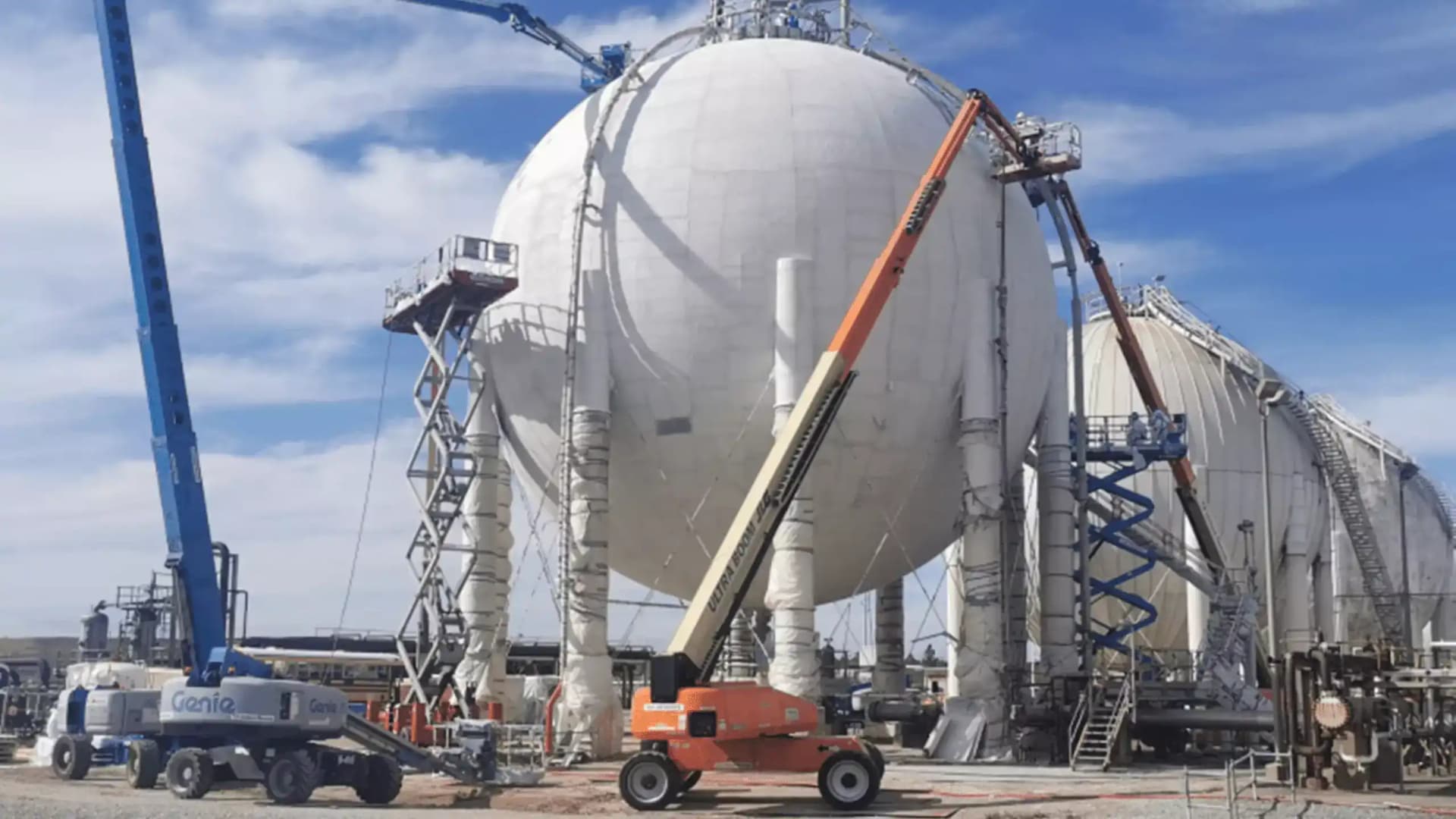
We worked with our sister company EnerTherm Ltd to develop a liquid thermal insulation system. The dual layer insulation system was proposed as a replacement for the aerogel blanket on a major US refinery pentane sphere. This system presents a seamless cover compared to traditional fibrous insulation and can protect against corrosion under insulation CUI. EnerTherm Engineering consultants investigated the potential of using such a system against condensation build-up at the surface of the coating and overall heat loss performance compared with the Aerogel blanket.

CFD was used to conduct scenario analysis and calculate the necessary thickness of the thermal coating to reduce the risk of condensation build-up at the surface of the insulated surface. Weather properties and patterns (temperature, relative humidity and wind speed) were used to evaluate seasonal changes.

With an internal temperature of –10oC for Pentane, the necessary thickness of liquid insulation with thermal conductivity of 0.046 W/m.K was 38 mm to match the heat loss value of the aerogel blanket.

After 6 months of running with the liquid insulation coating, the performance showed a significant reduction of 1.2oC compared to the Aerogel blanket. Outperforming traditional insulation was achieved by evaluating the optimum thickness of insulation as well as achieving a seamless insulating blanket.

A 3D model of the pentane tank was built with a steel shell (20mm) and varied thermal coating thicknesses.

Being a coastal application, various wind speeds, air velocities and levels of relative humidity in the air were modelled for the summer and winter seasons. Dew point formation and surface water condensation were computed across the entire surface. Optimum liquid insulation was calculated from this model and demonstrated clear feasibility.

// RELATED_READING

Uncategorized

Design and Problem Solving via CFD

Design And Problem Solving Via CFD Case Study Computational fluid dynamic CFD is part of a broader range of software tools which is encompassed by Computer Aided Engineering (CAE) tools. Whether it is to evaluate and optimize a new design or find fault and troubleshoot an existing design, CFD aims to better understand and …

Uncategorized

Heat Recovery In Pet Food Plant

Heat Recovery In Pet Food Odour Treatment Plant Case Study A Pet Food Processing site had an issue with odour complaints from the local residents and we’re looking at a new odour treatment system across all the process lines. EnerTherm Engineering investigated the use of incineration, combined with heat recovery, to access the suitability …

Uncategorized

Factory Data Capture

Factory Data Capture Case Study Factory data is at the essence of process and production knowledge. Without quality data, production facilities struggle to commission products in time and often find it difficult to get reproducibility, which is key for volume manufacturing. One of our customers continuously produces leather sheets for the automotive and aeronautic …

Uncategorized

Crisp Production Optimisation

Crisp Production Optimisation – Operation Crispy Crisp Case Study EnerTherm Engineering Ltd saves energy and waste in the food and processing industries. One of their customers operates a very large crisp production. These large production lines are capable of delivering 3.2 tons per hour of crisps, which is about 1 million bags of crisps …

Uncategorized

Process Integration And Pinch Analysis

Learn how process integration and pinch analysis optimize thermal energy recovery, featuring a food industry case study with £125k in annual savings.

Uncategorized

Precious Metal Incinerator

Precious Metal Incinerator Case Study EnerTherm Engineering Ltd has designed a unique batch incinerator for a famous Jewellery watch manufacturer. This bespoke design encompasses a feed-in-out system bar scanned for all trays of waste to be incinerated. A dual chamber incineration system in conjunction with sorbent treatment allows minimum emission which complies with strict …