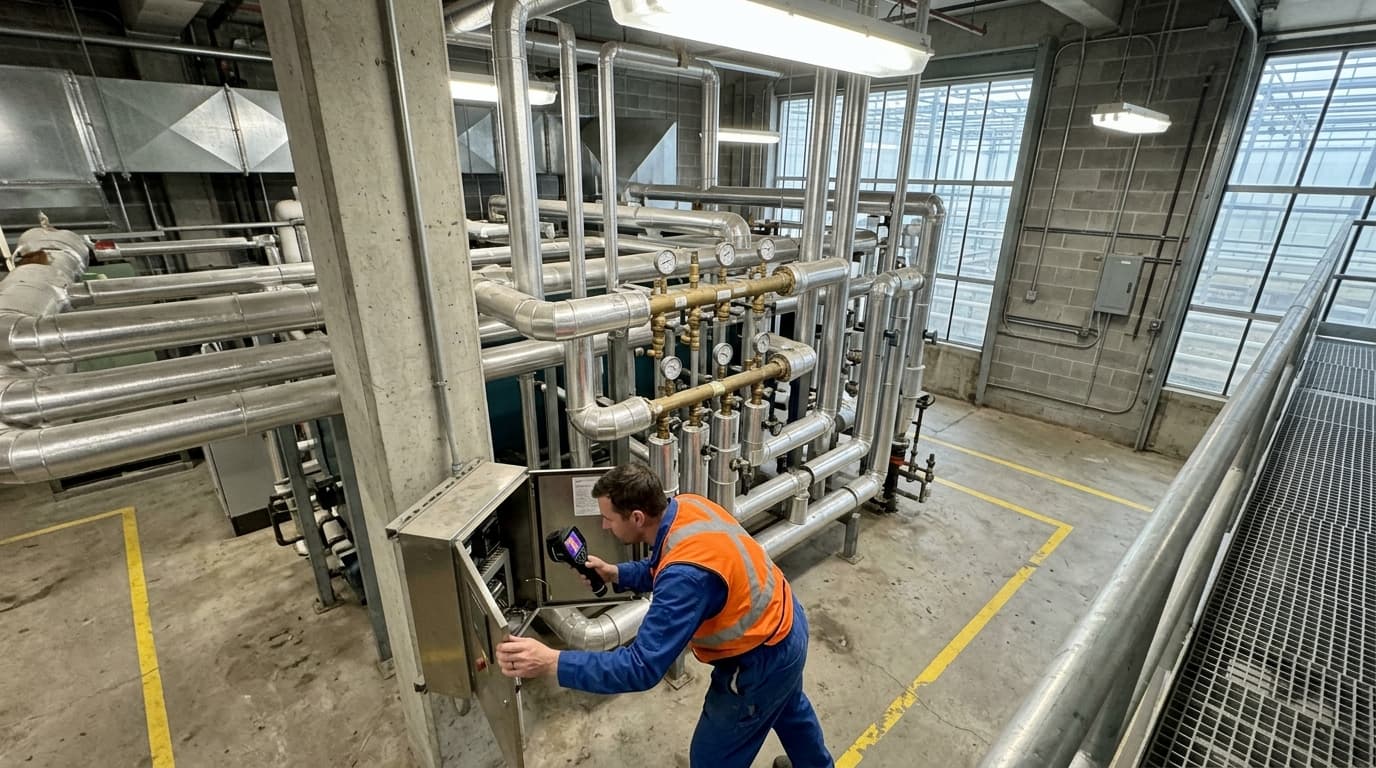
Why Agricultural Thermal Projects Require Rigorous Validation
How IETF-aligned feasibility studies secure grant funding and ensure ROI compliance.
Agricultural feasibility studies validate ROI for thermal projects. Learn how IETF grants, BS EN 16247 audits, and EPR compliance secure capital investment.
Deploying industrial thermal systems across agricultural operations demands immense capital expenditure. Whether installing custom-engineered dehydrators for crop moisture reduction, high-capacity incinerators for biosecurity and waste disposal, or precision process heaters for controlled environment horticulture, facility owners face acute financial and operational risks. A poorly specified thermal plant will erode profit margins through excessive fuel consumption, unplanned downtime, and regulatory fines. Rigorous feasibility studies insulate project investors from these liabilities by quantifying exact techno-economic parameters before procurement begins.
Agricultural facility managers and sustainability directors must present airtight financial models to secure internal board approval or external government funding. A comprehensive feasibility study transforms theoretical thermal engineering concepts into verified cost-benefit analyses. By standardising energy audit baselines and stress-testing regulatory compliance, project planners can confirm the operational efficiency and lifetime return on investment (ROI) of large-scale thermal infrastructure.

De-risk your capital investment with a rigorous feasibility study — covering technical viability, economic analysis, and risk assessment before you commit.
Allocating Capital and Structuring Cost-Benefit Analysis
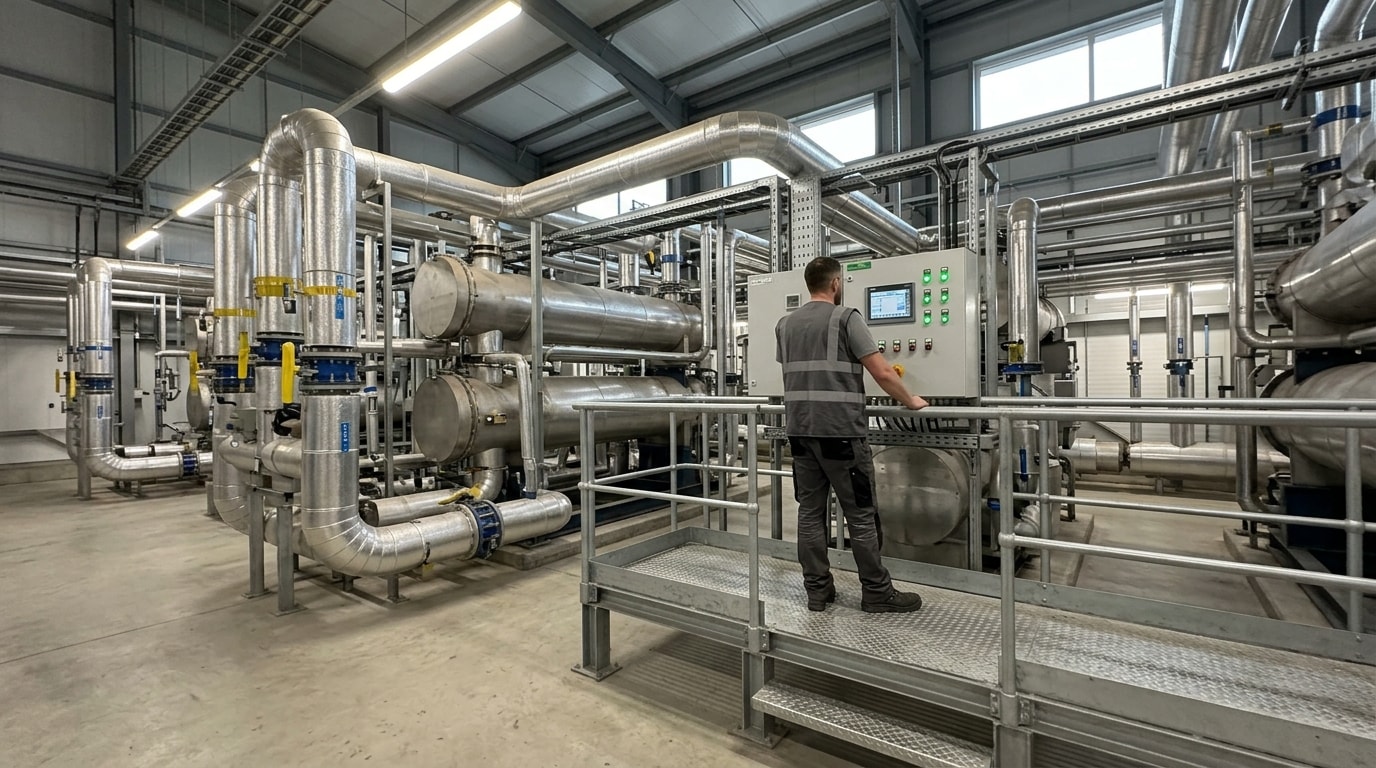
Evaluating the financial viability of agricultural thermal projects requires a strict cost-benefit analysis (CBA) that balances initial capital expenditure (CapEx) against projected operational expenditure (OpEx). Industrial process heaters and dehydrators consume vast amounts of energy, meaning that minor inefficiencies at the design stage compound into severe financial losses over a 15 to 20-year asset lifecycle.
Establishing the ROI Baseline
A credible feasibility study begins by mapping the baseline energy consumption of existing agricultural processes. When replacing fossil-fuelled grain drying systems with electrified process heaters or biomass-fed dehydrators, project engineers must calculate the exact thermal load required to achieve target moisture content. The feasibility report models the cost of continuous operation, factoring in fuel price volatility, maintenance schedules, and the thermal degradation of components over time.
Financial viability hinges on the payback period. Investors typically demand a clear timeline detailing when the energy savings generated by the new thermal asset will surpass the initial installation costs. Cost-benefit models must incorporate grid connection upgrade costs, structural foundation work, and the integration of heat recovery systems. By capturing low-grade thermal waste from existing site operations and redirecting it into new process heaters, facilities can drastically shorten the payback period and improve the overall financial yield of the investment.
Quantifying Risk in High-Temperature Processes
Risk quantification forms the second pillar of thermal project validation. Agricultural thermal systems frequently operate under harsh, fluctuating environmental conditions. Feasibility studies must account for variable feedstock quality, such as seasonal changes in the moisture content of agricultural waste fed into an incinerator. If a waste stream contains higher moisture than anticipated, the incinerator will consume more auxiliary fuel to maintain the required combustion temperatures, directly impacting the projected OpEx.
Process engineers often use advanced thermodynamic modelling software to simulate these variables during the feasibility phase. By stressing the financial model against worst-case operational scenarios, project sponsors can determine whether the proposed thermal infrastructure maintains its ROI under sub-optimal conditions. This data-driven validation is mandatory when approaching external funding bodies, as grant administrators require proof that a project is financially resilient before releasing public funds.
Aligning with IETF Phase 3 Grant Requirements
The UK government heavily subsidises industrial decarbonisation, making grant acquisition a primary objective for agricultural thermal projects. The Industrial Energy Transformation Fund (IETF) serves as the principal grant route for private-sector heavy industry and controlled environment horticulture. Following the completion of the Spring 2024 window, the government confirmed an additional £163 million to continue the IETF through to the 2027-2028 financial year.
Funding Structures for Techno-Economic Studies
The IETF specifically de-risks the early stages of project development by co-funding feasibility and engineering studies. For agricultural businesses evaluating complex decarbonisation projects, the fund provides grant intensities up to 50% of the eligible study costs, with typical awards ranging from £25,000 to £500,000. This capital allows facility owners to commission highly detailed techno-economic assessments without bearing the entire financial risk upfront.
If the feasibility study proves successful, the project can transition into the deployment phase. IETF deployment grants cover 15% to 30% of eligible CapEx, delivering awards that can scale from £100,000 up to £30 million for major industrial installations. To access these deployment funds, the preceding feasibility study must demonstrate a credible, verified pathway to carbon reduction and energy efficiency.
Preparing a Compliant Bid for DESNZ
The Department for Energy Security and Net Zero (DESNZ), alongside administrators at Salix Finance Ltd, evaluate IETF bids based on strict criteria. Feasibility studies submitted for funding must prove that the proposed thermal technology improves performance beyond current regulatory standards.
When applying for funds to install custom-engineered dehydrators or heat recovery systems, the study must quantify the exact metric tonnes of carbon dioxide equivalent (CO₂e) saved per pound of grant funding requested. Evaluators reject vague estimations. The feasibility report must include detailed heat and mass balance calculations, schematic diagrams, and a comprehensive measurement and verification (M&V) plan. By aligning the cost-benefit analysis directly with IETF scoring rubrics, agricultural operators drastically increase their probability of securing non-repayable government capital.

De-risk your capital investment with a rigorous feasibility study — covering technical viability, economic analysis, and risk assessment before you commit.
Setting Baselines Through BS EN 16247-1:2022 Energy Audits
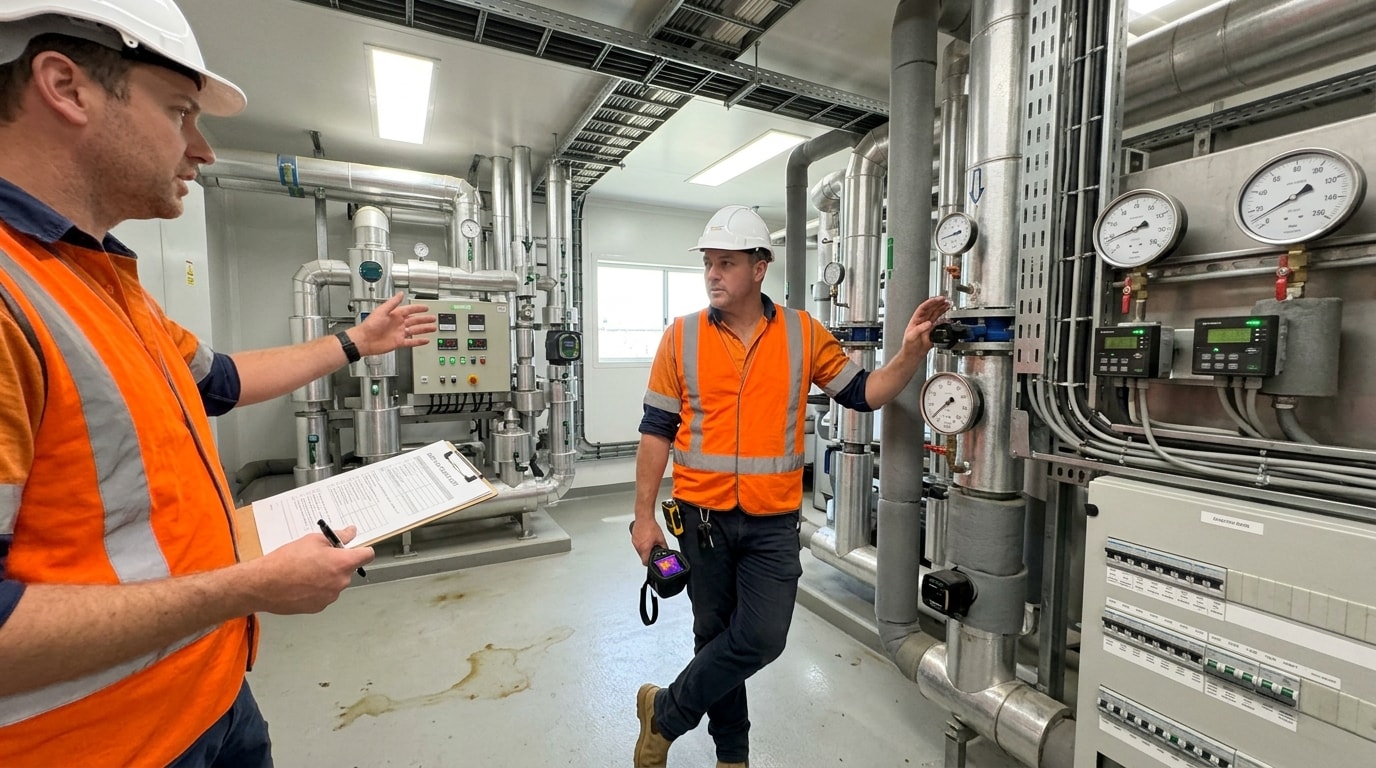
Accurate data collection dictates the success of any thermal feasibility study. To guarantee that ROI calculations are based on factual operational metrics rather than assumptions, the UK industrial sector relies on the BS EN 16247-1:2022 standard. This framework specifies the requirements, common methodology, and deliverables for comprehensive energy audits.
Standardised Data Collection
Published in September 2022 to supersede the previous 2012 iteration, BS EN 16247-1:2022 introduces rigorous process flow diagrams and updated definitions for establishing energy performance. When auditing an agricultural facility prior to a thermal system upgrade, energy auditors must record consumption across all existing processes, buildings, and transport operations.
For a proposed process heater installation, auditors evaluate the existing thermal generation plant. They extract half-hourly gas and electricity consumption data, normalising the figures against variable weather conditions and seasonal production outputs. This standardisation isolates the exact energy intensity of the agricultural process. Without a BS EN 16247-1:2022 compliant baseline, any subsequent claims regarding the energy-saving potential of a new dehydrator or process heater lack analytical credibility.
Proving Energy-Saving Metrics
The deliverables mandated by the standard require auditors to present targeted, prioritised recommendations for efficiency improvements. When evaluating thermal infrastructure, this often involves identifying heat loss through uninsulated pipework, inefficient heat exchangers, or outdated boiler systems.
Industry professionals widely regard compliant energy audit reports as the definitive proof required for internal capital expenditure requests. If the audit identifies that upgrading to a modern, custom-engineered agricultural dehydrator will yield a 40% reduction in primary energy consumption, the feasibility study incorporates this exact figure into the financial cash flow model. This verifiable data trail satisfies both corporate risk committees and external grant assessors, proving that the projected energy savings are technically achievable and mathematically sound.
Overcoming Regulatory Hurdles in Agricultural Incineration
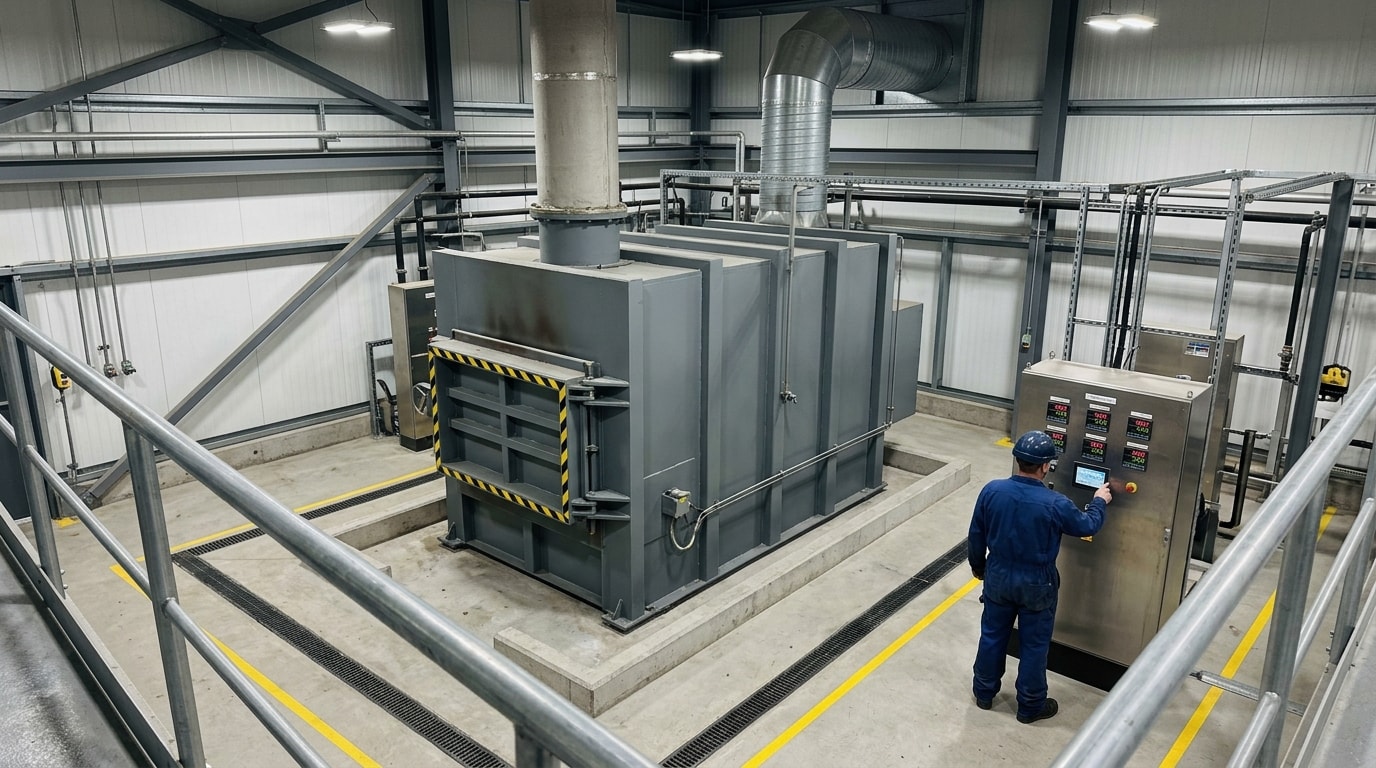
Thermal projects involving waste disposal carry severe regulatory risks. Agricultural incinerators provide essential biosecurity by safely destroying fallen stock, animal by-products, and contaminated organic waste. However, burning agricultural waste triggers stringent environmental oversight. Feasibility studies must thoroughly validate regulatory compliance, as failing to secure an environmental permit renders the physical asset useless.
The Environmental Permitting Regulations 2016
In England and Wales, agricultural incineration projects are governed by the Environmental Permitting (England and Wales) Regulations 2016 (EPR). Process engineers must classify the proposed incinerator accurately during the early feasibility stages. A critical regulatory threshold exists for Small Waste Incineration Plants (SWIPs). Under the EPR, a SWIP is defined as an installation with a capacity less than or equal to 10 tonnes per day for hazardous waste, or 3 tonnes per hour for non-hazardous waste.
If a proposed agricultural incinerator exceeds these capacity limits, it shifts into a higher regulatory tier, requiring a complex Part A(1) permit managed directly by the Environment Agency. The feasibility study must lock down the exact throughput requirements of the farm or processing facility. Oversizing the incinerator unnecessarily complicates the permitting process and inflates the CapEx, while undersizing it creates operational bottlenecks.
Industrial Emissions Directive Compliance
Regardless of whether the plant is classified as a SWIP, agricultural incinerators must comply with the emission limits set out in Chapter 4 of the Industrial Emissions Directive (IED). The IED dictates strict limits on the release of particulates, heavy metals, and highly toxic dioxins and furans. To meet these parameters, the thermal plant must achieve and sustain highly specific combustion conditions. For example, the incinerator must maintain the combustion gases at a minimum temperature of 850°C for at least two seconds.
Feasibility studies must price the secondary pollution control equipment required to meet IED standards. Scrubbers, bag filters, and continuous emission monitoring systems (CEMS) add substantial costs to the initial CapEx. Furthermore, the cost-benefit analysis must include the recurring OpEx of regulatory compliance, such as independent stack emissions testing and permit subsistence fees. By quantifying these legal and operational requirements before capital is committed, planners ensure the incineration project remains financially viable under active environmental regulation.
Securing Stakeholder and Investor Buy-In
The ultimate objective of an agricultural thermal feasibility study is to secure authorisation to proceed. Corporate boards, sustainability managers, and private investors do not approve multi-million-pound CapEx requests based on technical theory alone; they require absolute financial clarity.
Translating Technical Data to Financial Viability
A robust feasibility report bridges the gap between complex thermodynamics and corporate finance. It translates airflow rates, combustion temperatures, and heat transfer coefficients into internal rates of return (IRR) and net present value (NPV). When proposing a custom-engineered dehydrator to a facility owner, the study must prove that the increased processing speed and reduced energy consumption will generate direct margin expansion on the finished agricultural product.
Financial models must be transparent, outlining all assumptions regarding discount rates, inflation, and future energy tariffs. By systematically dismantling the operational risks—from environmental permitting under the EPR 2016 to validating energy baselines via BS EN 16247-1:2022—the study removes uncertainty. When paired with a strategic application for IETF Phase 3 funding, a rigorously validated feasibility study provides the irrefutable evidence required to deploy efficient, compliant, and highly profitable agricultural thermal infrastructure.
This article reflects the independent analysis and editorial opinion of EnerTherm Engineering. Product names, trademarks, and brands mentioned belong to their respective owners. EnerTherm Engineering is not affiliated with, endorsed by, or a licensee of any third-party software or product mentioned unless explicitly stated.

Managing Director — EnerTherm Engineering
Dr. François Pierrel is Managing Director of EnerTherm Engineering with over two decades of expertise in thermal design, heat transfer, and industrial energy optimisation. He holds a PhD in Heat Transfer from Cranfield University and a Post-Doctorate from Heriot-Watt University.
