
Cost Analysis of Flue Gas Heat Recovery Systems: Unlocking Industrial Energy Efficiency
In the realm of industrial manufacturing and power generation, a significant amount of thermal energy is routinely expelled into the atmosphere through flue gases. This represents a substantial waste of energy and a missed opportunity for enhanced operational efficiency and reduced environmental impact.
Flue gas heat recovery (FGHR) systems offer a compelling solution, capturing this otherwise lost heat and repurposing it within industrial processes. However, before integrating such a system, a thorough cost analysis is crucial to understand the investment, operational expenditures, and the substantial returns these systems can deliver.
Understanding Flue Gas Heat Recovery
Flue gas heat recovery involves extracting thermal energy from hot exhaust gases generated by combustion processes and transferring it to another medium, such as water, air, or thermal oil, for beneficial reuse. This process directly reduces fuel consumption, lowers operating costs, and decreases emissions, making it a cornerstone of modern industrial waste heat recovery and energy efficiency strategies.
Why is Flue Gas Heat Recovery Important?
Industries, particularly those reliant on boilers, furnaces, and turbines, produce hot flue gases that can range from 100 °C to several hundred degrees Celsius. Recovering even a fraction of this wasted heat can lead to significant energy savings, as 20 to 50 per cent of industrial energy input is often lost as waste heat. Beyond the financial incentives, FGHR systems contribute to:
- Reduced Fuel Consumption: Less primary fuel is needed to achieve desired process temperatures.
- Lower Operating Costs: Direct savings on energy bills.
- Environmental Benefits: Decreased greenhouse gas (GHG) emissions, including CO₂, and often reduced thermal pollution.
- Improved Process Efficiency: Preheating combustion air or boiler feedwater can optimise overall system performance.
The Thermodynamics of Waste Heat Recovery: Sensible vs. Latent Heat
To fully appreciate the potential of flue gas heat recovery, it is necessary to examine the thermodynamics of the exhaust stream. Heat recovery is divided into two distinct thermodynamic regimes:
- Sensible Heat Recovery: This occurs when the flue gas is cooled but remains above its dew point. The recovered heat is directly proportional to the temperature drop of the dry gas.
- Latent Heat Recovery: This occurs when the flue gas is cooled below its water vapour dew point (typically around 55 °C to 57 °C for natural gas combustion). As the water vapour in the flue gas condenses into liquid water, it releases a massive amount of latent heat of vapourisation (approximately 2,260 kJ/kg of water condensed), significantly boosting energy recovery.
The total heat recovery rate (Q) can be calculated using the following thermodynamic relationship:
Q=m˙⋅Cp⋅(Tin−Tout)+m˙cond⋅ΔHvapWhere:
- Q is the total recovered thermal power (kW)
- m˙ is the mass flow rate of the flue gas (kg/s)
- Cp is the specific heat capacity of the flue gas (kJ/kg·K)
- Tin is the inlet flue gas temperature (°C)
- Tout is the outlet flue gas temperature (°C)
- m˙cond is the rate of water vapour condensation (kg/s)
- ΔHvap is the latent heat of vapourisation of water (kJ/kg)
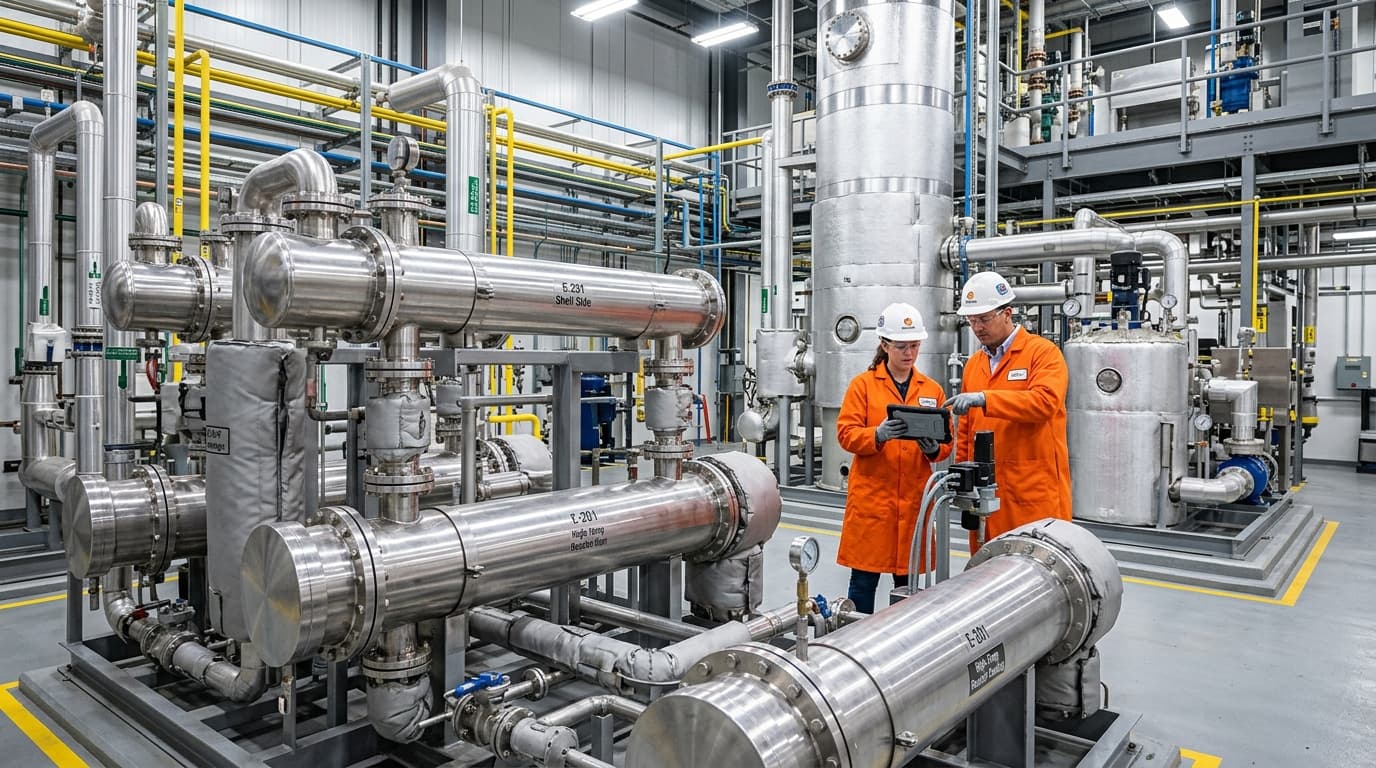
Recover waste heat and cut fuel costs with shell & tube or air-to-air exchangers engineered for continuous industrial duty.
Key Components of a Flue Gas Heat Recovery System
The core of any FGHR system is the heat exchanger, designed to facilitate efficient heat transfer between the hot flue gas and a cooler working fluid. Several types are commonly employed, depending on the flue gas temperature, chemical composition, and the intended use of the recovered heat:
- Economisers: Primarily used in industrial boilers, economisers preheat boiler feedwater using waste heat from flue gases, thereby increasing combustion efficiency. They are most effective with flue gases above 150 °C.
- Recuperators: These gas-to-gas or gas-to-liquid heat exchangers transfer energy to air or other fluids, reducing fuel consumption in various industrial and heating processes. Finned tube heat exchangers are often used in this application to enhance heat transfer from hot gases to a liquid.
- Condensing Heat Exchangers: Used in lower-temperature systems (from around 80 °C down to 30 °C), these exchangers recover both sensible and latent heat by condensing water vapour present in the flue gases, significantly boosting energy recovery. They are particularly suitable for preheating process water or boiler feedwater.
- Organic Rankine Cycle (ORC) Systems: For higher-temperature flue gases, ORC systems can convert recovered heat directly into electricity, offering a pathway to decentralised power generation from waste heat.
- Heat Pipe Heat Exchangers: These offer zero cross-contamination risk, a low physical footprint, and high thermal efficiency, making them suitable for small to medium applications that require high gas-to-liquid heat exchange flexibility.
Dissecting the Costs: Investment, Operation, and Maintenance
A comprehensive cost analysis for flue gas heat recovery systems typically involves evaluating initial capital expenditure (CAPEX), ongoing operational costs (OPEX), and maintenance expenses.
1. Capital Investment Costs (CAPEX)
The initial cost of installing an FGHR system can vary widely, influenced by the system's size, complexity, type of heat exchanger, and specific industrial application.
- Equipment Costs: This includes the heat exchanger (economiser, recuperator, condenser, ORC module), ducting, insulation, pumps, bypass dampers, fans, and integrated monitoring and control interfaces designed for supervisory intervention. The cost of materials is also a significant factor, especially if corrosive or fouling flue gases necessitate special alloys.
- Materials and Corrosion Resistance: For condensing systems or processes burning sulphur-rich fuels, the flue gas drop below the acid dew point (which can range from 110 °C to 140 °C) can cause aggressive sulphuric acid corrosion. This necessitates high-grade materials such as stainless steel 316L, 316Ti, or fluoropolymer coatings (such as PTFE or PVDF), which elevate initial equipment costs but prevent premature equipment failure.
- Installation Costs: Labour, piping, structural modifications, and potential temporary production stoppages during installation contribute to this cost. For a small-scale system, installation might be a few thousand pounds, while large-scale industrial systems could run into hundreds of thousands or even millions. For domestic boilers, the marginal price of a passive flue gas heat recovery (PFGHR) system can range from less than £200 to over £1,000, with many products falling between £250 and £600.
- Engineering and Design: Custom-engineered solutions for specific industrial processes often require significant upfront design, computational fluid dynamics (CFD) modelling, and integration costs.
- Ancillary Equipment: This may include auxiliary boilers, chiller systems, CO₂ absorber vessels, and circulation pumps, depending on the complexity and purpose of the heat recovery.
2. Operational Costs (OPEX)
While FGHR systems are designed to reduce energy consumption, they do incur some operational costs:
- Electricity Consumption: Induced draught (ID) fans and circulation pumps required to move fluids through the heat exchanger and overcome additional gas-side pressure drops can consume electricity. However, the overall energy savings typically far outweigh this additional parasitic load.
- Wastewater Disposal and Condensate Treatment: In condensing heat exchangers, the generated condensate is often acidic (pH 3 to 5). Before disposal to municipal sewers or reuse in the plant, this water must pass through a neutralisation unit containing basic media (such as calcium carbonate chips), adding a minor operational material cost.
- Chemical Treatment: In systems dealing with corrosive flue gases, chemicals might be needed to maintain water quality or protect downstream piping.
3. Maintenance Costs
Regular maintenance is crucial for ensuring the longevity and efficiency of FGHR systems.
- Routine Servicing: This involves checking, calibrating sensors, and cleaning components like filters and fans. Servicing typically costs between £150 and £400 per service, depending on system size and complexity.
- Sootblowing and Cleaning Systems: Flue gases containing particulate matter, ash, or corrosive fouling substances (such as in biomass boilers or heavy fuel oil systems) require integrated sootblowers or specialised CIP (clean-in-place) washing systems. These installations increase maintenance complexity and water consumption.
- Parts Replacement: Over time, gaskets, pump seals, and sensor probes may wear out and require replacement, which should be factored into long-term budgeting. For carbon capture systems integrated with flue gas recovery, maintenance costs are often estimated at 1 per cent of the capital cost annually.
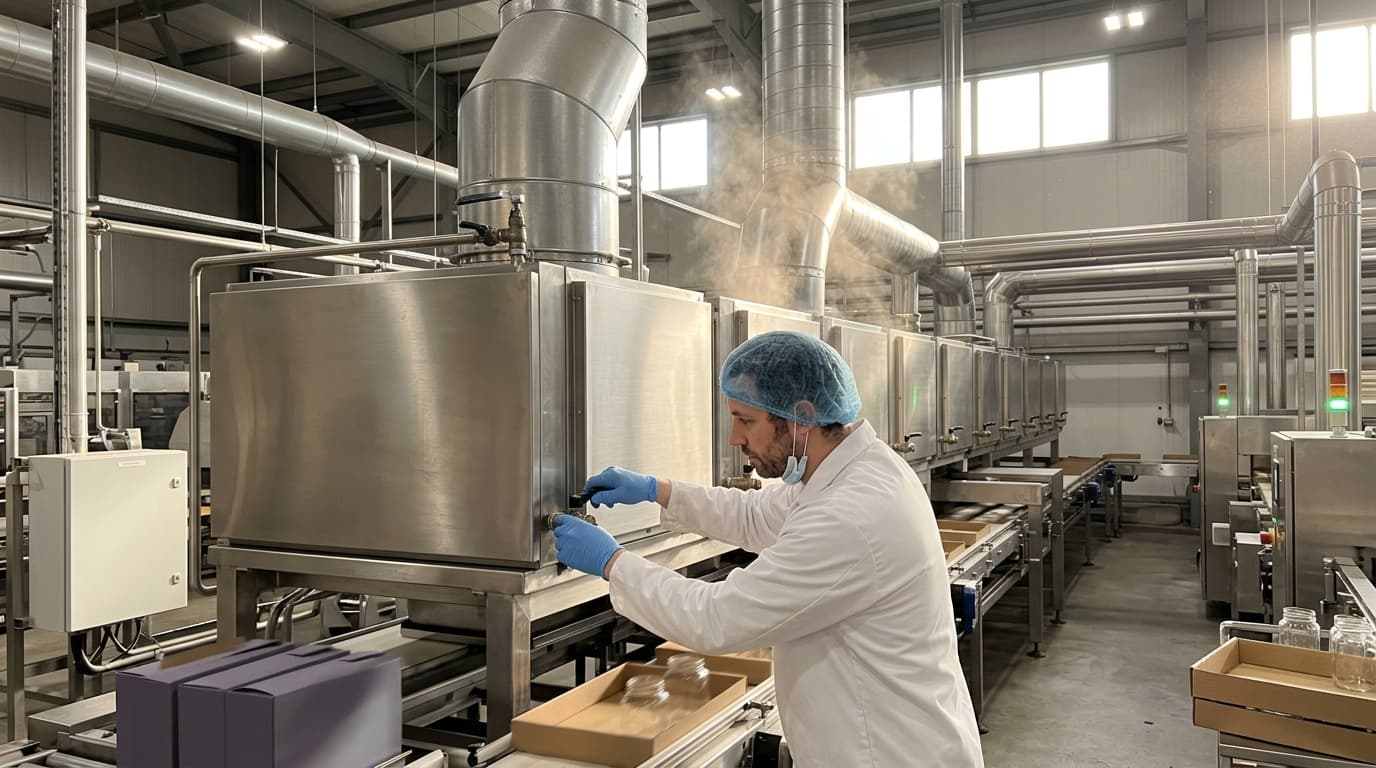
Our ThermStack and EcoStream heat exchanger ranges deliver measurable energy savings across chemical, food, pharma, and power generation processes.
Economic Benefits: Savings, ROI, and Payback Periods
The primary driver for investing in FGHR systems is the significant economic return through energy savings.
- Energy Savings: FGHR systems can lead to substantial reductions in fuel consumption. For instance, an economiser can save between 4 and 6 per cent in fuel consumption in steam boilers. In natural gas boilers, heat pump-assisted condensing recovery systems can save a significant amount of natural gas, potentially saving 10 to 15 per cent of total energy consumption.
- Reduced Carbon Emissions Costs: With increasing carbon pricing, carbon taxes, and environmental regulations, reducing CO₂ emissions through improved efficiency can lead to direct financial savings on emissions allowances and compliance penalties.
- Improved Overall Efficiency: For combined heat and power (CHP) plants, FGHR can significantly increase heat production and overall thermal efficiency, resulting in economic and environmental benefits.
Return on Investment (ROI) and Payback Period
The payback period for FGHR systems is often remarkably short, making them highly attractive investments for industrial facilities.
- Typical Payback Periods: Many sources indicate payback periods ranging from 1 to 3 years for industrial applications. Some systems, particularly economisers, can have payback periods as short as a few months or up to 2 to 3 years, especially in retrofit applications where boiler run hours are high. One study involving a heat pump and counter-current heat exchanger for natural gas boiler flue gas recovery showed a payback period of 2.3 years, saving 61.97 million yuan annually.
- Factors Influencing Payback:
- Initial Investment Cost (CAPEX): Lower initial engineering and equipment costs generally lead to quicker paybacks.
- Fuel Prices: Higher and rising energy prices (such as natural gas or electricity) significantly shorten the payback period as waste heat savings become more valuable in real-term financial savings.
- Flue Gas Characteristics: High and stable flue gas temperatures, as well as continuous operation and sufficient volume of flue gases, increase profitability.
- Utilisation of Recovered Heat: The ability to efficiently use the recovered heat within production processes (such as for preheating boiler make-up water, space heating, or electricity generation) is critical. If there is no demand for the recovered low-grade heat, the economic viability drops.
- System Efficiency: More efficient heat recovery systems lead to greater energy savings and shorter payback periods.
- Subsidies and Financial Support: Access to green financing, energy efficiency grants, or tax incentives can further improve the economic viability.
For example, a heat recovery system in a textile mill can see a payback of 1 to 3 years due to significant fuel cost reductions for heating process water. In a 1 MW Jenbacher gas generator project, payback periods ranged from 1.5 years with high natural gas prices and steam production for process heating, to 2 to 3 years for hot water and hotel heating with moderate natural gas prices.
Factors Influencing Cost and Profitability
Beyond the direct cost components, several variables play a crucial role in determining the overall economic viability of a flue gas heat recovery system:
- Flue Gas Temperature and Volume: Higher temperatures and larger volumes of flue gas mean more recoverable heat, directly impacting the potential for savings. However, excessively low flue gas temperatures (below 100 °C) may not economically justify non-condensing heat recovery technologies without a heat pump interface.
- Flue Gas Composition: Corrosive or fouling substances in the flue gas can necessitate more expensive materials (such as stainless steel or titanium) and complex self-cleaning systems, increasing both CAPEX and OPEX.
- Continuous Operation: Facilities with continuous (24/7) or high-load operations benefit most, as the system consistently generates savings, accelerating the amortisation of the CAPEX.
- Integration Complexity: Retrofitting an FGHR system into an existing plant can be more complex and costly than designing it into a greenfield facility due to spatial constraints and ducting modifications.
- Energy Demand Synchronisation: The availability of suitable applications for the recovered heat (such as process heating, water preheating, space heating, or electricity generation) is critical for maximising benefits.
Conclusion
Flue gas heat recovery systems represent a powerful tool for industrial energy efficiency and sustainability. While the initial capital investment can be substantial, the long-term operational savings, reduced environmental impact, and often rapid payback periods make them a highly attractive proposition.
A detailed cost-benefit analysis, considering the specific thermodynamic characteristics of the industrial process, flue gas chemistry, and energy market dynamics, is essential for identifying the most cost-effective solution and realising the full economic and environmental potential of waste heat recovery. As energy prices continue to fluctuate and environmental regulations tighten, the strategic adoption of FGHR systems will be increasingly vital for competitive, low-carbon, and responsible industrial operations.
