
The Complex Impact of Agricultural Waste Incineration on Greenhouse Gas Emissions
The agricultural sector, while vital for sustaining human populations, generates enormous quantities of waste. Managing this agricultural waste efficiently and sustainably is a significant global challenge, with direct implications for greenhouse gas (GHG) emissions and climate change. One method gaining attention is agricultural waste incineration, which offers both potential benefits and considerable environmental concerns, particularly regarding its contribution to atmospheric GHGs.
Understanding Agricultural Waste Incineration
Agricultural waste incineration refers to the controlled thermal combustion of various organic and inorganic by-products generated during farming, livestock management, and post-harvest activities. This waste stream is highly diverse, containing crop residues (such as cereal straw, cotton stalks, sugarcane bagasse, and rice husks), animal manure, animal carcasses (fallen stock), and various processing residues. Unlike uncontrolled open burning, which is often illegal and highly polluting, modern agricultural incineration plants utilise specialised engineering controls to achieve complete oxidation of the organic matter.
These specialised systems aim for high combustion temperatures, long gas residence times, and efficient waste agitation with optimised air introduction. Modern farm incinerators utilise advanced thermodynamic and mechanical designs to safely and efficiently combust agricultural waste, reducing its volume significantly—by up to 90% of its dry weight—and producing inert ash as a byproduct. The process converts organic matter into high-temperature thermal energy, which can then be harnessed for heating farm operations, generating steam, or driving turbines for electricity generation, feeding directly into agricultural waste-to-energy (WtE) frameworks.
Beyond waste volume reduction, agricultural incineration serves as a critical biosecurity tool. During outbreaks of highly infectious animal diseases (such as Avian Influenza or African Swine Fever), rapid on-farm thermal destruction of animal biosecurity waste is often the safest method to eliminate pathogens, prevent soil-borne disease vector transmission, and safeguard local livestock populations.
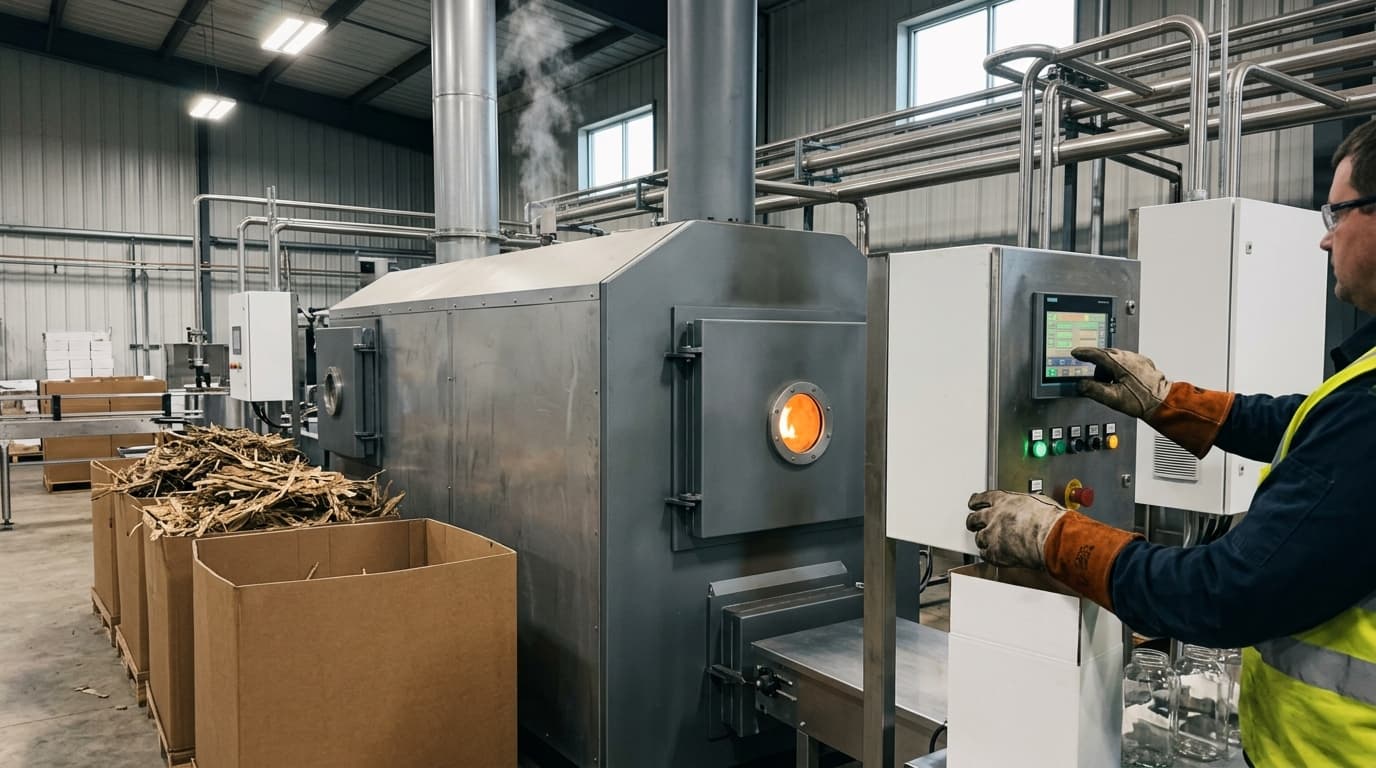
Complete incineration systems for general, agricultural, pharmaceutical, healthcare, and military waste — from under 50kg/h batch to 500kg/h continuous.
Engineered Agriculture Incineration Systems: Core Configurations
To process such highly variable feedstock, operators must deploy specialised agriculture incineration systems. These systems are classified based on their mechanical design, combustion pathways, and waste-handling capacities:
1. Fixed Hearth / Batch-Loaded Incinerators
Widely used for smaller on-farm operations and biosecurity applications, fixed hearth systems process waste in discrete batches. The primary chamber operates under starved-air (sub-stoichiometric) conditions to gasify the solid waste, minimising particulate entrainment in the flue gas. The volatile gases then pass into a secondary chamber where excess air is introduced to ensure complete thermal oxidation.
2. Rotary Kiln Incinerators
For high-throughput, continuous agricultural incineration, rotary kilns provide exceptional performance. The kiln consists of a slowly rotating, refractory-lined cylindrical drum mounted at a slight incline. As the drum rotates, the agricultural waste is continuously tumbled and mixed, ensuring uniform exposure to heat and oxygen. This configuration is highly effective for processing heterogeneous mixtures, such as crop residues blended with agricultural plastics or packaging material.
3. Fluidised Bed Combustors (FBC)
Fluidised bed systems are highly efficient for processing homogeneous agricultural residues with high moisture content, such as animal manure slurry, wet straw, or spent brewing grains. The waste is fed into a suspended bed of inert granular material (typically silica sand) fluidised by high-velocity combustion air. The intense thermal mass of the fluidised bed ensures rapid heat transfer, highly efficient combustion at lower operating temperatures (800°C to 900°C), and significantly lower nitrogen oxide emissions.
The operational sequence of a modern, closed-loop agriculture incineration system with energy recovery is mapped below:
Greenhouse Gas Emissions: A Double-Edged Sword
The impact of agricultural waste incineration on greenhouse gas emissions is highly complex. While it can offer distinct environmental advantages over traditional disposal methods like landfilling or open-field dumping, it also introduces specific atmospheric challenges. The primary greenhouse gases of concern are carbon dioxide (CO₂), methane (CH4), and nitrous oxide (N2O), alongside other secondary atmospheric pollutants.
Carbon Dioxide (CO₂) Emissions
Incineration, by its very nature, involves rapid oxidation that releases CO₂. When municipal solid waste (MSW) or diverse agricultural biomass is incinerated, it releases approximately 0.7 to 1.7 tonnes of CO₂ per tonne of waste, with 33% to 50% of this carbon often being of biogenic origin (derived from recently living organic matter). However, modern waste-to-energy incinerators can produce as much CO₂ per unit of generated electricity as coal-fired power plants if the combustion system is not highly optimised.
The stoichiometry of complete biogenic carbon combustion can be represented by the general chemical equation:
CnHmOp+(n+4m−2p)O2→nCO2+2mH2Owhere n, m, and p represent the stoichiometric ratios of carbon, hydrogen, and oxygen within the agricultural biomass feedstock.
The critical distinction for greenhouse gas accounting lies in the origin of the carbon. CO₂ released from burning biogenic agricultural residues (like straw or wood chips) is often classified as "carbon-neutral" under international IPCC reporting frameworks, as the plants absorbed an equivalent mass of CO₂ via photosynthesis during their growth cycle. However, this neutrality is debated. The immediate release of large quantities of CO₂ into the atmosphere creates a "carbon debt" that takes years or decades to repay through new plant growth. Furthermore, if the agricultural waste contains fossil-derived components—such as polyethylene mulching films, silage wraps, or pesticide containers—their combustion releases fossil CO₂, which directly accelerates net radiative forcing in the atmosphere.
Methane (CH4) and Nitrous Oxide (N2O) Emissions
While methane (CH4) is generally not generated during normal, highly efficient waste incineration, incomplete combustion due to poor air distribution, low chamber temperatures, or transient feeding conditions can lead to significant CH4 emissions. Methane is a potent greenhouse gas with a global warming potential (GWP) 28 times greater than CO₂ over a 100-year timescale, and up to 84 times greater over a 20-year timescale.
Nitrous oxide (N2O) is another powerful greenhouse gas released during the thermal destruction of nitrogen-rich agricultural residues, such as poultry litter, manure solids, and heavily fertilised crop residues. The fuel-bound nitrogen undergoes complex oxidation reactions during combustion:
Fuel Nitrogen→HCN/NH3O2N2O/NOxThe nitrogen-to-carbon (N/C) ratio of agricultural residues can lead to N2O emission factors up to 0.15 g N2O / kg dry matter during burning. Because N2O has a GWP approximately 273 times that of CO₂ over a 100-year horizon, even minor emissions of this gas can severely compromise the net greenhouse gas benefits of agricultural incineration. Modern systems must carefully control primary and secondary combustion zone temperatures; operating temperatures between 800°C and 900°C can promote N2O formation if local oxygen deficiencies exist, whereas higher combustion temperatures (above 950°C) decompose N2O, though they simultaneously increase the formation of thermal nitrogen oxides (NOₓ).
Other Pollutants
Beyond greenhouse gases, agricultural waste incineration can release a wide array of secondary atmospheric pollutants. If not mitigated by robust air pollution control systems, flue gases may contain particulate matter (PM2.5 and PM10), oxides of nitrogen (NOₓ), sulfur dioxide (S02), acid gases (such as hydrogen chloride, HCl), ammonia (NH3), and highly toxic, bioaccumulative organic compounds like polychlorinated dibenzo-p-dioxins and dibenzofurans (PCDD/Fs). These substances degrade regional air quality, impact human respiratory and cardiovascular health, and carry severe carcinogenic risks.
Waste-to-Energy Systems in Agriculture
The concept of "waste-to-energy" (WtE) is central to the viability of agricultural incineration. By capturing the thermal energy released during combustion, farms can displace fossil-fuel-based heating and electricity, creating a circular energy economy. For instance, high-pressure steam generated by agricultural waste boilers can drive steam turbines to produce electricity, while low-pressure exhaust steam can run district heating loops for greenhouses, livestock sheds, or crop drying systems.
However, the net climate-neutrality of agricultural WtE depends heavily on system efficiency. Because agricultural biomass generally has a lower calorific value and higher moisture content than fossil fuels, the thermal conversion efficiency of small-scale agriculture incineration systems can be lower than that of large municipal plants. To achieve a net reduction in greenhouse gases, the energy transformation efficiency (η) must be high enough to offset the direct emissions generated during combustion by displacing higher-carbon grid electricity or oil-fired heating boilers.
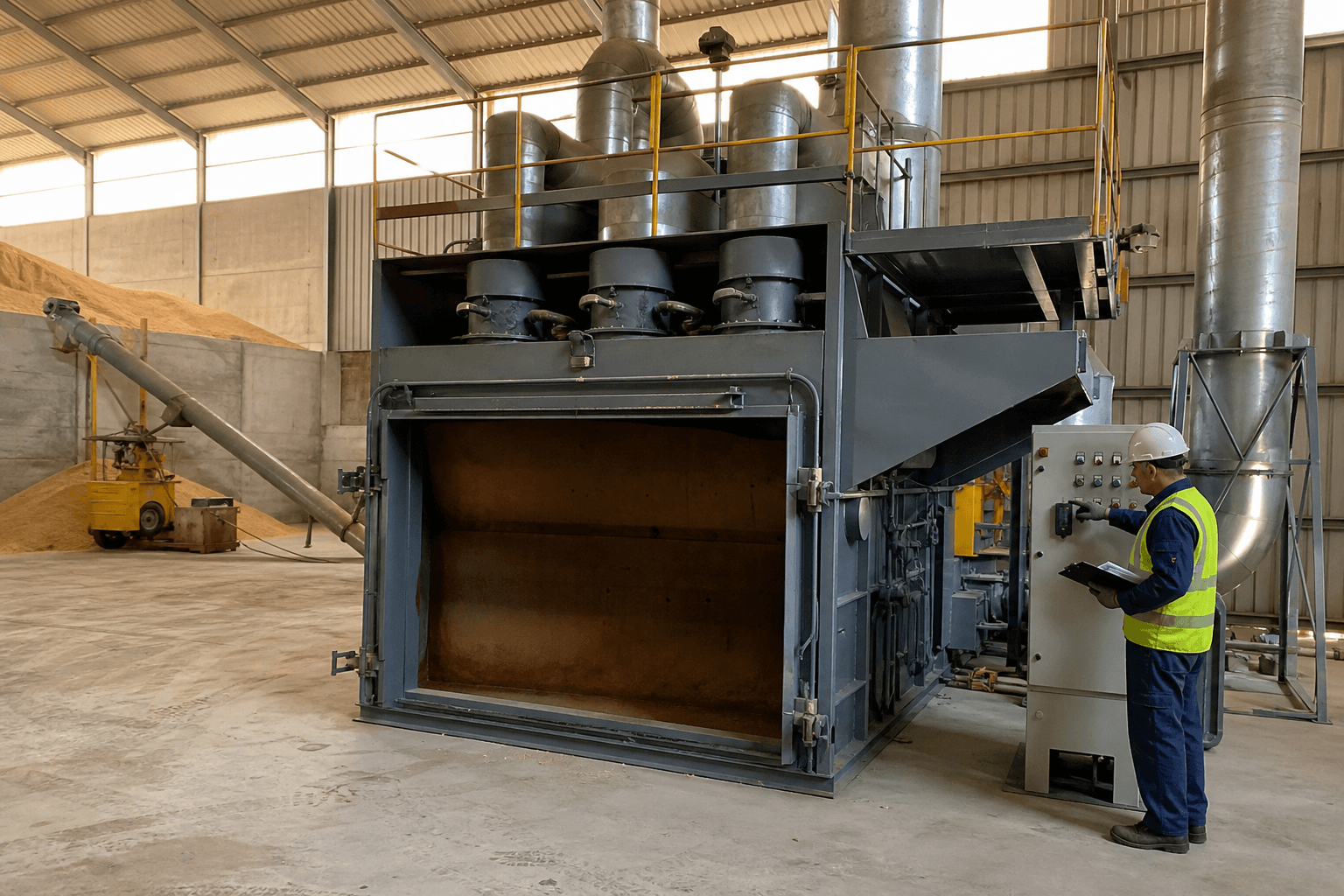
The LitBurn, AgriBurn, AmoBurn, and AniBurn ranges cover every waste disposal need with dual-chamber combustion and scrubbing options.
Controlled Combustion vs. Open Burning
A clear distinction must be made between controlled combustion within engineered agriculture incineration systems and uncontrolled open burning in fields.
- Controlled Combustion: Modern, commercial farm incinerators are engineered to ensure complete combustion and minimise emissions in compliance with strict national air quality standards (such as the UK's Environmental Permitting Regulations or the EU's Industrial Emissions Directive). These systems employ multi-stage combustion chambers, oxygen sensors, and continuous temperature monitoring to ensure volatile gases are held at high temperatures (typically above 850°C) for at least two seconds. Highly integrated flue gas cleaning systems—including cyclone separators, electrostatic precipitators, acid gas scrubbers, and active carbon injection—are used to capture particulates, acid gases, and heavy metals.
- Open Burning: Historically common but increasingly restricted or banned, open-field burning of crop residues releases massive amounts of uncombusted hydrocarbons, carbon monoxide (CO), black carbon (a potent short-lived climate pollutant), and greenhouse gases directly into the lower atmosphere. Because open fires burn at low, unstable temperatures with highly variable oxygen distribution, they suffer from extremely poor combustion efficiency, leading to significant emissions of CH4 and volatile organic compounds. Furthermore, open burning destroys precious organic matter that would otherwise return nutrients and stable carbon to the agricultural soil.
Alternatives and Mitigation Strategies
To balance waste management requirements with decarbonisation goals, agricultural operators are evaluating alternative waste processing pathways and advanced emission control technologies.
Alternative Waste Management
- Composting: This aerobic decomposition process transforms organic farm residues into stable organic matter. Composting preserves soil nutrients, improves soil moisture retention, and avoids the anaerobic conditions that generate methane in landfills, though it must be managed carefully to limit ammonia and fugitive nitrous oxide emissions.
- Anaerobic Digestion (AD): For high-moisture agricultural wastes such as cattle slurry, pig manure, and food processing residues, anaerobic digestion is highly effective. AD utilises anaerobic microorganisms to break down organic matter in a sealed vessel, producing biogas (composed primarily of CH4 and CO₂). The biogas can be upgraded to biomethane for injection into the natural gas grid or burned in a combined heat and power (CHP) unit, while the leftover digestate provides an exceptional, nutrient-rich biofertiliser that displaces synthetic nitrogen fertilisers.
- Biofuel Production and Pyrolysis: Pyrolysis involves the thermal degradation of agricultural biomass in the complete absence of oxygen. Rather than burning the feedstock to ash, pyrolysis yields bio-oil, syngas, and biochar—a highly stable, porous form of carbon. When applied to agricultural soils, biochar acts as a carbon sink, sequestering biogenic carbon in the terrestrial system for hundreds of years while improving soil structure and nutrient retention.
Emission Reduction Technologies in Incineration
Where agricultural incineration is required for biosecurity or waste volume reduction, modern plants employ advanced technologies to mitigate their environmental footprint:
- Advanced Flue Gas Cleaning Systems: Modern installations use dry or wet scrubbers to neutralise acid gases, selective non-catalytic reduction (SNCR) or selective catalytic reduction (SCR) to convert NOₓ into harmless nitrogen gas, and baghouse fabric filters to capture ultra-fine particulate matter.
- Continuous Emission Monitoring Systems (CEMS): Highly sensitive, automated analysis systems continuously measure stack emissions of CO, CO₂, NOₓ, SO₂, and total organic carbon. This real-time data allows system controllers to instantly adjust combustion air feeds and fuel auxiliary burners to maintain optimal combustion conditions.
- Optimised Combustion Control and AI Modelling: Computational fluid dynamics (CFD) and automated control models are used to optimise fuel-to-air ratios and secondary air injection velocities inside agriculture incineration systems, ensuring complete combustion under changing feedstock moisture levels and minimising the formation of N2O and CO.
Conclusion
Agricultural waste incineration presents a complex picture regarding its impact on greenhouse gas emissions. While modern, controlled incineration facilities offer major benefits in waste volume reduction, biosecurity, pathogen destruction, and renewable energy generation, they still release biogenic and, in some cases, fossil-derived carbon dioxide. If not managed with precise temperature and oxygen controls, they can also emit potent non-CO₂ greenhouse gases like N2O and CH4. Uncontrolled open burning, by contrast, is highly damaging, releasing a wide array of pollutants, particulates, and GHGs directly into the atmosphere without any energy recovery.
The future of sustainable agricultural waste management lies in a multi-faceted approach. High-moisture organic wastes are ideal for anaerobic digestion, crop residues can be prioritised for composting, biochar production, or conservation tillage, and plastics should be channelled into specialised recycling loops. Where agricultural incineration is necessary, continuous investment in advanced agriculture incineration systems, high-efficiency heat recovery, and state-of-the-art flue gas treatment technologies will remain essential to minimise the sector's carbon footprint and support the transition to net-zero agricultural operations.
