SECR Carbon Reporting Compliance UK: The Two-Threshold Test
The UK rules cover large unquoted companies meeting two of three size thresholds.
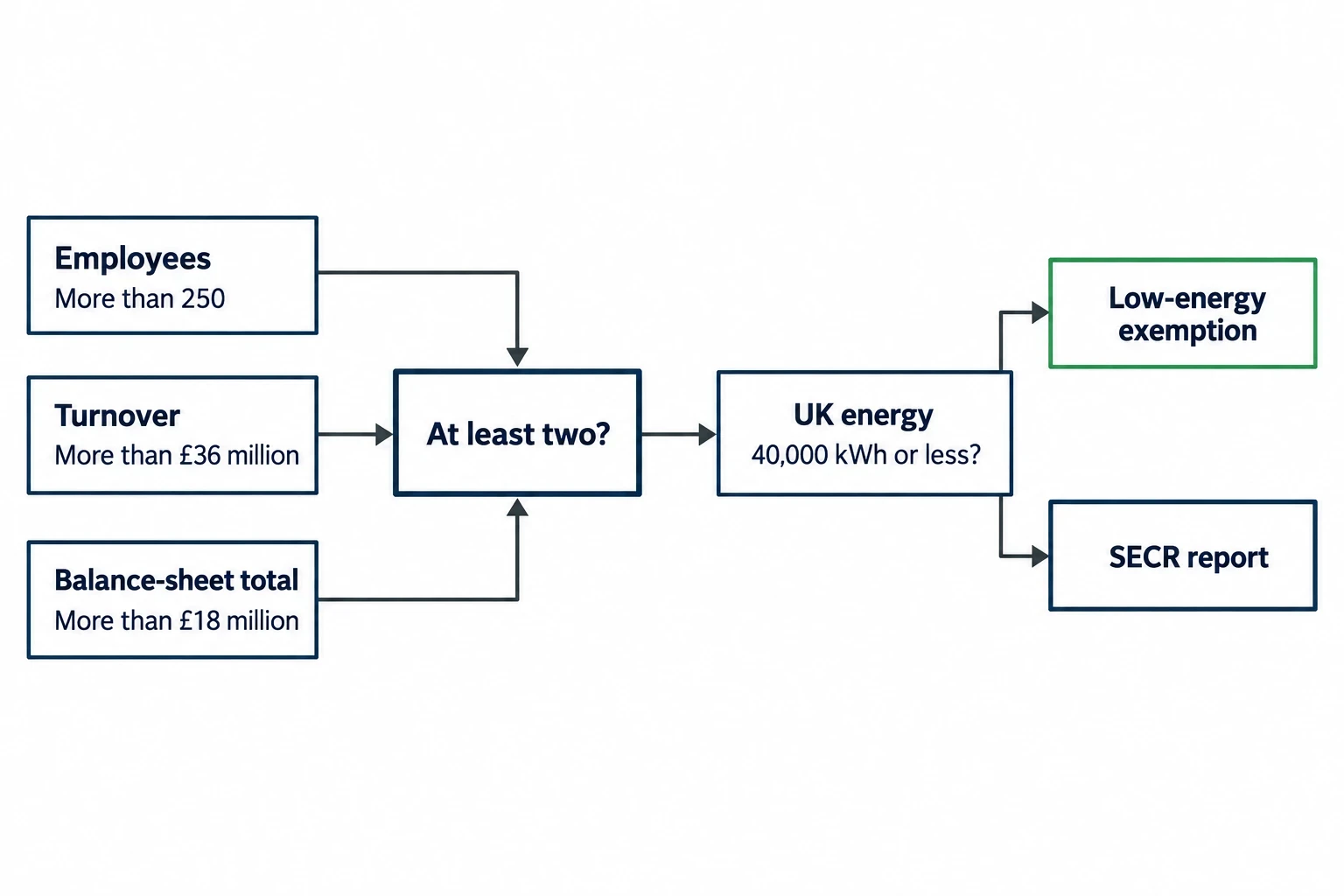
A UK manufacturer with £42 million turnover, 260 employees and an £11 million balance-sheet total meets two SECR size thresholds, so it falls within the large unquoted-company test. If its UK energy consumption exceeds 40,000 kWh during the reporting period, it must include prescribed energy and carbon information in its annual directors’ report.
For SECR carbon reporting compliance UK, the test has two stages. First, establish whether the UK-incorporated unquoted company or LLP meets the statutory size criteria. Second, determine whether it qualifies for the low-energy exemption.
The framework sits within The Companies (Directors’ Report) and Limited Liability Partnerships (Energy and Carbon Report) Regulations 2018, SI 2018/1155. It applies for financial years beginning on or after 1 April 2019. For industrial businesses, the calculation is usually straightforward. The sustained work lies in defining reporting boundaries, collecting complete UK energy data, applying suitable conversion factors and retaining evidence for each annual-report figure.
The two-threshold test for SECR carbon reporting compliance UK
SECR applies to UK-incorporated quoted companies. Large unquoted UK companies and LLPs also come into scope, subject to the low-energy exemption.
An unquoted company or LLP meets the size test where it exceeds at least two of the three statutory thresholds.
| Statutory criterion | Threshold |
|---|---|
| Employees | More than 250 |
| Turnover | More than £36 million |
| Balance-sheet total | More than £18 million |
The wording matters. A company with 180 employees, £42 million turnover and an £11 million balance-sheet total exceeds only the turnover threshold. On those facts, it does not meet the two-out-of-three size test. A manufacturer with 260 employees and £42 million turnover does meet it, even where its balance-sheet total remains below £18 million.
Finance teams should retain the accounts and HR workings behind the conclusion. The employee figure is the statutory average number of people employed under contracts of service during the financial year, calculated from monthly totals. It should not be replaced with a year-end headcount or a broader contractor population.
The 40,000 kWh low-energy exemption
Passing the size test does not automatically create the full reporting obligation. A qualifying organisation that consumes 40,000 kWh or less of UK energy during the reporting period can claim the low-energy exemption.
The energy assessment must include, as a minimum, UK energy from:
- Gas consumption
- Purchased electricity
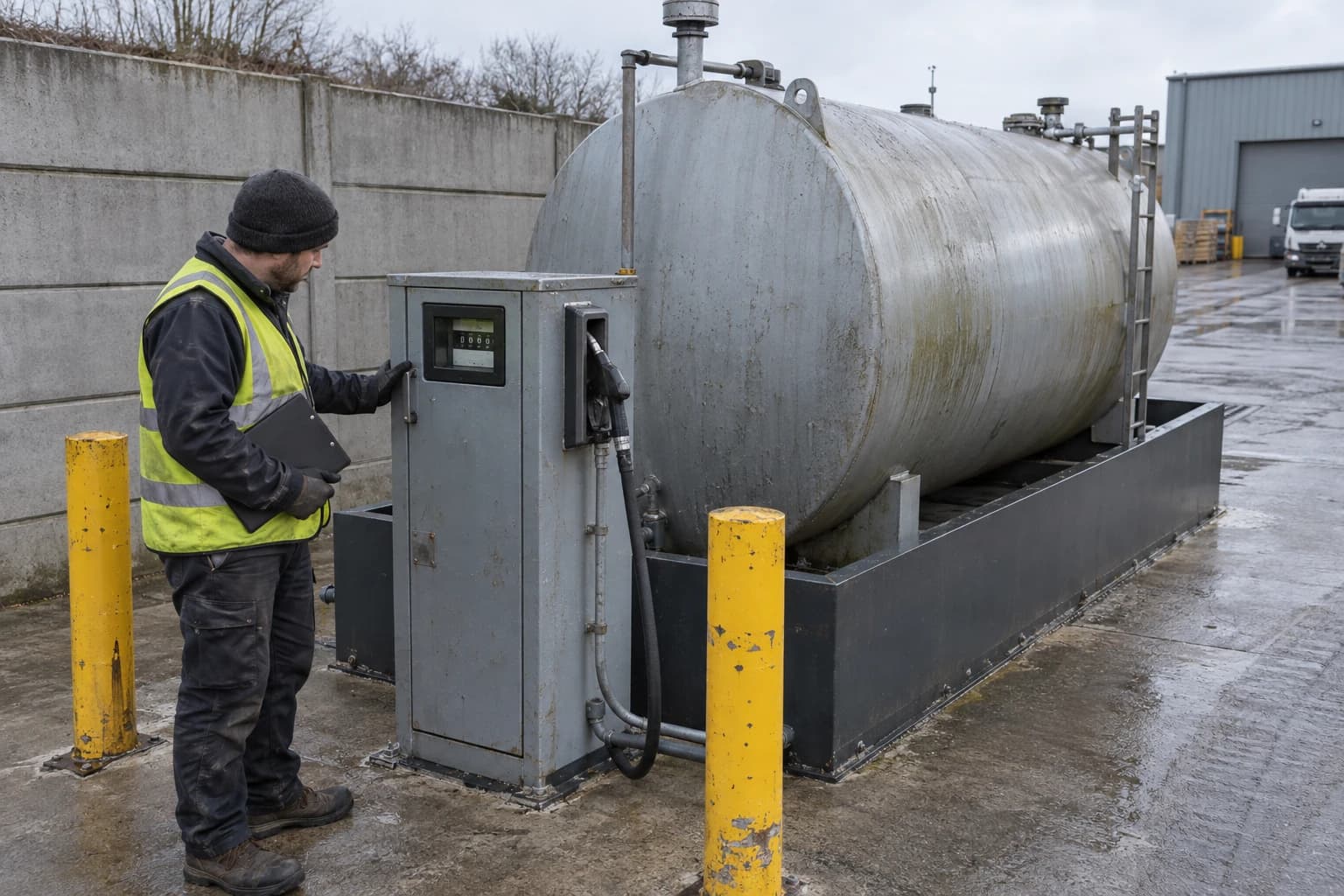
- Transport fuel for which the organisation is responsible
The directors’ report or LLP energy and carbon report should state that the detailed information is omitted because the organisation consumed 40,000 kWh or less of energy in the UK.
For most industrial manufacturers, 40,000 kWh is quickly exceeded. A continuous electrical load of 5 kW consumes 43,800 kWh over a full year before boilers, process heat, compressors, chilled-water systems or transport fuel are included. The exemption should be tested against complete data, not presumed from a partial electricity bill.
Assess the accounting history as well as the current year
The statutory exemptions account for changes in company size between accounting periods. This can affect a business that has recently grown, contracted, acquired a site or disposed of a division.
Finance and legal teams should assess the current and preceding financial years together, particularly where the company sits close to the thresholds. A single turnover figure or current headcount may not provide the complete legal answer.
Omni Vision delivers turnkey utility metering, CO2 tracking, and AI-powered production KPI intelligence — giving you real-time dashboards and actionable insights across your entire facility.
Group reporting requires a defined reporting boundary
Group structures create a frequent SECR reporting issue. Energy data often sits with site engineering or utilities teams, while the legal reporting entity may sit in a holding company or shared-services function.
A parent company preparing group accounts must assess the relevant group position using aggregate figures. The legislation includes group-specific net and gross approaches to turnover and balance-sheet total. A parent may prepare a consolidated disclosure for undertakings within the consolidation.
A subsidiary may be exempt from a standalone disclosure where it is included in a compliant parent group report and the relevant statutory conditions are met. This should be confirmed early in the reporting cycle. A subsidiary energy manager should know whether site data supports a local report, a UK group report or both.
Map energy responsibility to the reporting entity
SECR concerns energy for which the organisation is responsible. The party named on an energy invoice provides useful evidence, but invoice ownership alone does not settle every boundary question.
Industrial reporting teams should map each source against the legal entity and operational responsibility:
| Source | Boundary question |
|---|---|
| Grid electricity | Which entity controls and pays for the consumed electricity? |
| Natural gas | Does the meter serve the reporting entity, a shared estate or a landlord-controlled plant room? |
| Fuel oil or LPG | Which entity purchases the fuel and operates the consuming equipment? |
| Fleet fuel | Which entity buys fuel for business transport? |
| Reimbursed mileage | Does the organisation fund the fuel through mileage or expense arrangements? |
A leased warehouse, contract-manufacturing site or shared industrial estate may need specific review. Document the reporting boundary before emissions calculations begin, then apply it consistently in comparative reporting.
What a compliant SECR disclosure must contain
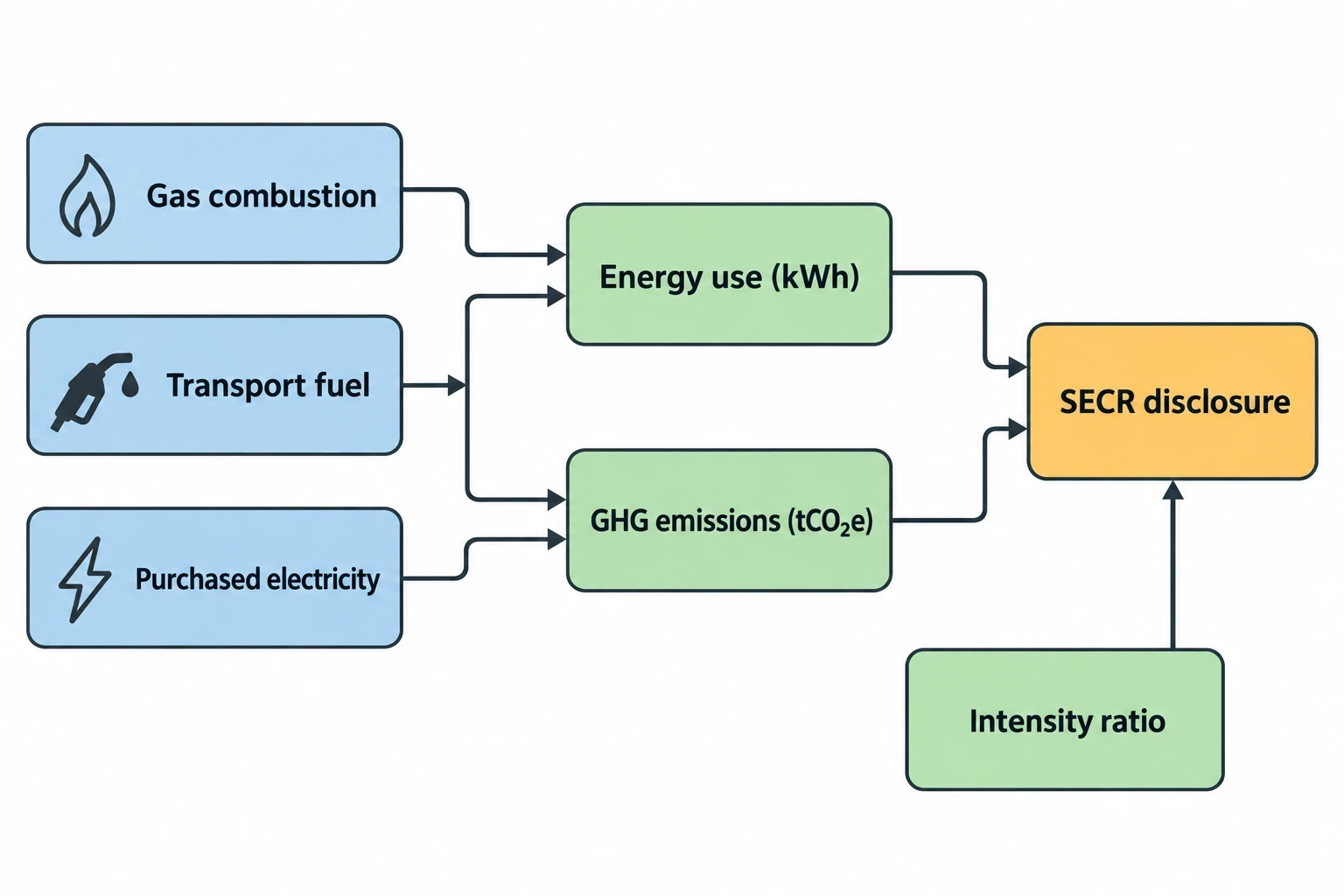
Large unquoted companies and LLPs above the low-energy threshold need more than a single carbon figure. The required disclosure is concise, but each part must be traceable to activity data and working papers.
UK energy use and greenhouse gas emissions
The report must state annual UK energy consumption in kWh and associated greenhouse gas emissions in tonnes of CO₂e.
For unquoted companies and LLPs, the statutory minimum includes:
- Emissions from gas combustion
- Emissions from fuel used for transport where the organisation is responsible
- Emissions from purchased electricity, including electricity used for transport
- The associated aggregate energy figure in kWh
In manufacturing, stationary gas combustion often covers boilers, ovens, furnaces, thermal-oil heaters and space heating. These emissions typically sit in Scope 1. Purchased grid electricity is Scope 2. Transport activity can include owned fleet fuel and business-travel fuel where the reporting organisation purchases it.
A complete Scope 3 inventory is not a minimum SECR requirement. Transport fuel within the statutory disclosure cannot be excluded solely because an activity may be treated as Scope 3 under the Greenhouse Gas Protocol.
An intensity ratio that explains operations
SECR requires at least one intensity ratio. It must express annual emissions against a quantifiable factor associated with the company’s activities.
Manufacturers commonly use:
- Tonnes CO₂e per tonne of product
- kWh per tonne of product
- Tonnes CO₂e per batch
- Tonnes CO₂e per £ million turnover
- Tonnes CO₂e per full-time equivalent employee
A production-linked measure usually gives directors and plant managers a clearer picture than turnover alone. Revenue can shift with commodity pricing, acquisition activity and product mix without a corresponding change in plant energy demand.
The chosen ratio should remain stable between years where possible. A business changing from tonnes of product to emissions per batch should explain the reason, the operational change and the effect on comparability.
Methodology, energy-efficiency measures and comparatives
The report must explain the methodology used to calculate energy consumption and emissions. It must also describe principal energy-efficiency actions taken during the reporting year.
The methodology should identify the reporting boundary, source data, conversion-factor publication, treatment of estimates and emissions classification. A clear methodology statement gives finance, auditors and directors a route back to supporting evidence.
Except in the first reporting year, prior-year comparative figures are required. The comparison should cover disclosed energy use, emissions and intensity information. Material changes need a short explanation, such as an acquired site, changed tenancy, new production line, fuel switch, closed warehouse or revised reporting boundary.
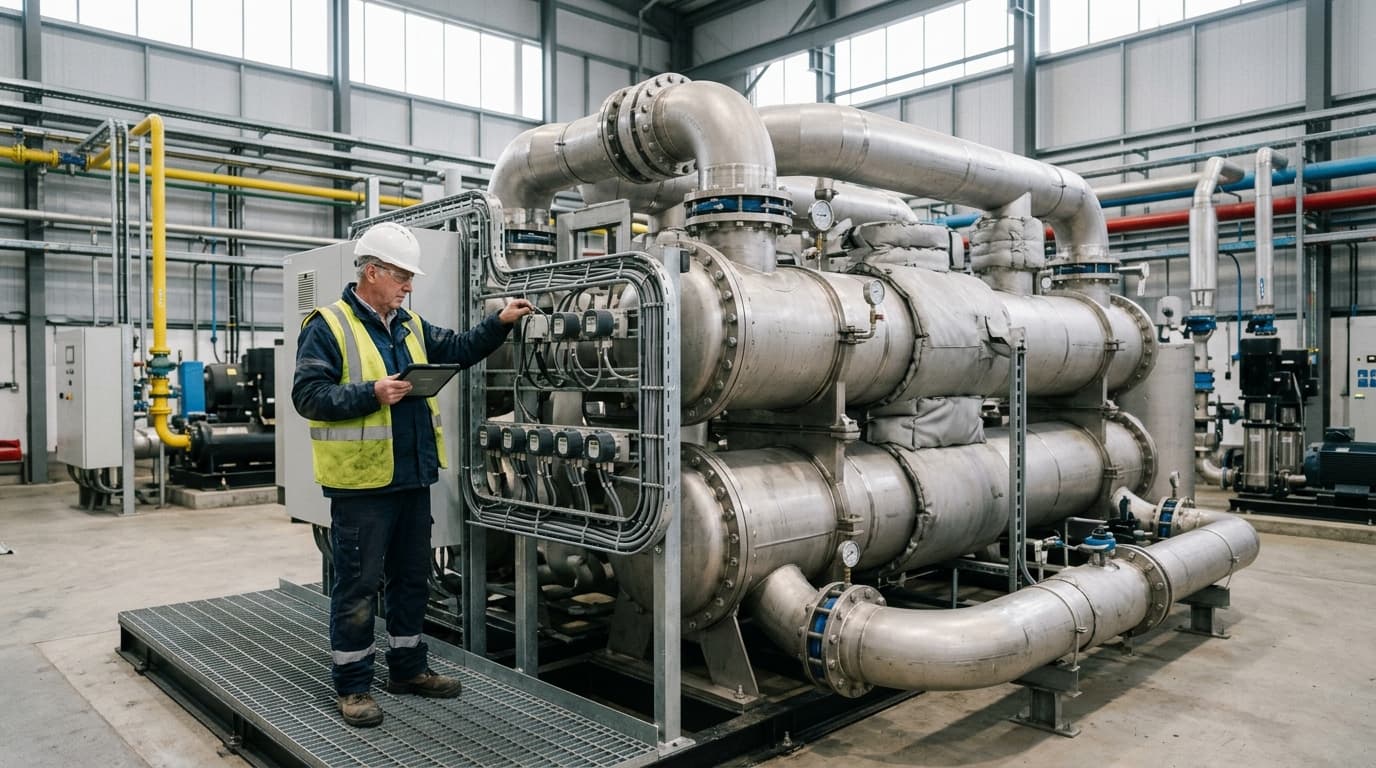
Track energy consumption, emissions, and process parameters with seamless PLC/SCADA integration via Modbus, OPC-UA, and MQTT protocols.
Calculating Scope 1 and Scope 2 emissions from activity data
SECR calculations start with activity data. Gas invoices expressed in kWh, half-hourly electricity records and fuel-card reports in litres are activity data. Conversion factors translate those inputs into tonnes of CO₂e.
The Department for Energy Security and Net Zero published the Greenhouse gas reporting: conversion factors 2026 on 11 June 2026. It updated the automatic-processing flat file on 31 July 2026 after correcting certain unavailable values shown as zero. The affected values concerned well-to-tank factors for certain hybrid, CNG and LPG cars, and hotel stays in certain countries. The June 2026 full set was unaffected.
Record the selected factor set
DESNZ publishes company reporting factors annually. Reporting teams should retain a calculation record that identifies:
- The publication and file version used.
- The financial year covered.
- Each activity-data source and unit.
- The selected factor category.
- Any estimate, assumption or data gap.
- The review and approval record.
The 2026 conversion factors support separate Scope 1, Scope 2 and Scope 3 calculations using activity data such as fuel volume, purchased electricity and distance travelled. Separate reporting avoids an unlabelled carbon total that cannot be traced back to combustion, purchased power or transport.
Keep energy and carbon calculations aligned
Energy consumption and emissions are related, but they are not interchangeable. The energy-use disclosure needs kWh, while the emissions disclosure needs tonnes of CO₂e. Fuel data supplied in litres or kilograms may require conversion into energy units before aggregation.
Teams should also avoid removing purchased electricity consumption from the energy total because of a renewable tariff. Government environmental reporting guidance treats energy consumption on a gross basis. Contractual renewable claims, supplier certificates and market-based disclosures may be relevant in wider sustainability reporting, but the SECR energy figure still requires transparent treatment of underlying consumption.
Building audit-ready SECR evidence on industrial sites
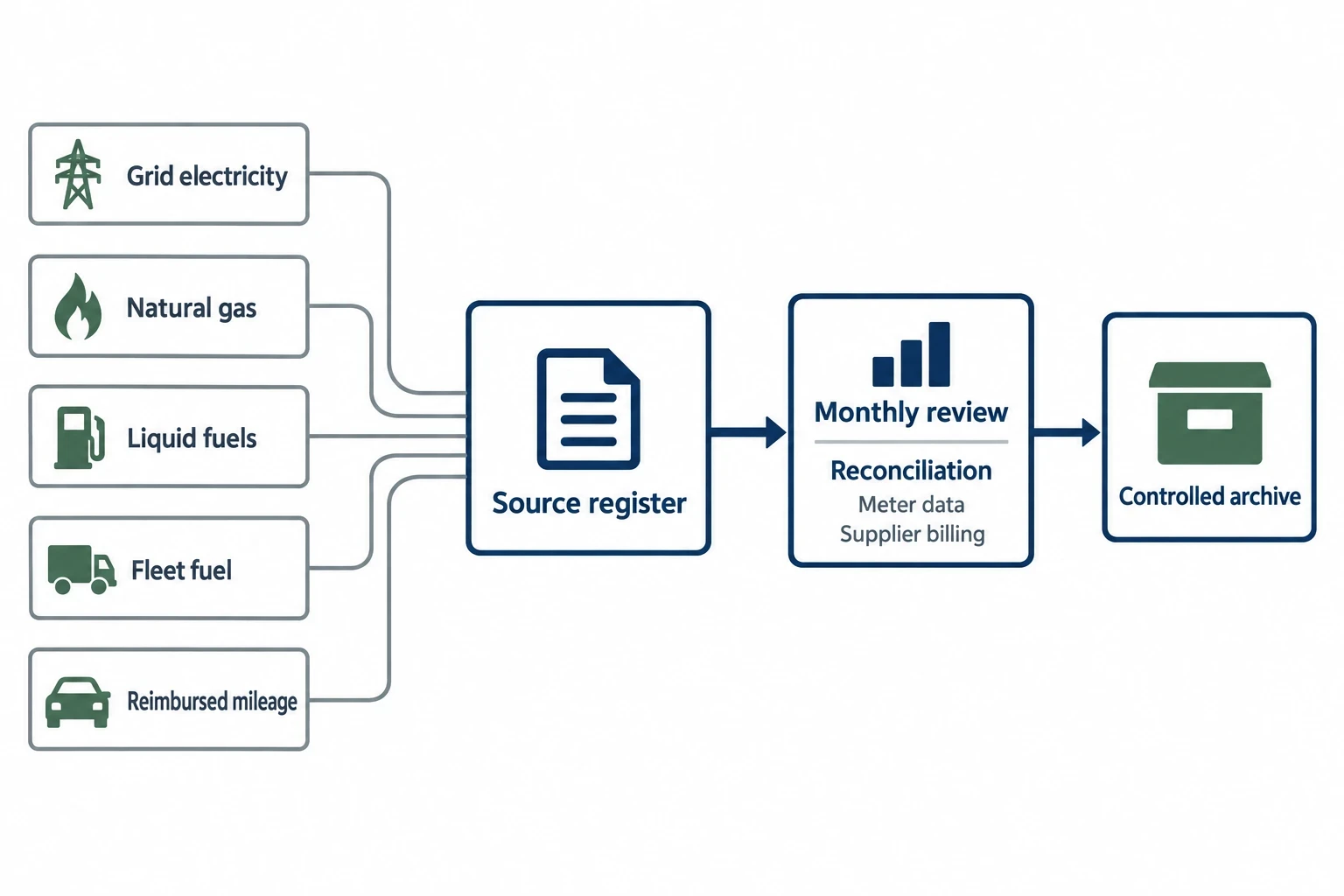
An annual spreadsheet assembled close to the filing deadline creates avoidable gaps. A monthly evidence process gives finance teams a consistent data trail and gives engineers earlier visibility of missing meters, unusual loads and reporting-boundary changes.
Establish a source register
A source register should identify each UK site, energy stream, evidence source, data owner, unit, collection frequency and archive location.
| Energy or transport source | Primary evidence | Useful validation |
|---|---|---|
| Grid electricity | Half-hourly data, supplier bills, meter reads | Reconcile meter totals to invoices |
| Natural gas | Supplier bills, AMR data, meter reads | Check billing periods and kWh basis |
| Liquid fuels | Delivery notes, tank records, invoices | Reconcile litres to stock movements |
| Fleet fuel | Fuel-card records and fleet reports | Check vehicles and mileage |
| Reimbursed mileage | Expense claims and mileage records | Check distance and vehicle category |
Metered data gives plant teams the resolution to identify gaps, abnormal demand and operational changes. Supplier invoices remain important evidence, particularly for reconciliation and periods where interval data is unavailable.
Government guidance recognises that some data may not be reasonably practical to obtain. In those cases, the report should identify the omission and explain it. Estimates based on comparable periods, pro-rata extrapolation or similar sites need documented assumptions, calculation workings and a plan to improve the next reporting cycle.
Perform a monthly reporting close
A monthly close reduces the risk of discovering missing data after the accounts timetable has begun. The review should check that:
- Reporting dates match the financial year.
- Added, closed and transferred sites are recorded.
- Energy units are normalised before aggregation.
- Meter data and supplier billing reconcile within an explained tolerance.
- Transport data distinguishes fleet fuel from mileage claims.
- Conversion factors match the supplied activity-data unit.
- Current and comparative reporting boundaries remain consistent.
The July 2026 flat-file correction shows why calculation systems need change control. Save the original activity-data extraction, factor file, calculation output, reviewer comments and final sign-off. That evidence makes a later board or audit query a controlled retrieval task.
Link the disclosure to actual efficiency measures
The efficiency narrative should describe actions taken in the reporting year. Industrial examples include boiler-control upgrades, compressed-air leak repair, variable-speed-drive installation, steam-trap maintenance, refrigeration optimisation and load management.
Each reported measure should have a project record containing the site, implementation date, accountable owner and available energy outcome. A short account of real work is stronger than a generic sustainability statement.
For industrial organisations, Omni Vision for Energy Consumption can monitor and consolidate granular utility data across electricity, gas, steam, compressed air and other monitored streams. The information can support source reconciliation, production-linked intensity ratios and evidence retention. Directors retain responsibility for the annual report, while a maintained data trail makes the disclosure easier to review.
SECR compliance remains the present requirement
DESNZ published its SECR regulations evaluation in January 2026. The work drew on business surveys, interviews, Companies House accounts, energy-meter analysis and cost-benefit analysis. The subsequent Regulatory Policy Committee opinion recorded DESNZ’s recommendation to amend the framework.
No amendment has displaced the current duties under SI 2018/1155. Organisations should apply the existing thresholds and reporting requirements while monitoring official announcements.
The government’s Scope 3 call for evidence received 184 responses. It considered the costs, benefits and practicalities of Scope 3 reporting, including the SECR framework. Scope 3 remains largely voluntary under SECR, outside transport-related activity included within the statutory minimum disclosure.
This article reflects the independent analysis and editorial opinion of EnerTherm Engineering. Product names, trademarks, and brands mentioned belong to their respective owners. EnerTherm Engineering is not affiliated with, endorsed by, or a licensee of any third-party software or product mentioned unless explicitly stated.

Technical Manager — EnerTherm Engineering
John Naranjo is Technical Manager at EnerTherm Engineering, bringing specialist expertise in chemical and environmental engineering. He recently led the implementation of Omni Vision, EnerTherm's real-time energy and utility monitoring platform. He holds an MSc in Environmental Engineering from the University of Huelva and a BSc in Chemical Engineering, with memberships in both the Energy Institute and IChemE.
