
Shell and Tube Heat Exchangers: Critical Case Studies in Chemical Processing
Shell and tube heat exchangers (STHXs) are indispensable workhorses across the chemical processing industry (CPI), playing a pivotal role in regulating temperature, facilitating reactions, and optimising energy usage. Their robust design, adaptability to various operating conditions, and ability to handle corrosive or high-pressure fluids make them the most prevalent type of heat exchanger in industrial settings. Understanding their application through real-world case studies provides crucial insights into their design, operation, and maintenance challenges.
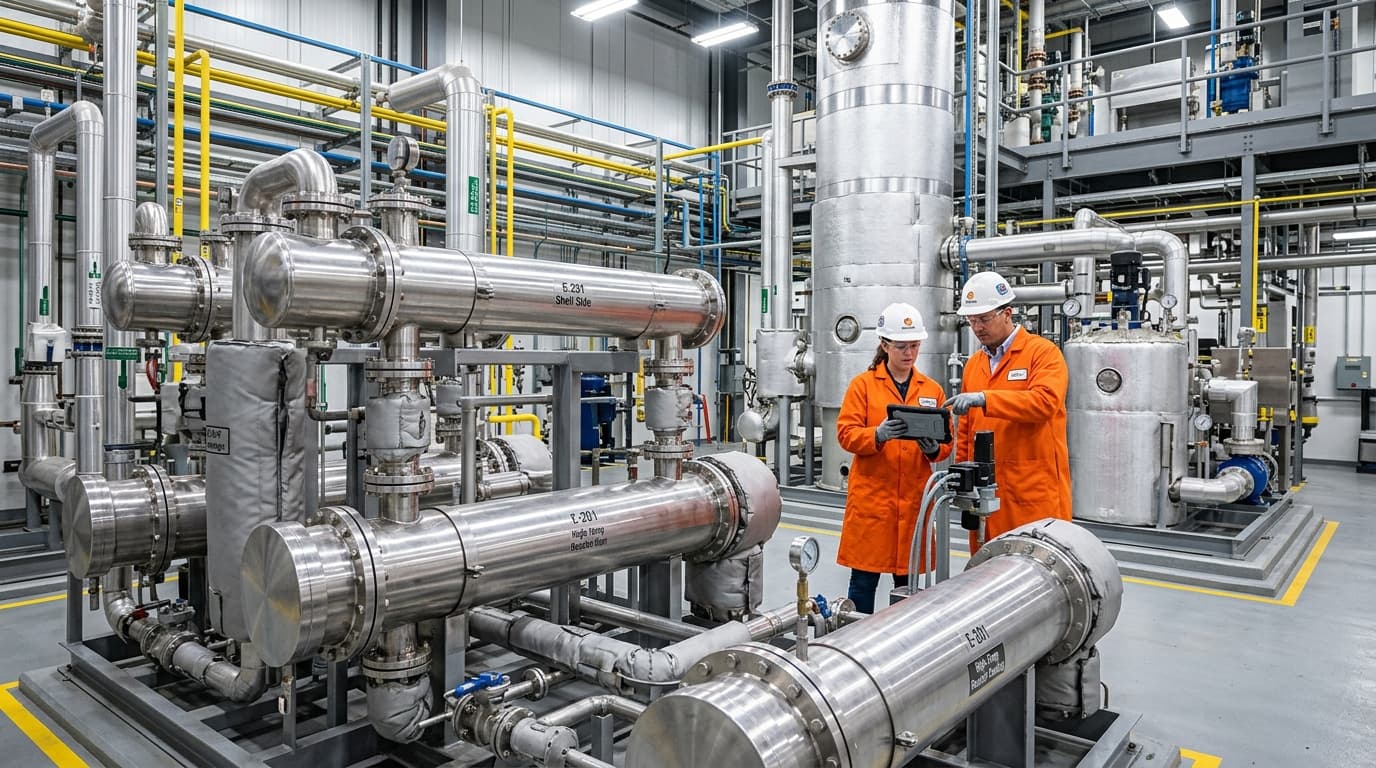
Recover waste heat and cut fuel costs with shell & tube or air-to-air exchangers engineered for continuous industrial duty.
The Versatility of Shell and Tube Heat Exchangers in Chemical Operations
STHXs are chosen for their nearly limitless customisation potential, enabling them to optimise diverse processes within chemical plants. They facilitate heat transfer between two fluids—one flowing through a bundle of tubes and the other through the surrounding shell—without direct mixing. This design allows for efficient thermal energy exchange, which is critical for a wide array of chemical processes.
Key applications include:
- Condensing Vapours: Transforming vapours into liquids, common in refrigeration systems and various chemical processes.
- Reboiling: Adding heat to the bottom of distillation columns to generate vapours for separation.
- Preheating Fluids: Increasing the temperature of fluids before they enter reactors or other process units, thereby improving energy efficiency.
- Cooling Hot Fluids: Reducing the temperature of process streams using a cooler medium.
- Reactor Temperature Control: Crucial for maintaining optimal conditions during exothermic or endothermic chemical reactions.
- Heat Recovery: Recycling waste heat from chemical reactions to preheat reactants, significantly improving overall energy efficiency.
In petroleum refineries, shell and tube heat exchangers are especially important in crude pre-heat trains, pumparound circuits, product coolers, steam condensers and reboilers. Their performance determines how much recovered process heat can displace fired-heater duty. Consequently, heat-transfer optimisation must be assessed alongside pressure drop, allowable exchanger approach temperature, fouling tendency, hydraulic limits and unit throughput; increasing heat-transfer area alone does not necessarily improve the overall industrial process.
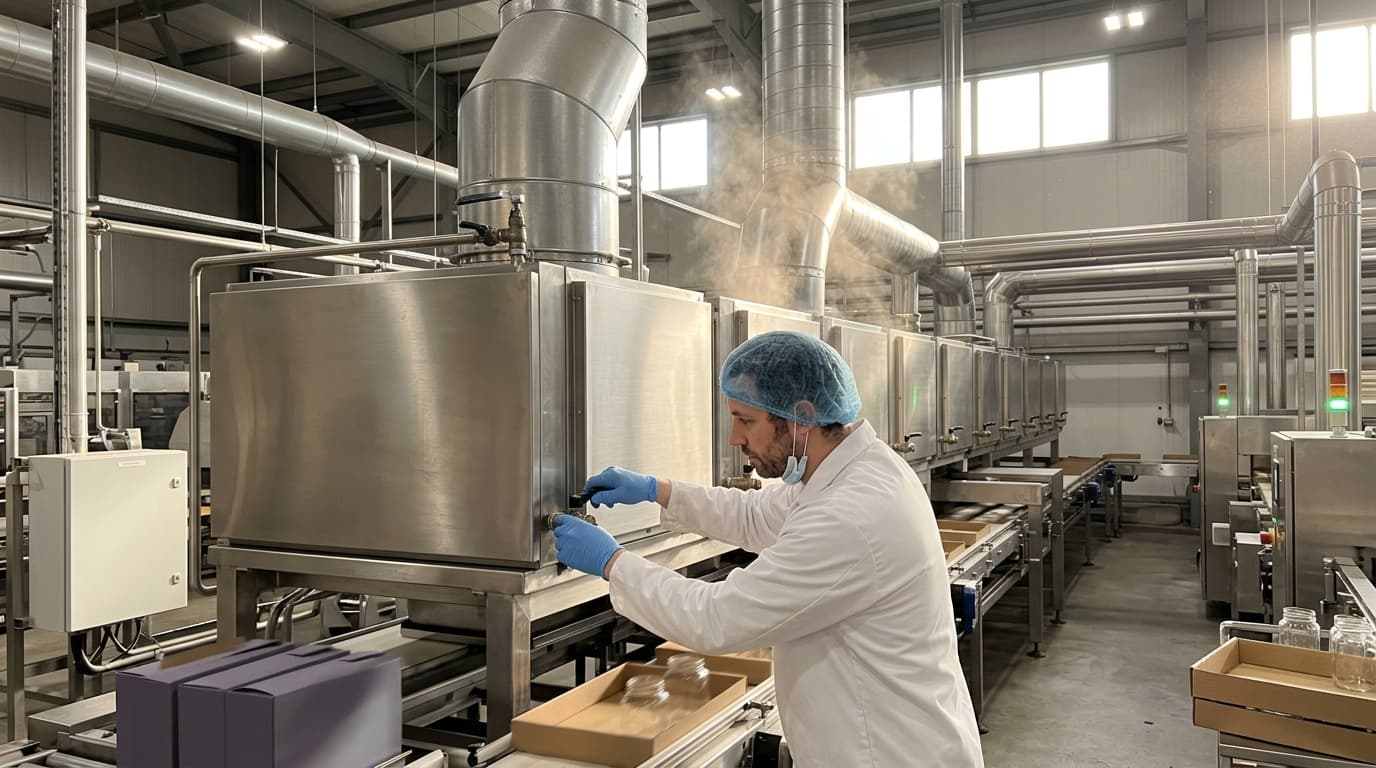
Our ThermStack and EcoStream heat exchanger ranges deliver measurable energy savings across chemical, food, pharma, and power generation processes.
Case Studies: Addressing Common Challenges
Despite their versatility, shell and tube heat exchangers face several operational challenges that can impact their efficiency and longevity. Key issues often include fouling, corrosion, and mechanical failures. Case studies frequently highlight innovative solutions or best practices to mitigate these problems.
Fouling Mitigation in Crude Oil Distillation Units
Fouling, the accumulation of undesirable deposits on heat transfer surfaces, is a pervasive and costly issue in heat exchangers, particularly in the pre-heat trains of crude oil distillation units in refineries. These deposits, which can include inorganic salts, polymers, sludge, or biological growth, significantly reduce heat transfer rates (sometimes by as much as 50%) and increase pressure drop, leading to decreased thermal performance and increased energy consumption.
Petroleum-refinery heat-transfer optimisation begins with reliable operating evidence: inlet and outlet temperatures, flow rates, stream properties, pressure drop, exchanger bypass condition and cleaning history. Comparing the measured duty and temperature approach with the design basis helps distinguish a true loss of heat-transfer performance from changes in crude slate, flow distribution or upstream process conditions. This distinction is essential before specifying a retrofit, because a modification that raises turbulence and the heat-transfer coefficient may also raise pumping demand or constrain throughput.
- Industrial Example: An industrial case study analysed severe fouling in a heat exchanger within a crude distillation unit. The study focused on using dynamic simulation combined with plant measurements to assess the impact of fouling and identify retrofit opportunities. By implementing a proposed retrofit design, which aimed at better utilisation of the available heat transfer area, improved heat transfer coefficients, and shell-side fouling mitigation, the heat recovery in the exchanger was projected to increase by 2.5–4.5 MW. This led to estimated fuel cost savings of $1.2 million after two years, demonstrating the economic benefits of proactive fouling management. The study also emphasised that while some designs reduce fouling, they can have undesired side effects such as increased pressure drop or decreased throughput, necessitating a holistic approach to optimisation.
Heat Transfer Optimisation in Petroleum Refineries
A 1994 book case study on shell-and-tube heat exchangers in petroleum refineries remains useful because it frames exchanger improvement as an industrial-process problem rather than an isolated equipment calculation. In a refinery pre-heat train, recovered heat is valuable only when it reduces furnace fuel use without upsetting column operation, exceeding allowable pressure drop, accelerating fouling or making cleaning impractical. The relevant decision is therefore the best network and exchanger operating point, not simply the highest possible exchanger duty.
For practical optimisation, refinery teams should review the following together:
- Temperature driving force: Confirm whether the observed hot- and cold-end approaches still permit worthwhile heat recovery and identify exchanger bypassing or maldistribution.
- Overall thermal performance: Trend duty, utility consumption and inferred overall heat-transfer performance against comparable crude runs, rather than relying on a single test.
- Hydraulic performance: Check shell-side and tube-side pressure drop, pump margin and flow distribution before increasing velocity or adding inserts.
- Fouling and cleanability: Select tube geometry, velocities, materials and cleaning intervals that suit the crude, water and solids exposure expected in service.
- Economic outcome: Compare fuel reduction and any capacity benefit with pumping power, maintenance cost, downtime and the capital cost of a retrofit or additional surface.
This approach connects the historic case-study perspective with current refinery practice: measured plant data and process simulation establish the constraint, while exchanger design changes are evaluated for their effect on the complete heat-recovery system.
Combating Corrosion in Aggressive Chemical Environments
Corrosion is another critical challenge for STHXs, especially when handling aggressive, corrosive, or abrasive fluids common in the chemical industry. Material selection plays a vital role, with many STHXs fabricated from high-alloy materials to ensure compatibility with specific process requirements.
- Corrosion in a Water Basin Heat Exchanger: One case study investigated the corrosion failure of a stainless steel 316 straight-tube heat exchanger used to heat desalinated water during winter. The water contained a high chloride level (approximately 800 ppm), which, combined with the use of hydrochloric acid to adjust pH, led to pitting corrosion, particularly at high temperatures. Pitting corrosion is a localised form of attack that can occur when chloride ions break down the protective oxide film on stainless steel. The solution suggested was to control chloride levels and properly adjust the pH of the basin water to prevent further corrosion.
- Protecting Heat Exchanger Surfaces with Coatings: A project for a Baltic chemical company involved coating 27 shell and tube heat exchangers and 5 floating-head heat exchangers, with lengths up to 12 metres and diameters up to 1.75 metres, to protect them from corrosion and incrustation. The heat exchangers were exposed to cooling water of inconsistent quality at 60 °C on the tube side and high-pressure steam at approximately 200 °C on the shell side. Cold-cured epoxy linings, specifically SÄKAPHEN HR 60 Extra TG and SÄKATONIT K 80 LS, were applied to the tube sheets and tube ends. These coatings were chosen for their chemical resistance to various acidic and alkaline substances, inorganic salts, and water types, even under permanent immersion. The project resulted in excellent overall protection, optimal prevention of caking and fouling, and enhanced long-term plant efficiency and reliability. Another similar case involved coating 86 high-pressure pipes, each 15 metres long, for a large heat exchanger from a major multinational chemical manufacturer. These pipes were exposed to aggressive cooling water on the shell side and a corrosive solvent over 100 °C on the tube side.
Preventing Mechanical Failures and Optimising Design
Mechanical failures in shell and tube heat exchangers can stem from issues such as thermal expansion, metal erosion due to excessive fluid velocity, vibration, tube leakage or stress corrosion. Proper design and ongoing monitoring are crucial for preventing such failures. Designers must allow for differential expansion between shell and tube bundle, while operators should investigate unexpected pressure-drop changes, loss of duty, vibration indications and recurrent tube-side contamination before a small defect becomes a forced outage.
- Optimisation for Annual Operating Cost: A project focused on optimising a shell and tube heat exchanger to minimise its total annual operating cost. The optimisation involved a three-stage approach: thermal analysis using a mathematical model, structural optimisation of the nozzle considering loads using ANSYS, and computational fluid dynamics (CFD) analysis. This comprehensive approach, based on industry codes and standards, aimed to determine optimum dimensions for the heat exchanger given specific inlet and desired outlet conditions, considering factors such as heat-transfer area and pumping capacity.
- Cleaning for Efficiency Restoration: Water scale deposits on the shell side of a shell and tube heat exchanger at a tyre and rubber manufacturing plant led to significant heat-transfer issues. To address this, a biodegradable descaler was circulated through the heat exchanger for one hour. This cleaning process successfully removed all water scale deposits, restoring the heat exchanger's efficiency, and prompted the implementation of a preventative maintenance programme at the plant.
Conclusion
Shell and tube heat exchangers are fundamental to the chemical processing industry, enabling efficient temperature control and energy management across numerous applications from petroleum refining to pharmaceutical production. Case studies underscore their adaptability but also highlight persistent challenges such as fouling, corrosion and mechanical reliability. Effective strategies, including measured heat-transfer optimisation in refinery heat-recovery systems, advanced material selection, protective coatings, diligent maintenance practices such as chemical descaling, and sophisticated design optimisation using tools such as CFD, are critical for maximising the performance, safety and longevity of these essential components in complex chemical processes.
