Waste Heat Recovery Systems: The Role of Shell and Tube Heat Exchangers
Introduction
In an era where energy efficiency and sustainability are paramount, industries are increasingly focusing on industrial waste heat recovery solutions to reduce energy consumption, lower operating costs, and minimise their environmental footprint. Among the various technologies employed for waste heat recovery (WHR), selecting the correct waste heat recovery heat exchanger is critical to overall system performance.
Shell and tube heat exchangers stand out as a highly reliable, robust, and versatile technology. This article delves into the application of shell and tube heat exchangers in waste heat recovery systems, exploring their design, functionality, advantages, and pivotal role in promoting thermal efficiency across diverse industries.
Understanding Waste Heat and Its Recovery
Waste heat refers to the thermal energy generated during industrial processes that is released into the environment, often through exhaust gases, cooling water, or other process streams. This energy, if unrecovered, represents a significant loss of potential resources and contributes to thermal pollution.
Waste heat recovery involves capturing and reusing this thermal energy for useful purposes, such as preheating fluids, generating steam, or producing electricity. Implementing these waste heat recovery solutions transforms a secondary byproduct into a valuable source of primary energy.
Industrial Waste Heat Recovery Solutions by Temperature Range
To select the appropriate waste heat recovery heat exchanger, engineers categorise waste heat streams based on their temperature profiles. The table below outlines these ranges and their typical industrial sources:
| Temperature Range | Typical Sources | Preferred Heat Recovery Technologies |
|---|---|---|
| High Temperature (> 650 °C) | Solid oxide fuel cells, incinerators, glass melting furnaces, steel reheating furnaces | Waste heat boilers, ceramic recuperators, heavy-duty shell and tube exchangers |
| Medium Temperature (230 °C – 650 °C) | Steam boiler exhaust, gas turbine exhaust, internal combustion engines, catalytic crackers | Economisers, waste heat boilers, shell and tube recuperators |
| Low Temperature (< 230 °C) | Cooling water jacket systems, air compressor discharge, steam condensate, HVAC exhaust | Plate heat exchangers, run-around coils, organic Rankine cycles (ORC) |
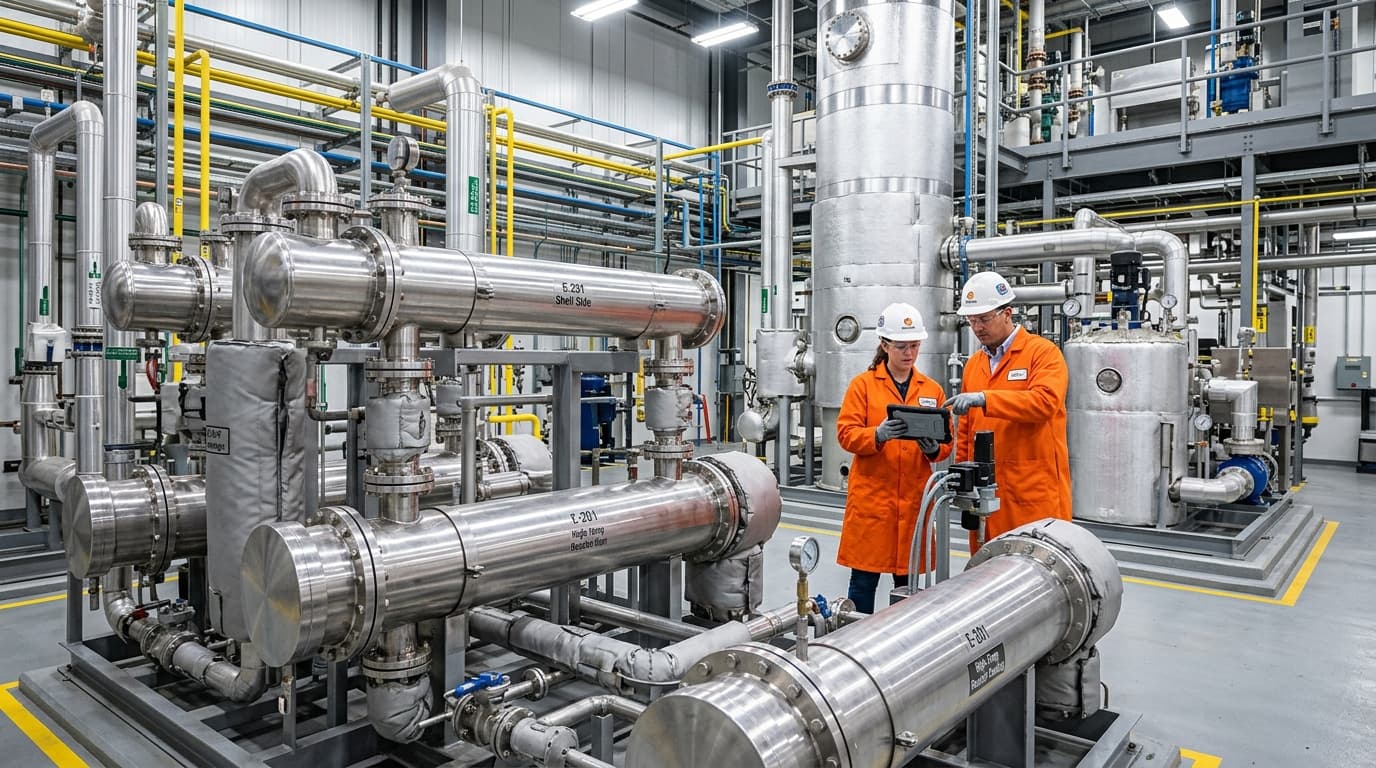
Recover waste heat and cut fuel costs with shell & tube or air-to-air exchangers engineered for continuous industrial duty.
Shell and Tube Heat Exchangers: An Overview
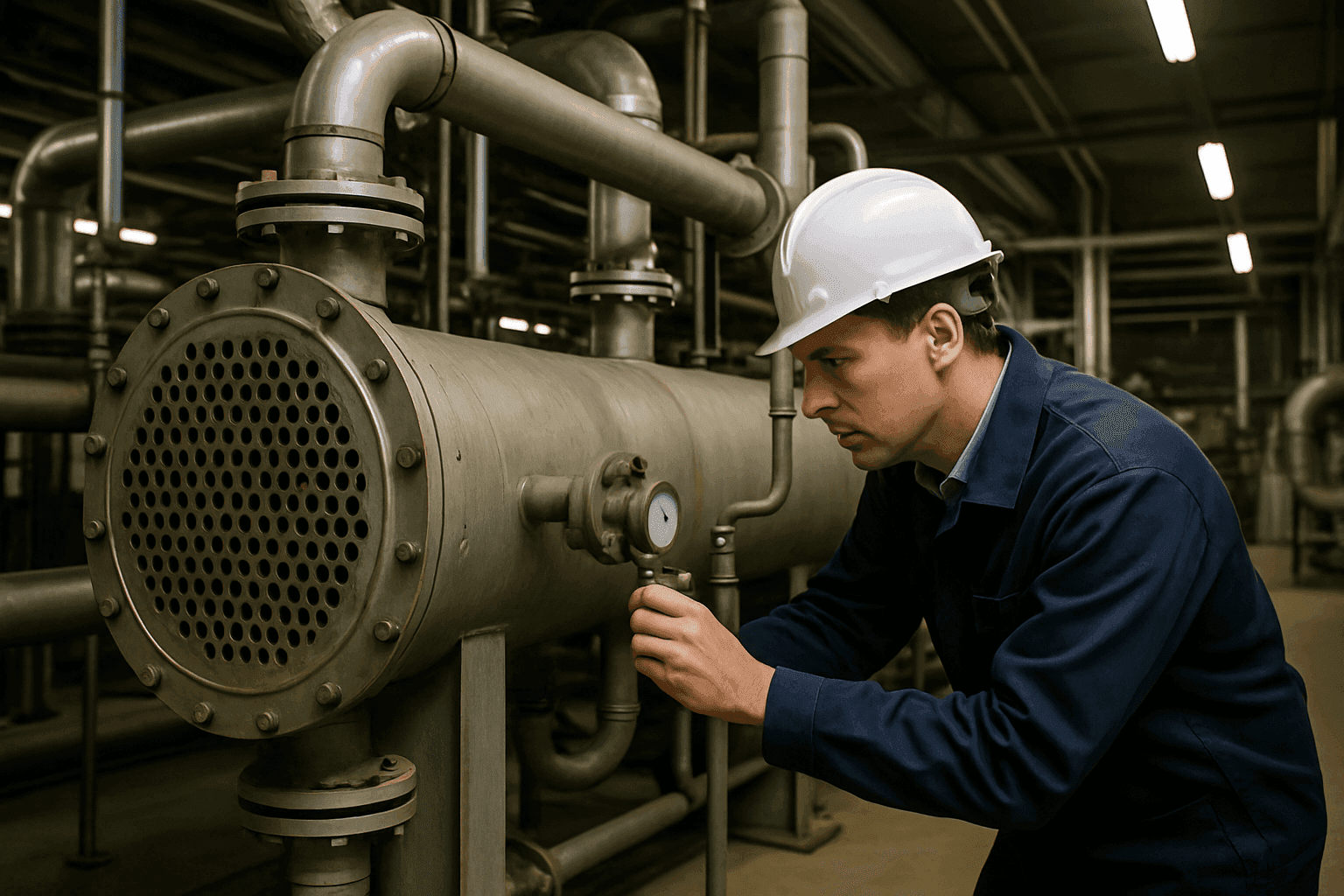
A shell and tube heat exchanger consists of a series of tubes enclosed within a cylindrical shell. One fluid flows through the tubes (the tube side), while another fluid flows around the tubes within the shell (the shell side). This design facilitates efficient heat transfer between the two fluids without direct contact, preventing cross-contamination.
Shell and tube heat exchangers are widely used in various process industries due to their robust construction, ability to handle high pressures and temperatures, and adaptability to different fluid types, viscous properties, and flow rates. When looking for a durable waste heat recovery heat exchanger, this classic configuration is often the preferred choice for harsh industrial environments.
Applications of Shell and Tube Heat Exchangers in Waste Heat Recovery
Shell and tube heat exchangers play a crucial role in waste heat recovery solutions across a multitude of industrial applications:
1. Exhaust Heat Recovery
Shell and tube heat exchangers are commonly used to recover heat from exhaust streams, such as flue gas from boilers, hot air from drying processes, or discharge from air compressors. The heat exchanger captures the thermal energy from the exhaust and transfers it to a secondary fluid, like water or a process stream. This heated fluid can then be used for various purposes, including preheating incoming process materials or generating steam for other applications.
2. Cogeneration and Combined Heat and Power (CHP) Systems
Cogeneration and CHP systems generate both electricity and useful thermal energy, often by capturing waste heat from power generation equipment, such as turbines or engines. Shell and tube heat exchangers are essential in these systems, efficiently transferring waste heat to a secondary fluid like water or steam. The thermal energy can then be used for space heating, process heating, or generating additional electricity through a steam turbine. CHP systems employing shell and tube heat exchangers can achieve remarkable energy efficiency improvements, often reaching overall system efficiencies of 80 per cent or higher.
3. Process Heating
Shell and tube heat exchangers can improve the efficiency of process heating applications by using waste heat from one stream to preheat another. This significantly reduces the overall energy required for the heating process, especially in applications where the process stream needs to be heated to a high temperature.
4. Waste Heat Boilers
Waste heat boilers, also known as heat recovery steam generators (HRSGs), capture high-temperature waste heat to produce steam. This steam can be used for process heating, power generation via steam turbines, or combined heat and power (CHP) systems.
5. HVAC Integration
Excess heat recovered by shell and tube heat exchangers can be utilised for climate control, domestic hot water production, and building heating applications, reducing the dependency on fossil-fuelled auxiliary boilers.
6. Air Compressor Systems
Shell and tube heat exchangers are widely used for air compressor waste heat recovery. During compression, up to 94 per cent of electrical energy is converted into heat. The hot air or gas from the air compressor discharge flows through the tubes, while a secondary fluid (such as water or glycol) flows through the shell side, absorbing the waste heat.
The recovered heat can be utilised for preheating the air intake to the air compressor, generating hot water or steam for building heating or industrial processes, or powering an organic Rankine cycle (ORC) system to generate electricity.
7. Diesel Engine Exhaust
Shell and tube heat exchangers can recover high-grade waste heat from diesel engine exhaust, utilising it for heating water or thermal oil. These units are commonly constructed using high-grade stainless steel or mild steel, with the tube side fluid carrying the hot exhaust gas and the shell side fluid carrying the tap water or cooling media.
Design Considerations for Shell and Tube Heat Exchangers in WHR Systems
Several thermodynamic and mechanical factors must be considered when designing shell and tube heat exchangers for waste heat recovery applications to ensure optimal performance, longevity, and reliability:
1. Fluid Properties and Thermal Calculations
The physical properties of the fluids involved—such as temperature, pressure, flow rate, viscosity, thermal conductivity, and corrosivity—significantly influence the design and material selection of the heat exchanger.
To size the waste heat recovery heat exchanger correctly, engineers determine the total heat transfer rate (Q˙) required using the basic heat balance equation:
Q˙=m˙cpΔTwhere:
- Q˙ is the heat transfer rate (kW)
- m˙ is the fluid mass flow rate (kg/s)
- cp is the specific heat capacity of the fluid (kJ/kg·K)
- ΔT is the temperature change of the fluid (K or °C)
The sizing is further governed by the overall heat transfer coefficient (U) and the Logarithmic Mean Temperature Difference (ΔTlm):
Q˙=UAΔTlmwhere:
- U is the overall heat transfer coefficient (W/m²·K)
- A is the heat transfer area (m²)
- ΔTlm is the logarithmic mean temperature difference (K or °C), calculated as:
In this equation, ΔT1 represents the temperature difference between the two fluid streams at one end of the exchanger, and ΔT2 represents the temperature difference at the other end.
2. Heat Transfer Requirements
The amount of heat to be transferred and the desired inlet and outlet temperatures dictate the footprint of the required heat exchanger. Narrower temperature approaches and large heat transfer duties often necessitate high heat exchanger efficiency for a given heat transfer area.
3. Fouling Potential
Fouling, the accumulation of unwanted material (such as soot, ash, scale, or biological growth) on heat transfer surfaces, is a major concern in waste heat recovery systems, especially when dealing with polluted or particulate-heavy flue gas streams.
Fouling reduces heat transfer efficiency, increases back pressure, and requires regular cleaning and maintenance. Selecting suitable tube diameters, optimising fluid velocity, and incorporating self-cleaning or easily accessible configurations can mitigate this risk.
4. Material Selection
The materials used in the construction of shell and tube heat exchangers must be compatible with the fluids involved and able to withstand intense operating conditions. Common materials include carbon steel, stainless steel (e.g., 316L for corrosive gases), copper alloys, and high-nickel alloys. In low-temperature applications involving highly corrosive flue gases that condense into acids, polymer heat exchangers or specialised coatings are sometimes used.
5. Configuration and Flow Arrangement
Shell and tube heat exchangers can be configured in various ways, including single-pass, multi-pass, crossflow, and counterflow arrangements. Counterflow configurations generally provide the highest thermal efficiency, whilst multi-pass configurations are chosen to optimise pressure drops and velocity profiles within physical footprint limitations.
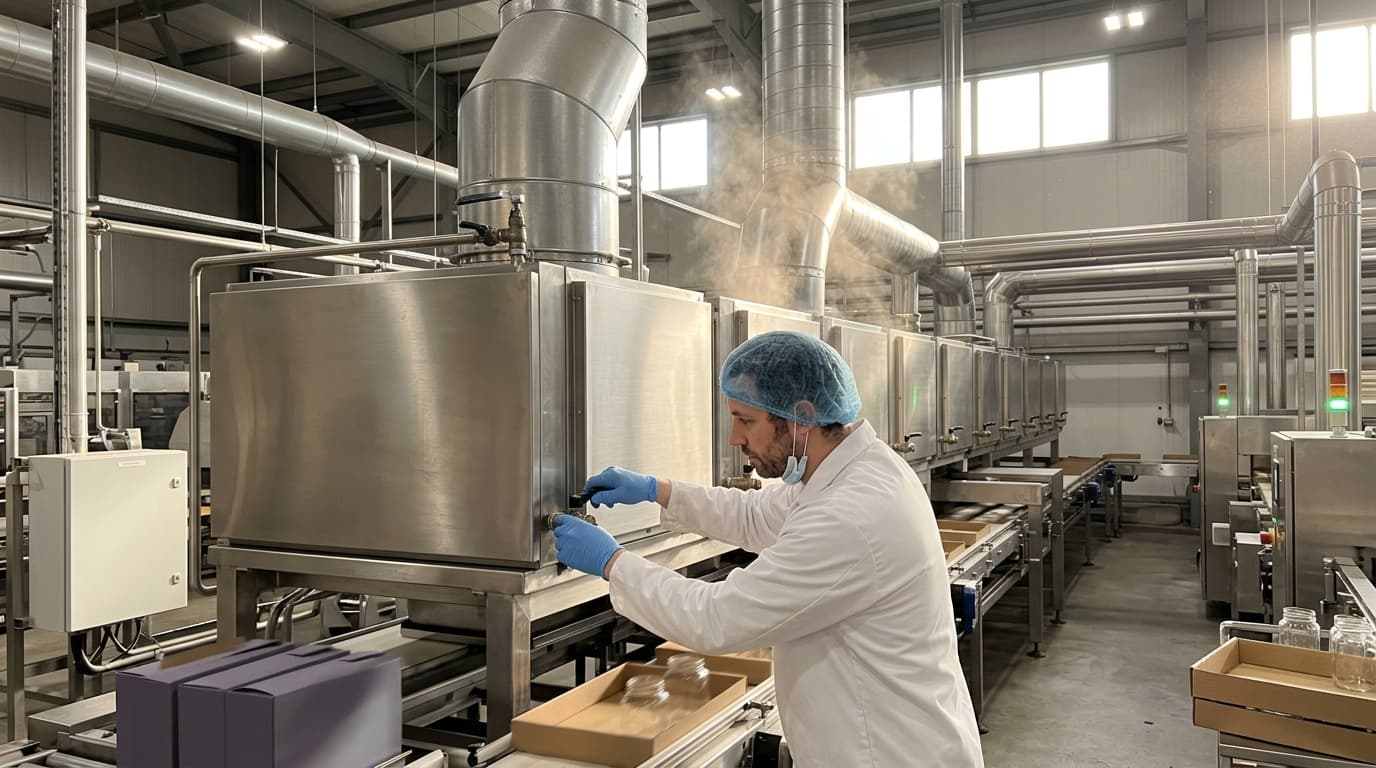
Our ThermStack and EcoStream heat exchanger ranges deliver measurable energy savings across chemical, food, pharma, and power generation processes.
Advantages of Shell and Tube Heat Exchangers in WHR
Shell and tube models offer unique mechanical advantages that make them the preferred waste heat recovery heat exchanger across heavy industries:
- Robustness and Reliability: Their sturdy construction and proven track record of long-term performance make them well-suited for demanding, high-vibration, and high-fouling industrial environments.
- Versatility: Shell and tube heat exchangers can handle a wide range of fluid types, multiphase flows (condensation and evaporation), high particulate counts, and variable operating conditions.
- Scalability: The heat transfer capacity can be scaled easily by adjusting the number of tubes, tube length, shell diameter, or baffle spacing to match specific recovery requirements.
- Maintainability: Their design allows for straightforward access, inspection, cleaning, mechanical tube brushing, and the replacement of individual components or tube bundles.
- High-Pressure and High-Temperature Capability: Unlike plate alternatives, they easily withstand extreme pressures (exceeding 100 bar) and temperatures (above 600 °C), making them highly versatile.
- Integration Ease: Shell and tube heat exchangers can be seamlessly integrated into existing facility bypass lines, allowing operators to capture waste heat without disrupting primary operations.
Challenges and Considerations
Despite their advantages, deploying shell and tube heat exchangers within waste heat recovery solutions presents certain challenges:
1. Fouling Mitigation
As highlighted earlier, fouling can significantly degrade heat transfer efficiency and increase pressure drops over time. Regular chemical or mechanical cleaning, combined with continuous monitoring of the pressure drop, is crucial to maintain peak performance.
2. Corrosion Control
Depending on the chemical makeup of exhaust gases (such as sulphur content in flue gas), acid condensation can occur if the temperature drops below the dew point. Selecting acid-resistant alloys and maintaining operating temperatures above the dew point are essential corrosion-prevention strategies.
3. Capital Cost
The initial cost of custom-designed shell and tube heat exchangers can be relatively high compared to standard low-pressure plate heat exchangers. However, the long-term thermodynamic benefits of waste heat recovery—such as reduced fuel consumption and lowered carbon taxes—often result in rapid return on investment (ROI) periods.
4. Space and Weight Footprint
Shell and tube heat exchangers can be bulky and require significant floor space, alongside additional clearance area for tube bundle withdrawal during maintenance. This footprint constraint must be planned for during retrofitting phases.
Future Trends and Innovations
The design of shell and tube heat exchangers for waste heat recovery is continuously evolving, with ongoing research and development focused on improving efficiency, reducing structural weight, and lowering maintenance requirements:
1. Advanced Materials and Surface Coatings
The development of advanced materials, such as high thermal conductivity polymers, nanocomposites, and anti-fouling hydrophobic coatings, offers new opportunities for enhanced heat transfer. Novel surface treatments prevent ash and scale build-up, significantly extending operational run-times between cleanings.
2. Geometrical Optimisation and Additive Manufacturing
Innovative internal geometries, such as helical baffles, micro-grooved tubes, and additive-manufactured (3D-printed) flow optimisers, are being introduced. These advancements enhance localised turbulence (and therefore the heat transfer coefficient) while keeping pressure drops to a minimum.
3. Digital Twins and Predictive Maintenance
The integration of digital technologies, such as IoT sensors and AI-powered predictive maintenance models, enables real-time monitoring of thermal efficiency and fouling factors. Operators can predict exactly when cleaning is required, reducing unplanned downtime and improving overall system reliability.
4. Eco-Friendly Working Fluids
Modern waste heat recovery solutions increasingly interface with organic Rankine cycles utilising low global warming potential (GWP) working fluids or supercritical CO2 (sCO2), which demand high-pressure shell and tube heat exchangers to achieve superior cycle efficiencies.
Conclusion
Shell and tube heat exchangers are a vital component of modern industrial waste heat recovery solutions, offering a highly reliable, versatile, and efficient means of capturing and reusing thermal energy from various process streams. By understanding their design parameters, fluid dynamics, thermodynamic calculations, and limitations, industries can leverage shell and tube heat exchangers to improve energy efficiency, reduce operating costs, and minimise their environmental footprint.
As technology advances and new innovations emerge, the role of the waste heat recovery heat exchanger will continue to expand, contributing to a more sustainable, circular, and energy-efficient industrial future.
