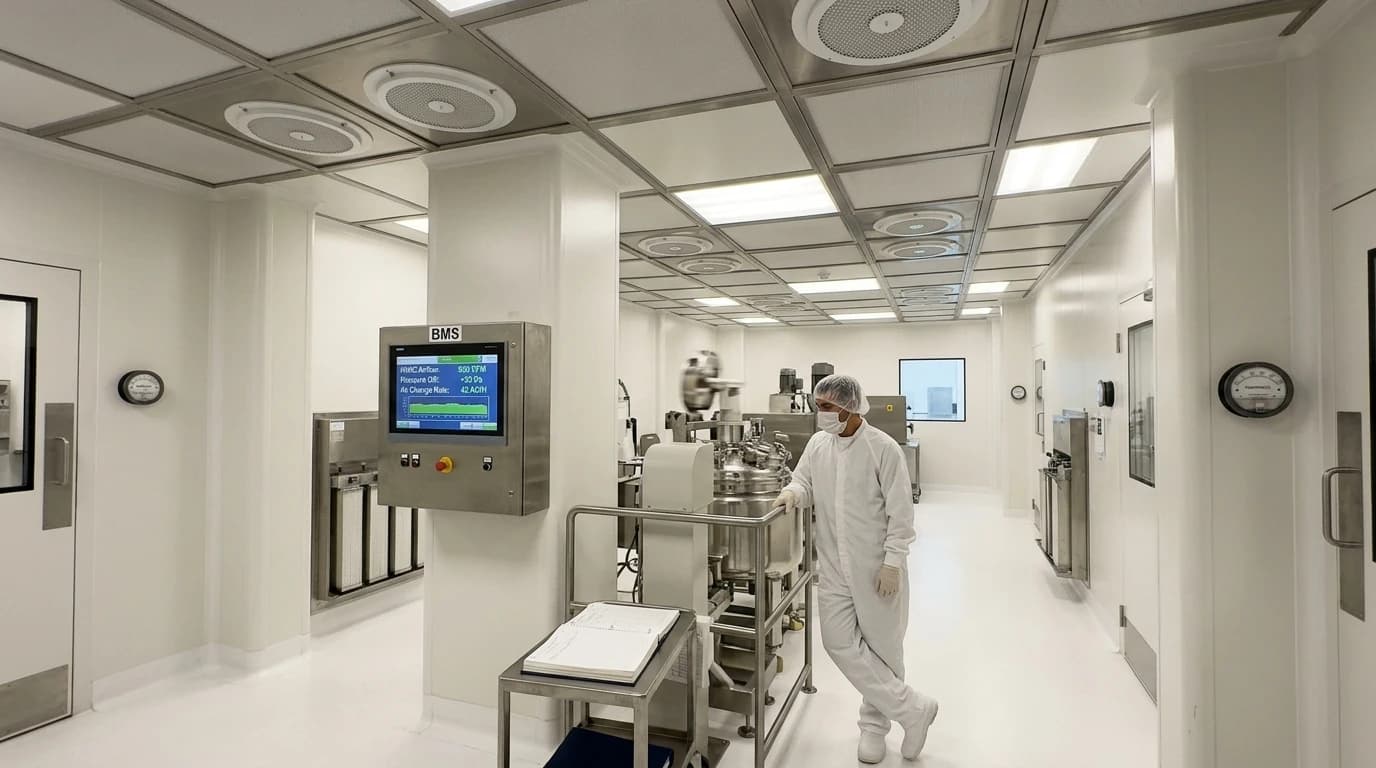
Why Pharmaceutical Cleanrooms Are Reducing Air Change Rates Now
How optimising HVAC systems can cut energy consumption by 20% to 40% under EU GMP Annex 1.
A pharmaceutical cleanroom is a highly controlled manufacturing environment that restricts airborne particulate and microbial contamination to specific limits determined by regulatory standards. For decades, facility managers have maintained these stringent environmental conditions by flooding production zones with heavily filtered, temperature-controlled air. This brute-force approach guarantees compliance but demands immense power. Heating, ventilation, and air conditioning (HVAC) systems regularly account for 50% to 80% of total energy consumption within sterile manufacturing sites.
Energy costs are rising across Europe. Decarbonisation targets are accelerating. Consequently, pharmaceutical operators are actively rethinking how they ventilate classified spaces. The strategy is shifting from fixed, continuous over-ventilation to dynamic, data-driven airflow management. By implementing targeted cleanroom energy efficiency strategies, operators can safely reduce air change rates (ACR) without risking product sterility or violating Good Manufacturing Practice (GMP) guidelines.
The Historical Burden of Fixed Air Change Rates
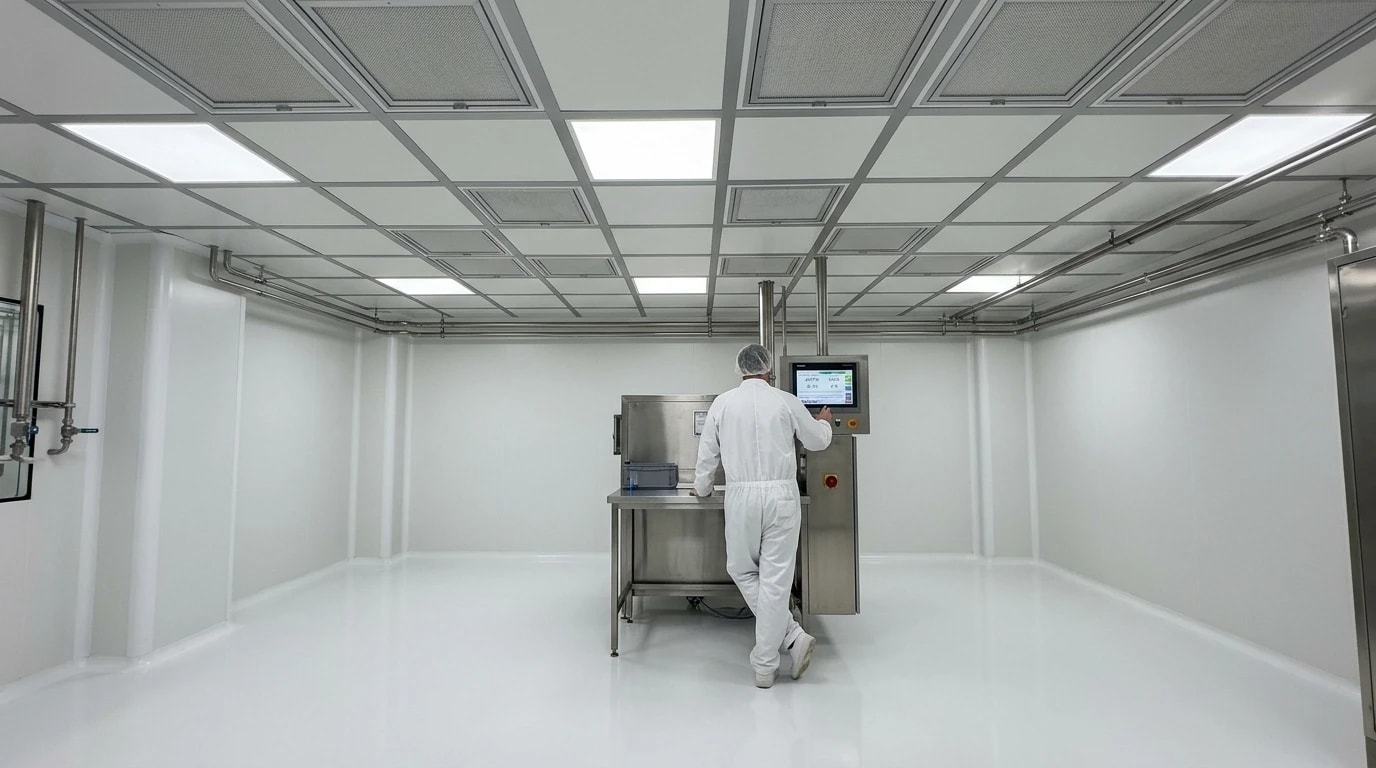
Air change rates dictate how many times the total volume of air within a room is replaced every hour. Cleanroom HVAC design has traditionally relied on rigid, static calculations.
The Legacy of Over-Ventilation
Early cleanroom designs established high fixed air change rates to provide a massive safety margin against contamination. An ISO Class 7 cleanroom might operate continuously at 30 to 60 air changes per hour, regardless of whether the room is fully staffed, handling a complex batch, or sitting completely empty during a weekend shift.
Mechanical engineers traditionally relied on open-loop or simple proportional-integral-derivative (PID) control mechanisms. These systems held air volume set-points at constant, elevated levels. This fixed-volume methodology ensured compliance by treating worst-case contamination scenarios as the permanent operational baseline. It successfully protected sterile products but created severe operational inefficiencies.
The Financial and Carbon Cost
Moving massive volumes of air through High-Efficiency Particulate Air (HEPA) filters generates significant aerodynamic resistance. Fan motors must overcome this static pressure continuously. Furthermore, the make-up air drawn into the facility must be heated, cooled, dehumidified, and re-heated before it enters the cleanroom supply plenum.
Data from the Carbon Trust indicates that inefficient and static ventilation systems drive substantial financial waste in the UK industrial sector. A fixed HVAC strategy forces chillers, boilers, and air handling unit (AHU) fans to operate at peak load 24 hours a day. In the context of modern grid pricing and stringent corporate decarbonisation mandates, this continuous peak-load operation is no longer financially viable.
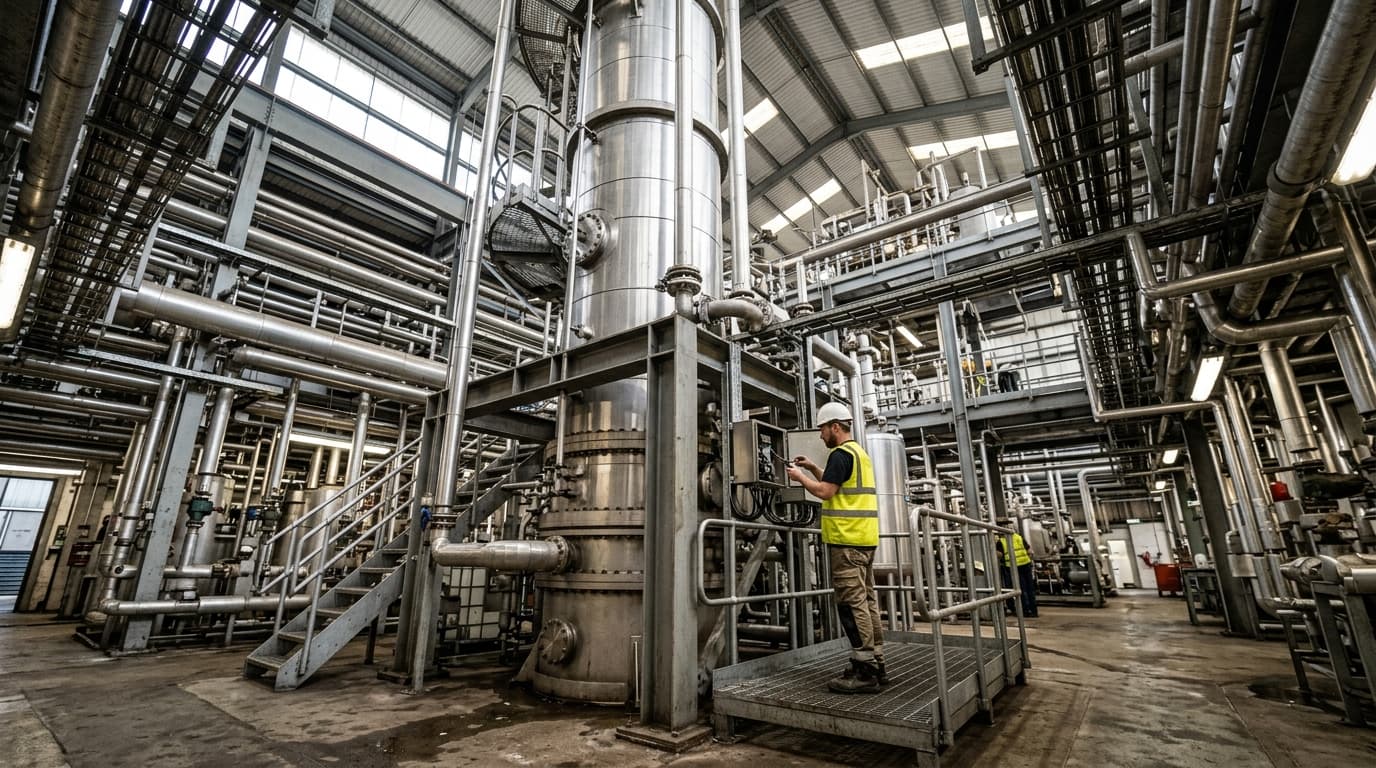
Omni Vision delivers turnkey utility metering, CO2 tracking, and AI-powered production KPI intelligence — giving you real-time dashboards and actionable insights across your entire facility.
Comparing Dynamic Cleanroom Control vs Traditional Fixed Air Change Rates
To modernise facility performance, operators must directly compare dynamic cleanroom control vs traditional fixed air change rates across operational, technical, and regulatory dimensions. The legacy approach relies on rigid design assumptions, whereas dynamic control acts as an active, responsive environmental management system.
The table below contrasts the technical execution and performance parameters of these two operational modes:
| Comparative Factor | Traditional Fixed Air Change Rates | Dynamic Cleanroom Control (DCV) |
|---|---|---|
| Control Philosophy | Static, open-loop design assuming worst-case particulate generation at all times. | Closed-loop, real-time feedback based on actual environmental contamination. |
| Airflow Performance | High, constant volumetric flow rate maintained continuously. | Variable volumetric flow rate that modulates between operational and standby levels. |
| Energy Consumption | Consistently high; fan power and conditioning loads remain at peak 24/7. | Reduced average power; fan load drops exponentially during periods of low activity. |
| Regulatory Alignment | Compliant but over-designed, relying on historical margins rather than data. | Highly aligned with BS EN ISO 14644-16 and EU GMP Annex 1 CCS frameworks. |
| System Wear and Tear | High static pressure stresses HEPA filters, dampers, and fan bearings constantly. | Minimised wear and tear; average static pressure is lower, extending filter lifespans. |
| Response to Contamination | Uniform, passive dilution recovery speed. | Fast, targeted purge response triggered dynamically by real-time particle counters. |
By comparing dynamic cleanroom control vs traditional fixed air change rates, it becomes clear that dynamic control treats cleanliness as a variables-based quality attribute rather than a static hardware limit. This yields a more resilient contamination control profile.
Regulatory Enablers: BS EN ISO 14644-16 and EU GMP Annex 1
Strict regulatory compliance is the primary barrier to modifying cleanroom operations. Historically, quality assurance teams resisted reducing airflow, fearing that lower air change rates would result in immediate regulatory censure. Recent updates to global standards have dismantled this barrier, actively encouraging scientific, risk-based efficiency.
Redefining Efficiency with BS EN ISO 14644-16:2019
The publication of BS EN ISO 14644-16:2019 ("Energy efficiency in cleanrooms and separative devices") marked a formal shift in how regulatory bodies view cleanroom energy consumption. This standard provides explicit guidance on optimising energy usage without compromising contamination control.
A critical element of BS EN ISO 14644-16:2019 is the formal endorsement of operational turn-down states. The standard confirms that cleanroom airflow can be safely reduced when the space is unoccupied or when continuous monitoring proves that particulate levels remain well below the required classification limits. Instead of prescribing blanket air change minimums, the standard permits engineers to calculate airflow based on the actual contamination removal rate required for the specific process.
The Contamination Control Strategy (CCS) Mandate
The European Commission’s revision of EU GMP Annex 1 (effective August 2023) fundamentally altered sterile medicinal manufacturing requirements. The revised regulation moves the industry away from periodic, static testing and demands a facility-wide, risk-based Contamination Control Strategy (CCS).
Under the revised EU GMP Annex 1 framework, pharmaceutical manufacturers must deploy layered controls and continuous environmental monitoring to prove their environments remain stable. This regulatory mandate perfectly complements modern cleanroom energy efficiency strategies. Because operators must now generate continuous, real-time data regarding particulate and microbial control, they possess the exact empirical evidence required to justify variable airflow. If the environmental monitoring system confirms an ISO 5 zone is maintaining a Sterility Assurance Level of 10−6, the HVAC system can automatically modulate the fan speed to deliver the precise air volume necessary to hold that state, rather than defaulting to an arbitrary maximum.
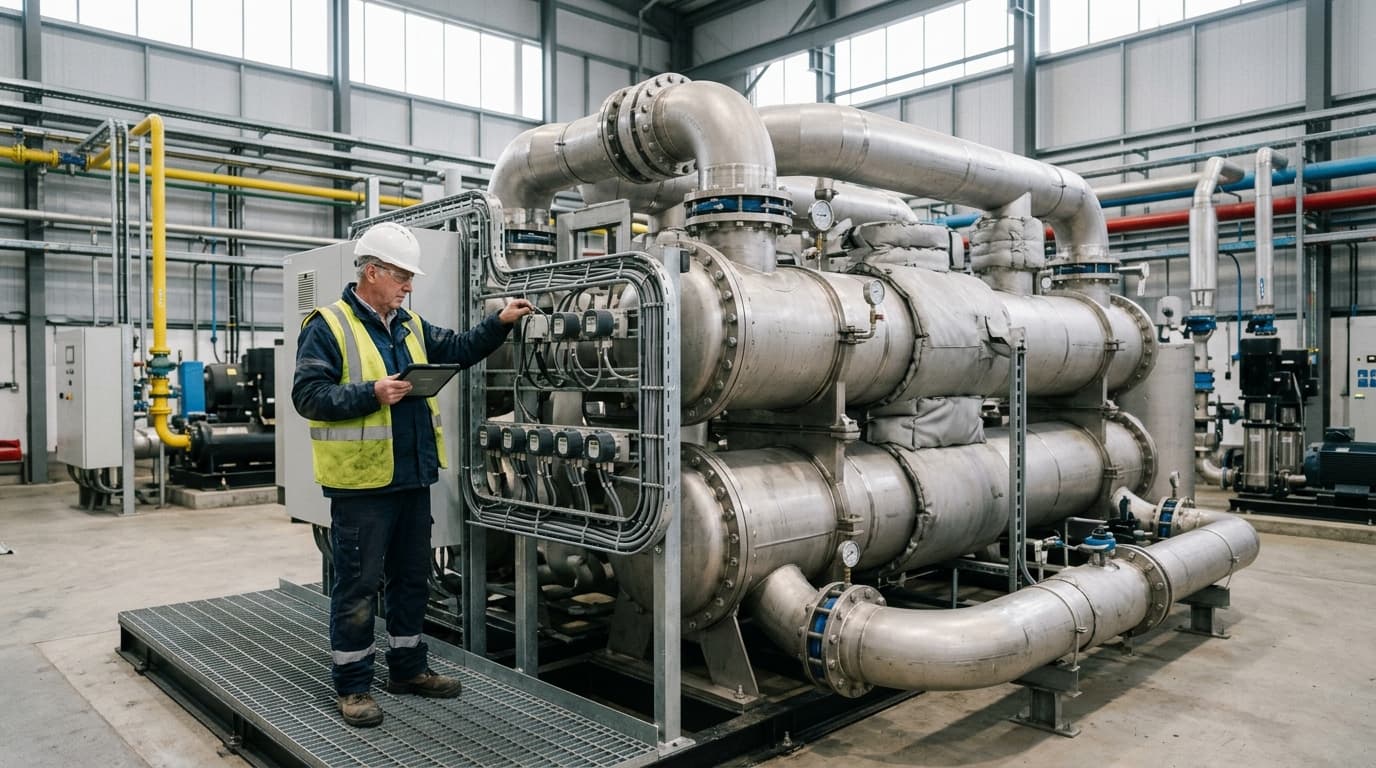
Track energy consumption, emissions, and process parameters with seamless PLC/SCADA integration via Modbus, OPC-UA, and MQTT protocols.
Implementing Demand-Controlled Ventilation
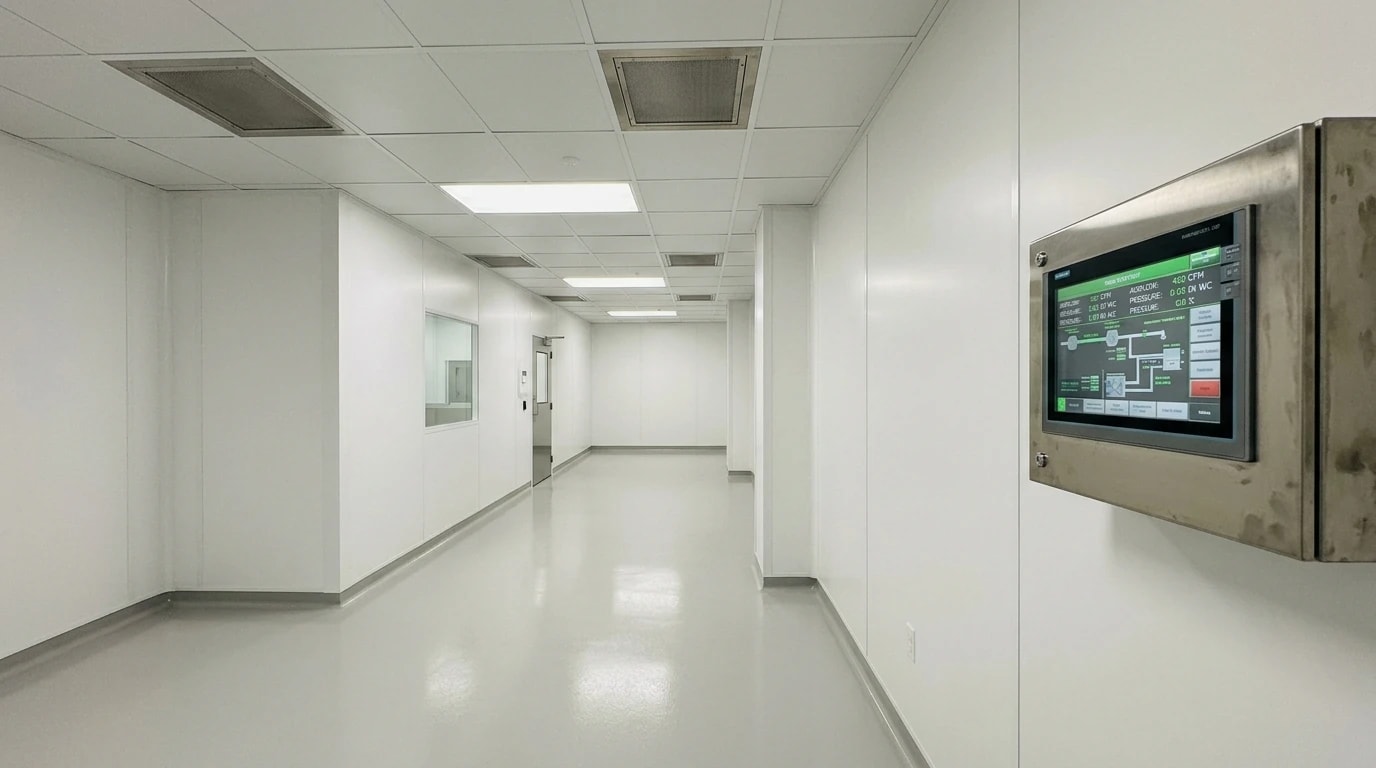
Transitioning a validated pharmaceutical cleanroom from fixed-volume operation to a dynamic system requires precise engineering. Demand-controlled ventilation (DCV) represents the primary mechanical mechanism for reducing cleanroom energy consumption.
Transitioning from Fixed to Variable Air Volume
Demand-controlled ventilation replaces static AHU output with Variable Air Volume (VAV) capability. In a DCV setup, continuous environmental sensors communicate with the building management system or PLC network. When particle counts rise due to personnel entering the space or a specific manufacturing intervention, the VAV boxes open and fan drives ramp up to purge the contaminants. Once the particulate levels drop back to the baseline, the system reduces the air change rate.
Implementing DCV during unoccupied periods offers the fastest return on investment. Pharmaceutical cleanrooms often sit vacant overnight or during shift changeovers. By engaging an automated turn-down mode, facilities can slash overnight airflow by 30% to 50%, yielding massive reductions in fan motor electricity consumption.
Overcoming Differential Pressure Challenges
Cleanroom suites rely on precise pressure cascades to prevent cross-contamination. An ISO 6 background room must maintain positive pressure relative to an adjacent ISO 7 gowning room. Modulating the supply air to save energy can destabilise these pressure differentials if not engineered correctly.
To implement cleanroom energy efficiency strategies successfully, HVAC engineers must synchronise supply and exhaust terminal units. When the system detects low particulate loads and reduces the supply air volume, the exhaust dampers must modulate in exact proportion to maintain the validated pressure cascade. High-speed actuation and sophisticated control algorithms are mandatory to ensure that pressure boundaries never fail during airflow transitions.
Quantifying HVAC Energy and Financial Savings
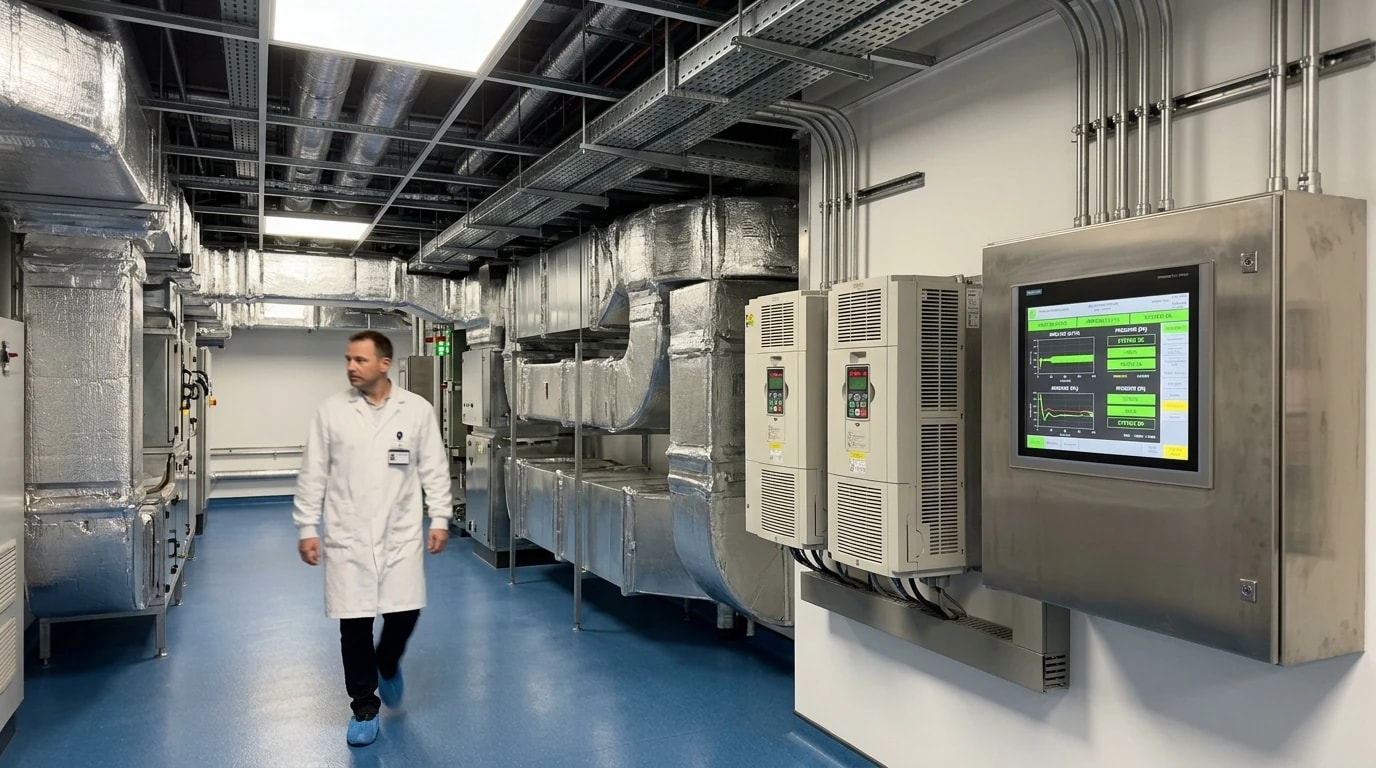
The transition from static to dynamic airflow yields immediate, measurable reductions in utility consumption. Because fan power consumption follows the affinity laws—where power is proportional to the cube of the fan speed—even a minor reduction in air change rates delivers outsized energy savings.
Hitting 20-40% HVAC Reductions
Industry analyses and engineering models demonstrate that optimising air change rates typically achieves 20% to 40% savings on HVAC energy consumption. In highly refined applications featuring advanced heat recovery and aggressive turn-down protocols, total HVAC electricity and thermal load reductions can exceed 50%.
To understand why these reductions are so dramatic, we examine the governing physical fan laws. The relationship between the fan's volumetric airflow rate (Q) and its shaft power consumption (P) is cubic:
P∝Q3Alternatively, this can be written as:
P=C⋅Q3where P is the fan power consumption (kW), Q is the volumetric airflow rate (m³/h), and C is a constant representing the system resistance coefficient and mechanical efficiency.
Because of this cubic relationship, if a facility implements a dynamic control strategy that safely drops the average cleanroom air change rate by just 20% (operating at 80% of baseline volume, so Qnew=0.80⋅Qold), the theoretical power requirement of the fan motor is:
Pnew=C⋅(0.80⋅Qold)3=0.512⋅PoldThis modest reduction in airflow yields an immediate 48.8% reduction in fan motor electricity demand. Reducing the air change rate also directly lowers the workload on chilled water circuits and steam boilers. By processing less outside air, the facility expends less energy cooling the air to strip moisture and less energy reheating it to the required supply temperature. This cascading efficiency improvement drastically lowers the baseline operating cost of the entire manufacturing facility.
Supporting Decarbonisation with UK IETF Grants
Capital projects required to upgrade legacy cleanrooms—such as retrofitting VAV boxes, variable frequency drives (VFDs), and precision sensor networks—require upfront investment. In the UK, operators frequently offset these costs through the Industrial Energy Transformation Fund (IETF).
The UK Government IETF scheme provides multi-million-pound grant funding to support industrial sites deploying energy efficiency and deep decarbonisation technologies. Pharmaceutical facilities leveraging the IETF can drastically shorten the payback period for HVAC upgrades. When combining government grant funding with a 30% reduction in annual electricity consumption, the return on investment for a cleanroom ventilation upgrade routinely falls below 24 months.
Centralising Control with the Omni Vision Energy Intelligence Platform
Executing these cleanroom energy efficiency strategies requires absolute data visibility. Mechanical upgrades will fail to deliver sustained ROI if the facility cannot accurately track consumption, correlate utility usage to specific production batches, and monitor system performance without disrupting validated equipment.
The Omni Vision Energy Intelligence Platform provides the comprehensive, turnkey infrastructure required to manage complex pharmaceutical energy transitions. Designed specifically for regulated industrial environments, the platform connects facility-wide utility performance with deep, actionable analytics.
Non-Invasive PLC Connectivity for Validated Systems
Pharmaceutical facilities operate under strict qualification statuses. Altering existing control codes or writing new parameters to a validated PLC can trigger severe regulatory delays and costly re-validation procedures.
The Omni Vision platform bypasses this risk through secure, non-invasive hardware integration. The platform supports read-only industrial protocols, including Modbus, OPC-UA, BACnet, and MQTT. By strictly extracting data without writing back to the control layer, the system ensures zero interference with plant operational integrity. Process engineers utilise these read-only data acquisition methods to preserve GMP safety requirements while feeding high-fidelity sensor data into external analytics engines. While the Omni Vision platform forecasts, identifies, and recommends optimal airflow profiles, operators or building management systems act on these insights during validated change windows.
Granular Utility Monitoring and Batch-Level Tracking
High-level utility metering is insufficient for modern cost control. To truly optimise a cleanroom, sustainability officers require granular visibility into electricity, gas, water, steam, and compressed air usage at the zone and equipment level.
The Omni Vision platform maps exact utility consumption against production output. Instead of viewing a monthly electricity bill, pharmaceutical plant managers can track the energy required per specific drug batch. If a specific biological compounding process requires temporary high air change rates, the platform precisely isolates the energy cost of that regulatory requirement. This batch-level KPI tracking allows financial teams to accurately calculate cost-per-unit metrics and identifies exactly where operational turn-down modes can be safely engaged by operators.
EPSA AI Analytics for Audit-Ready Reporting
Collecting data is only the first step; interpreting it rapidly is where true efficiency is unlocked. At the core of the Omni Vision platform is EPSA’s cloud-based AI analytics engine. This secure, one-way encrypted architecture applies advanced machine learning models to the raw facility data.
The EPSA AI engine delivers real-time anomaly detection and predictive maintenance alerts. If a HEPA filter begins to blind, creating a slow but steady increase in static pressure and fan energy consumption, EPSA identifies the baseline deviation weeks before a catastrophic failure occurs. This predictive capability prevents unplanned downtime in highly regulated sterile corridors.
Furthermore, the platform completely automates compliance reporting. The EPSA engine processes granular consumption data to generate audit-ready Scope I and II CO₂e emissions reports. For pharmaceutical manufacturers navigating SECR, ESOS, EU ETS, ISO 14064, and ISO 50001 frameworks, this automated documentation removes hundreds of hours of manual spreadsheet administration.
Designed for an 8 to 16-week turnkey deployment, the Omni Vision platform modernises pharmaceutical energy management. By equipping facilities with real-time operational intelligence, EnerTherm Engineering enables the safe reduction of air change rates, driving 15% to 25% facility-wide energy cost reductions while maintaining absolute, uncompromised regulatory compliance.
This article reflects the independent analysis and editorial opinion of EnerTherm Engineering. Product names, trademarks, and brands mentioned belong to their respective owners. EnerTherm Engineering is not affiliated with, endorsed by, or a licensee of any third-party software or product mentioned unless explicitly stated.

Managing Director — EnerTherm Engineering
Dr. François Pierrel is Managing Director of EnerTherm Engineering with over two decades of expertise in thermal design, heat transfer, and industrial energy optimisation. He holds a PhD in Heat Transfer from Cranfield University and a Post-Doctorate from Heriot-Watt University.
