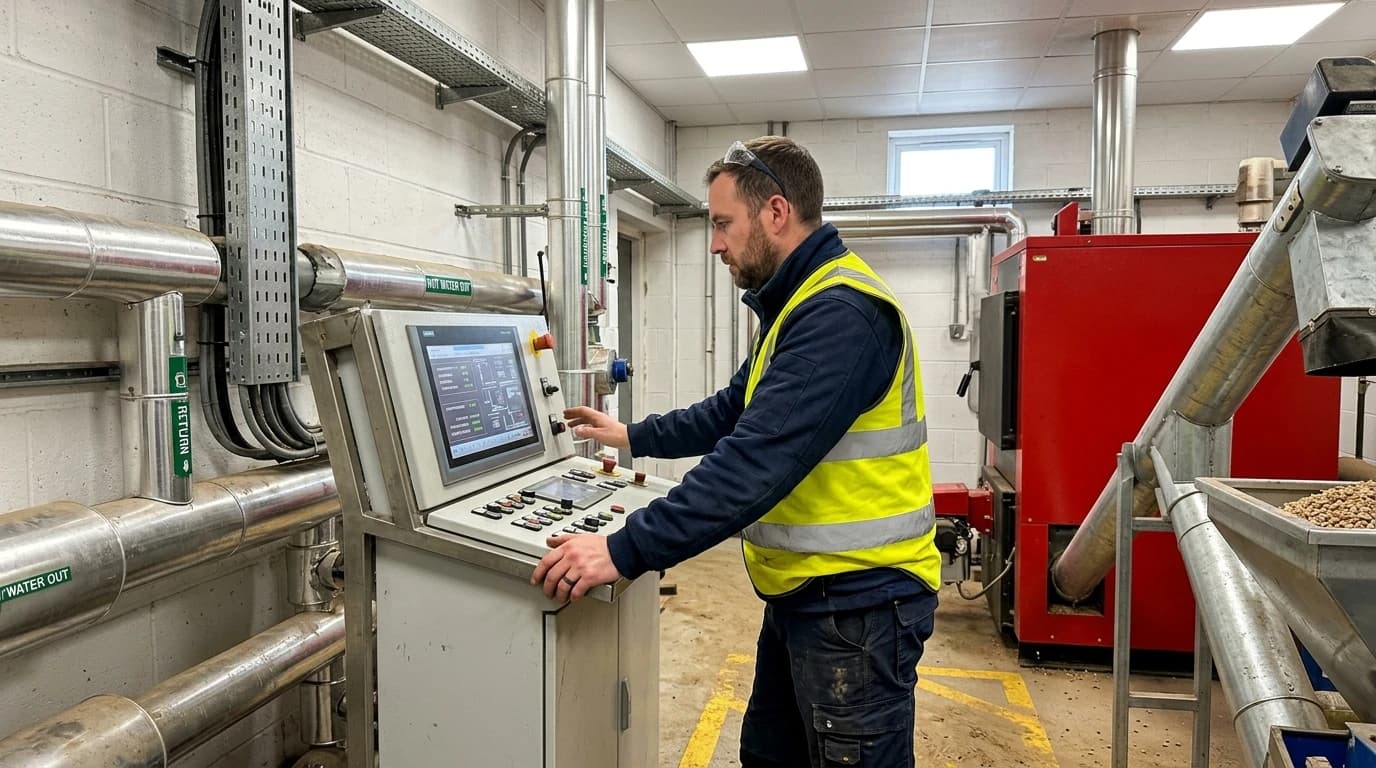
Why UK Farmers Are Pivotting to Biomass for Process Heating
A cost-benefit analysis of reducing energy OPEX against current fuel price volatility and MCPD regulatory compliance.
A farm-scale biomass boiler is a renewable thermal process heating system that combusts organic materials—such as wood chips, pellets, or agricultural residues—to generate high-temperature hot water or steam for commercial agricultural operations. A typical UK farming operation running a 100kW heating system for poultry sheds, commercial glasshouses, or grain drying facilities consumes roughly 15,000 litres of heating oil or 22,000 litres of LPG annually. This heavy reliance on fossil fuels generates significant operational expenditure and leaves a carbon footprint of up to 50 tonnes of CO₂ per year. With agricultural profit margins under pressure from supply chain volatility and stringent supermarket net-zero demands, replacing outdated fossil fuel infrastructure with biomass heating systems has transitioned from an environmental aspiration to a financial necessity.
The Financial Case for Biomass Heating on UK Farms
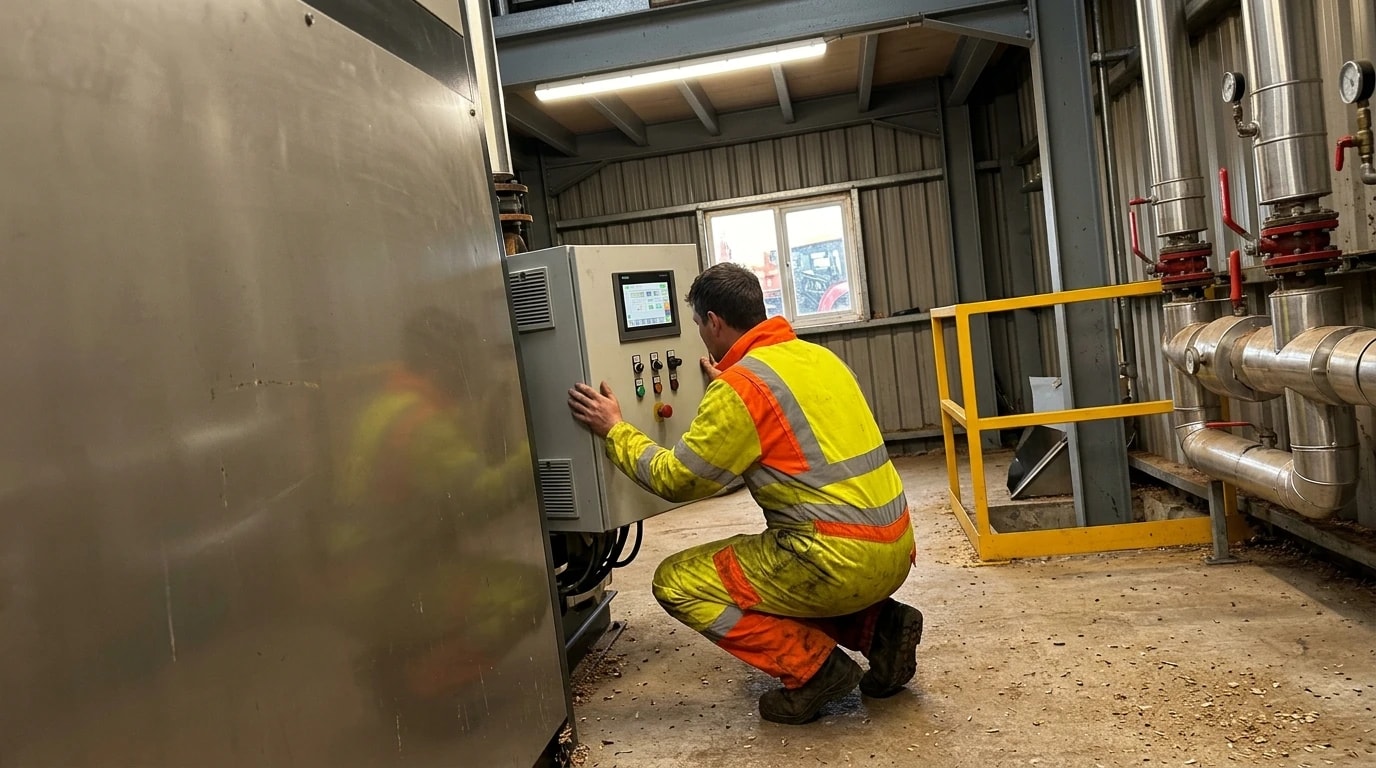
Shifting from Historical Subsidies to Modern OPEX Savings
For over a decade, the Non-Domestic Renewable Heat Incentive (RHI) drove the adoption of agricultural biomass boilers across the United Kingdom. The RHI offered lucrative tariff payments for every kilowatt-hour (kWh) of renewable heat generated, effectively subsidising both the capital and operational costs. While that scheme definitively closed to new applicants in March 2021, current market realities demonstrate that the financial viability of biomass no longer relies on heavy government subsidies.
Today, cost-benefit analyses centre entirely on long-term operational expenditure (OPEX) savings. Fossil fuel prices remain notoriously volatile, exposing agricultural estate managers to unpredictable seasonal heating costs. In stark contrast, biomass fuel—particularly sustainably sourced wood chips, pellets, or farm-generated agricultural residues—offers a highly stable and consistently lower price per kWh.
Typical Fuel Savings: Biomass Versus Fossil Fuels
Process engineers often calculate that high-volume users of heating oil can achieve a return on investment (ROI) within four to eight years simply by switching to a modern biomass system. A standard 100kW biomass boiler, which is commonly deployed for SMEs, large farms, or rural commercial buildings, provides a highly efficient thermal output capable of reducing annual heating bills by up to 40% compared to oil or LPG systems.
When comparing raw fuel costs, bulk-delivered wood chips frequently cost significantly less per kWh than heating oil. Even premium-grade wood pellets, which average between £150 and £250 per tonne, represent a substantial saving over fossil fuels. Beyond the immediate fuel savings, the transition to biomass effectively shields farm operators from international oil price shocks, allowing for highly accurate, long-term operational budgeting.
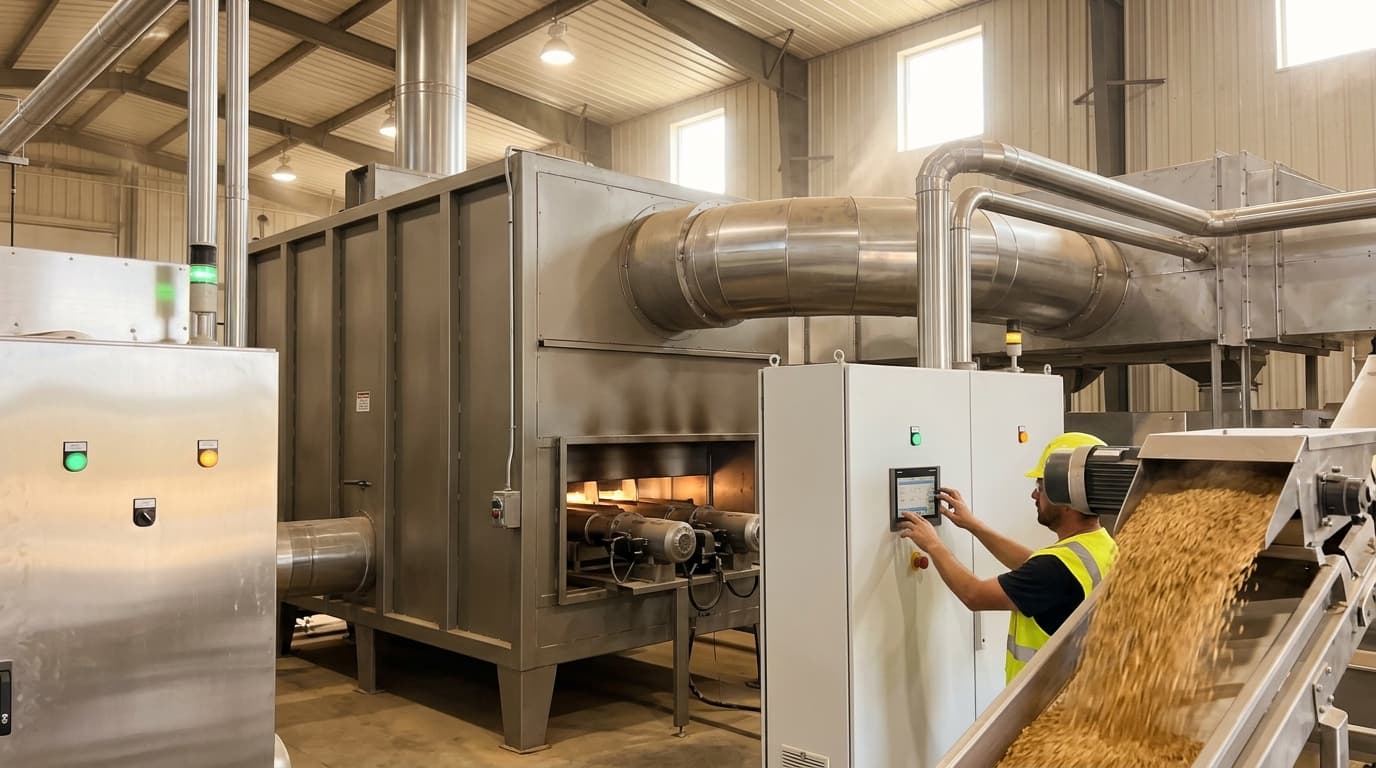
Direct and indirect-fired process heating systems for grain drying, baking, textile finishing, metal treatment, and industrial thermal processes.
Deconstructing the Capital Expenditure (CAPEX)
The 45/55 Split: Boiler Units Versus Infrastructure
When agricultural business operators evaluate the initial capital expenditure for a biomass heating system, the equipment costs alone often create a misleading picture. Feasibility studies consistently reveal that the boiler unit itself accounts for only around 45% of the total plantroom expenditure.
The remaining 55% of the project cost is driven entirely by site-specific infrastructure. This broad category includes essential civil works, fuel storage capacity, automated handling systems, thermal stores (buffer tanks), and bespoke flue installations. For a high-quality 100kW commercial biomass boiler system, industry professionals usually budget an installed price between £55,000 and £65,000. Larger 1MW industrial installations designed for intensive process heating can easily exceed £300,000.
This 45/55 split is critical for accurate financial planning. A farm cannot simply purchase a boiler; it must engineer a complete thermal plantroom. Constructing a custom-built bunker capable of receiving articulated lorry deliveries of wood chips requires significant concrete pouring and structural steelwork. Similarly, large-capacity thermal stores—often holding several thousand litres of water—are mandatory to absorb excess heat and optimise the boiler's combustion efficiency, preventing costly short-cycling. Consequently, an accurate cost-benefit analysis must incorporate the entire installation package, rather than just the core combustion unit.
Funding Opportunities: The Boiler Upgrade Scheme (BUS)
To help offset these upfront infrastructure costs for smaller applications, the UK Government operates the Boiler Upgrade Scheme (BUS). While the scheme is primarily designed to promote air-source and ground-source heat pumps, it explicitly provides a £5,000 grant for biomass boilers in limited circumstances.
This funding applies to properties in England and Wales that currently rely on fossil fuels, specifically where heat pumps are not technically feasible due to building fabric limitations or high-temperature heat demands. To qualify, the installation must be completed by a Microgeneration Certification Scheme (MCS) certified installer, who will deduct the £5,000 voucher directly from the total project quote. Though BUS funding targets smaller, farm-scale or domestic-adjacent systems, it remains a highly valuable mechanism to reduce the initial CAPEX for rural operators.
Adhering to the Medium Combustion Plant Directive (MCPD)
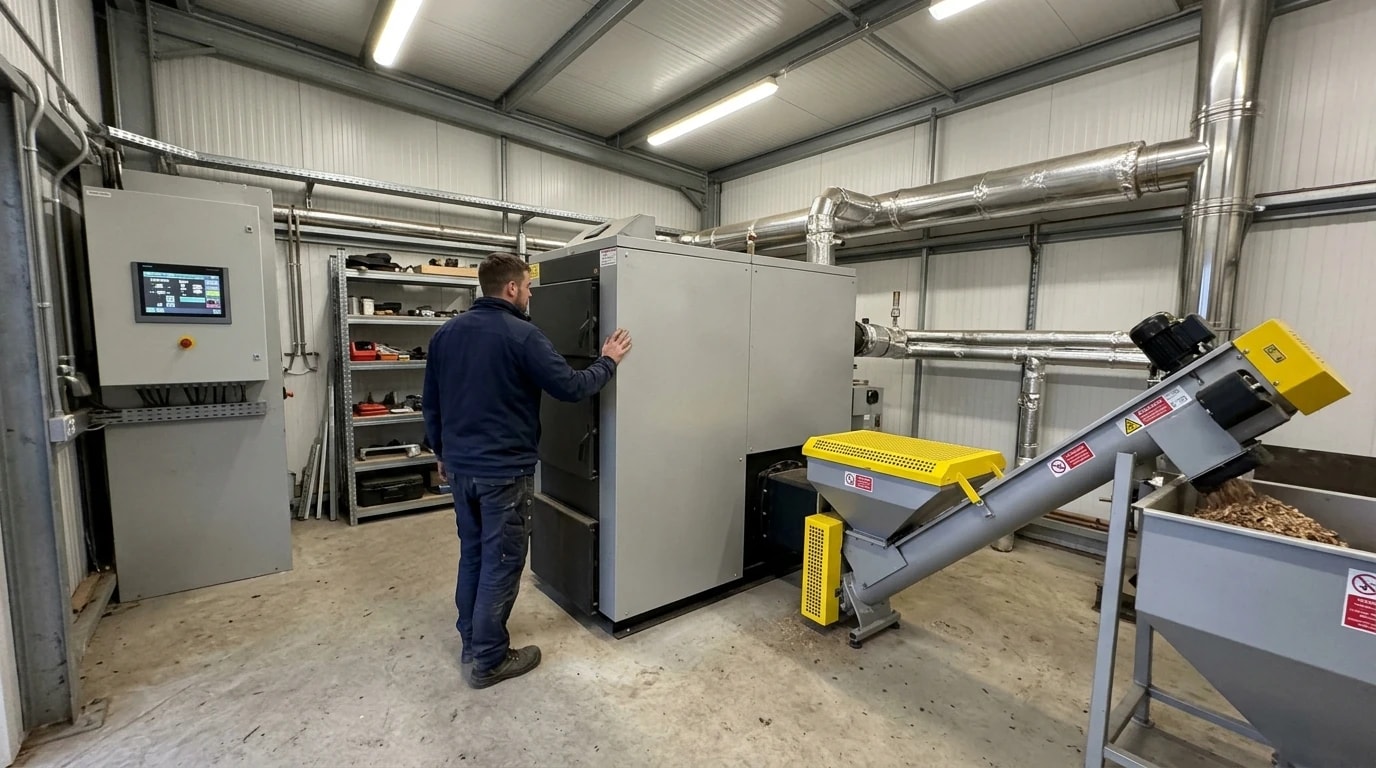
Environmental Permitting Regulations 2018 Compliance
Any cost-benefit analysis for large-scale agricultural biomass systems must rigorously account for regulatory compliance costs. In the UK, the Medium Combustion Plant Directive (MCPD) is implemented through the Environmental Permitting (England and Wales) (Amendment) Regulations 2018. This legislation strictly regulates pollutant emissions from any independent combustion plant with a rated thermal input between 1MWth and 50MWth.
Agricultural estate managers planning to install high-capacity process heating systems exceeding the 1MWth threshold must formally obtain an environmental permit from the Environment Agency (or equivalent devolved authority) before the plant can be put into service. While certain specific exemptions exist—such as combustion plants where the gaseous products are used directly for drying crops without a heat exchanger—the vast majority of standard hot water, thermal fluid, and steam boilers fall squarely under these regulations.
Securing this permit often requires detailed atmospheric dispersion modelling to prove that the proposed boiler stack will not negatively impact local air quality. This modelling, along with the application fees themselves, must be factored into the project's initial CAPEX.
Emission Monitoring for Plantroom Operations >1MWth
Under the MCPD, operators are legally required to monitor emissions of nitrogen oxides (NOₓ), sulphur dioxide (SO₂), and particulate matter (dust). The directive specifies strict emission limit values designed to mitigate the environmental impact of industrial combustion.
To ensure these limits are continuously met, thermal design teams typically select premium filtration and abatement equipment. Depending on the fuel grade, this may include multi-cyclones, ceramic filters, baghouse filters, or electrostatic precipitators (ESPs). Incorporating this advanced abatement technology adds a significant premium to the initial infrastructure expenditure. Furthermore, the mandatory annual or triennial emission monitoring introduces a recurrent OPEX requirement. Operators must maintain comprehensive operational records for at least six years to prove continuous compliance, making digital telemetry and control systems an absolute necessity.
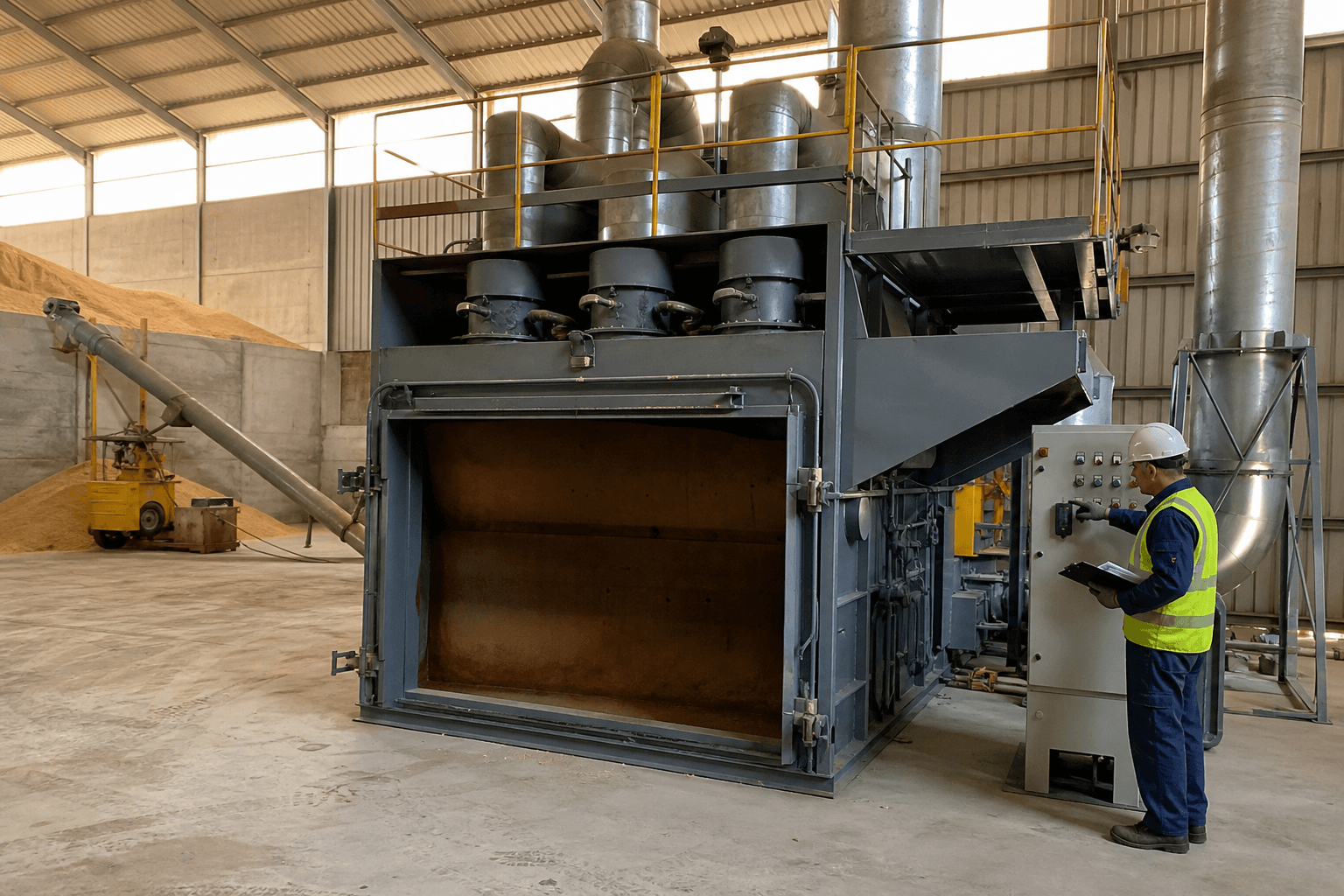
The LitBurn, AgriBurn, AmoBurn, and AniBurn ranges cover every waste disposal need with dual-chamber combustion and scrubbing options.
Infrastructure, Feedstock Logistics, and Technical Specifications
Sourcing Agricultural Biomass and Wood Fuel
The operational success and financial ROI of any farm-scale biomass boiler depend entirely on intelligent feedstock logistics. Sourcing reliable, high-quality fuel is the single most critical variable in a long-term feasibility study. Farms possess a distinct commercial advantage in this sector: many generate their own organic waste, straw, or low-grade timber, which can be chipped and utilised as free or low-cost fuel.
For facilities purchasing fuel externally, wood chips offer a vastly lower cost per tonne but possess a low energy density and higher moisture content. This necessitates significantly larger storage silos and strict drying protocols. Wood pellets, while more expensive to purchase, offer exceptionally high energy density and dimensional uniformity. This uniformity makes pellets ideal for highly automated, low-maintenance heating systems. The specific moisture content and calorific value of the chosen fuel directly dictate the boiler's overall thermal efficiency, which typically operates between 85% and 90% when optimally tuned.
Integrating Automated Handling Systems
Labour costs will quickly erode the financial benefits of cheap fuel if a large-scale biomass system requires constant manual feeding or intervention. Consequently, modern industrial thermal engineering prioritises fully automated fuel handling infrastructure.
Walking floor extraction systems, heavy-duty spring agitators, and automated auger drives transport the biomass fuel from the primary storage bunker directly into the boiler's combustion chamber. Constructing adequate storage to accommodate bulk deliveries reduces the long-term cost per tonne of fuel, but it requires significant initial civil engineering works. Industry professionals widely regard these infrastructure investments as completely essential for ensuring uninterrupted process heating, particularly during peak winter operations or intensive, time-sensitive harvest periods.
Process Heating Applications in Agriculture
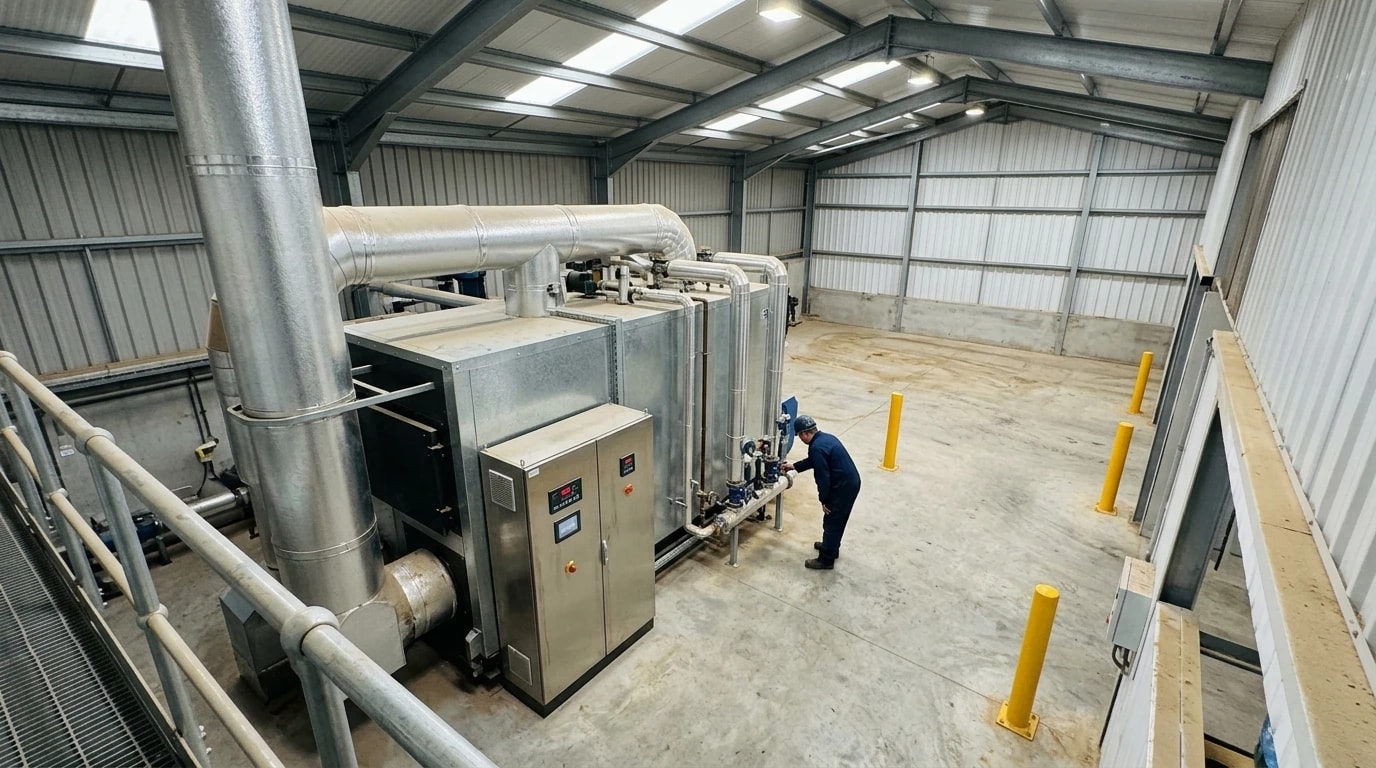
Grain Drying and Moisture Dehydration
Process heating is integral to modern agricultural output. A typical 100kW wood chip boiler can provide the exact thermal control required to dry approximately 1,500 tonnes of grain per year, efficiently reducing the harvest moisture content from a volatile 20% down to a highly stable 14%.
EnerTherm Engineering provides custom-engineered dehydrators and process heaters specifically designed for these intensive agricultural applications. Precise temperature regulation is incredibly critical during the dehydration of high-value crops, medicinal herbs, and pelleted animal feed. If the thermal input is too high, the cellular structure of the product degrades; if the temperature is too low, residual moisture remains, inevitably leading to rot, fungal growth, and total crop loss. Biomass-fed process heaters supply consistent, high-temperature hot water or steam to the facility's heat exchangers and air handling units, ensuring optimal drying conditions while entirely eliminating fossil fuel dependency.
Advanced Waste-to-Energy and Incineration Strategies
Beyond standard space heating and dehydration, large agricultural processing facilities generate substantial volumes of biogenic waste, including fallen stock, diseased crops, and processing by-products. Integrating a highly regulated biomass incinerator allows farm operators to convert this financially draining waste stream into a lucrative source of usable thermal energy.
EnerTherm Engineering designs bespoke incinerators and industrial thermal solutions that facilitate safe, biosecure, and highly efficient agricultural waste disposal. By actively recovering heat from the primary incineration process, farms can generate high-pressure steam for equipment sterilisation, wash-down cleaning, or secondary space heating for adjacent livestock sheds. This closed-loop, waste-to-energy strategy drastically reduces external landfill disposal fees, cuts haulage emissions, and directly offsets the facility's overall energy demand, significantly improving the project's long-term financial viability.
Long-Term Feasibility and Operational Return on Investment
Analysing Total Cost of Ownership
A thorough, data-driven cost-benefit analysis proves that biomass process heating remains a highly lucrative investment for UK agriculture, provided the system is sized accurately and the 55% infrastructure costs are fully anticipated. The compelling combination of OPEX savings from cheaper fuel, dramatic waste disposal cost reductions, and targeted capital grants like the Boiler Upgrade Scheme provides a remarkably strong financial defence for transitioning away from heating oil and LPG.
While the initial CAPEX is undeniably substantial—frequently exceeding £60,000 for mid-sized commercial plantrooms and climbing much higher for MW-scale systems—the highly predictable nature of biomass fuel prices insulates agri-business processing facilities from geopolitical fossil fuel shocks. When fuel savings reach up to 40% annually, the payback period easily falls within the typical 20-year operational lifespan of a premium European biomass boiler. Maintenance costs, including mandatory annual sweeping, sensor calibration, and mechanical servicing, must be budgeted at roughly £250 to £400 for smaller systems, scaling proportionately for industrial units.
Future-Proofing Agricultural Estates
Furthermore, achieving strict compliance with the Environmental Permitting Regulations 2018 guarantees that these large-scale systems operate cleanly and efficiently. Proactively meeting the emission thresholds set by the Medium Combustion Plant Directive future-proofs the farm against increasingly stringent UK environmental legislation and aggressive local air quality mandates.
Ultimately, pivotting to biomass thermal systems enables UK farmers and agricultural estate managers to achieve immediate carbon neutrality, strictly control their operational energy costs, and independently manage their waste-to-energy cycles. By treating process heating as an integrated engineering challenge rather than a simple boiler replacement, agricultural facilities can secure complete energy independence for decades to come.
This article reflects the independent analysis and editorial opinion of EnerTherm Engineering. Product names, trademarks, and brands mentioned belong to their respective owners. EnerTherm Engineering is not affiliated with, endorsed by, or a licensee of any third-party software or product mentioned unless explicitly stated.

Managing Director — EnerTherm Engineering
Dr. François Pierrel is Managing Director of EnerTherm Engineering with over two decades of expertise in thermal design, heat transfer, and industrial energy optimisation. He holds a PhD in Heat Transfer from Cranfield University and a Post-Doctorate from Heriot-Watt University.
