Industrial Energy Management Systems UK: ESOS Phase 4
How metered data supports ESOS Phase 4, SECR and ISO 50001 audit evidence.
UK organisations that qualify for ESOS Phase 4 on 31 December 2026 must submit a compliance notification by 5 December 2027. Their assessment must cover at least 95% of total energy consumption, using energy audits, ISO 50001 certification, or a combination of the two.
For industrial sites still assembling supplier bills, meter readings, boiler records and production data in spreadsheets, this is more than a reporting deadline. It tests whether energy evidence can be traced, checked and explained.
An industrial energy management system that UK manufacturers can rely on should create a dependable record of utility consumption, support analysis of significant energy uses and retain the evidence behind reported figures. Monthly graphs alone will not meet that need. Facilities need controlled data, clear calculation rules and a practical route from abnormal consumption to corrective action.
The same record can support Streamlined Energy and Carbon Reporting, known as SECR. The framework requires in-scope businesses to report energy use, greenhouse gas emissions, intensity ratios, energy-efficiency actions and calculation methodology. Spreadsheet-based reporting can work for a small, stable site. It becomes difficult to govern when a business operates several facilities, changes meters, adds processes or relies on multiple teams to prepare annual figures.
ESOS Phase 4 raises the standard for industrial energy evidence
Which organisations qualify for ESOS Phase 4?
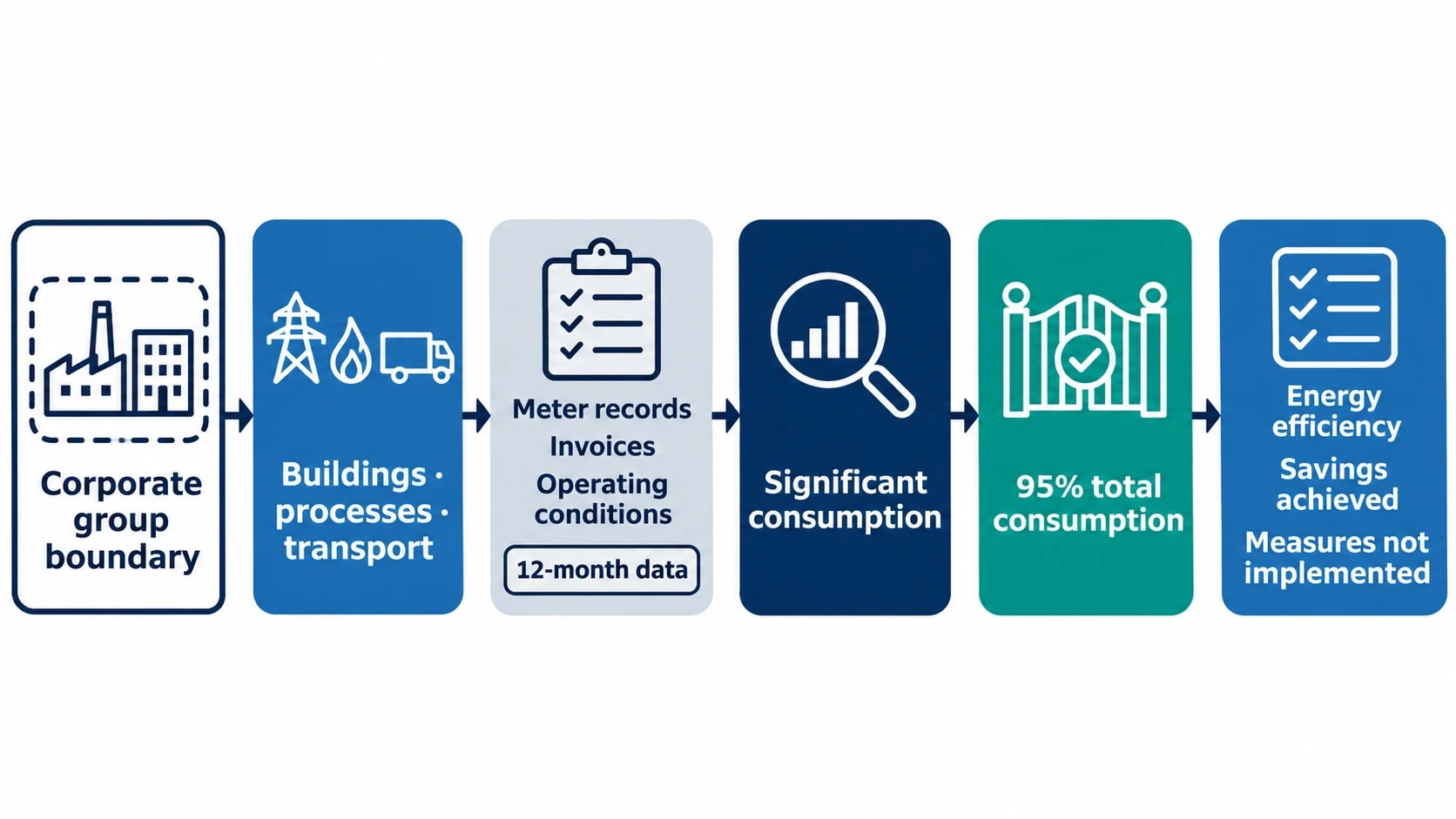
ESOS applies to large UK undertakings and qualifying corporate groups. An organisation qualifies for Phase 4 if, on 31 December 2026, it employs 250 or more people, or has annual turnover above £44 million and an annual balance sheet total above £38 million.
The scheme covers energy used by buildings, industrial processes and transport. A manufacturer must calculate total energy consumption, identify significant energy consumption and ensure that at least 95% of total consumption is covered by the chosen compliance route.
This scope extends beyond a site’s main electricity meter. Significant consumption may include gas-fired steam generation, process heating, compressed air, refrigeration, clean utilities, water treatment, laboratories, warehouses and transport. The boundary must reflect the undertaking or corporate group, rather than only the most visible production building.
What evidence does an ESOS energy audit require?
An ESOS energy audit must, so far as reasonably practicable, use verifiable energy-consumption data measured over a 12-month period. For Phase 4, that period must begin no earlier than 6 December 2022 and no more than 24 months before the audit begins.
The audit must analyse energy consumption and energy efficiency, identify savings opportunities and include site visits. ESOS does not require every load to have a permanent sub-meter. It does, however, value data that an assessor can verify against meter records, invoices, operating conditions and documented calculations.
A broad allocation assumption may be acceptable where direct measurement is not proportionate or practical. It is less persuasive than data showing how energy use changes by area, process, production run or operating hour. For an energy-intensive site, a structured metering plan gives the ESOS lead assessor a stronger basis for determining opportunities and estimating savings.
Phase 4 also requires organisations to calculate energy-intensity ratios for buildings, transport, industrial processes and other energy uses. The chosen activity indicator must be quantifiable, associated with the relevant asset or activity, and based on verifiable data where reasonably practicable.
Action-plan progress now belongs in the assessment
Phase 4 includes progress against action-plan commitments. Participants must report energy savings achieved since the previous compliance date, identify measures from the action plan that were not implemented and explain why they were not completed.
This requirement changes the role of historic energy data. Teams need to retain more than the final project list. They need an auditable baseline, the subsequent measurement period, relevant production or operating conditions, calculation assumptions and records supporting the claimed saving.
The removal of Display Energy Certificates and Green Deal Assessments as alternative Phase 4 routes reinforces the focus on energy audits and ISO 50001 certification. A facility cannot treat the ESOS submission as a one-off consultant exercise if it needs reliable evidence of implemented measures.
Omni Vision delivers turnkey utility metering, CO2 tracking, and AI-powered production KPI intelligence — giving you real-time dashboards and actionable insights across your entire facility.
SECR makes data governance an annual obligation
SECR applies to quoted companies and to large unquoted companies and large LLPs, subject to the statutory thresholds and exemptions. Large unquoted companies and LLPs generally meet the test if they satisfy at least two of the following conditions:
- More than 250 employees
- Turnover above £36 million
- Balance sheet total above £18 million
Quoted companies report global energy use and greenhouse gas emissions. Large unquoted companies and LLPs report UK energy use and associated emissions. In-scope entities must also disclose at least one intensity ratio, energy-efficiency actions taken during the reporting year and the methodology used to calculate the figures.
For industrial organisations, the reporting challenge often sits in the joins between systems. Electricity data may arrive as half-hourly files, gas data through invoices, oil through delivery records and production data through manufacturing systems. A reporting workbook can bring those inputs together, but manual handling introduces risks around version control, unit conversion, missing data and inconsistent emissions factors.
A controlled industrial energy management system cannot replace finance review, directors’ report preparation or board sign-off. It can provide the operational record that makes those processes easier to verify.
Why spreadsheets become a compliance and operational risk
A spreadsheet remains useful for analysis, project planning and supporting schedules. It is a weak primary system of record for continuous industrial energy reporting.
The failure points are familiar. A meter replacement can interrupt a reading sequence. A new sub-meter may not appear in the reporting template. A fuel purchase might be recorded in litres while energy data is held in kWh. A production shutdown can distort an intensity metric if the relevant output data is absent. A formula may be changed after figures have been shared with management.
These issues consume time at year end, but they also affect daily decision-making. A site may see a rise in monthly electricity use without knowing whether the driver is increased throughput, a refrigeration fault, compressed-air leakage, a process change or an error in the source file.
A digital system should preserve the link between the raw reading, validation activity and reported total. That creates a usable audit trail and gives operations staff a current view of abnormal demand.
The difference between supplier data and process evidence
Supplier data is essential. It confirms energy delivered to the site and supports cost reconciliation. It rarely explains where energy is consumed.
A monthly gas invoice cannot distinguish between inefficient combustion, distribution losses and additional process demand. A main electricity meter cannot show whether compressed-air demand persists through a planned shutdown. A temporary data logger can investigate a particular issue, but it may not provide the continuous evidence needed for annual SECR reporting or ESOS action-plan progress.
An industrial energy management platform should join utility data with operating context. Useful questions include:
- Which production line has the highest electricity consumption per tonne?
- Has steam use per batch changed after a process modification?
- Is compressed-air demand elevated outside production hours?
- Does a rise in boiler fuel use align with throughput, ambient conditions or maintenance activity?
- Can the site demonstrate the measured effect of an energy-saving project?
Comparing industrial energy management system UK options
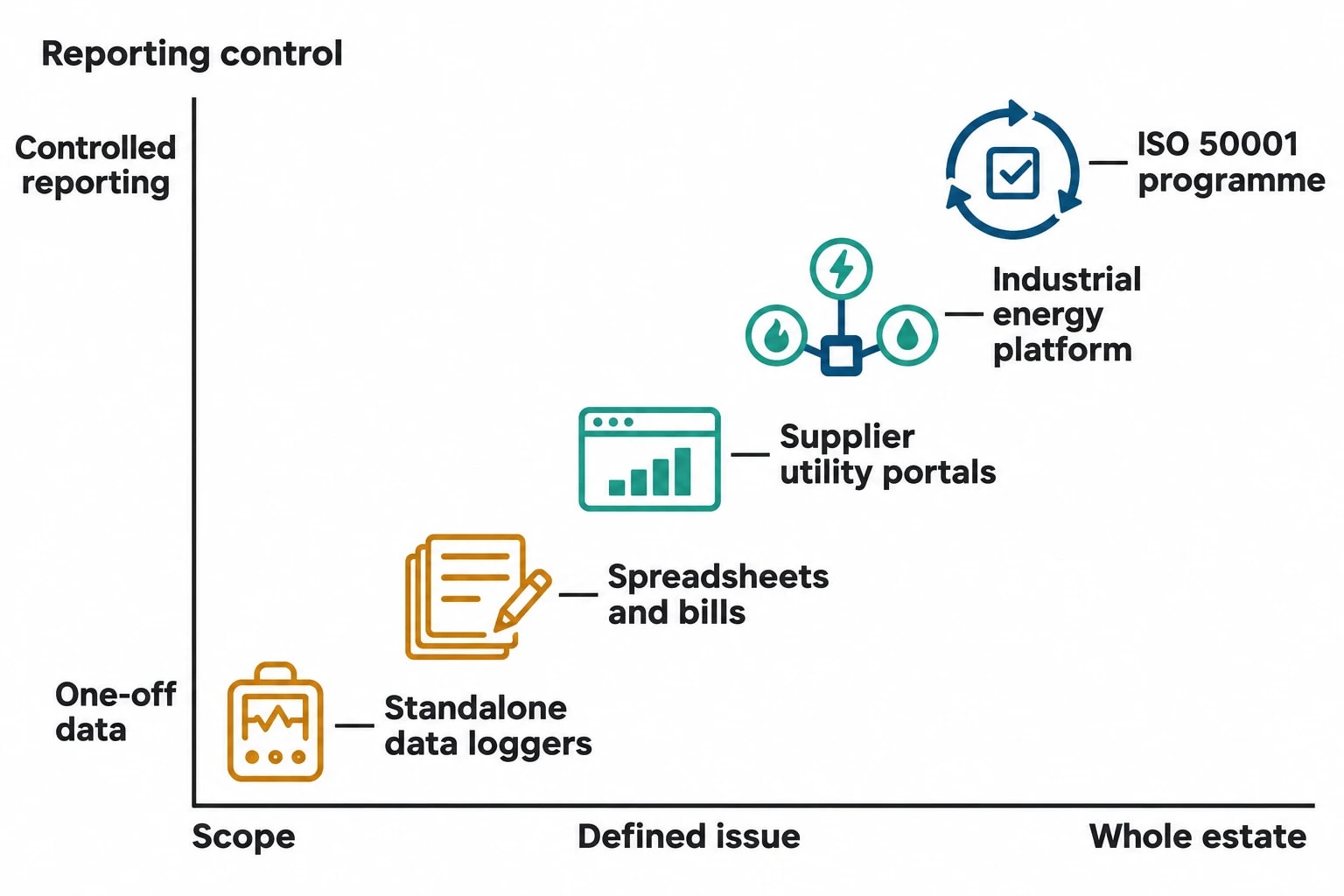
The appropriate route depends on the scale of the estate, its energy intensity, metering maturity and reporting exposure.
| Approach | Main strength | Limitation for ESOS and SECR | Suitable use |
|---|---|---|---|
| Spreadsheets and supplier bills | Low initial cost and familiar workflow | Manual consolidation, limited change control and weak process visibility | Small, stable estate with uncomplicated energy use |
| Supplier utility portals | Reliable access to supplier electricity or gas data | Usually limited to supplied utilities and does not show process demand | Estate-level cost and consumption checks |
| Standalone data loggers | Good for investigating a defined issue | Short-term data often sits outside ongoing reporting processes | Targeted diagnostics and measurement studies |
| Industrial energy management platform | Continuous multi-utility data with analysis and reporting controls | Requires a metering strategy, ownership model and commissioning work | Energy-intensive or multi-site industrial operations |
| ISO 50001 programme supported by digital monitoring | Supports a structured energy-management process and ESOS route where coverage is sufficient | Certification requires management-system discipline, not only data collection | Organisations pursuing continual improvement and formal certification |
A buying decision should start with reporting and operational questions, rather than the number of dashboards offered. Facilities should define which consumption decisions are delayed by missing, late or unreliable information.
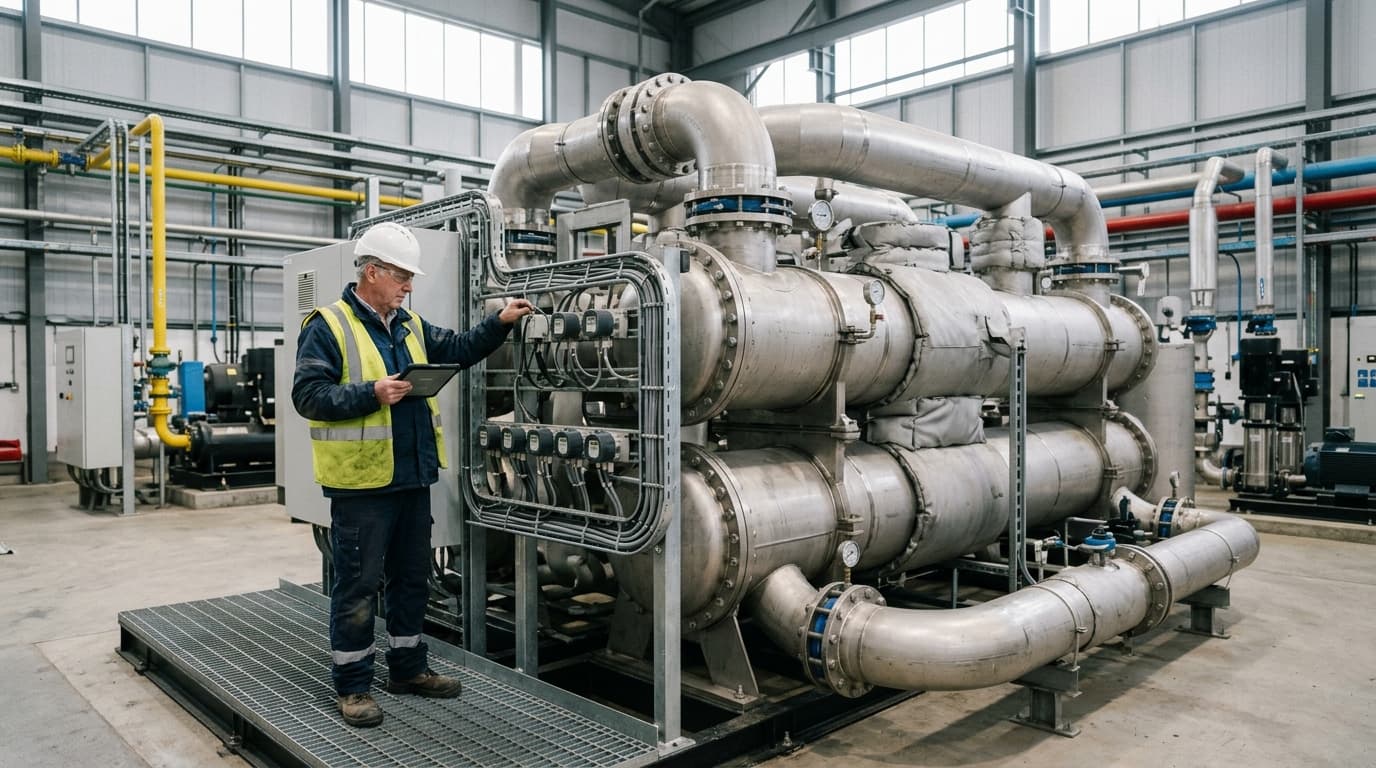
Track energy consumption, emissions, and process parameters with seamless PLC/SCADA integration via Modbus, OPC-UA, and MQTT protocols.
What to specify in an industrial energy management system
Meter significant energy uses before expanding coverage
A metering plan should follow materiality. Electricity and gas often provide the first priority. Steam, compressed air, water and oil may be equally material in pharmaceutical, chemical, food and beverage, and general manufacturing facilities.
Main meters establish the site balance. Area, department and process meters identify where demand sits. Equipment-level measurement can support focused investigations into high-use or variable assets.
Each meter should have a documented purpose, engineering unit, location, data interval, ownership and verification requirement. The register should also explain how the data contributes to ESOS, SECR or operational decisions. That record becomes part of the evidence pack rather than an engineering document that disappears after installation.
Specify read-only utility-data collection
Procurement requirements should confirm that utility data can be collected without altering plant-control logic or changing process operation. Read-only collection is particularly relevant where energy monitoring draws information from production assets, boilers, compressed-air systems or site metering infrastructure.
The specification should define permitted data points, data ownership, data retention, commissioning responsibilities and access controls. Industrial teams should assess these requirements through their established engineering, quality and operational governance processes.
Specify visible data-quality controls
A platform should identify missing readings, flatlined meters, implausible values and timestamp gaps before information reaches an annual disclosure or ESOS evidence pack. It should retain the original data, record the reason for any correction and show who authorised the change.
Procurement teams should look for:
- Time synchronisation and transparent interval handling.
- Visible unit-conversion rules.
- Documented meter hierarchy and allocation methods.
- Controlled configuration of emissions factors.
- Locked reporting periods and revision history.
- Exportable records for assessors, auditors, finance teams and site management.
These controls reduce rework and make it possible to explain changes between preliminary operational figures and signed statutory reporting.
ISO 50001 monitoring requirements should shape the system design
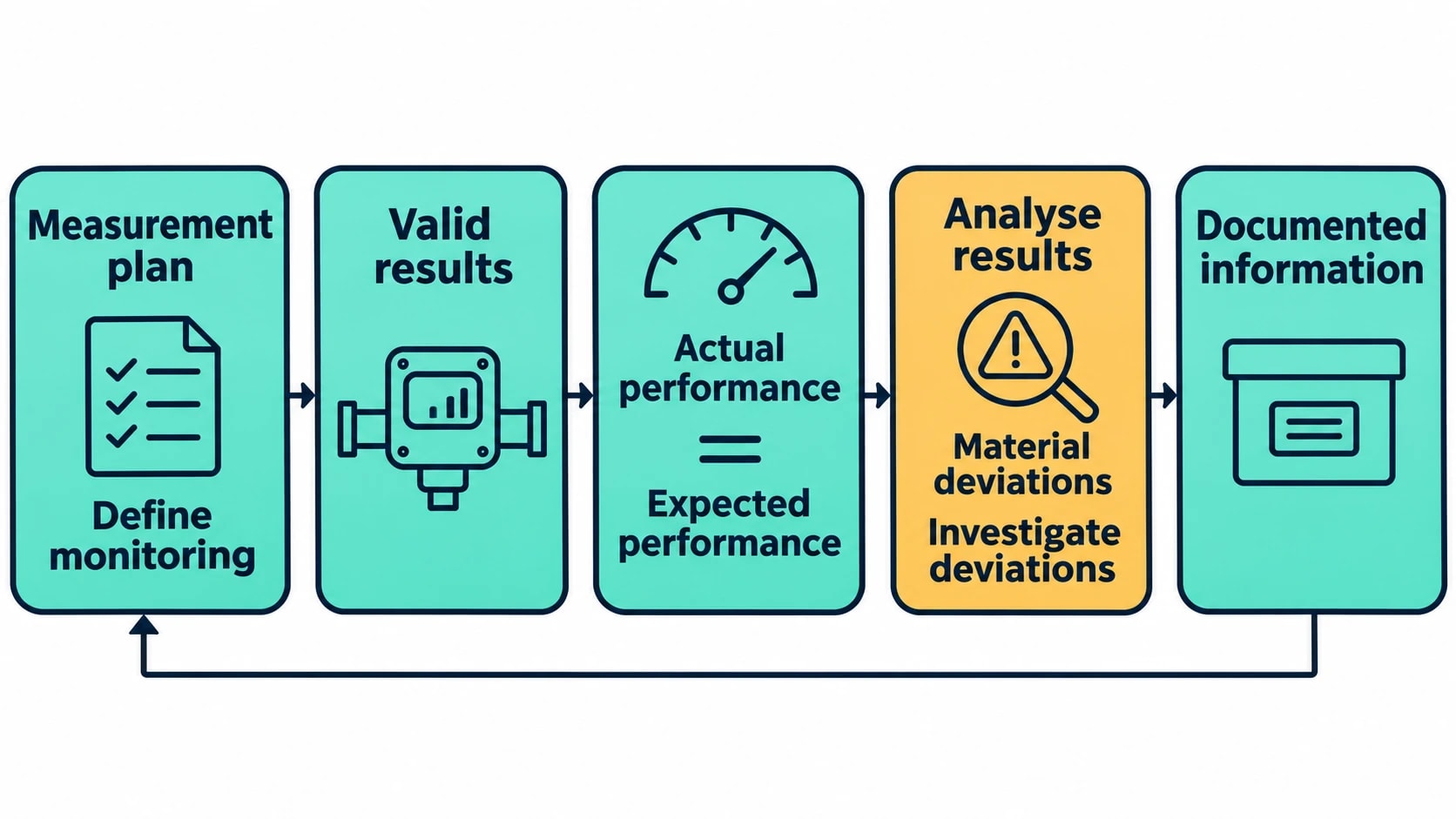
ISO 50001:2018 remains current and has one published climate-action amendment, ISO 50001:2018/Amd 1:2024. Clause 9.1 addresses monitoring, measurement, analysis and evaluation of energy performance and the energy management system.
For an industrial facility, this points to a defined measurement plan. The organisation needs to determine what it monitors, how it obtains valid results, when it analyses the results and how it evaluates performance. Relevant indicators may include energy per tonne, energy per batch, steam per operating hour or compressed-air demand during shutdown periods.
A valid ISO 50001 certification can form an ESOS compliance route where its scope covers sufficient energy consumption. It must have been issued after 5 December 2023 and remain valid on the Phase 4 compliance date of 5 December 2027.
Digital monitoring supports this work when it helps teams compare actual performance with expected performance, investigate material deviations and retain documented information. Software does not create ISO 50001 conformity on its own. The site still needs energy objectives, responsibilities, operational controls, reviews and evidence that its management system is functioning.
How Omni Vision supports energy reporting and operational analysis
Omni Vision is EnerTherm Engineering’s industrial energy intelligence platform for facilities moving from manual utility tracking to centralised measurement and analysis. It is configured to bring together data from electricity, gas, water, steam, compressed air and oil, then relate consumption to production indicators such as energy per batch or cost per tonne.
For ESOS Phase 4, this type of record can support total-energy calculations, analysis of significant energy consumption, 12-month evidence periods and measurement of action-plan outcomes. The ESOS lead assessor remains responsible for the assessment, site visits and professional judgement required by the scheme.
For SECR, centralised records can support the preparation and review of energy data, emissions calculations, intensity ratios and descriptions of energy-efficiency activity. Responsible finance, sustainability and board teams still need to approve the final statutory disclosure.
For ISO 50001 work, the platform can support monitoring of significant energy uses and investigation of deviations. Higher overnight compressed-air demand, a steam increase outside scheduled production or an unexplained electricity baseload can be assigned to maintenance or operations teams for review.
The strongest business case comes from using the same information throughout the year. A system that helps teams identify waste in January, verify a project in June and supply evidence at year end delivers more value than a compliance dashboard opened only before an ESOS deadline.
A practical procurement checklist before ESOS Phase 4
Questions for sustainability and finance leaders
- Does the organisation qualify for ESOS Phase 4 on 31 December 2026?
- Which legal entity and group boundary will submit the ESOS notification?
- Which SECR obligations apply to the reporting entity?
- Who owns emissions-factor selection, intensity ratios and report approval?
- Can the organisation reproduce the source data and methodology behind a published figure?
Questions for operations and engineering leaders
- Which assets and activities account for the required 95% coverage?
- Which significant energy uses are supported only by estimates?
- Where should energy data be related to batches, throughput, operating hours or other activity indicators?
- Which meters require verification, replacement or addition?
- What operational process follows a material deviation in energy use?
- Can the business retain evidence of savings after an improvement project is completed?
This article reflects the independent analysis and editorial opinion of EnerTherm Engineering. Product names, trademarks, and brands mentioned belong to their respective owners. EnerTherm Engineering is not affiliated with, endorsed by, or a licensee of any third-party software or product mentioned unless explicitly stated.

Technical Manager — EnerTherm Engineering
John Naranjo is Technical Manager at EnerTherm Engineering, bringing specialist expertise in chemical and environmental engineering. He recently led the implementation of Omni Vision, EnerTherm's real-time energy and utility monitoring platform. He holds an MSc in Environmental Engineering from the University of Huelva and a BSc in Chemical Engineering, with memberships in both the Energy Institute and IChemE.
