Boosting Aluminium Recycling Throughput and Thermal Efficiency: A Rotary Drying Plant Redesign
The facility operates a rotary drying line to process 15 tonnes per hour of recycled aluminium. The project scope required the technical evaluation of the drying and cooling infrastructure, specifically addressing energy consumption, particle emission management, and production throughput capabilities. The facility processes varied particle sizes, necessitating a robust approach to material handling and thermal drying.
The primary objectives were to size the new equipment for the target throughput, validate the energy requirements to reduce moisture from 12% to 1%, and define a suitable dust collection strategy. A mechanical engineering consultancy was engaged to perform a detailed design review, utilizing heat and mass balance analysis and CFD modelling to validate system requirements.
Thermal and Energy Optimisation
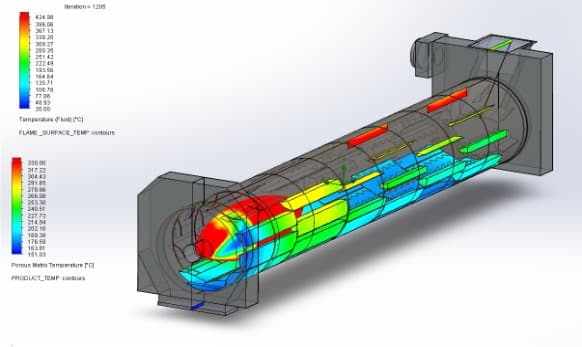
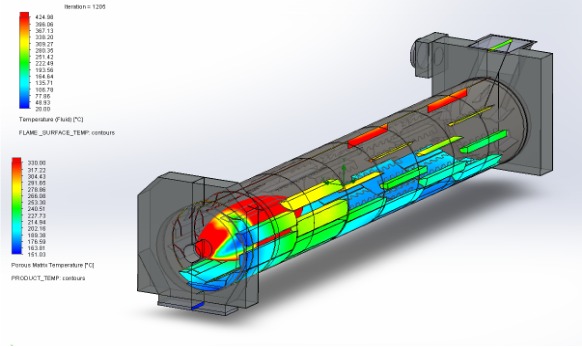
A significant portion of the design phase focused on the thermal efficiency of the rotary dryer. The consultancy analysed heat losses across the dryer shell, identifying key areas where thermal energy was escaping. The simulation results highlighted that without adequate insulation, the dryer shell alone accounted for a thermal loss of 56.7 kW.
To address this, the team designed a mitigation strategy involving the application of 120 mm of Rockwool insulation to the main dryer tube. The subsequent analysis demonstrated a substantial improvement in thermal containment.
| Configuration | Estimated Heat Loss (kW) |
|---|---|
| Dryer without insulation | 56.7 |
| Dryer with 120 mm Rockwool | 1.9 |
This design modification resulted in a reduction of heat loss to 1.9 kW. Based on operational data, this upgrade was projected to deliver annual energy savings of approximately 101,096 kWh, significantly lowering the plant operational expenditure related to gas consumption.
Burner and Combustion Management
The burner design was critical to maintaining process stability, particularly given the variable nature of the feed material. The team selected a 3.3 MW dual-fuel burner to handle the required throughput, ensuring sufficient capacity to accommodate potential increases in production by up to 30%.
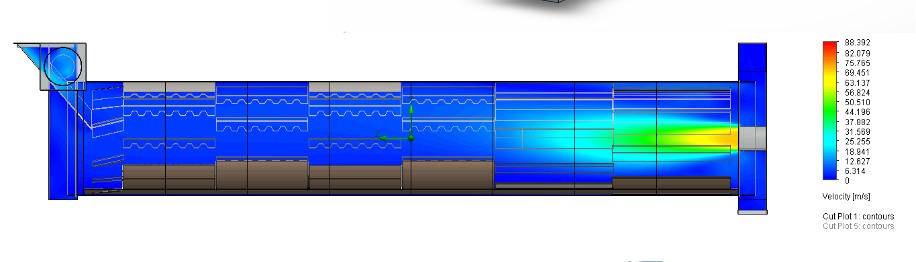
During the design phase, the engineering team identified a potential risk of flame quenching caused by cold air ingress at the solids discharge section. The team engineered several specific modifications to eliminate this effect:
- Inlet Air Distribution: Designed two pairs of inclined plates placed in opposing directions to create a uniform air velocity and pressure profile around the flame.
- Flame Tube Implementation: A high-grade insulated flame tube was incorporated to protect the critical first metre of flame formation, ensuring stable combustion and reducing emissions.
- Exhaust Geometry: Revised the exhaust section to reduce flow restrictions and lower the system pressure drop, which also improved overall burner efficiency.
Filtration Strategy
Managing particulate emissions was a central requirement of the project. The consultancy conducted a comparative analysis of filtration technologies—including wet scrubbers, cyclones, and bag filters—to determine the most effective solution for the fine-particulate nature of the recycled aluminium dust.
"The analysis concluded that a bag filter system was the superior technical choice. Wet collectors were ruled out due to the high water consumption required to condition the gas stream and the high probability of visible condensation plumes, while cyclones lacked the necessary efficiency for the specific particle size distribution present in the process stream."
The team successfully sized the bag filters based on the heat and mass balance data to ensure efficient operation and compliance with emission standards. Furthermore, the inclusion of a gas booster was specified to raise the supply pressure from 19 mbar to the required 50 mbar for the burner, ensuring reliable ignition and operation.
Operational Outcome
The comprehensive design report provided the facility with a clear roadmap for equipment procurement and installation. By defining the precise residence time requirements (3 minutes for the dryer and 2.4 minutes for the cooler), the consultancy enabled the client to select the correct slope angle and rotational speed for the equipment.
The project successfully integrated modern simulation techniques with practical engineering constraints. The resulting design ensures the facility can process 15,000 kg/hr of material at the specified moisture reduction targets, with built-in provisions for future scaling and emission control. The combination of targeted insulation, optimised burner protection, and appropriate filtration technology has positioned the facility for significantly improved thermal efficiency and reduced operational risk.

Managing Director — EnerTherm Engineering
Dr. François Pierrel is Managing Director of EnerTherm Engineering with over two decades of expertise in thermal design, heat transfer, and industrial energy optimisation. He holds a PhD in Heat Transfer from Cranfield University and a Post-Doctorate from Heriot-Watt University.
