Stabilising Coating Line Thermal Profiles: Resolving Zonal Temperature Instability
Project Overview
A manufacturing facility operating a continuous coating line was experiencing chronic thermal inconsistencies across its oven network, directly impacting product quality and operational efficiency. Internal oven temperatures frequently failed to align with established zonal setpoints, with notable delays in reaching target heat levels and significant temperature fluctuations occurring near extraction points. To address these operational deficits, the facility engaged a specialized engineering consultancy to conduct a comprehensive audit, documented in the technical project documentation.
The Challenge: Identifying Thermal Drift
The facility was managing a complex heating process where maintaining precise, consistent temperatures is critical for the integrity of the coating. The core issue involved a divergence between the zonal temperature set-point and the actual temperature at the band level. Throughout the initial evaluation, the team deployed a temperature logger to traverse each oven, allowing for a precise mapping of the thermal environment under operational conditions.
The investigation revealed several systemic faults:
- Start-up Delays: The front zones exhibited a prolonged ramp-up period, failing to reach temperature set-points in a timeframe consistent with efficient production.
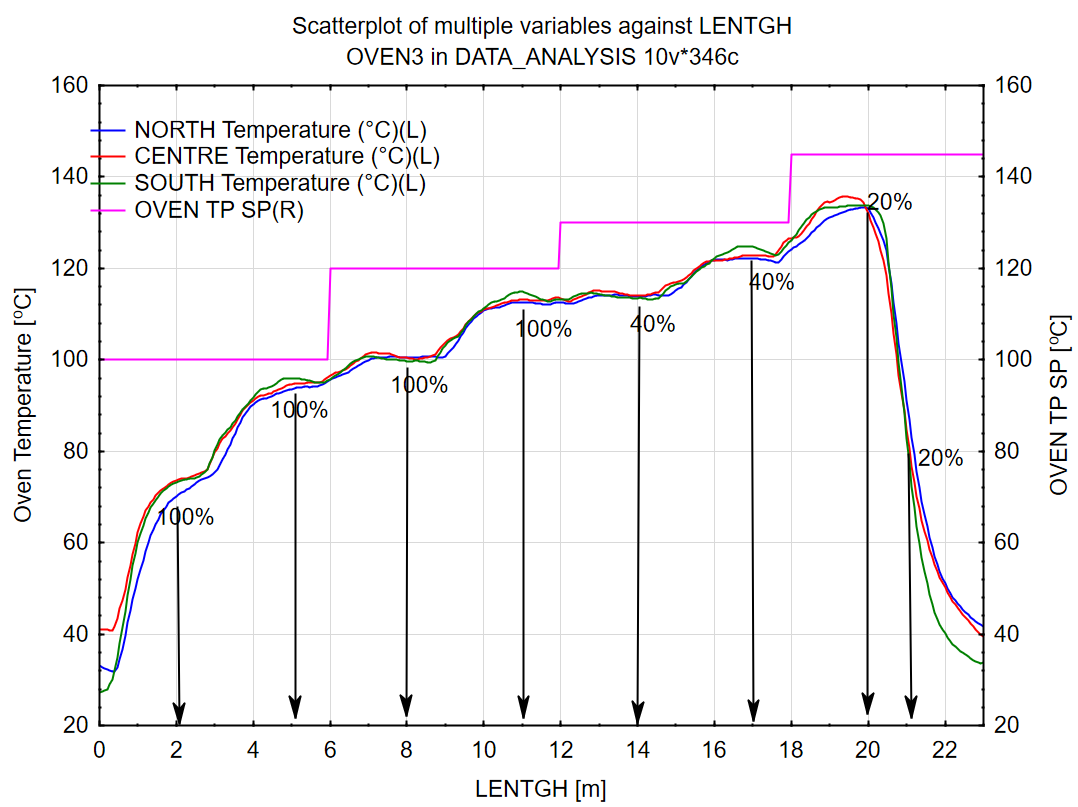
- Zonal Instability: Temperatures showed a marked decline in the final zones of the process.
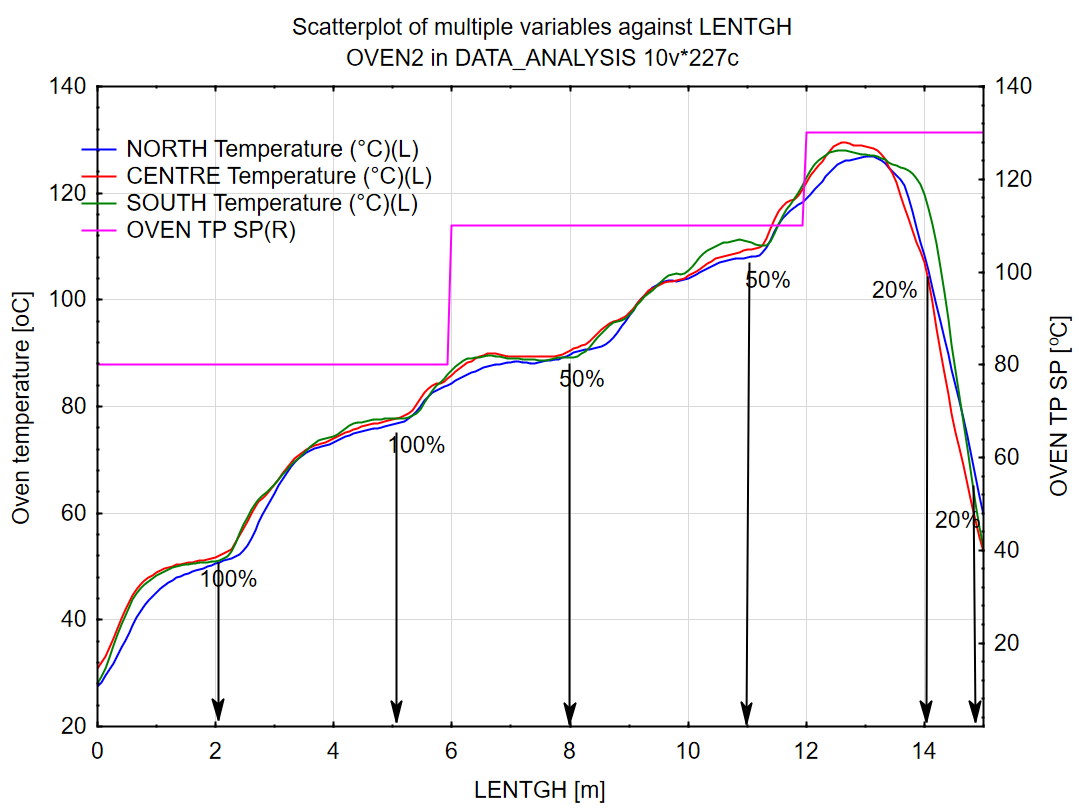
- Extraction Interference: The position of the extraction damper at the front of the oven was identified as a primary contributor to the thermal lag. Each extraction point caused a quantifiable drop in temperature across the entire oven width, which the system struggled to recover from effectively.
- Lateral Variation: Thermal data indicated that the northern section of the oven was consistently cooler than the centre and southern sections by approximately 10 degrees Celsius.
Comparative Analysis
A central focus of the analysis was comparing performance data against historical benchmarks following maintenance interventions carried out by a third-party mechanical service provider. The technical project documentation highlighted a significant variance in thermal profiles pre- and post-service.
| Parameter | Observed Variance | Operational Impact |
|---|---|---|
| Zone 1 and 2 | > 30°C drop post-service | Delayed set-point attainment |
| Lateral Temp (North vs Centre) | ~ 10°C difference | Uneven curing |
| Extraction Points | Immediate, sharp temperature drop | Energy inefficiency / product variation |
The data demonstrated that the internal oven temperature was never fully achieved at the band level, suggesting that the existing configuration of fans and extraction systems was unable to compensate for thermal losses occurring at specific extraction stages. The temperature drop before each extraction point, followed by a sluggish recovery, indicated a failure in the recycle fan strategy or inefficient mixing of the oven air.
Recommendations and Implementation Strategy
Based on the audit findings, a specialized engineering consultancy proposed a series of technical interventions designed to stabilise the thermal environment and improve heat transfer efficiency.
1. Optimising Recycle Rates
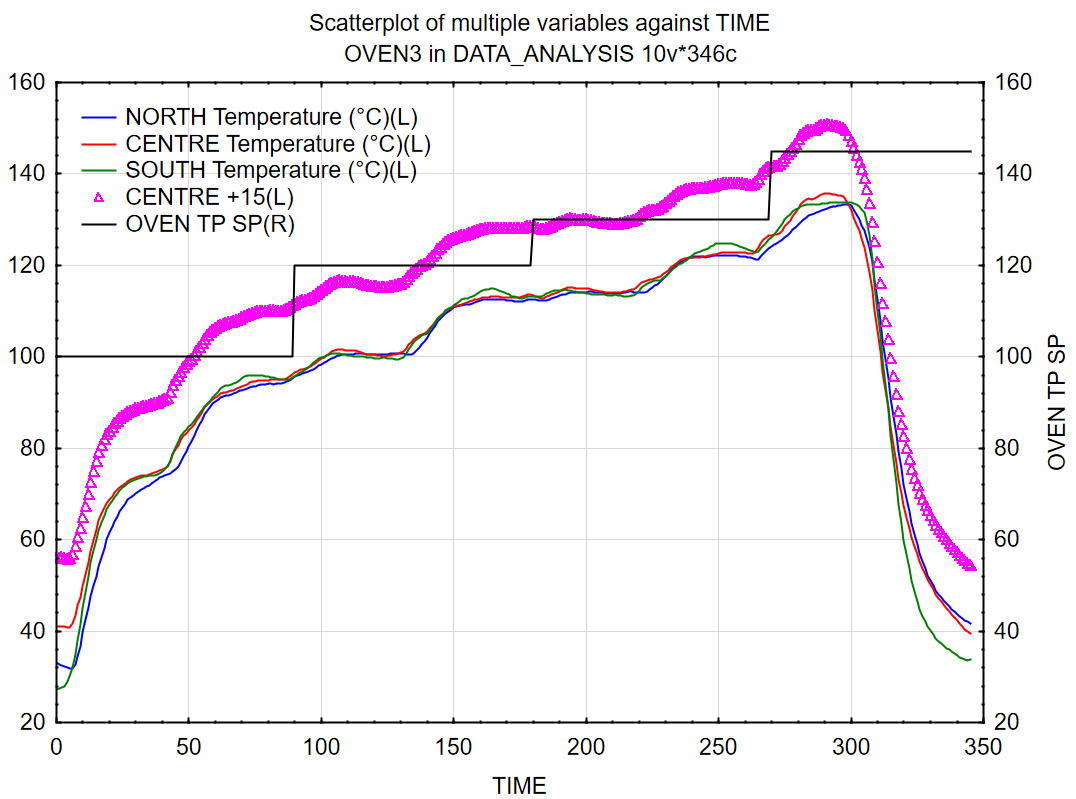
The analysis indicated that increasing recycle fan speed directly enhanced air mixing, resulting in an overall temperature increase of approximately 15 degrees Celsius. Increasing the recycle rate to 100 per cent was recommended to improve both lateral temperature distribution and overall oven temperature. This adjustment not only addresses the temperature shortfall but also provides the potential to increase band speed to between 9 and 10 metres per minute, significantly boosting production throughput.
2. Adjusting Sensor Positioning
The current placement of internal temperature sensors was deemed suboptimal. The team recommended adjusting the sensor position to between 4 and 5 centimetres from the band. This adjustment allows for a more accurate gauge of the internal chamber temperature relative to the target, enabling the facility to fine-tune the oven temperature set-points with greater precision.
3. Balancing Extraction and Pressure
To address the "end effect" caused by extraction—where temperatures dropped sharply at the end of the oven—the extraction dampers at the front and back require precise calibration. The team recommended using an anemometer to measure airflow at the oven mouth to ensure a slight negative pressure. This maintains a balance between preventing solvent build-up and minimising unnecessary heat loss through excessive extraction.
4. Mechanical Integrity Checks
The investigation questioned the performance of the heat exchangers in the front zones. Recommendations included:
- Conducting a full check of the differential pressure at each heat exchanger feed and outlet.
- Inspecting oil valve operation to ensure fluid flow is not restricted.
- Verifying tube cleanliness to prevent fouling, which significantly hinders heat transfer efficiency.
Furthermore, the facility maintenance manager highlighted concerns regarding the feed to the incinerator, currently rated at 20,000 cubic metres per hour. The team recommended transitioning from spot measurements to cross-flow measurements to ensure the total average flow is accurately quantified, as current measurement methods may be masking potential for further extraction optimisation.
Conclusion
The thermal process survey successfully identified the root causes of temperature instability across the coating line. By transitioning from reactive maintenance to a data-driven approach, the facility is now positioned to implement precise mechanical and process adjustments. A specialized engineering consultancy also developed a bespoke software programme to automate data extraction from the loggers, reducing analysis time from several hours to just a few minutes. This streamlined approach enables the client to monitor thermal performance continuously and make real-time adjustments, ensuring the oven operates at peak thermal efficiency.

Managing Director — EnerTherm Engineering
Dr. François Pierrel is Managing Director of EnerTherm Engineering with over two decades of expertise in thermal design, heat transfer, and industrial energy optimisation. He holds a PhD in Heat Transfer from Cranfield University and a Post-Doctorate from Heriot-Watt University.
