Improving Oven Consistency: Reducing Residence Time Variance in Coating Lines
The manufacturing facility operates three industrial coating ovens as part of its primary production line. Following maintenance activities on the burners, ovens, and instrumentation, the management team engaged an engineering consultancy to perform a comprehensive thermal audit. The objective was to establish a baseline of operational performance and assess the efficacy of the recent service interventions.
The project was structured into two distinct survey phases. The first audit took place on 6 May, with a follow-up assessment performed on 6 July to evaluate the state of the equipment post-maintenance. This comparative approach allowed the project team to quantify performance shifts directly attributable to the service work.
Methodology and Investigation
The project engineer led the site surveys using a standardised protocol across all three ovens. To measure internal conditions accurately, the team deployed heat flux sensors and temperature loggers. These sensors were attached to the coating paper, with a aperture cut directly beneath the sensor to facilitate measurement of heat transfer to both the top and bottom surfaces of the material.
The instrumentation was traversed through the full length of the three coating ovens. To ensure data integrity, sensors were positioned at three strategic points across the oven band: the centre, the control side, and the non-control side. The facility maintained a consistent line speed of 4 m/min during both survey events. The primary metric for comparison was the oven length, allowing for a normalised analysis of heat transfer profiles despite variations in residence time.
Performance and Observations
The analysis revealed that prior to the service, the ovens exhibited inconsistent residence times, which complicated the drying process. Post-service data indicated a marked improvement in operational stability.
| Oven Identification | Survey 1 Residence Time Variance (s) | Survey 2 Residence Time Variance (s) |
|---|---|---|
| Oven 1 | 21.00 | 5.25 |
The reduction in residence time variance from 21 s to 5.25 s in Oven 1 represents a significant gain in process consistency. This improvement is critical for ensuring uniform drying, reducing the likelihood of residual solvent in the final product, and minimising quality defects. However, the study also identified persistent technical limitations across the fleet.
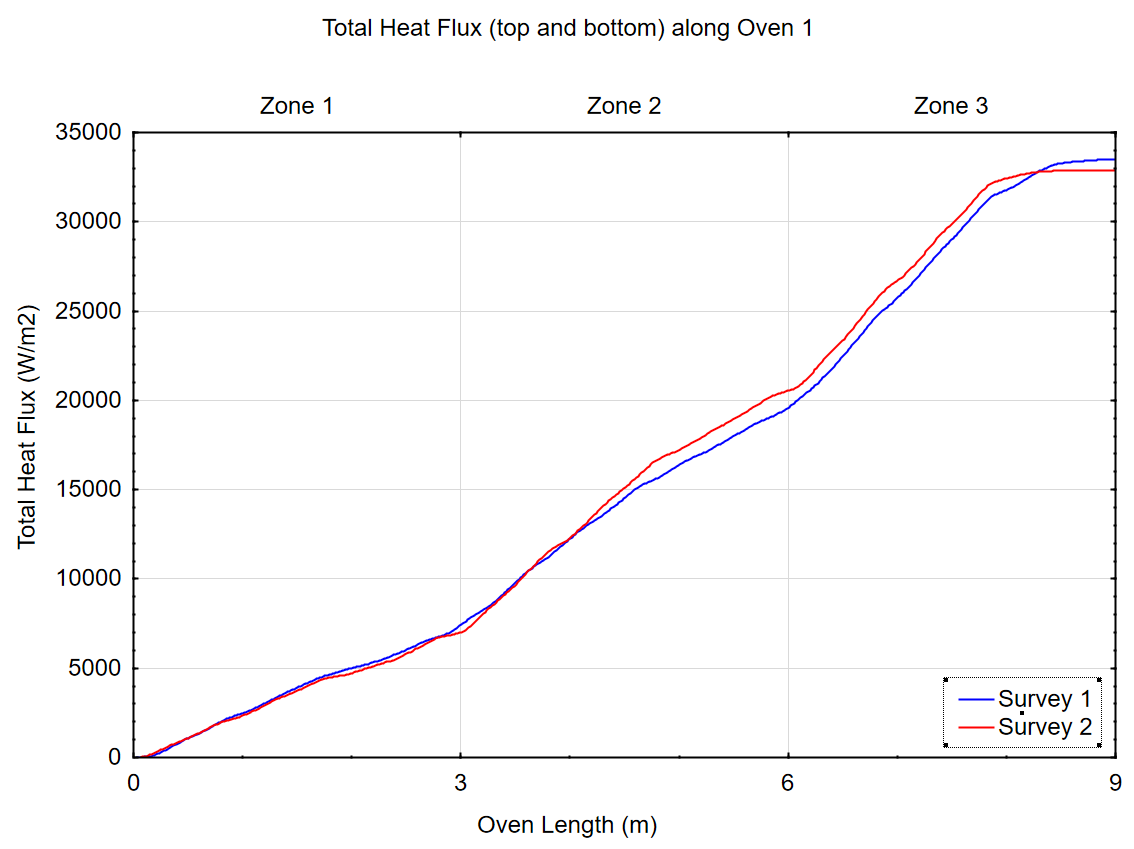
Oven 1: Thermal Profile Analysis
While temperature control across Oven 1 remained consistent, data analysis identified a notable temperature drop at the conclusion of Zone 3. The project team attributed this to air ingress near the oven exit, which facilitated cooling in the final processing stage. This cooling effect reduced the effective heat transfer area, though the bottom-nozzle heat transfer remained largely resilient to this disturbance.
Oven 2: Impact of Air Ingress
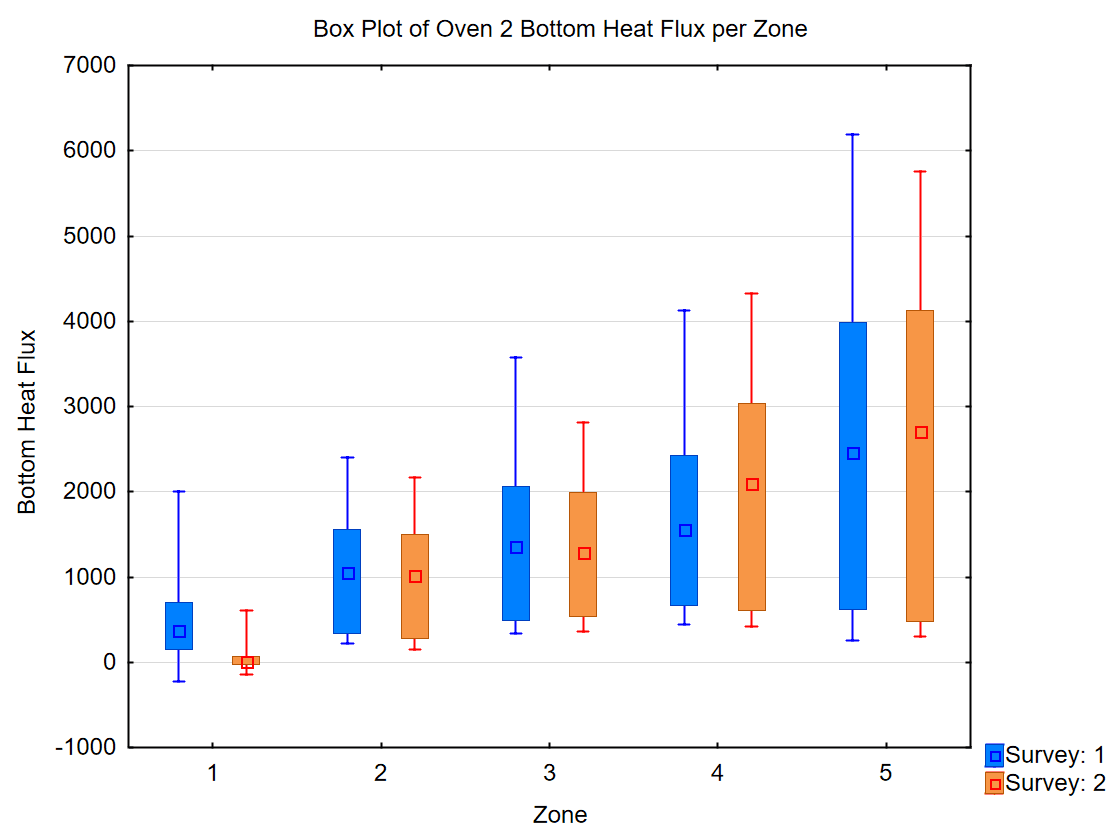
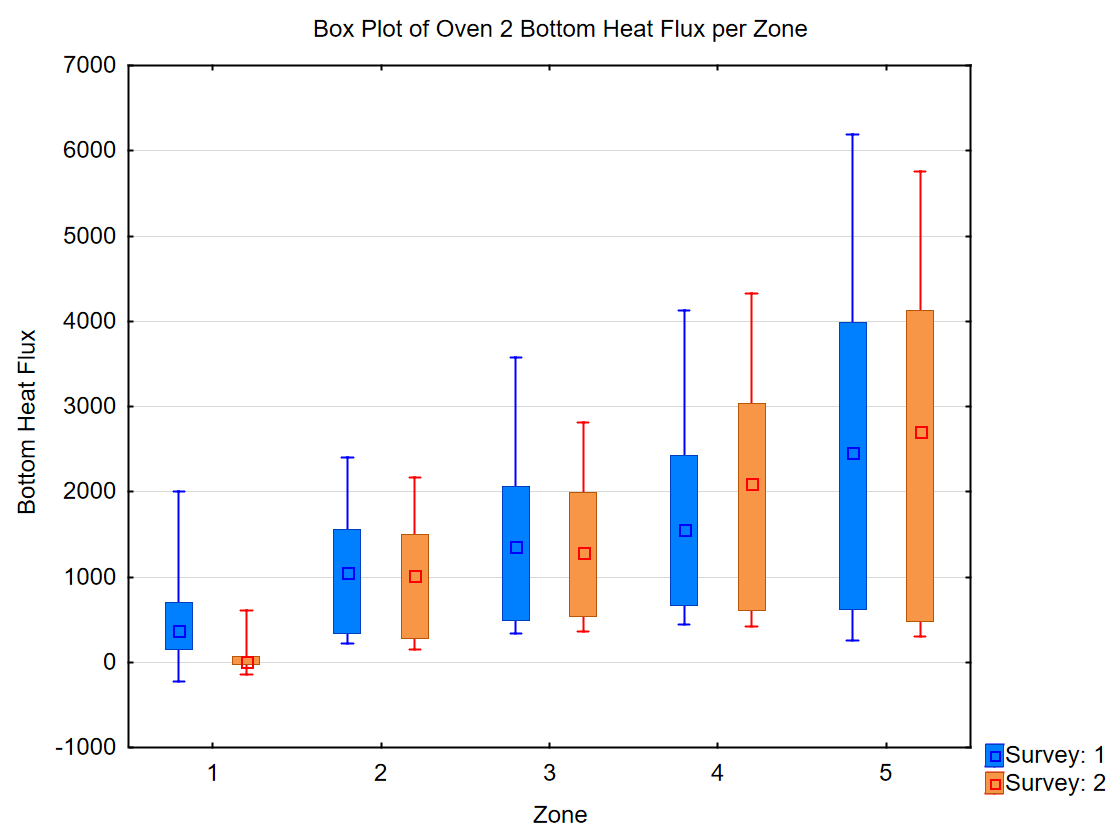
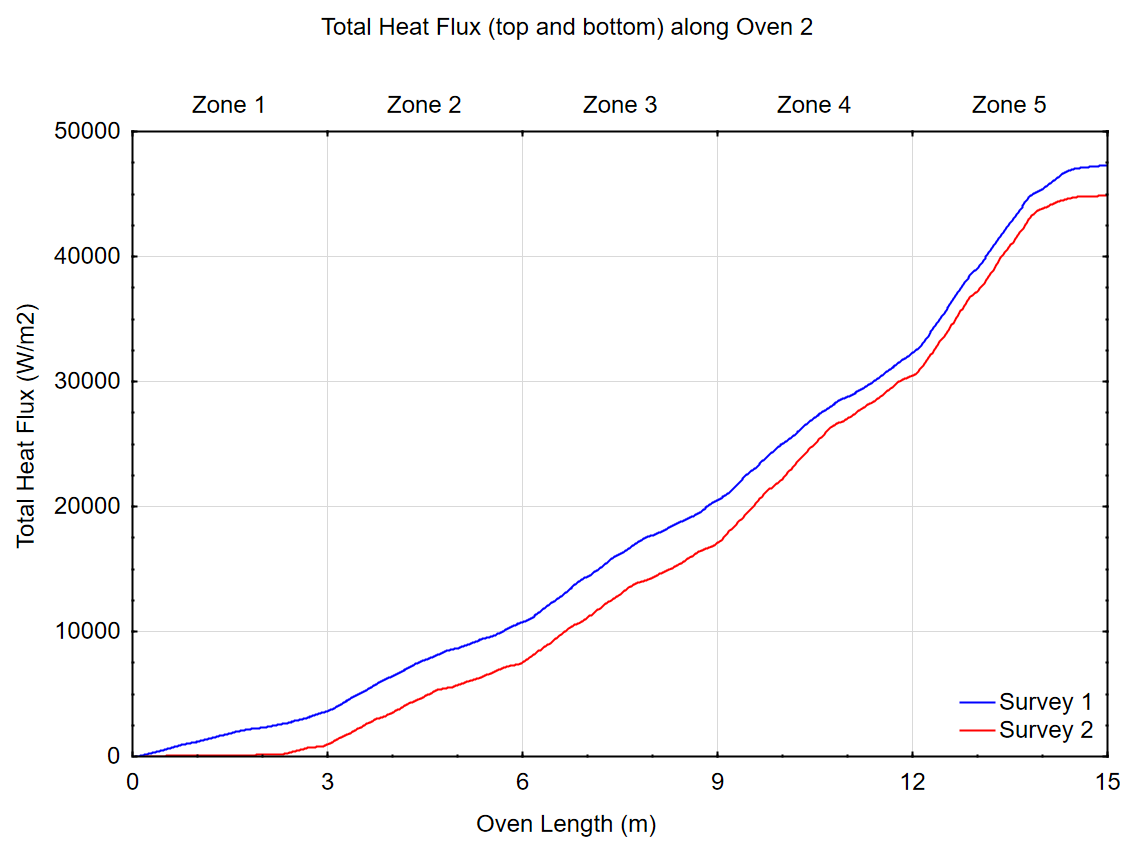
Oven 2 exhibited similar temperature control in the central sections, but the entrance conditions were suboptimal. Significant air ingress at the entrance was found to be cooling Zone 1, effectively suppressing heat transfer to the product. This loss of thermal energy was not fully recovered throughout the remainder of the oven length, demonstrating that the initial thermal deficit imposed a hard limit on the total heat transfer possible for that pass.
Oven 3: Plenum Design and Control
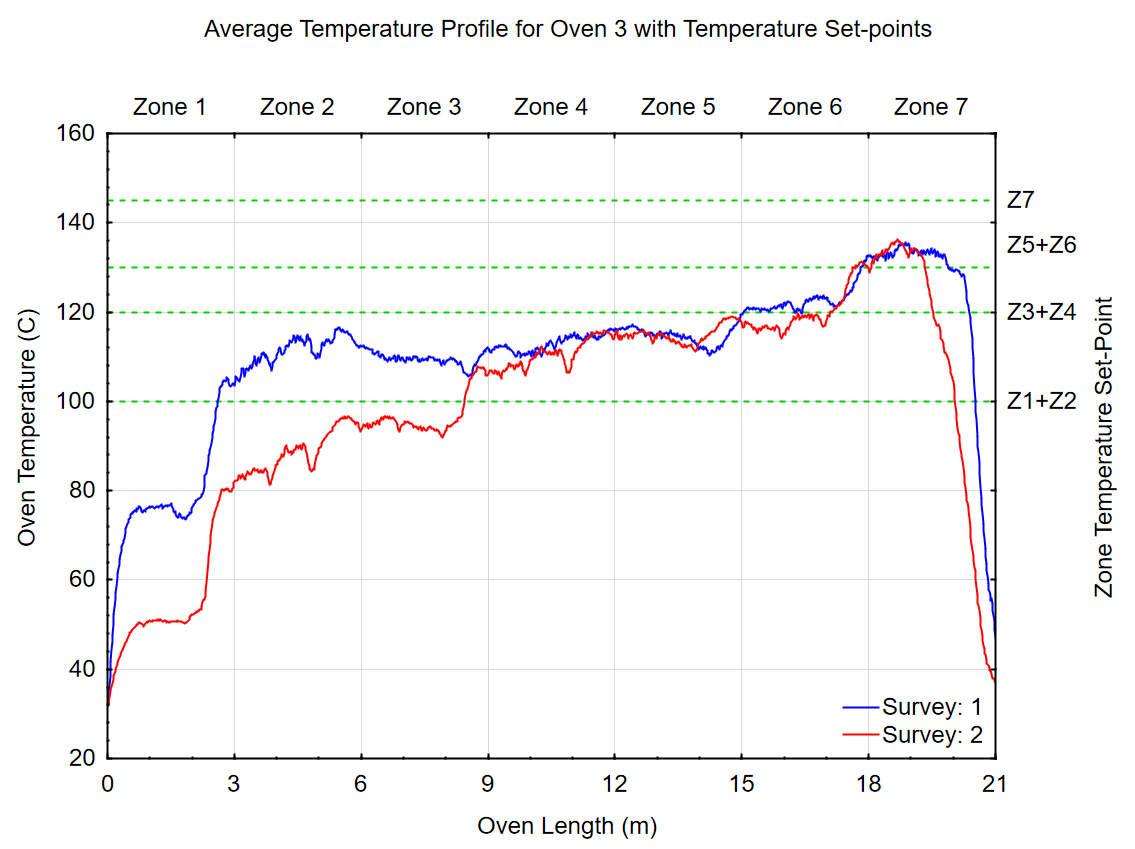
The survey of Oven 3 highlighted distinct changes following the service. The temperature in the first zone was significantly lower than pre-service levels, resulting in poor initial heat transfer to the substrate. Furthermore, the analysis identified subtle variations in heat transfer across the oven band. The project lead concluded that this was due to the plenum design, which struggled to distribute airflow evenly from the lower nozzles. However, the oven temperature profile was more distinct post-service, suggesting that while the initial drying zones required further calibration, the overall control capability of the system had improved.
Analysis of Findings
The investigation confirmed that while the maintenance work successfully improved the consistency of the drying line, all three ovens continued to suffer from uncontrolled air ingress. This phenomenon creates a consistent drag on thermal efficiency. When cold air enters the oven, it creates a temperature differential that forces the burner to work harder to maintain set points, or alternatively, reduces the effective heat flux delivered to the product.
The team noted that the specific actions taken during the service may have inadvertently altered the sealing or pressure balance of the ovens. Without a detailed breakdown of the service adjustments, the precise source of the increased air ingress remains a subject for further investigation. Nevertheless, the improved residence time stability is a demonstrable operational success, providing a more reliable foundation for downstream process control.
Conclusion
The thermal survey provided a clear data-driven baseline for the manufacturing facility. By quantifying the heat flux and temperature profiles, the engineering consultancy enabled the facility management to distinguish between controlled process variables and mechanical inefficiencies.
The next phase of operational improvement will focus on maximising heat transfer by fine-tuning the balance between temperature, airflow, and recirculation. To achieve this, the team recommends the implementation of online product measurement to track real-time drying effects. Alternatively, re-deploying the heat flux logger will be necessary to validate future adjustments to the internal oven environment. Through this iterative approach, the facility aims to optimise the drying curve, thereby unlocking the potential for increased overall throughput and improved product quality.

Managing Director — EnerTherm Engineering
Dr. François Pierrel is Managing Director of EnerTherm Engineering with over two decades of expertise in thermal design, heat transfer, and industrial energy optimisation. He holds a PhD in Heat Transfer from Cranfield University and a Post-Doctorate from Heriot-Watt University.
