Engineering Design and Costing for Flue Gas Heat Recovery at a Manufacturing Facility
Project Overview
A manufacturing facility in southern England, operated by a multinational consumer goods corporation, was venting substantial volumes of thermal energy through flue gas emissions. The facility required a solution to recover this waste heat to preheat water for internal site processes, thereby reducing overall utility demand. a thermal systems engineering consultancyineering was engaged to lead the first phase of the thermal recovery project, focusing on technical design, energy modelling, and comprehensive cost estimation.
The facility presented a complex environment characterised by variable flue gas flow rates and the need for seamless integration into existing infrastructure. Without a verified Pinch Analysis and subsequent mechanical design, the client could not proceed with capital expenditure. The objective was to produce a rigorous design package that would define the technical requirements, safety protocols, and budgetary framework for the installation of a heat recovery system.
Engineering Investigation and Design
The initial phase of the thermal recovery project necessitated a multidisciplinary approach to ensure the proposed solution was both technically viable and commercially sound. The team, led by a thermal systems engineering consultancyineering, commenced with an on-site data collection and energy audit. This stage was critical to accurately model the flue gas composition and establish the variable flow parameters required to size the equipment correctly.
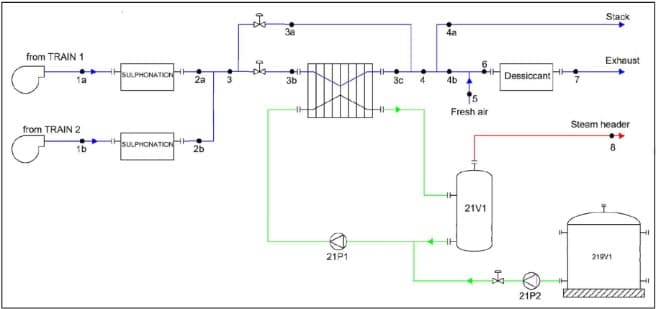
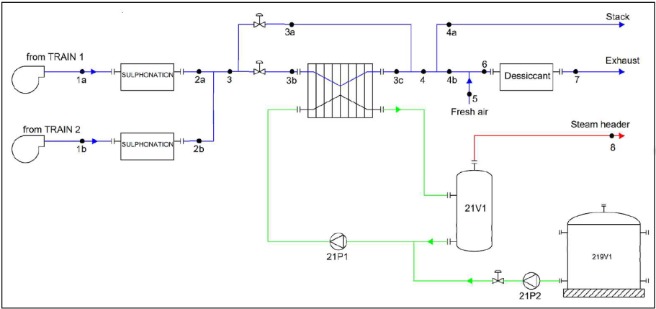
Following the audit, the team developed a set of conceptual schematics. This involved a collaborative effort with a mechanical engineering contractor to align the proposed PFD with the physical layout of the site. Key activities undertaken during this phase included:
- System Modelling: Calculation of heat exchanger sizing to optimise thermal transfer efficiency based on varying flue gas input levels.
- Mechanical Integration: Coordination of equipment location and layout, including the requirement for a new structural platform to support the heat exchanger units.
- Tie-in Point Mapping: Detailed identification of connection points for water and flue gas piping, managed in partnership with the mechanical engineering contractor.
- System Instrumentation: Defining the control philosophy for the heat exchanger, ensuring it could operate reliably across minimum and maximum flow scenarios.
Safety and Structural Compliance
Integrating high-temperature equipment into an existing industrial environment introduces significant safety and structural challenges. Consequently, the design phase placed heavy emphasis on regulatory compliance and mechanical integrity. A HAZOP study was facilitated by a global professional services firm to rigorously assess the risks associated with the new thermal recovery system. This study was instrumental in identifying potential failure points and ensuring that the final design mitigated these risks through appropriate engineering controls.
| Activity | Lead Responsibility |
|---|---|
| Data Collection and Energy Audit | a thermal systems engineering consultancyineering |
| Conceptual Schematics and PFD | a thermal systems engineering consultancyineering / Mechanical Contractor |
| Instrumentation and Control Design | a thermal systems engineering consultancyineering / Global Services Firm |
| Structural Calculations and Stress Analysis | a thermal systems engineering consultancyineering |
| Civil Engineering Coordination | Civil Engineering Contractor / Global Services Firm |
Structural integrity remained a primary focus. a thermal systems engineering consultancyineering performed detailed stress analysis on the proposed pipework and heat exchanger supports. This ensured that the configuration could withstand operational thermal expansion and contraction without compromising the safety of the plant. A civil engineering contractor was subsequently consulted to define the requirements for the supporting structures, anchors, and hangers, ensuring that the installation would adhere to site safety standards.
Project Deliverables and Financial Costing
A core component of the engagement was the development of precise documentation to support the transition from design to tender. The team produced comprehensive P&I&D documents, which served as the foundation for the material list and final cost estimation. This granular level of detail ensured that the mechanical engineering contractor and other stakeholders could provide accurate quotations for the subsequent phases of the project.
The deliverables provided by the team included:
- Technical Specifications: Detailed equipment datasheets for the heat exchangers and ancillary components.
- Cost Estimation: A clear, itemised budget for materials, installation labour, and professional services.
- Project Roadmap: A phased approach moving from design and costing to the eventual client capital expenditure tender and contractual agreement.
Results and Conclusion
By the conclusion of the design phase, the thermal recovery project had achieved a clear definition of the technical solution. The design proved that an efficient heat exchanger system could be successfully integrated into the existing facility infrastructure. With the completion of the structural calculations, safety reviews, and material lists, the client was provided with the necessary documentation to move confidently into the capital expenditure tender process.
The structured approach ensured that all parties, from the mechanical engineering contractor to the civil engineering contractor, were aligned on the scope, responsibilities, and technical requirements. This preparation significantly reduced the risk profile for the upcoming installation and established a robust framework for successfully recovering 100% of the design-basis thermal energy from the flue gas, directly contributing to the client's long-term sustainability goals.

Managing Director — EnerTherm Engineering
Dr. François Pierrel is Managing Director of EnerTherm Engineering with over two decades of expertise in thermal design, heat transfer, and industrial energy optimisation. He holds a PhD in Heat Transfer from Cranfield University and a Post-Doctorate from Heriot-Watt University.
