
How UK Pharmaceutical Energy Audits Meet ESOS and GMP
BS EN 16247-1, ISO 50001 and non-invasive metering protect GMP data integrity.
UK pharmaceutical businesses that meet the ESOS Phase 4 threshold on 31 December 2026 must submit their compliance notification by 5 December 2027. Their significant energy consumption must account for at least 95% of total energy use across buildings, industrial processes and transport.
A pharmaceutical facility energy audit has a wider burden than a conventional factory review. It must identify credible reductions in electricity, gas, steam, compressed air and cooling demand while protecting validated manufacturing conditions, cleanroom stability and GMP-record integrity.
That requires discipline at the boundary between energy management and product quality. An air handling unit, clean steam generator or compressed-air system may have a direct quality, contamination-control or operator-safety function. Energy performance needs scrutiny, but audit work cannot become an uncontrolled change to a qualified system.
ESOS Phase 4 changes the audit brief for pharmaceutical groups
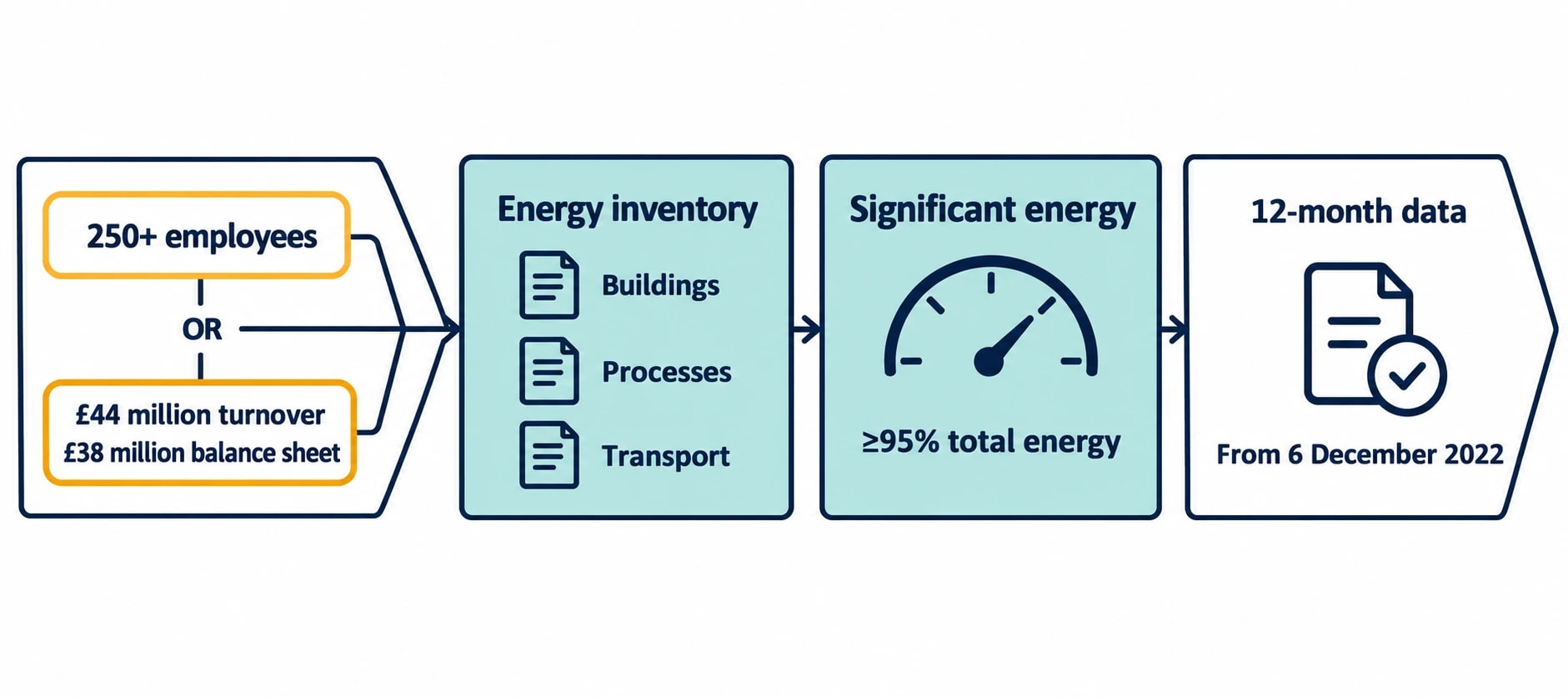
ESOS applies to large UK undertakings and qualifying corporate groups. A UK company qualifies for Phase 4 if, on 31 December 2026, it employs 250 or more people, or exceeds both £44 million annual turnover and a £38 million annual balance-sheet total.
For pharmaceutical groups, the assessment starts with a complete inventory of energy used by buildings, industrial processes and transport. The group then identifies areas of significant energy consumption that together represent at least 95% of the total.
What a pharmaceutical facility energy audit should cover
Material energy uses at a medicines site often include:
- Cleanroom, production-suite and warehouse HVAC
- Chillers, cooling towers, chilled-water pumps and dehumidification plant
- Steam generation, clean steam, hot-water distribution and condensate recovery
- Compressed-air generation, treatment, distribution and point-of-use demand
- Granulation, coating, drying, sterilisation and thermal processing
- Refrigeration, cold storage and temperature-controlled logistics areas
- Laboratories, offices and supporting buildings
- Company-operated transport where it is material to group consumption
Phase 4 also requires energy-intensity ratios for buildings, transport, industrial processes and other energy uses. A single site-wide kWh-per-unit metric can obscure the cause of changing demand when batch size, product mix or campaign length shifts.
A better pharmaceutical facility energy audit uses a hierarchy of indicators: electricity per batch, steam per sterilisation cycle, compressed air per production hour, chilled-water energy per operating hour and kWh per square metre of classified area. Each needs a clearly defined denominator and verifiable source data.
Phase 4 demands evidence of action as well as opportunity
The audit must use, so far as reasonably practicable, verifiable energy-consumption data from a 12-month period. That period cannot begin before 6 December 2022 or more than 24 months before the audit starts. ESOS energy audits also require site visits.
Phase 4 reporting goes beyond a list of opportunities. Participants must report energy savings achieved during the compliance period, review the previous action plan and explain why proposed measures were not implemented.
For pharmaceutical operators, an improvement register should record estimated annual kWh savings, the accountable owner, implementation date, measurement method, capital cost, operating impact, change-control reference and qualification activity. This provides ESOS evidence while showing QA that energy work followed site governance.
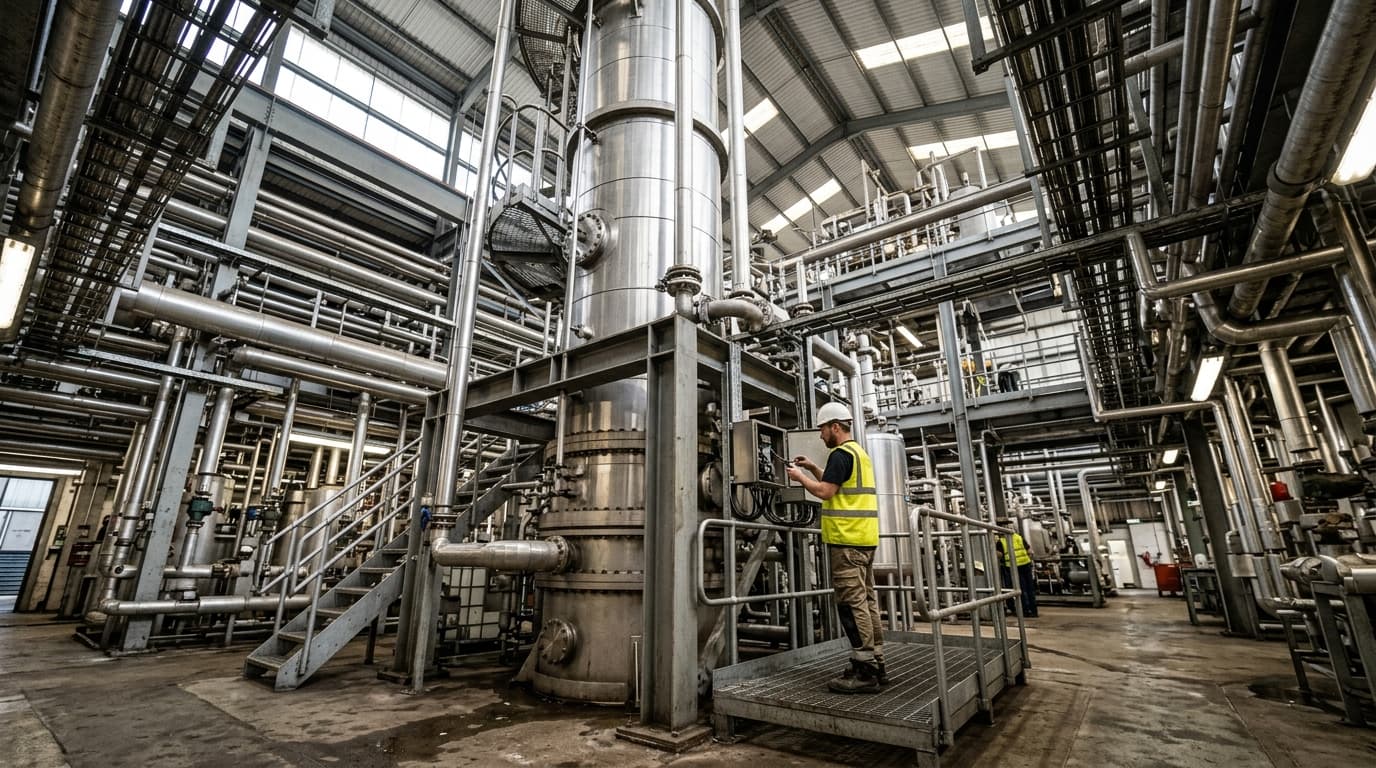
Omni Vision delivers turnkey utility metering, CO2 tracking, and AI-powered production KPI intelligence — giving you real-time dashboards and actionable insights across your entire facility.
Use BS EN 16247-1 to structure the audit
ESOS does not prescribe a single audit methodology. The Environment Agency identifies BS EN 16247 energy-audit standards as good-practice methods for identifying opportunities. BS EN 16247-1:2022 sets general requirements, methodology and deliverables for energy audits.
For pharmaceutical sites, its value lies in the structured review of the organisation, energy uses and operating context. A credible audit establishes why the plant uses energy before recommending reductions.
Set the boundary with QA, production and engineering
The audit team should agree the scope before collecting temporary data or accessing plant areas. Engineering can confirm utility architecture, meter points, isolations, equipment condition and permitted access windows. Production can explain campaign timing, cleaning, changeovers, maintenance shutdowns and abnormal operating modes.
QA should identify systems, records and environmental conditions that affect product quality, batch release or validation status. Environmental health and safety personnel should identify access restrictions and permits. Finance should validate invoices, cost data and reporting boundaries.
Stable overnight cleanroom consumption may be necessary to maintain approved environmental conditions. It may also reveal unnecessary fan operation, reheating, cooling or filtration resistance. Audit evidence must distinguish between those causes.
Measure utilities without changing their control function
Non-invasive sub-metering can establish a utility baseline while limiting physical intervention. Clip-on current sensing, temporary power monitoring and suitable clamp-on flow measurement can identify demand patterns without cutting into pipework or changing a control programme.
The intended use still matters. If energy data remains an operational management input, it may sit outside the validated control system. If it informs batch release, environmental-compliance decisions or a GMP record, the facility should assess it through quality risk management and change control.
The ISPE GAMP 5 Guide, Second Edition, provides risk-based good practice for computerised systems that are fit for intended use. It is guidance rather than legislation. Its principles help a site decide what validation and documentation are proportionate to a system’s GxP impact.
The MHRA’s GxP data-integrity guidance makes the same practical point: controls depend on data criticality and how information supports quality decisions. Meter locations, data sources, calibration status where applicable, data gaps and correction methods should allow an auditor to retrace the energy conclusion.
Cleanroom HVAC efficiency must preserve the qualified state
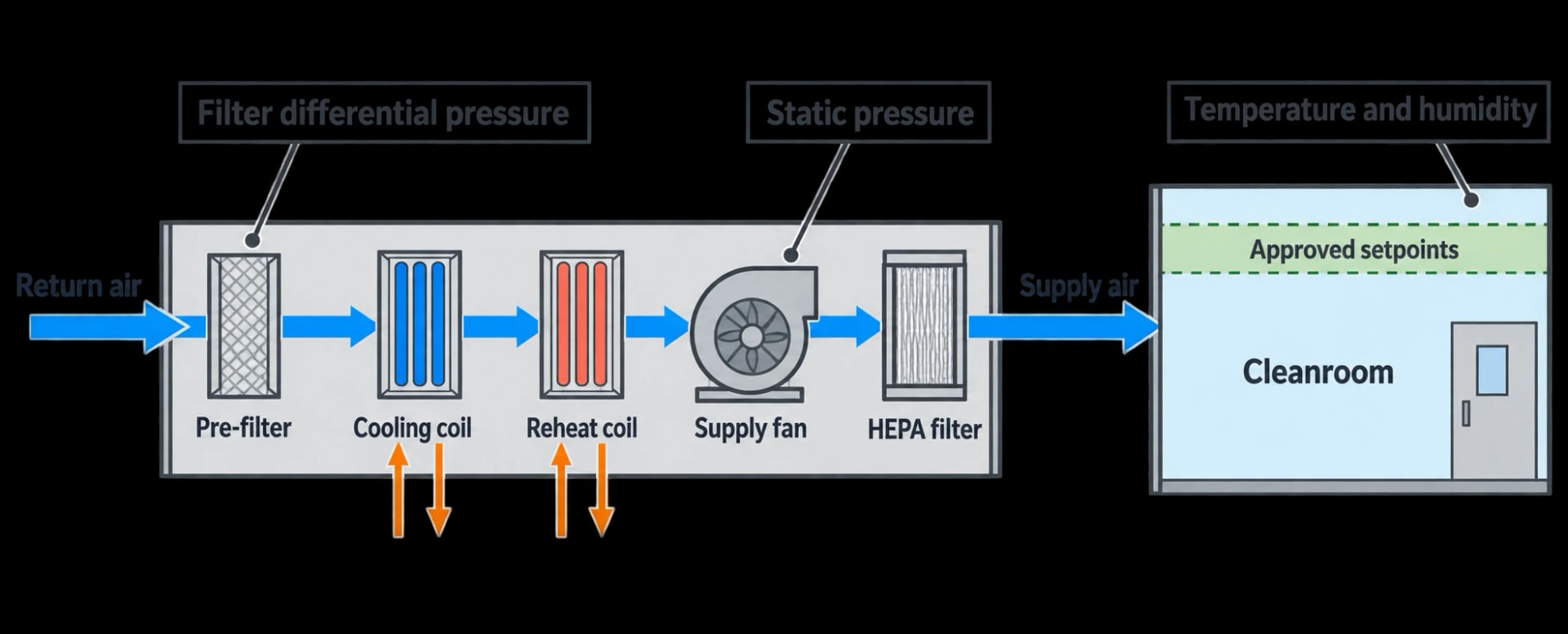
Cleanroom HVAC can dominate pharmaceutical electricity use, particularly where facilities maintain continuous temperature, humidity, pressure-cascade and particle-control conditions. It also supports the contamination-control strategy for sterile and non-sterile manufacturing.
EudraLex GMP Annex 1 for sterile medicinal products became fully applicable on 25 August 2024. Its focus on contamination control makes uncontrolled HVAC energy projects unacceptable, however attractive the predicted saving.
Treat approved conditions as audit constraints
An audit should record approved setpoints, alarm limits, pressure differentials, airflow requirements, filtration arrangements and recovery requirements for each area. These are operating constraints, not variables to adjust during a survey.
Engineers can assess whether the plant operates in accordance with its approved design and sequence. They should route any proposed parameter change through formal quality assessment, change control, commissioning and, where necessary, requalification.
Useful questions include:
- Does each air handling unit follow the intended schedule for production, cleaning, recovery and unoccupied periods?
- Is fan power consistent with the required airflow and actual pressure drop across filters?
- Are heating and cooling coils operating at the same time because of sequencing errors, leaking valves or poor loop tuning?
- Do room-pressure excursions coincide with door opening, airlock use, fan faults or excessive control response?
- Does chilled-water supply temperature reflect the approved dehumidification and process requirement?
- Are humidification, reheat and extract systems operating when the area is outside its approved demand state?
These are performance questions, not permission to relax environmental control.
Build the HVAC evidence set around operating state
A monthly electricity invoice cannot explain why an air system consumes energy. The audit should relate fan kW to supply and return air temperature, humidity, static pressure, damper position, filter differential pressure and production state.
ISO 14644-1:2015 classifies air cleanliness by airborne particle concentration. It does not set an energy target or replace GMP requirements. It reinforces the need to maintain the defined controlled environment while assessing energy performance.
A properly scoped review can identify excess run hours, simultaneous heating and cooling, unstable control loops, high fan resistance and abnormal base load. Each finding needs an operational explanation and GMP impact assessment before the site changes a critical parameter.
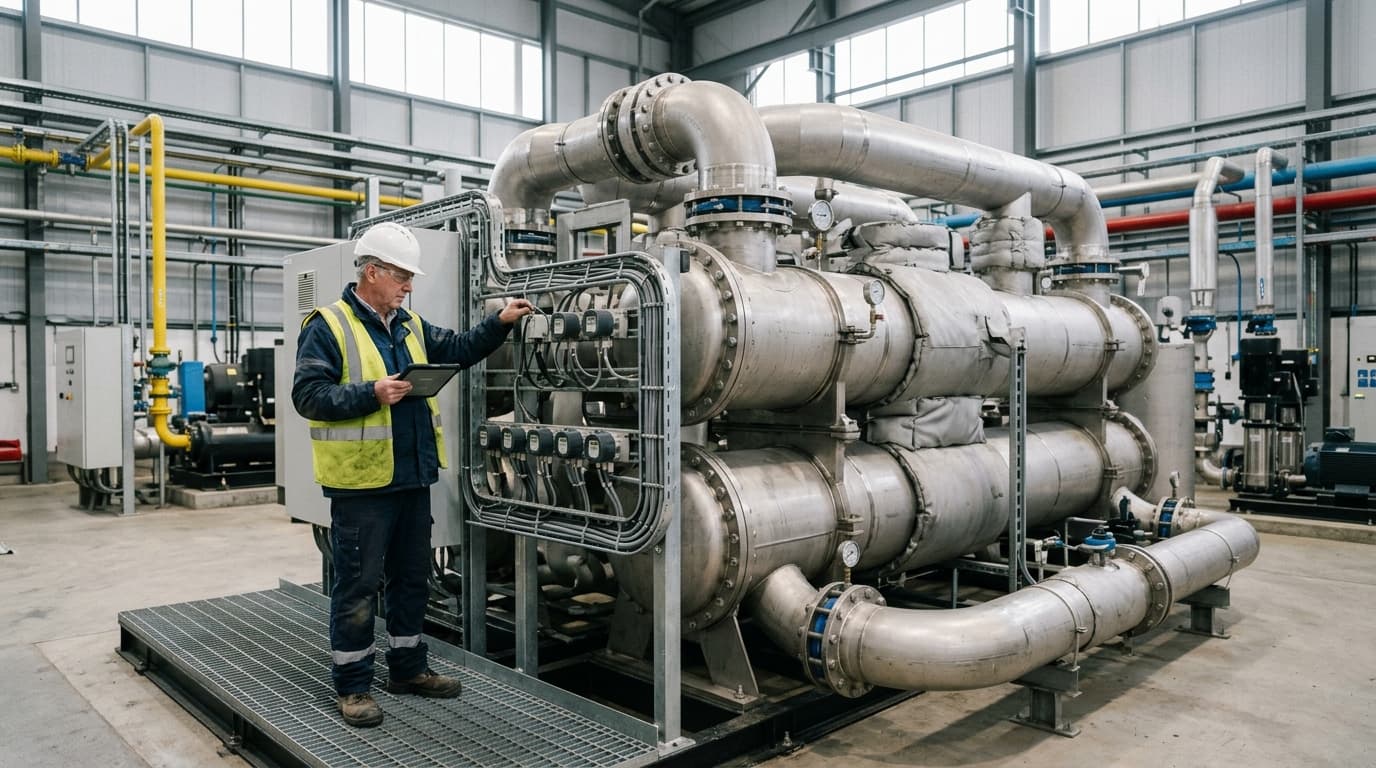
Track energy consumption, emissions, and process parameters with seamless PLC/SCADA integration via Modbus, OPC-UA, and MQTT protocols.
ISO 50001 turns the audit into a managed programme
ISO 50001:2018 remains current and provides a framework for establishing, implementing, maintaining and improving an energy management system. It does not prescribe a particular technology. It requires an organisation to manage energy performance systematically.
For pharmaceutical manufacturing, this turns the periodic pharmaceutical facility energy audit into a continuing management process. It connects utilities, operations, maintenance and quality rather than leaving energy responsibility with sustainability alone.
Give significant energy uses defined owners
The energy review should identify significant energy uses. In pharmaceutical production, these commonly include cleanroom HVAC, refrigeration, steam, compressed air and thermal processing. Each should have an owner, operating-control approach, energy-performance indicator and improvement plan.
| Audit element | Energy-management purpose | GMP consideration |
|---|---|---|
| Meter hierarchy | Identifies consumption by utility and major user | Installation and intended use assessed through change control |
| Energy baseline | Establishes a reference for improvement | Baseline reflects approved production and environmental conditions |
| Batch-linked indicator | Separates output-related demand from avoidable loss | Batch identifiers remain within controlled manufacturing records |
| HVAC review | Identifies excess fan, cooling and reheat demand | No alteration to qualified conditions without approval |
| Improvement register | Tracks measures, owners and verified savings | Links projects to validation, maintenance and quality actions |
An ISO 50001 certification can provide an ESOS compliance route where it covers the required significant or total energy consumption. For Phase 4, the certificate must have been issued after 5 December 2023 and remain valid on the 5 December 2027 compliance date.
Certification scope matters. A certificate that excludes major cleanroom, steam or refrigeration loads will not by itself cover the organisation’s ESOS obligation. The remaining significant energy consumption needs appropriate audit coverage.
SECR needs traceable Scope 1 and 2 information
SECR applies to quoted companies, large unquoted companies and large LLPs, subject to relevant exemptions. It requires reporting entities to disclose energy use, greenhouse-gas emissions, intensity ratios, prior-year comparisons where available, methodology and principal energy-efficiency actions.
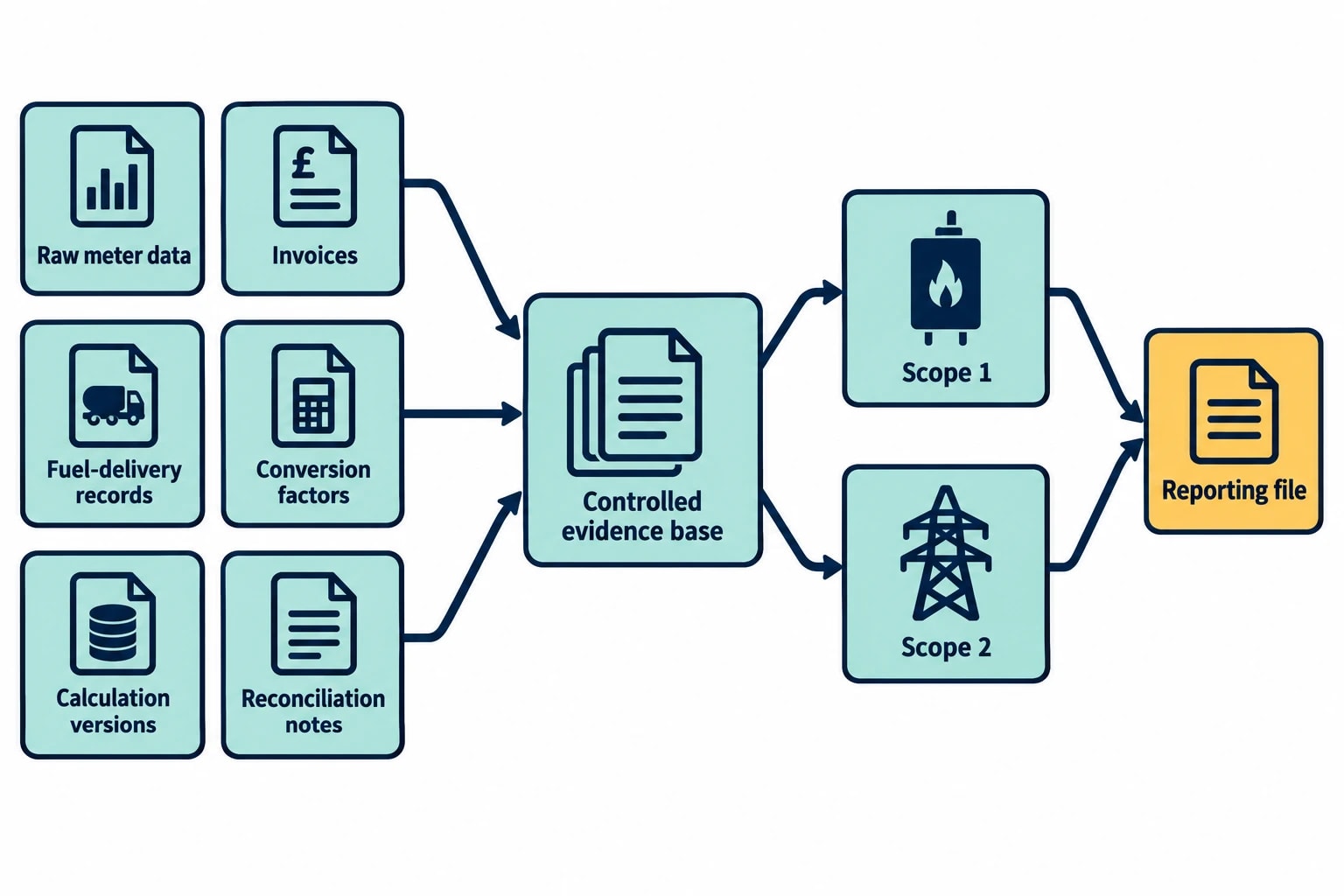
For a pharmaceutical manufacturer, ESOS and SECR should draw on one controlled evidence base. Separate spreadsheets maintained by facilities, finance, sustainability and QA teams create reconciliation risk.
Reconcile energy data with production records
Scope 1 emissions commonly arise from fuels burned on site, including natural gas used in boilers and thermal plant. Scope 2 covers purchased electricity and, where relevant, purchased heat, steam or cooling.
The audit record should retain raw meter data, invoices, fuel-delivery records, conversion factors, calculation versions and reconciliation notes. The Department for Energy Security and Net Zero publishes annual greenhouse-gas conversion factors for company reporting. The reporting file should identify the factor set used for the relevant financial year.
Batch-level utility information need not appear in the annual report. It does allow the site to explain material changes in reported consumption. A rise in electricity use may result from additional production, extended cleanroom operation, a refrigeration fault or deteriorating HVAC control. Batch and campaign context allows teams to make that distinction.
A practical pharmaceutical facility energy audit sequence
A successful audit follows the pharmaceutical quality system from the outset.
1. Confirm regulatory and quality objectives
Confirm ESOS eligibility, reporting entities, audit boundary, ISO 50001 scope and SECR reporting period. Identify utilities, production areas and data sources that affect GMP activities.
2. Map the energy and production system
Document incoming supplies, existing meters, distribution networks, major consuming assets, cleanroom zones and production patterns. Record shutdowns, planned maintenance, batch campaigns and unusual operating events before interpreting demand.
3. Approve the measurement plan
Define measurement locations, installation methods, safety controls, data-collection period and intended use of the findings. Quality should assess any activity that could affect validated equipment, process control or GMP records.
4. Establish baselines and investigate variation
Compare energy use with relevant production and operating drivers. A high night-time load may be an avoidable base load, a required cleanroom condition or evidence of equipment malfunction. The audit should establish the cause before assigning a saving.
5. Put savings measures through change control
Rank measures by energy, carbon, cost, technical risk, GMP impact and available implementation window. Route accepted projects through the site’s engineering and quality procedures. Verify savings after the new operating condition has stabilised and required quality activities are complete.
This article reflects the independent analysis and editorial opinion of EnerTherm Engineering. Product names, trademarks, and brands mentioned belong to their respective owners. EnerTherm Engineering is not affiliated with, endorsed by, or a licensee of any third-party software or product mentioned unless explicitly stated.

Technical Manager — EnerTherm Engineering
John Naranjo is Technical Manager at EnerTherm Engineering, bringing specialist expertise in chemical and environmental engineering. He recently led the implementation of Omni Vision, EnerTherm's real-time energy and utility monitoring platform. He holds an MSc in Environmental Engineering from the University of Huelva and a BSc in Chemical Engineering, with memberships in both the Energy Institute and IChemE.
