Optimising Chiller System Design: Dynamic Thermal Modelling for Chemical Batching
Operational Context
A chemical manufacturing company located in a town in the West Midlands was undertaking a significant facility upgrade. The production line relied on a series of reactor and mixer units, which utilised a cooling heat exchanger to maintain precise temperature control during batch processing. To support increased production requirements, the facility needed to install a new, upgraded chiller system. However, standard steady-state sizing calculations were deemed insufficient due to the inherent temperature fluctuations that occur throughout a typical batch cycle.
The client engaged EnerTherm Engineering to perform a rigorous assessment of their cooling infrastructure. The objective was to calculate the exact cooling load required for the proposed chiller system, ensuring it would deliver necessary reliability and efficiency without the capital expenditure risks associated with oversizing or the operational risks of undersizing.
The Technical Approach
Unlike continuous manufacturing processes, batch production involves variable heat release profiles. As reactants interact and chemical reactions progress, the rate of heat generation changes significantly. To address this, the team deployed a transient thermal model of a representative reactor and mixer system.
Data Collection
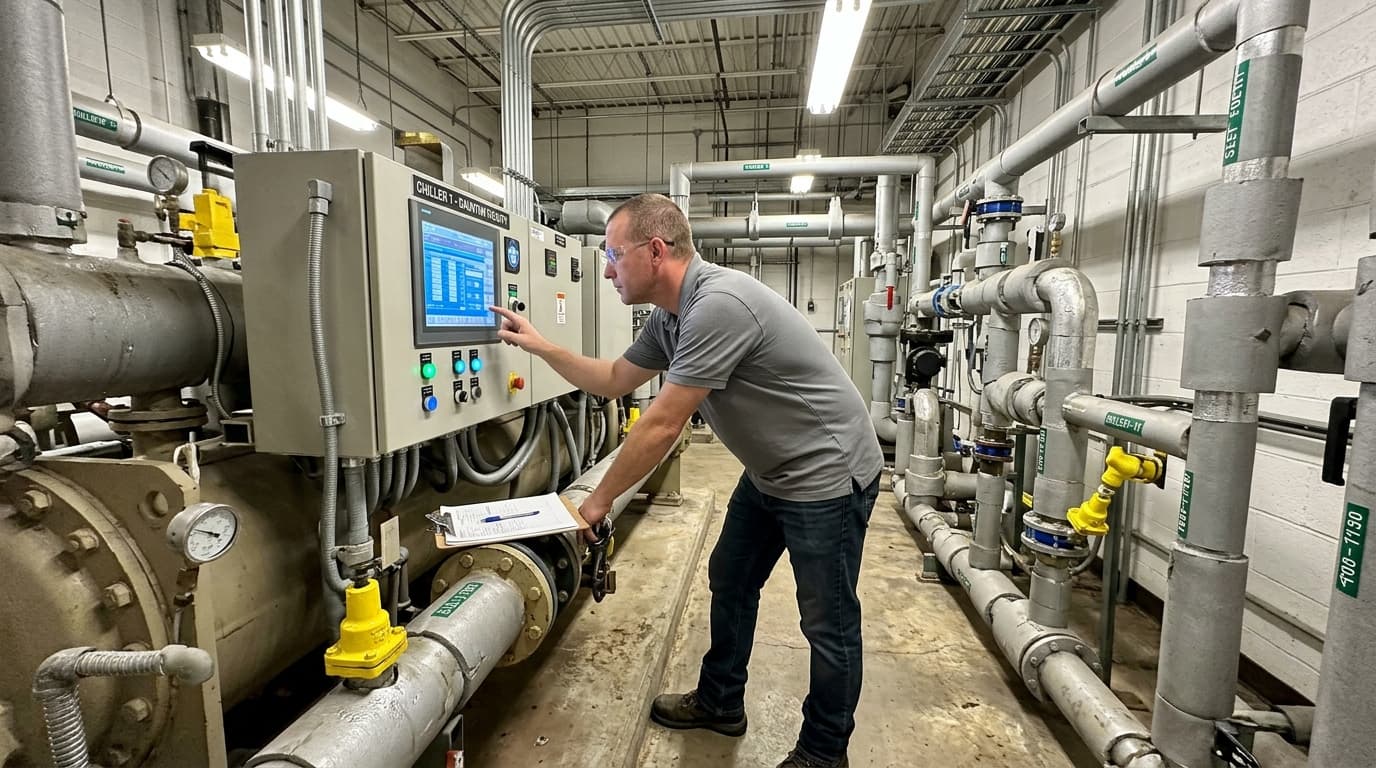
The first phase of the programme involved an intensive site survey. EnerTherm Engineering dispatched 2 engineers to the client facility in the West Midlands for 2 days of data acquisition. The team utilised specialised measuring equipment to record baseline data, including:
- Vessel size and geometry.
- Process fluid composition and phase change properties.
- Existing flow rates and pipework configuration.
- Pressure and temperature profiles at various stages of the batch operation.
Simulation and Modelling
Using the collected site data, the engineering team developed a dynamic simulation to replicate the heat transfer between the reactants and the cooling system. This model allowed the team to visualise the cooling demand profile across the entire batch cycle. By capturing the peak thermal loads rather than relying on average figures, the simulation provided a high-fidelity view of exactly when and how much cooling capacity the chiller system needed to provide.
| Scope of Work | Objective |
|---|---|
| Site Data Collection | Capture accurate flow rates, vessel constraints, and process temperatures. |
| Transient Simulation | Model heat transfer dynamics during the full batch operation cycle. |
| Load Extrapolation | Scale the findings from a single reactor unit to estimate total system demand. |
Findings and Project Outcomes
The transient model enabled the team to successfully extrapolate the cooling requirements across the wider plant. By validating the model against the representative units, EnerTherm Engineering provided the client with a precise cooling load profile. This technical data served as the foundation for the design, sizing, and specification of the new chiller system.
This evidence-based approach provided several key advantages for the manufacturer:
- Capital Expenditure Control: By avoiding the common industry practice of applying broad safety margins, the client was able to size their new chiller equipment accurately, reducing initial investment costs.
- Energy Efficiency: An appropriately sized chiller operates closer to its optimal performance point, reducing parasitic energy losses that typically occur in oversized or inefficiently controlled cooling systems.
- System Reliability: The model identified critical points in the batch cycle where cooling demand peaked, ensuring the new installation could handle these surges without compromising process integrity.
The successful delivery of this transient analysis highlights the necessity of dynamic modelling in complex chemical processing. By shifting from static calculations to time-based thermal analysis, the client ensured their new cooling infrastructure was fully aligned with their actual production demands.

Managing Director — EnerTherm Engineering
Dr. François Pierrel is Managing Director of EnerTherm Engineering with over two decades of expertise in thermal design, heat transfer, and industrial energy optimisation. He holds a PhD in Heat Transfer from Cranfield University and a Post-Doctorate from Heriot-Watt University.
