Optimising Hydraulic Stability in High-Capacity Skid-Mounted Boiler Packages
The thermal recovery project required the integration of a skid-mounted high-temperature hot water boiler package into an existing facility process. With a design temperature of 110 °C and a fluctuating process demand peaking at 37,900 L/h, the primary engineering challenge was to ensure consistent hydraulic performance across the closed-circuit system. A specialized engineering consultancy was engaged to model the hydraulic network, size the pumping equipment, and establish the necessary boiler water treatment protocols to ensure long-term operational integrity.
Establishing the Hydraulic Baseline
The project necessitated a high degree of precision in hydraulic design due to the complex flow demands of the facility. The system was designed to handle two distinct operational phases: a ramp-up phase and a steady-state phase. During ramp-up, the demand placed on the boiler reached 23,500 L/h, while the steady-state load combined with the secondary process requirements necessitated a total system flow of 37,900 L/h.
To accurately model the system behaviour, the team performed a comprehensive fluid dynamic simulation based on the client-provided isometric drawings. This analysis was critical to map the pressure drop across the 100-metre pipe run (utilising 78 mm inner diameter carbon steel pipe) and the brine heat exchangers. By ignoring minor losses from fittings and control valves in the initial modelling phase, the team established a theoretical baseline for the pressure requirements, which was subsequently verified against the system's total head loss constraints.
| Parameter | Specification |
|---|---|
| Design Flow Rate | 37,900 L/h |
| Operating Temperature | 110 °C |
| System Pressure (Pre-charge) | 2.0 bar |
| Brine System Max Pressure Drop | 2.5 bar |
| Pipework Inner Diameter | 78 mm |
Pumping Strategy and Configuration
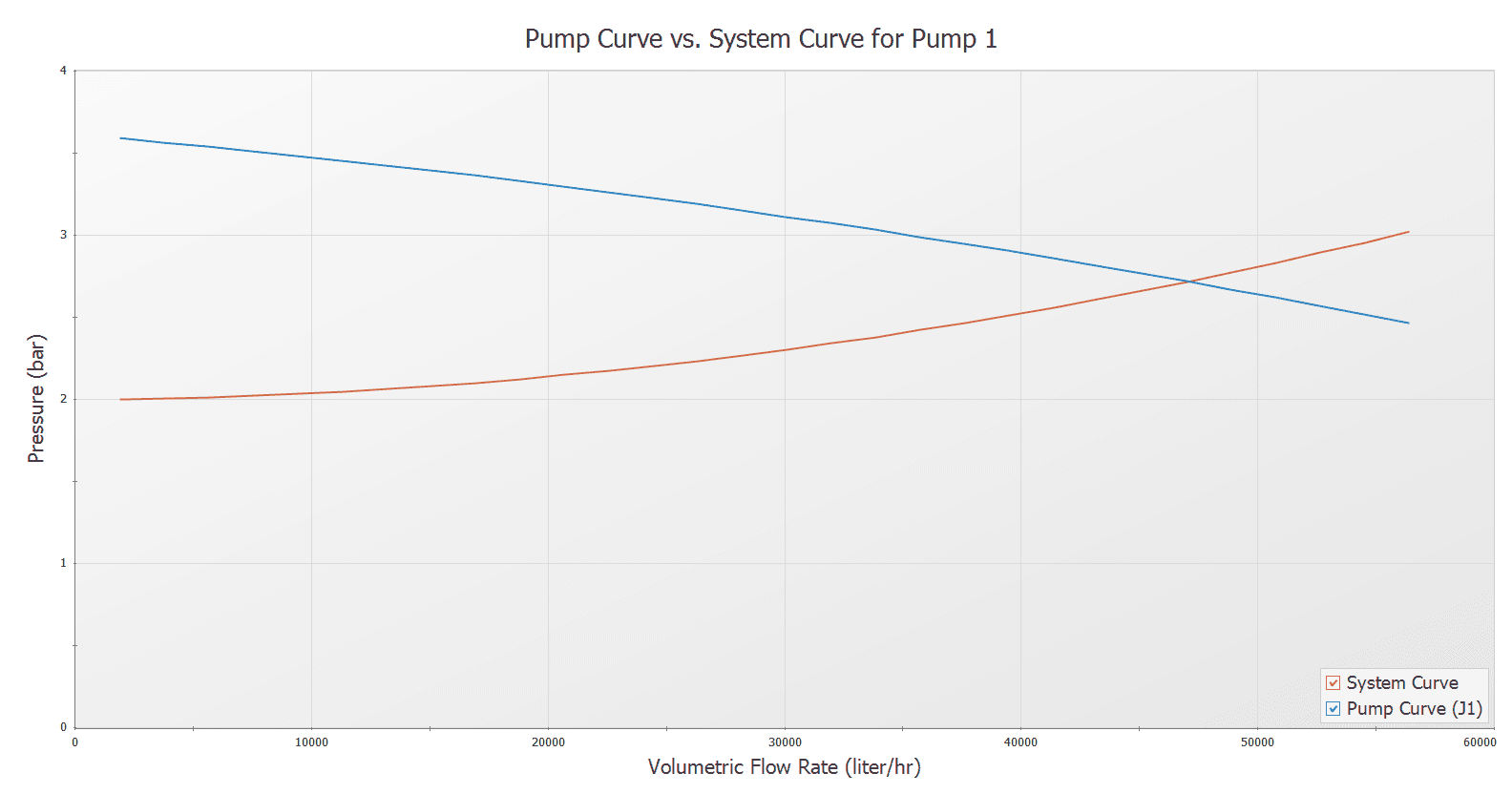
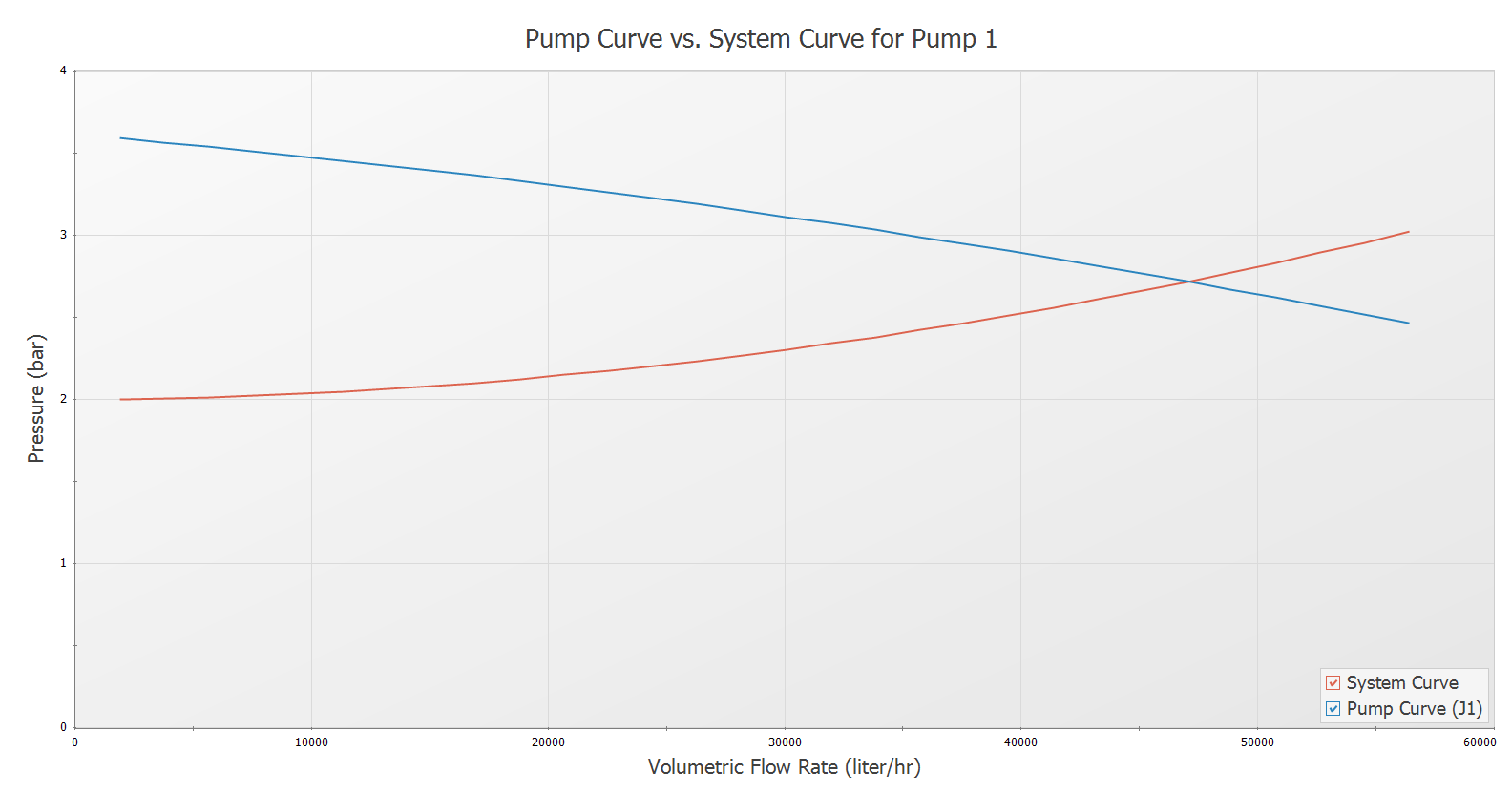
A critical component of the design involved the specification of pumping equipment suitable for the aggressive flow rates required. Discussions with a pump manufacturer identified that a single-pump solution would be insufficient for the required capacity and system reliability needs. Consequently, the team designed a duty-standby arrangement to manage the system flow effectively.
The configuration specifies three pumps in total. One pump is dedicated to managing the bypass flow of 18,000 L/h, ensuring the boiler receives consistent flow regardless of downstream process fluctuations. The remaining 28,800 L/h, intended for the heat exchangers, is managed by two pumps in a duty-standby arrangement. This design ensures that should one pump fail, the critical heat exchanger loop remains operational, providing the system with the necessary resilience required for industrial process heating.
Ensuring Compliance with BG04 Standards
Beyond the hydraulic design, the project team addressed the stringent requirements for boiler water chemistry. Operating shell boilers at these temperatures necessitates strict adherence to industry guidelines to prevent scaling, corrosion, and carryover. The team implemented a strategy aligned with BG04 guidance, as recommended by a boiler manufacturer.
Proper water treatment is not merely an operational recommendation but a regulatory necessity to ensure the longevity of the boiler assets. The design integrates several key water treatment components:
- Water Softening: Installation of a duplex ion-exchange softener to facilitate the continuous removal of calcium and magnesium ions.
- Deaeration: Systems designed to maintain dissolved oxygen levels below 0.02 mg/L, mitigating the risk of oxygen-induced corrosion within the coil and shell structures.
- Chemical Dosing: Automated systems for the precise application of oxygen scavengers and alkalinity builders to maintain the feedwater pH between 8.5 and 9.5.
- Monitoring Protocols: Establishment of regular testing regimes for total dissolved solids (TDS), pH, and hardness, ensuring that operators can maintain system conductivity within the recommended bounds.
Safety and Expansion Management
To accommodate the thermal expansion of the fluid within the closed-circuit system, the design included the specification of an appropriately sized expansion vessel. With a total system volume of 1122.6 L, the team calculated the expansion volume to be 57.8 L, requiring a vessel with a total volume of 110.6 L. This ensures that the system pressure is maintained safely between the pre-charge pressure of 2.0 bar and the maximum pressure of 5.3 bar.
The final system integration also includes a pressure safety valve (PSV) configured for 10 barG to provide an ultimate safeguard against over-pressurisation. This combination of hydraulic modelling, strategic equipment selection, and robust water treatment compliance provides a complete, reliable solution for the client, ensuring the boiler package can meet the demanding process requirements of the facility.

Managing Director — EnerTherm Engineering
Dr. François Pierrel is Managing Director of EnerTherm Engineering with over two decades of expertise in thermal design, heat transfer, and industrial energy optimisation. He holds a PhD in Heat Transfer from Cranfield University and a Post-Doctorate from Heriot-Watt University.
