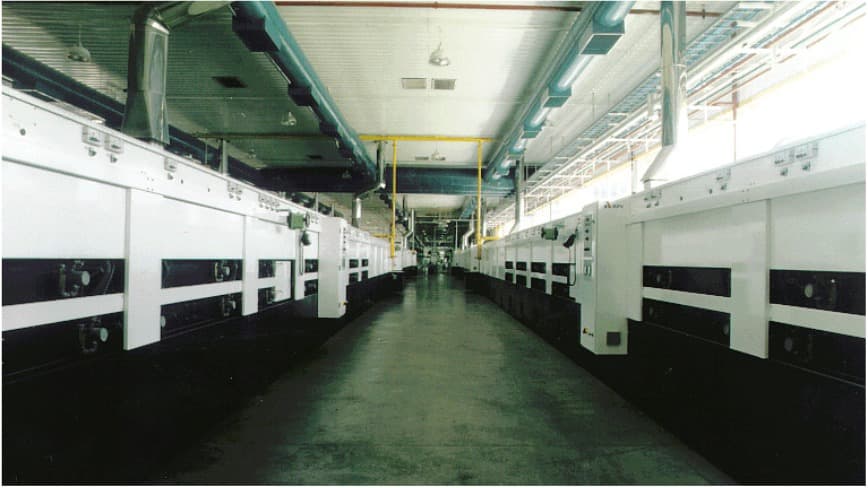
Optimising Industrial Oven Performance: Reducing Bake Times by 16 Percent
The transition from baking as art to thermal science
The industrial baking sector has historically relied on empirical rules of thumb rather than granular thermal analysis. While this approach has sustained production, it often hides inefficiencies in energy usage and throughput. Modern baking plants require a transition from qualitative assessment to quantitative, physics-based control to meet rising global demand and cost pressures. This white paper documents a comprehensive examination of heat transfer mechanisms in baking using a dedicated Thermal Performance Research Oven (TPRO).

What this white paper covers
This document details the design, commissioning, and application of a research-grade oven designed to isolate and measure the variables that determine baking performance. It provides a blueprint for applying scientific rigour to standard bakery processes.
- Oven Design and Energy Balance: An analysis of the TPRO rig architecture, focusing on air circulation, radiative heating, and the real-time energy balance required to maintain steady-state baking conditions.
- Control System Development: Documentation of a computer-aided control system, including PID logic, instrumentation for flow and velocity measurement, and human-machine interface (HMI) integration.
- Heat Flux Quantification: Methods for separating and measuring convective versus radiative heat transfer to the product surface, challenging conventional assumptions about how heat reaches the dough.
- Baking Comfort Zone (BCZ) Methodology: The introduction of a novel concept for analysing baking optimisation, analogous to thermal comfort standards in building services engineering.
- Design of Experiments (DOE): A multi-stage statistical approach, including screening and factorial designs, used to quantify the impact of process variables on product responses such as crust hardness, density, and colour.


Key findings and performance outcomes
The research successfully mapped the relationship between oven parameters and final product quality, moving the process toward a predictable, model-driven workflow.
- Bake Time Reduction: The statistical models developed through the DOE approach identified process adjustments capable of reducing bake time by up to 16% relative to current benchmarks, while maintaining target product specifications.
- Validation: These findings were validated through rigorous experimental testing, confirming that consistent product quality is achievable at significantly higher production rates.
- Process Sensitivity: The study highlights that specific combinations of fan speed, humidity, and radiative temperature are the primary constraints on baking efficiency, providing operators with a clearer path to process optimisation.


Who should read this
This white paper is intended for industrial oven designers, bakery process engineers, and R&D managers responsible for facility throughput and energy efficiency. It provides the technical foundation for those looking to implement data-driven control strategies in commercial baking operations.

Managing Director — EnerTherm Engineering
Dr. François Pierrel is Managing Director of EnerTherm Engineering with over two decades of expertise in thermal design, heat transfer, and industrial energy optimisation. He holds a PhD in Heat Transfer from Cranfield University and a Post-Doctorate from Heriot-Watt University.
