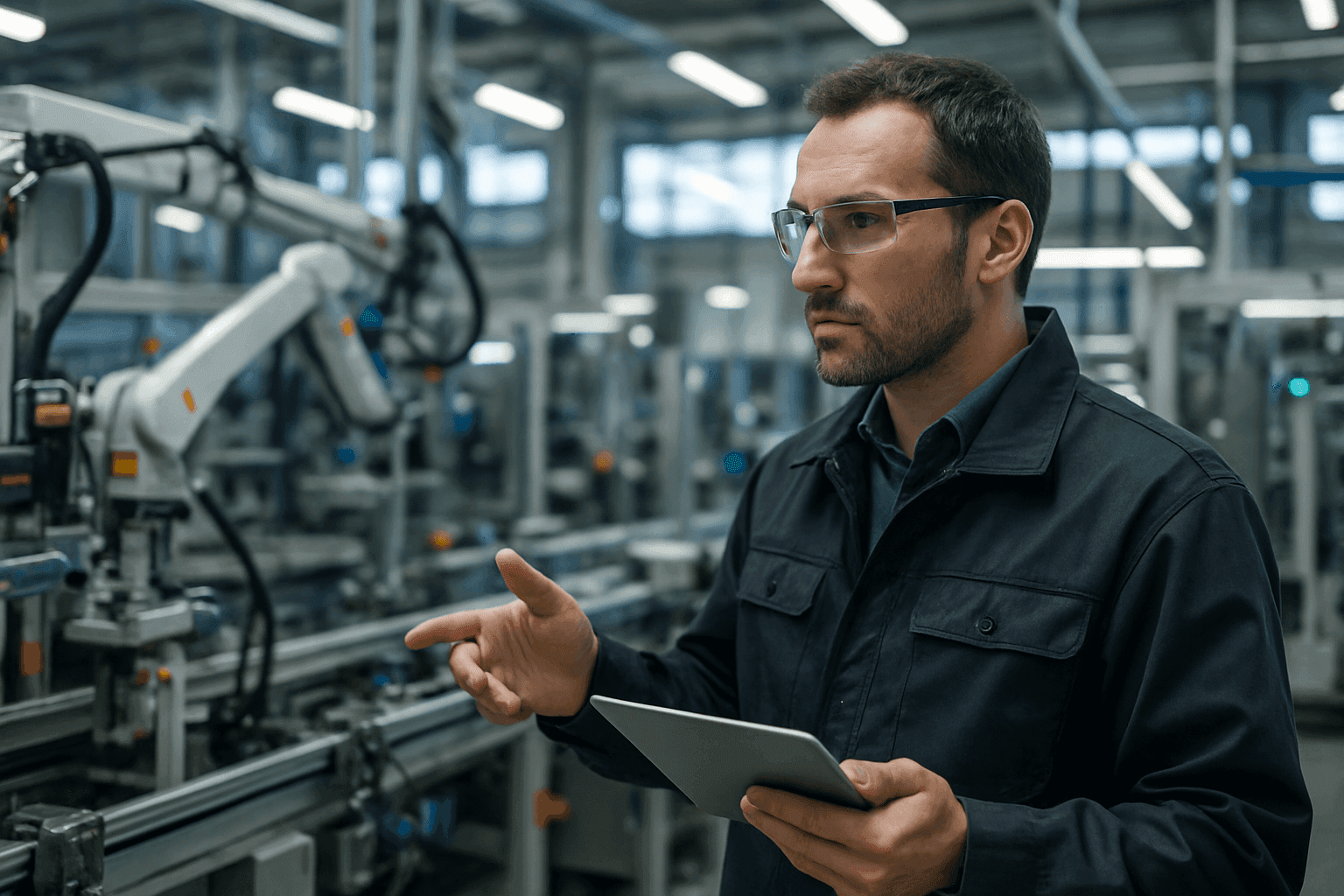
Process Optimization for Enhanced Resource Utilization in Industrial Manufacturing
Industrial manufacturing, a cornerstone of global economies, faces increasing pressure to operate more sustainably and cost-effectively. At the heart of this challenge lies process optimisation for improved resource utilisation—specifically concerning water, energy, and materials. By embracing methodologies such as Lean Manufacturing and Continuous Improvement, manufacturers can significantly reduce waste, boost efficiency, and secure a competitive edge in a resource-constrained world.
Effective industrial processes for resource utilisation connect production performance with the resources consumed to achieve it. Rather than treating water, electricity, fuels, raw materials, consumables, and waste as separate cost centres, manufacturers assess how each process step uses them, where losses occur, and how output quality, throughput, and safety can be maintained or improved with less input.
The Imperative of Resource Optimisation in Industrial Manufacturing
In the current landscape, optimising resource utilisation is no longer merely a best practice; it is a fundamental necessity. Manufacturers are driven by a confluence of environmental responsibility, stringent regulatory demands, supply-chain risk, and the economic benefits of reduced operational costs. Well-managed industrial processes make resource use visible, controllable, and continually improvable.
Environmental Stewardship and Regulatory Compliance
The industrial sector is a significant consumer of natural resources and a contributor to greenhouse gas emissions. As water scarcity intensifies and climate change concerns grow, companies are under increasing pressure to minimise their environmental footprint. Regulations increasingly require businesses to disclose water usage, energy consumption, emissions, and waste-management practices, as well as to implement reduction measures. Adopting sustainable manufacturing practices helps meet these obligations, improves public trust, and contributes to a healthier planet.
Economic Benefits: Cost Reduction and Competitiveness
Beyond environmental benefit, optimised resource utilisation translates directly into tangible economic advantages. By using resources more efficiently, organisations can lower operational costs, including expenses related to raw materials, energy bills, water treatment, waste disposal, and unplanned downtime. This reduction in costs frees capital for innovation, supports more competitive pricing, and ultimately improves profitability and market competitiveness.

An independent technical review of your process — evaluating efficiency, bottlenecks, safety, and improvement opportunities with quantified recommendations.
Core Principles of Process Optimisation for Resource Efficiency
Achieving significant gains in resource utilisation hinges on a systematic approach rooted in established process-improvement methodologies. Lean Manufacturing and Continuous Improvement are two powerful frameworks. Their value is greatest when resource data is considered alongside quality, delivery, maintenance, and safety data, so that a local efficiency gain does not create waste elsewhere in the operation.
Identifying Waste: The Lean Manufacturing Lens
Lean Manufacturing is a philosophy centred on eliminating waste (Muda) in all its forms to deliver more value with fewer resources. In the context of resource utilisation, Lean helps identify non-value-added activities and inefficiencies that lead to excessive consumption of water, energy, and materials. Common examples include overproduction, waiting, unnecessary transport, rework, excess inventory, avoidable motion, and scrap.
By streamlining operations and improving production flow, Lean principles directly contribute to lower resource consumption. Techniques such as Value Stream Mapping are crucial here, visualising the entire production process to pinpoint areas of waste. A useful map records not only material and information flow, but also resource inputs and losses at each stage: electricity used during idle time, water sent to drain, yield losses at changeover, and rejected product requiring reprocessing.
Continuous Improvement (Kaizen) for Sustained Gains
Continuous Improvement, often associated with the Japanese concept of “Kaizen” (change for the better), emphasizes small, ongoing, incremental enhancements to processes, products, and services. This iterative approach encourages employee involvement at all levels, fostering a culture where every team member is empowered to identify and implement improvements.
For resource optimisation, Kaizen ensures that efforts to reduce water, energy, and material waste are sustained and continually refined over time. Teams should establish a baseline, test one change at a time where practical, verify that quality and safety are unaffected, standardise successful changes, and monitor results so that performance does not drift back.
Strategies for Optimising Water Utilisation
Water is a critical resource, and its efficient use in industrial settings is increasingly vital for sustainability and operational efficiency. Industrial processes for resource utilisation should distinguish between water required for product contact, cleaning, cooling, steam generation, rinsing, and sanitation, because the quality required for each use determines whether water can be reduced, cascaded, recycled, or reused safely.
Water Audits and Leak Detection
The foundational step in reducing water consumption is to understand precisely how and where water is being used. Conducting thorough water audits allows businesses to identify areas of high water usage and potential inefficiencies. Metering major process areas, tracking use by production shift or batch, and comparing consumption against output can reveal abnormal demand that a site-wide meter conceals.
Regular audits help track progress and optimise water-saving initiatives. Identifying and eliminating leaks from ageing infrastructure, poorly operating valves, overflowing tanks, and continuously running wash-down points can also lead to substantial, low-cost savings. Where production varies, normalising water use by unit of good output gives a more meaningful performance measure than total site consumption alone.
Recycling and Reuse Systems
Implementing systems that treat and recycle wastewater within manufacturing processes can significantly reduce demand for fresh water. Treated wastewater can be repurposed for applications such as cooling, cleaning, or other process steps, thereby minimising reliance on external sources. Closed-loop water systems are particularly effective, as they recycle water continuously within the process.
Reuse decisions should be based on water quality, contamination risk, applicable product standards, and the requirements of the receiving process. For example, a final rinse may require higher-quality water than an initial rinse or non-contact cooling application. Segregating relatively clean streams from heavily contaminated ones often reduces treatment demand and increases viable reuse opportunities.
Advanced Water Treatment Technologies
Investing in water-efficient technologies is a key strategy. This includes upgrading to modern equipment that uses less water, such as high-efficiency cooling systems, and adopting advanced water-filtration systems. Depending on the contaminants and reuse target, treatment may include filtration, membrane processes, biological treatment, disinfection, or other site-appropriate methods.
These systems can purify raw water for use in manufacturing or treat contaminated wastewater for reuse, reducing both water consumption and the costs associated with external wastewater treatment and disposal. Before investing, manufacturers should assess whole-life requirements including energy use, chemical consumption, membrane replacement, operator capability, and sludge or concentrate management.
Enhancing Energy Efficiency in Production Processes
Energy is often one of the largest operational costs in manufacturing. Optimising energy consumption is crucial for cost savings and reducing environmental impact. The most effective approach starts with reducing avoidable demand before considering lower-carbon supply, because unused energy does not need to be generated, purchased, or recovered.
Energy Audits and Demand-Side Management
Similar to water, comprehensive energy audits are essential to identify major energy consumers, waste points, and opportunities for improvement within a facility. The audit should examine base-load consumption outside production hours, compressed-air losses, equipment operating while idle, poorly insulated thermal systems, and demand peaks caused by simultaneous high-load activities.
Demand-side management strategies, which involve actively managing energy consumption to reduce peak loads, can also lead to significant savings. Real-time monitoring and data analytics provided by Energy Management Systems (EMS) are invaluable for tracking, analysing, and optimising energy use across operations. Sub-metering production lines and major utilities makes it possible to compare energy use per unit of conforming product and identify deterioration quickly.
Optimising Equipment and HVAC Systems
Upgrading to modern, energy-efficient equipment with certifications such as Energy Star can dramatically lower energy use. This includes optimising industrial equipment such as motors and pumps, as well as heating, ventilation, and air conditioning (HVAC) systems. Equipment selection should consider the expected duty cycle and part-load performance, not only nameplate efficiency.
Implementing advanced controls, such as variable frequency drives and smarter operating modes, helps minimise energy waste during downtime or low-demand periods. Preventive and predictive maintenance, enabled by IIoT sensors and AI, can reduce downtime and extend equipment lifespan while helping equipment operate closer to its intended efficiency. Practical measures include maintaining compressed-air pressure at the lowest reliable setpoint, repairing leaks, cleaning heat-exchanger surfaces, and sequencing pumps or compressors to match demand.
Renewable Energy Integration and Waste Heat Recovery
Integrating renewable energy sources, such as solar or wind power, can reduce reliance on fossil fuels and lower energy costs where generation profiles, grid arrangements, and site demand are compatible. Energy storage and flexible production scheduling can further improve the use of on-site renewable generation.
Additionally, waste heat recovery systems capture heat generated from industrial processes and repurpose it for other uses, significantly improving overall energy efficiency. Recovered heat may support space heating, preheat combustion air or process water, produce hot water, or supply another lower-temperature process. The temperature and continuity of the heat source, the heat demand, and heat-exchanger fouling risk should all be assessed before implementation.
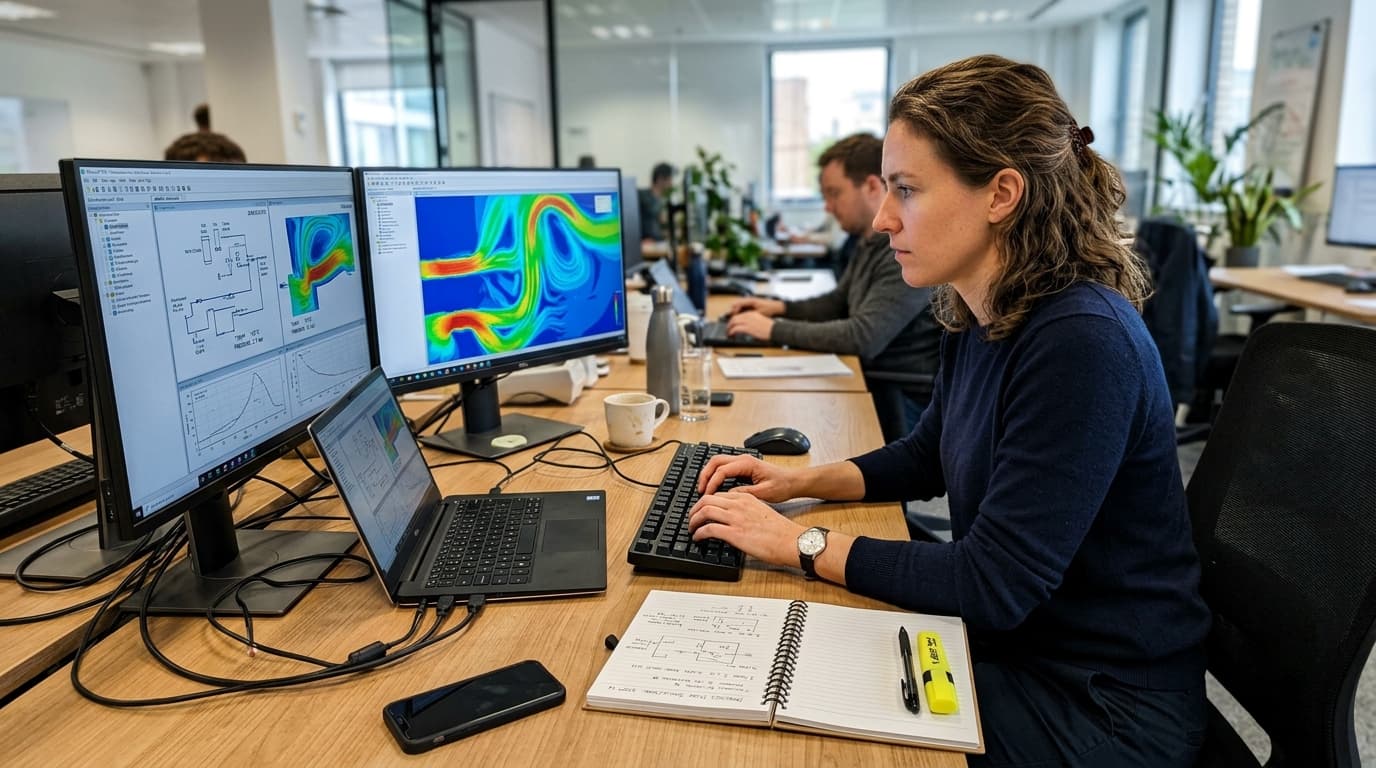
An independent technical review of your process — evaluating efficiency, bottlenecks, safety, and improvement opportunities with quantified recommendations.
Maximising Material Utilisation and Minimising Waste
Effective material utilisation is paramount for cost reduction, waste minimisation, and environmental sustainability in industrial manufacturing. Material efficiency includes reducing the quantity purchased, increasing the proportion that becomes saleable product, preventing quality losses, and retaining the highest practical value of unavoidable by-products and scrap.
Inventory Management and Just-In-Time (JIT) Principles
Advanced inventory-management protocols, including Just-In-Time (JIT) principles, aim to reduce excess stock and ensure materials are available only when needed. This approach minimises carrying costs, reduces the risk of obsolescence, and prevents waste from overproduction. Efficient inventory control, coupled with accurate demand forecasting, can significantly cut inventory costs.
JIT should be implemented with resilient supplier arrangements, clear replenishment signals, and appropriate buffers for critical materials. Otherwise, stock reductions can increase expediting, downtime, and waste caused by disrupted production. Accurate material records, controlled storage conditions, and first-expiry, first-out practices are particularly important for perishable, moisture-sensitive, or regulated inputs.
Design for Manufacturability and Disassembly (DfM/DfA)
Integrating material efficiency into product development from the design stage is crucial. Design for Manufacturability (DfM) and Design for Disassembly (DfA) principles focus on optimising material usage, reducing material thickness where possible without compromising product integrity, and designing products for easier recycling or reuse at end-of-life.
Design teams can also reduce losses by specifying manufacturable tolerances, selecting materials that suit available processes, reducing unnecessary part complexity, and considering the recoverability of coatings, fasteners, and mixed materials. This proactive approach minimises material waste throughout the product lifecycle while protecting product performance and compliance.
Waste Stream Analysis and Valorization
Identifying and analysing waste streams within the manufacturing process is vital to pinpoint areas for improvement. Waste-stream analysis should quantify the material, its source, contamination level, frequency, handling cost, and current destination. This creates a clearer basis for deciding whether prevention, direct reuse, internal recycling, external recycling, or energy recovery is most appropriate.
Strategies include minimising wastage through process changes, such as optimising cutting patterns to reduce scrap, improving setup accuracy, and reducing defects that create rework. Waste valorization—turning waste materials into new products or energy—can create additional value where prevention is not feasible. Recycling and reusing materials internally or through external partnerships also significantly improve material utilisation, provided material traceability and quality requirements are maintained.
Implementing Process Optimisation: A Practical Approach
Successfully implementing process optimisation for resource utilisation requires a holistic approach that integrates data, technology, and human elements. The work should focus on the complete industrial process, from incoming materials and utilities through production, quality control, packaging, and waste handling, rather than optimising one department in isolation.
Data Collection and Performance Metrics
“You cannot improve what you do not measure.” Real-time monitoring and data collection on machine performance, energy consumption, water flow, and material waste are critical. Key performance indicators (KPIs) such as Overall Equipment Effectiveness (OEE), cycle time, downtime tracking, and first-pass yield provide valuable insights into operational efficiency and resource use.
Resource KPIs should link consumption to useful output. Examples include energy per unit of conforming product, water per production batch, material yield, scrap rate, waste generated per tonne produced, and the proportion of water or material reused. Data analytics, often powered by AI and machine learning, help identify patterns, predict issues, and inform proactive decision-making, but data quality, meter calibration, and consistent production definitions remain essential.
Employee Engagement and Training
Employee engagement and training are fundamental to continuous improvement. Front-line workers often possess invaluable insights into daily operations and potential inefficiencies. Fostering a culture where employees are encouraged to contribute ideas, providing training on Lean principles and waste reduction, and establishing clear communication channels can lead to significant and sustained improvements.
Operators and maintenance teams should understand the resource consequences of setpoints, start-up and shutdown practices, cleaning routines, and defect prevention. Visible performance boards, structured improvement meetings, and feedback on implemented ideas help ensure that resource utilisation remains part of normal operational decision-making rather than a separate sustainability initiative.
Technology Adoption and Automation
The integration of Industry 4.0 technologies, such as the Industrial Internet of Things (IIoT), artificial intelligence (AI), and machine learning (ML), is transforming process optimisation. IIoT sensors enable real-time data collection, while AI and ML provide predictive analytics for maintenance, quality control, and resource allocation.
Automation and robotics streamline production processes, reduce human error, and optimise resource utilisation, leading to higher efficiency, precision, and flexibility. Technology should support a defined operational need: for example, detecting compressed-air leaks, identifying excessive cooling-water flow, predicting a quality drift that would create scrap, or automatically placing equipment into an appropriate low-energy mode. Piloting a solution on a measured bottleneck before scaling it across a site helps demonstrate value and avoids collecting data without a clear improvement pathway.
The Future of Sustainable Manufacturing
Process optimisation for improved resource utilisation is not a one-time project but an ongoing journey of continuous improvement. As technology advances and global demands for sustainability intensify, manufacturers must continually reassess and refine their strategies. The strongest industrial processes for resource utilisation combine disciplined measurement, Lean Manufacturing, Continuous Improvement, capable people, and appropriately selected digital technologies.
By optimising their use of water, energy, and materials, industrial manufacturers can achieve greater cost efficiency, bolster environmental stewardship, strengthen resilience to volatile resource prices and supply constraints, and secure long-term competitiveness. The objective is not simply to consume less, but to create more value from every resource entering the manufacturing system.
